

More news on this day
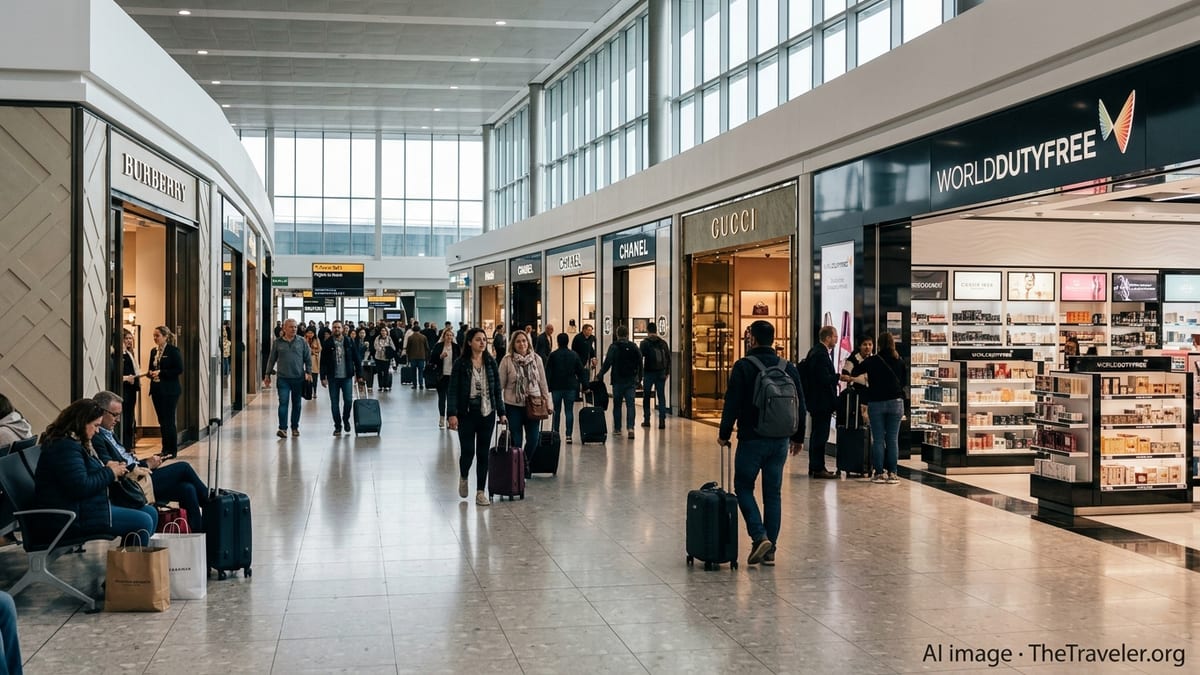
London Heathrow Airport has seized the title of the world’s best airport for shopping, a landmark result that upends years of dominance by Middle Eastern and Asian mega-hubs and signals a new phase in the increasingly high-stakes race to capture traveler spending.
Get the latest news straight to your inbox!
A Surprise Upset in a Closely Watched Global Ranking
The latest edition of a leading global airport satisfaction survey places Heathrow at the top of the world for airport shopping, ahead of high-profile competitors in Doha, Dubai, Singapore and Istanbul. The result marks a dramatic change of fortunes in a category where Gulf and Asian hubs have typically led the field, aided by vast terminal footprints and extensive luxury retail portfolios.
Previous award cycles routinely highlighted Doha’s Hamad International Airport and Singapore’s Changi Airport as benchmarks for airport retail, particularly in premium fashion, beauty and electronics. Recent rankings, however, indicate that Heathrow’s sustained investment in upgrading its terminals, curating brands and refining the passenger journey through its retail zones has propelled the airport ahead of its rivals.
According to published coverage of the most recent awards, Heathrow’s performance in the shopping category was strong enough to outscore airports that often dominate broader “best airport” rankings, underscoring how specialized retail strategies can shift competitive dynamics even when overall infrastructure or amenities may be similar.
The recognition is significant for Heathrow’s position within Europe. While airports such as Paris Charles de Gaulle, Rome Fiumicino and Munich feature in top-ten retail lists, the latest survey results show Heathrow setting the pace for the region and reshaping expectations of what a European hub can deliver in terms of duty free and luxury shopping.
How Heathrow Built a Retail Powerhouse
Heathrow’s ascent has been years in the making, built on an emphasis that treats retail not as an add-on but as a central part of the passenger experience. Publicly available information on the airport’s commercial strategy points to a focus on “boutique-style” environments, with premium brands clustered in walk-through zones that are tightly integrated with security and boarding flows.
Terminals 2 and 5, in particular, have been repeatedly cited in specialist aviation and travel-retail coverage for combining major global luxury labels with British designers, high-street fashion and large-format beauty halls. Reports indicate that Heathrow has also leaned heavily into omnichannel services, allowing passengers to browse and reserve items online before travel, then collect in-terminal through dedicated “personal shopper” desks and click-and-collect counters.
The airport has further sought to differentiate itself through seasonal campaigns and capsules that mirror central London’s luxury districts, bringing limited-edition products, pop-up boutiques and brand takeovers into airside spaces. Analysts note that this approach encourages spending from both long-haul travellers and short-haul European passengers who might otherwise bypass airport retail altogether.
Industry data suggests that Heathrow’s retail revenue per passenger has been among the strongest in Europe, a metric that likely helped underpin its surge to the top of global shopping rankings. The airport’s challenge now will be to sustain that performance as competitors respond with their own retail refurbishments and new store concepts.
Global Rivals Scramble to Keep Pace
For airports that have long been synonymous with duty free indulgence, Heathrow’s victory represents a wake-up call. Doha’s Hamad International and Singapore Changi still feature prominently near the top of world airport shopping lists, but recent rankings show them ceding the very top spot to London in the shopping category, even as they continue to perform strongly in overall airport quality awards.
In the Middle East, Hamad International and Dubai International have historically leveraged round-the-clock operations, large transfer passenger bases and extensive luxury assortments to anchor their reputations as shopping destinations in their own right. Aviation observers now note that these hubs are intensifying efforts to refresh retail precincts, experiment with experiential concepts and expand digital pre-order platforms in response to greater competition from European airports.
Across Asia, hubs such as Changi, Seoul Incheon, Tokyo Narita and Hong Kong remain retail powerhouses, with large-scale duty free areas and integrated mall-style experiences. Yet the latest shopping-specific rankings highlight that simply having more space or more brands is no longer enough. Analysts point to the importance of wayfinding, dwell-time management, and seamless payment and pickup experiences in determining how passengers assess airport retail.
Travel industry commentary suggests that Heathrow’s win could encourage other European hubs to push harder into premium retail as they seek new revenue streams amid fluctuating airline margins and rising infrastructure costs. This may, in turn, intensify competition for brand exclusives and flagship concepts previously concentrated in Gulf and Asian airports.
What Heathrow’s Win Means for Travelers
For passengers, Heathrow’s new status as the world’s best airport for shopping primarily translates into greater choice and more polished environments in which to spend time before departure. Travelers passing through the airport can expect a dense concentration of beauty, fashion, watches, jewelry and spirits, alongside technology and British-themed gift concepts, particularly in its newest and most recently refurbished terminals.
Travel-retail commentary notes that Heathrow has become a favored location for global brands to test travel-exclusive product lines and airport-only collaborations, often timed to coincide with major holiday periods or long summer peaks. This can create opportunities for frequent flyers to access limited items not easily available on traditional high streets, while also reinforcing Heathrow’s image as an extension of London’s upscale shopping districts.
At the same time, the focus on premium retail raises familiar questions about value. Consumer discussions frequently highlight a split between travelers who see airports primarily as convenient locations for duty free purchases and those who view pricing as comparable to, or in some cases higher than, city-center alternatives. Heathrow’s challenge will be to demonstrate that convenience, assortment and occasional exclusivity offset any perceived pricing gaps.
For budget-conscious passengers, the proliferation of high-end boutiques may be less relevant than practical offerings such as pharmacies, supermarkets and casual dining. Industry assessments indicate that Heathrow has attempted to maintain a mix that serves both segments, though the most visible airside zones continue to be dominated by luxury and beauty brands that generate the highest returns per square meter.
A Retail Arms Race in the Sky
Heathrow’s shopping triumph arrives at a time when non-aeronautical revenues are increasingly critical to airport balance sheets worldwide. As airlines push back against higher charges and regulators scrutinize fee structures, commercial income from retail, food and beverage, parking and ancillary services has become a strategic pillar for many hubs.
Analysts describe the current moment as a “retail arms race,” with airports vying not just for routes and airline partners but also for flagship stores, exclusive launches and memorable design features that can sway both travelers and brands. Heathrow’s elevation to the top of the shopping rankings underscores how success in this arena can influence overall perceptions of an airport, even as operational metrics such as punctuality and baggage performance remain under close watch.
The recognition may also carry reputational benefits for London as a whole. With the city already established as a global shopping capital, the alignment between its high streets and its main international gateway strengthens marketing narratives that position a trip to or through Heathrow as an integral part of the destination experience.
Looking ahead, industry observers expect rival hubs to accelerate redesigns of retail concourses, deepen digital integration and experiment with more locally rooted concepts to differentiate themselves from a growing field of copycat luxury corridors. Heathrow’s unexpected rise to the top spot shows how quickly the leaderboard can change, and how fiercely airports now compete for every purchase made between security and the boarding gate.