

More news on this day
London Heathrow is preparing for one of its most expansive network overhauls in years, with 2026 schedules introducing new connections to Seattle, St Louis, Tivat, Guernsey, Rome, Lahore and Seville that will significantly widen options for both business and leisure travelers.
Get the latest news straight to your inbox!
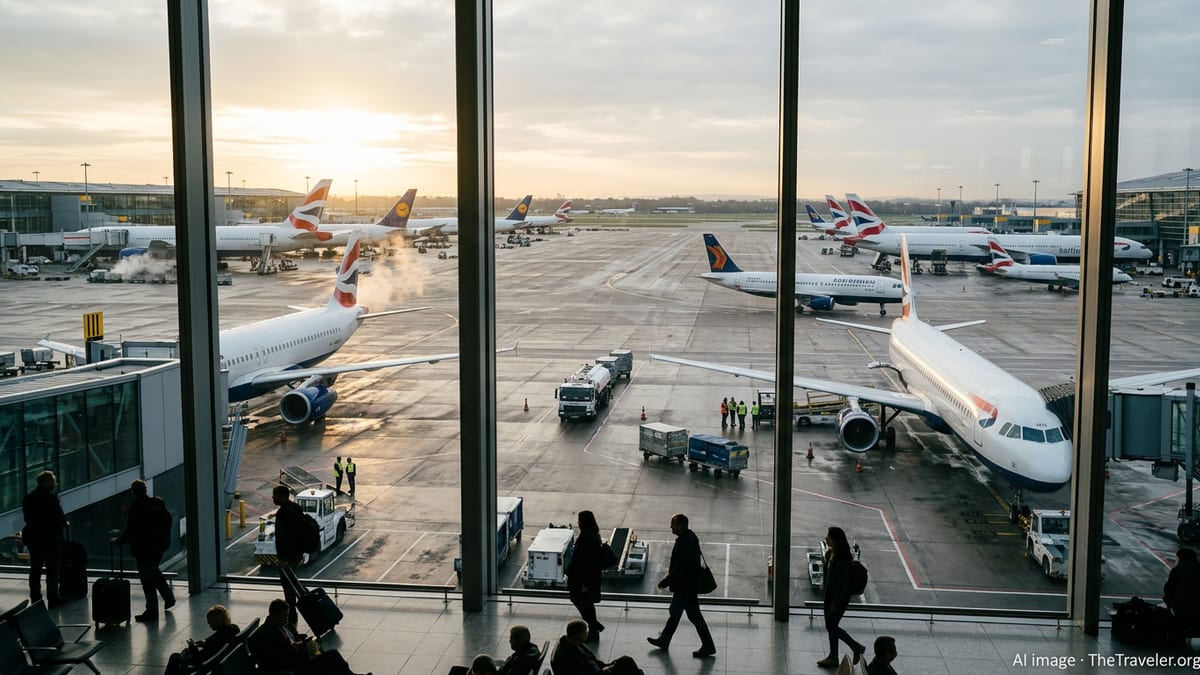
A Wider Global Web: Inside Heathrow’s 2026 Route Push
Publicly available timetable information and industry coverage for the 2026 summer season indicate that Heathrow is entering a new phase of growth, using fresh long haul and short haul routes to reinforce its position as a primary global gateway. The new services to the United States, the Balkans, the Channel Islands, mainland Europe and South Asia are framed as a response to sustained demand for direct links and the recovery of long haul travel.
According to recent route announcements and airport communications, 2026 has been positioned as a landmark year for Heathrow’s connectivity, with new links to U.S. and European secondary cities complementing existing flagship routes to hubs such as New York, Dubai and Singapore. The expanded map aims to disperse demand more evenly across the network, easing pressure on a handful of ultra‑busy trunk routes while opening up fresh tourism and trade corridors.
The broader push coincides with ongoing UK backing for Heathrow’s long‑discussed physical expansion, including government support in principle for a third runway and associated infrastructure. While that longer‑term construction program remains subject to detailed approvals and timelines, the wave of new routes set for 2026 gives a clear indication of how Heathrow’s role as a hub is already evolving.
For travelers, the practical impact is more choice on city pairs that previously required at least one connection, and in some cases two. The additions for 2026 are particularly notable for mid‑sized North American and European cities that until now have been missing from Heathrow departure boards.
Seattle and St Louis: New Nonstop Links Across the Atlantic
On the North Atlantic, Heathrow’s most eye‑catching additions center on Seattle and St Louis. In the Pacific Northwest, publicly available schedules and airline statements show a new daily nonstop service between Seattle‑Tacoma International Airport and London Heathrow beginning in late May 2026, operated by Alaska Airlines on Boeing 787‑9 aircraft. The route adds another option alongside existing services from other carriers and highlights the growing importance of Seattle as a transatlantic gateway.
Reports indicate that Alaska has secured a leased daily slot pair at Heathrow through an arrangement with a fellow oneworld alliance member, enabling the carrier to mount year‑round service. For travelers in the U.S. Pacific Northwest, the new flight is expected to provide same‑day connectivity to a wide range of European and onward destinations via Heathrow, while also giving UK‑based travelers a direct entry point into the broader Pacific Northwest beyond Seattle itself.
Further east in the United States, St Louis is also set to join Heathrow’s network. Regional transport documents and airline route announcements show that British Airways is preparing to launch nonstop St Louis–Heathrow service from April 2026, using Heathrow slots to restore a direct transatlantic link to the Missouri city. The move follows years in which St Louis travelers relied on connections via Chicago, Atlanta or East Coast hubs to reach London.
The St Louis route is expected to operate seasonally through the northern summer, timed to capture both business demand tied to the city’s manufacturing and health‑care sectors and leisure traffic exploring the Mississippi River region and Route 66 attractions. For Heathrow, the addition strengthens its footprint in the U.S. Midwest, complementing existing services to cities such as Chicago, Minneapolis and Detroit.
Guernsey and Tivat: New Holiday Gateways From Terminal 5
Closer to home, Heathrow’s expansion includes fresh options for leisure travelers seeking coastal escapes. Heathrow and airline new‑route pages show that Guernsey will be linked to the hub from summer 2026 with twice‑daily, year‑round flights operated from Terminal 5. The service will provide a new alternative to London’s other airports for accessing the Channel Islands, aimed at both short‑break holidaymakers and Guernsey residents connecting to long haul flights.
The Guernsey link is positioned as a convenience boost for passengers who prefer to use Heathrow’s extensive long haul network rather than route via Gatwick or regional airports. It also gives the island a more direct connection to long haul destinations in North America, the Gulf and Asia, thanks to through‑ticketing and baggage interline agreements offered by the operating carrier.
To the south‑east, Tivat on Montenegro’s Adriatic coast is another high‑profile addition. Travel‑industry coverage highlights that new Heathrow–Tivat flights are scheduled as part of the 2026 summer program, reflecting growing demand for Montenegro’s beaches, marinas and mountain scenery. Tivat has emerged over the past decade as a gateway not only to coastal resorts but also to the UNESCO‑listed Bay of Kotor and the country’s inland national parks.
Seasonal operations to Tivat from Heathrow will give UK travelers a more premium, hub‑based alternative to flights from smaller airports, with convenient same‑terminal connections for those arriving into Heathrow from long haul destinations. The route underlines how Heathrow’s growth strategy increasingly combines classic business destinations with high‑yield leisure markets around the Mediterranean and Adriatic.
Rome and Seville: Strengthening Southern Europe Links
Heathrow is also deepening its reach into Southern Europe as part of the 2026 expansion narrative. Rome, already a key destination in Heathrow’s network, is expected to benefit both from additional frequencies and from new transatlantic flows associated with Seattle–Rome services announced by Alaska Airlines from 2026. While that particular route bypasses London, analysts note that the broader surge in Seattle‑Europe connectivity is likely to support stronger demand on Rome–Heathrow legs, especially for multi‑city itineraries.
Published route overviews describe Rome as a central pillar of Heathrow’s Southern Europe offering, with carriers using the Italian capital to feed both inbound tourism and business travel linked to government, fashion, technology and automotive sectors. The wider uplift in North American demand is expected to tighten connections between Rome and hub airports like Heathrow, where banks of morning and evening flights increasingly cater to complex long haul itineraries.
Seville, by contrast, represents network growth in a city that has historically been less prominent than Madrid or Barcelona in long haul planning. Recent Heathrow network summaries and travel‑trade reporting highlight Seville among the Spanish destinations gaining fresh Heathrow capacity into 2026, responding to rising interest in Andalusia’s cultural attractions, food scene and warmer‑weather city breaks.
For leisure travelers, the added Heathrow–Seville capacity makes it easier to build itineraries that combine Andalusia with long haul sectors to North America, the Middle East or Asia. The shift is part of a broader pattern in which Heathrow’s short haul map is increasingly fine‑tuned around tourism flows rather than serving only capital cities or major business centers.
Lahore and South Asia: Expanding Long Haul Reach
The 2026 expansion also reinforces Heathrow’s longstanding role as a key European gateway for South Asia. Aviation and travel‑industry reports indicate that Lahore is due to receive a new weekly service from Heathrow from late March 2026, complementing existing links to other cities in Pakistan and the wider region. The addition responds to a mix of visiting‑friends‑and‑relatives traffic, student flows and growing two‑way business travel.
According to recent coverage of Heathrow’s 2026 plans, the Lahore route is scheduled as a limited‑frequency operation, at least initially, which allows capacity to be tested and adjusted in line with demand. Even at one flight per week, the connection is considered significant because it provides an extra option for passengers who prefer Heathrow’s transfer experience or who are seeking specific onward links that may not be available through other European hubs.
The new Lahore flights also underscore how Heathrow’s long haul strategy now extends beyond traditional mega‑cities to include a broader mix of secondary South Asian destinations. This development reflects both demographic ties between the UK and Pakistan and the competitive pressure from Gulf and Turkish carriers, which have built substantial sixth‑freedom traffic through their own hubs on routes between Europe and South Asia.
For travelers, the practical implication is another one‑stop option between cities such as Lahore and North America, with Heathrow acting as the intermediate point. That positioning helps the airport maintain its relevance as a connecting hub even as rival airports in the Middle East and continental Europe continue their own expansion drives.