

More news on this day
Heathrow Airport has smashed its annual passenger record, surpassing 84 million travelers in 2025, as major global carriers from Europe and the Gulf ramp up capacity to and through the United Kingdom, the United States and continental Europe, setting the stage for a fresh surge in demand for hotel groups such as Hilton and Marriott.
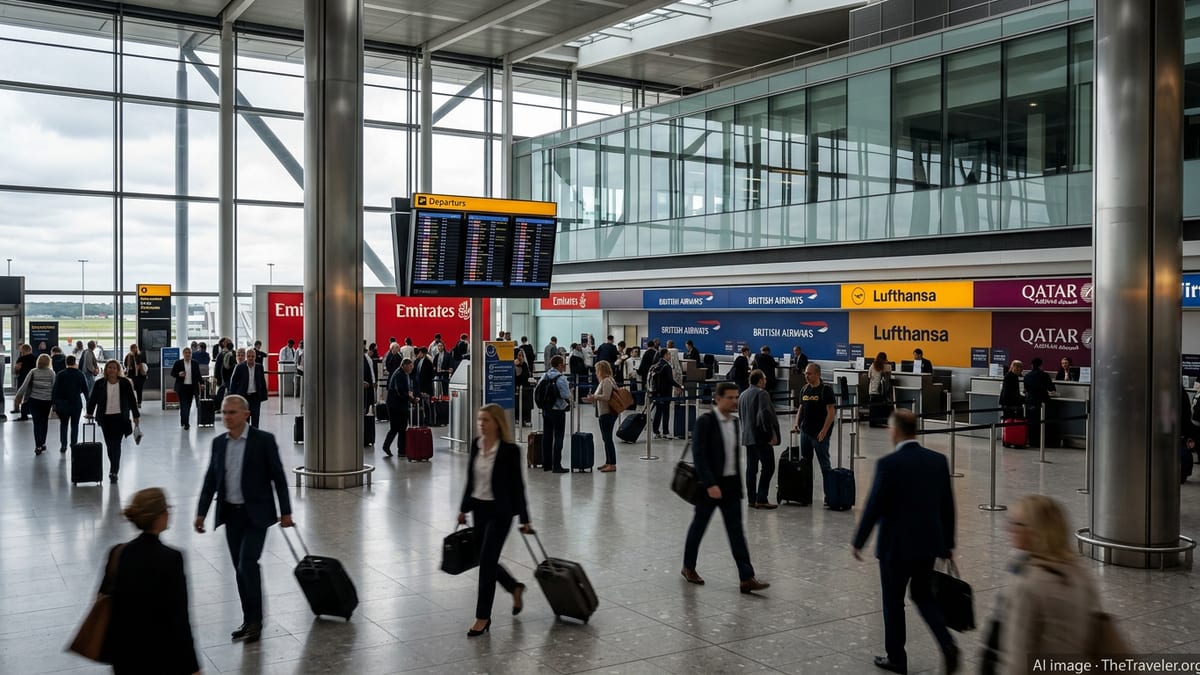
Heathrow’s Record Year Underscores a Global Travel Rebound
Heathrow’s latest figures confirm that the UK’s largest hub is operating at unprecedented scale. Airport data show traffic topping roughly 84.5 million passengers in 2025, edging up from a previous record of about 83.9 million in 2024 and cementing Heathrow’s position as the country’s dominant gateway. The hub also retained its status as one of Europe’s busiest airports, reflecting robust transatlantic and long haul demand.
Airport executives attribute the growth to a combination of pent up leisure demand, resilient premium traffic and strong connections to the United States, the Middle East and key European capitals. Routes to New York, Dubai and Doha rank among Heathrow’s busiest international corridors, drawing capacity from global network carriers that use the airport as a springboard to cities across North America and Europe.
The record passenger volumes are testing Heathrow’s physical limits. Management has warned that, without additional runway capacity, further growth is likely to be incremental, even as airlines signal appetite for more slots. For hotels and tourism businesses, that constraint has an upside: fuller planes and higher load factors typically translate into stronger and more predictable demand patterns in gateway cities.
The new milestone also underscores how far the aviation and hospitality sectors have recovered since the pandemic lows. As Heathrow edges beyond 84 million passengers, it is once again functioning as a key barometer of global travel health, with ripple effects reaching hotel lobbies from London and Manchester to New York and Los Angeles.
Gulf Superconnectors and European Flag Carriers Add Capacity
The traffic surge at Heathrow is being driven in part by aggressive network strategies from Emirates, Qatar Airways and other Gulf carriers, alongside legacy European airlines such as British Airways and Lufthansa. Emirates has expanded capacity across its global network, adding retrofitted widebody aircraft and introducing Airbus A350s that boost premium and economy seating to major European gateways, including London. The Dubai based carrier has also invested in new lounges at airports such as London Stansted, further entrenching its role in funneling long haul traffic through the UK.
Qatar Airways, for its part, has been steadily building its footprint in the British market. The airline has increased weekly flights to Manchester and strengthened its already dense schedule to Heathrow, Gatwick and Edinburgh, offering more one stop options between the UK, the Americas, Asia and Africa via Doha. Additional capacity on these routes feeds more passengers into UK cities and onward to European destinations, underpinning higher hotel occupancy at both hubs and spokes.
On the European side, Lufthansa continues to leverage its Frankfurt and Munich hubs as key connectors for US and Asian traffic into the continent. Additional seasonal and year round frequencies to US cities and secondary European markets are designed to capture both corporate travelers and high spending leisure guests, many of whom connect via Heathrow or rival UK airports on their journeys.
British Airways, the largest carrier at Heathrow, is simultaneously refreshing its long haul network to the United States and beyond. New and resumed services, including added transatlantic links from regional US cities into Heathrow, are broadening access to London as a stopover hub. For hotel operators, the combination of Gulf superconnectors and European flag carriers adds up to more arrivals, more overnight stays and a wider spread of demand across price points.
Transatlantic and European Flows Power Hotel Performance
The North Atlantic remains the world’s most lucrative long haul air corridor, and Heathrow sits at its center. High frequency services between London and major US gateways such as New York, Boston, Chicago and Los Angeles are critical feeders for hotels ranging from full service brands near Heathrow to luxury properties in central London and business hotels across continental Europe.
As carriers add capacity, US travelers gain more direct and one stop options into the UK and Europe. That in turn underpins longer stays and multi city itineraries, which favor large chains with extensive footprints. Travelers may fly in on British Airways or Lufthansa, then hop onward to secondary European cities on alliance partners, staying in branded hotels at each stop. The trend is especially visible in summer peak periods, when leisure travelers combine London with Paris, Rome or Spanish coastal destinations.
Within Europe, dense short haul networks operated by full service and low cost carriers keep feeding Heathrow and other major hubs with intra European passengers. These flows help smooth seasonality for hotels, bolstering weekday occupancy with business travelers and weekend demand from city breakers. As airlines rebuild corporate travel segments, conference and meetings business at hotels is also recovering, especially in markets with strong airlift such as London, Frankfurt, Munich and Doha connected cities.
The cumulative effect is a demand environment that rewards hotels capable of capturing both transient and group business. Large loyalty programs and direct booking channels, often aligned with airline partners, are becoming more important as travelers look to earn and redeem points seamlessly across flights and hotel stays.
Hilton, Marriott and Peers Poised to Capitalize on Capacity Growth
For hospitality giants like Hilton and Marriott, record traffic through Heathrow and expanding airline networks translate into a broader and deeper pool of potential guests. Both groups have dense portfolios in the UK, mainland Europe, the US and the Gulf, with brands positioned at multiple price tiers along key air corridors. Properties near airports, central business districts and major tourist attractions stand to benefit as airlines funnel more passengers into these markets.
Higher passenger volumes tend to lift occupancy first at airport hotels, where demand is closely tied to flight schedules, crew rotations and connecting traffic. As carriers like Emirates, Qatar Airways, British Airways and Lufthansa increase frequencies, hotels around Heathrow, Frankfurt, Munich and other hubs can capture incremental overnight stays from both transit passengers and aviation staff.
In city centers, growing long haul and connecting traffic supports rate resilience, especially at the upper midscale and upscale segments where global brands are strongest. Corporate travelers arriving on transatlantic and Gulf flights often favor familiar hotel flags for loyalty benefits and consistent service, while leisure guests on once in a year European trips are more inclined to book recognized names in premium locations.
The diversification of airline networks also helps hotel groups smooth regional volatility. When demand softens in one corridor, new or expanded routes in another can partially offset the impact. For global chains with hundreds of properties across the UK, Europe, the US and the Middle East, the current wave of capacity growth from major carriers reduces reliance on any single origin market.
Opportunities and Pressures in an Overheating Travel Ecosystem
Yet the upswing in air travel is not an unqualified win for hospitality. As Heathrow runs close to its capacity ceiling and airlines compete aggressively for airport slots, peak travel periods are increasingly compressed, creating sharper spikes in demand for rooms. Hotels in and around London and other European gateway cities are grappling with staffing shortages, wage inflation and higher energy costs, which can squeeze margins even as occupancy climbs.
Airlines and airports are simultaneously under pressure to decarbonize, invest in new infrastructure and maintain operational resilience. Any disruptions, whether from weather, strikes or geopolitical tensions, can quickly ripple through the network, leading to cancellations and schedule changes that complicate hotel planning. For chains like Hilton and Marriott, close coordination with airline partners and real time revenue management are becoming critical to optimize inventory in this more volatile environment.
Another challenge is ensuring that the benefits of booming air traffic are broadly shared across destinations. Secondary cities that gain new direct flights from carriers such as Qatar Airways, Emirates or Lufthansa often lack the room inventory of major hubs. This can create short term bottlenecks but also medium term opportunities for hotel developers and investors, especially in markets where tourism authorities are actively courting new routes.
Despite these pressures, the overarching narrative remains one of cautious optimism. With Heathrow surpassing 84 million passengers and long haul carriers betting on continued appetite for UK, US and European travel, the demand outlook for large global hotel brands is robust. For travelers, that should mean more choice of routes and rooms, even if both seats and beds are in higher demand than ever.