

More news on this day
London Heathrow is entering a new golden age, combining record passenger volumes with an increasingly luxurious mix of lounges, designer boutiques and very British retail experiences that are reshaping how visitors encounter the United Kingdom from the moment they land.
Get the latest news straight to your inbox!
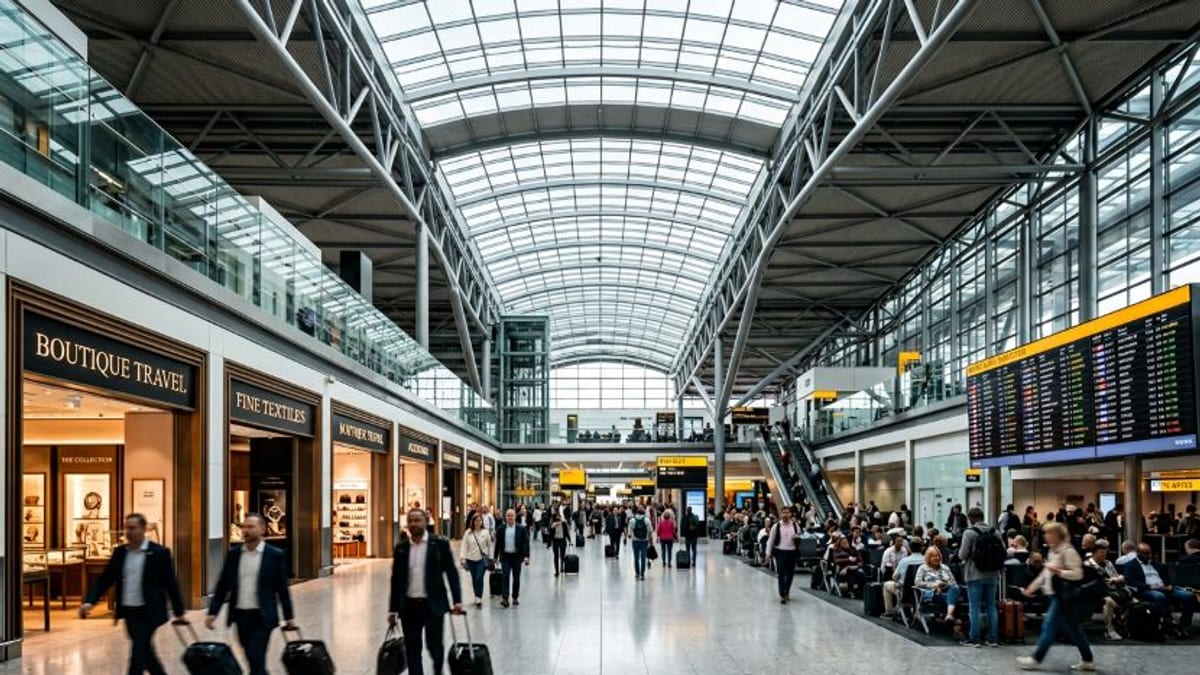
Image by Latest International / Global Travel News, Breaking World Travel News
From Recovery Hub to Global Top 20 Player
Publicly available data shows that Heathrow handled more than 83 million passengers in 2024, surpassing pre-pandemic levels and reinforcing its status as one of the world’s busiest international gateways. Industry rankings place the airport comfortably inside the global top tier by international traffic, cementing its role as the primary long-haul bridge between the United Kingdom and the rest of the world.
Recent traffic reports indicate that this performance is not a one-off spike but part of a steady upward trajectory. Quarter-by-quarter figures for 2024 and early 2025 point to strong demand on North American and Middle Eastern routes alongside a sharp rebound in East Asian travel. Aviation analysts note that Heathrow has effectively returned to, and in some measures exceeded, its 2019 performance, a benchmark year for global air travel.
Skytrax and Airports Council International league tables underline Heathrow’s ascent within the broader ecosystem of mega-hubs. While Gulf and Asian rivals dominate some categories, Heathrow’s blend of connectivity, premium cabins and spend-per-passenger keeps it within the upper ranks of global airport systems. For many airlines, this combination of scale and high-yield travellers makes slots at Heathrow among the most coveted in the world.
The airport’s leadership has framed this recovery as a springboard for long-term growth, with current investment aimed at smoothing peak-time bottlenecks and further improving the premium experience. For passengers, the impact is already visible in upgraded security areas, refreshed lounges and a widening range of high-end retail concepts across the terminals.
Why Heathrow Keeps Winning on Luxury and Shopping
Beyond aircraft movements and runway capacity, Heathrow’s reputation increasingly rests on its shopping streets. The airport has again been recognised in recent award cycles for the quality of its retail and duty paid offer, including being named the world’s best airport for shopping at the 2026 Skytrax World Airport Awards, based on passenger surveys. The accolade reflects a strategy that treats boutiques, restaurants and services as a core part of the journey rather than an add-on.
Across Terminals 3 and 5 in particular, passengers encounter a line-up of major luxury houses, from fashion and leather goods to high-end watches and jewellery. These sit alongside British institutions such as Harrods outposts and specialist tea, gin and confectionery brands that trade heavily on heritage. For connecting passengers who never leave the airport, these curated spaces often provide the only physical encounter with British retail culture on a tight schedule.
Travel-retail analysts highlight Heathrow’s ability to generate high spend per square metre by mixing flagship luxury with more accessible brands and strong food and beverage concepts. The experience leans into a “high street under glass” model, where familiar British names share the concourse with global labels and limited-edition airport exclusives. Window displays and product storytelling are designed to appeal to both first-time visitors and frequent flyers seeking a final upgrade before boarding.
At the same time, the retail proposition has had to adapt to regulatory changes. The removal of traditional tax-free shopping for many international visitors after Brexit reduced some of the pure price advantage once associated with British airport buying. Operators have responded with “airport prices,” bundled offers and a more experiential approach, using service, exclusivity and convenience to justify purchases that are no longer framed purely around duty-free savings.
The United Kingdom’s Airport Retail Secrets
Heathrow may be the headline act, but the broader United Kingdom airport system has quietly become a testing ground for next-generation travel retail. Forecasts for the British airport retail market point to annual growth rates in excess of 10 percent over the next decade, underpinned by strong passenger numbers at Heathrow, Gatwick and the main regional hubs. For retailers, captive audiences and predictable dwell times remain powerful commercial assets.
One of the sector’s less publicised strengths lies in its mastery of “walk-through” duty paid formats. Arriving and departing passengers at many British airports are now channelled directly through large, open-plan stores that combine cosmetics, liquor, fashion, technology and local souvenirs. Operators use data on flight schedules, nationality mix and spending patterns to adjust product ranges almost in real time, ensuring that a morning wave of business travellers or an afternoon surge of long-haul tourists each see a different emphasis on the shelves.
Another secret is the way airports blend global luxury brands with distinctly British narratives. From Scottish whisky displays and English sparkling wine bars to Cornish fudge and London design collaborations, merchandising often doubles as soft-power storytelling. For visitors who may spend only a few days in the country, a carefully curated shelf in a terminal can stand in for an entire shopping trip on the high street.
Behind the scenes, British airports have also become early adopters of digital pre-order platforms, allowing passengers to reserve items online and collect them airside. This approach helps smooth peak-time congestion and encourages higher-value purchases, as travellers feel less pressure from the ticking clock between security and boarding. For tourists with precise shopping lists, it can turn the terminal into an efficient final stop rather than an impulsive afterthought.
Regional Gateways Join the Luxury Race
While Heathrow dominates headlines, regional airports across England and Scotland are steadily upgrading their own retail and hospitality offers. Gatwick, Manchester, Edinburgh and Birmingham have all invested in refreshed commercial zones, new bar and restaurant concepts and expanded fashion and beauty footprints. Financial statements and operator briefings point to rising retail income per passenger even where total spend has plateaued, suggesting a gradual pivot toward higher-margin products and services.
Gatwick, for example, has reported resilient net retail income per passenger despite a recent dip in overall retail revenues. Part of that resilience is attributed to new or refurbished outlets, additional grab-and-go dining options and the introduction of more recognisable high-street names in airside areas. Other regional hubs are following a similar playbook, targeting the growing cohort of leisure travellers who expect a more cosmopolitan environment regardless of departure point.
These developments are particularly significant for tourists who combine London with time in other parts of the United Kingdom. A visitor heading to the Highlands via Inverness, or to the southwest coast via Bristol, is increasingly likely to encounter a coherent British retail language across multiple airports. For brands, this creates a distributed showcase that extends far beyond Heathrow’s glass-fronted luxury rows.
The regional push also supports a broader policy and industry narrative about spreading the benefits of tourism and aviation beyond the capital. As more airlines base aircraft and open routes from secondary cities, high-quality retail and lounges help those airports compete for both carriers and passengers, reinforcing a virtuous circle of connectivity and commercial opportunity.
What This Means for the Next Generation of Tourists
For international visitors planning a trip to the United Kingdom in 2026 and beyond, the evolution of airport luxury and retail has practical implications. Heathrow’s place among the world’s leading hubs will likely mean more direct connections, particularly from secondary cities in North America and Asia, with a consistently premium ground experience on arrival and departure. Longer transfer windows between long-haul flights may be less of a burden when the terminal itself functions as a compact shopping district.
The changing tax environment means that travellers can no longer assume uniform duty-free bargains across all categories, but targeted value still exists, particularly in liquor, beauty and selected travel exclusives. In many cases the real attraction is now assortment rather than price: airports concentrate ranges that might require visits to multiple stores in central London, giving time-poor tourists a one-stop opportunity to secure British gifts and global luxury labels.
As British airports experiment with new formats, from boutique-style watch galleries to pop-up fashion capsules and local artisan corners, tourists can expect more variety and seasonal rotation. For repeat visitors, Heathrow and its regional counterparts are becoming places where the retail landscape changes year by year, mirroring shifts seen on leading shopping streets.
In that sense, the “golden age” of British aviation luxury is not just about champagne bars and first-class lounges. It is about airports themselves evolving into curated gateways to the country’s retail and cultural identity, with London Heathrow at the front of the formation and a growing constellation of regional hubs close behind.