

More news on this day
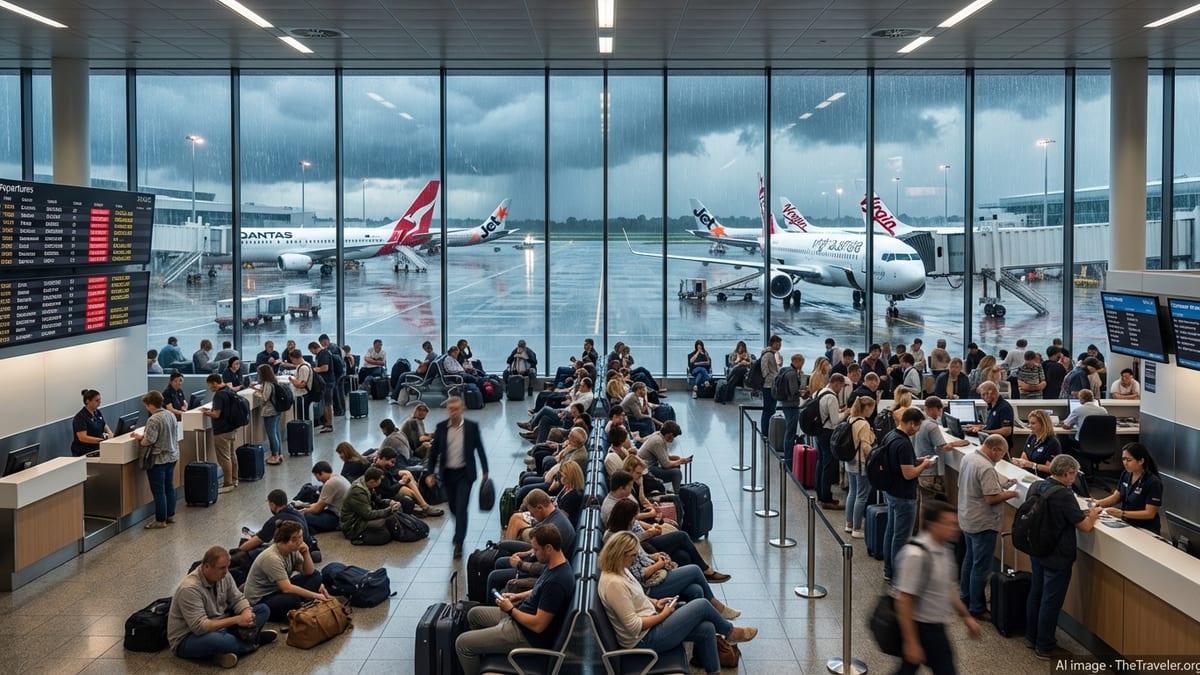
Thousands of travellers have been left stranded at airports across Australia as intense rainfall and thunderstorms trigger widespread flight delays and cancellations, disrupting services on Virgin Australia, Jetstar, Qantas and several smaller carriers.
Major Hubs Across Australia Brought to a Standstill
Operations at key gateway airports including Sydney, Melbourne, Brisbane, Adelaide and Perth were heavily disrupted as bands of heavy rain swept across multiple states, reducing visibility and forcing airlines and air traffic controllers to slow or suspend movements. At peak disruption, at least 720 flights were reported delayed and 74 cancelled nationwide, according to preliminary figures from aviation tracking services and airport operators.
Long queues built up at check-in counters and security lanes as rolling delays rippled through domestic and regional networks. With turnarounds slowed by wet tarmac conditions and congestion on taxiways, aircraft arriving late from one city triggered knock-on delays in others, snarling what is usually one of the busiest midweek travel periods.
In Sydney and Melbourne, departure boards through the afternoon and evening became dominated by notices of pushed-back departure times, while some services were repeatedly retimed before ultimately being cancelled. Airport staff moved additional personnel into terminal halls to help manage crowding and reassure anxious passengers waiting for updates.
Adelaide, Brisbane and Perth also reported significant disruption, particularly on short-haul domestic routes that rely on tight schedules and quick turnarounds. Regional airports feeding into these hubs were hit by a combination of aircraft and crew being out of position, compounding local weather-related challenges.
Airlines Face Operational Headaches and Rising Customer Anger
Major carriers including Qantas, Jetstar and Virgin Australia bore the brunt of the turmoil, alongside several smaller domestic and regional airlines. While severe weather and associated air traffic restrictions were cited as the primary cause, travellers expressed frustration at what they described as patchy communication, limited rebooking options and lengthy waits to speak with airline staff.
Across affected airports, customer service teams worked to rebook passengers on later services, arrange overnight accommodation where eligible and issue food and refreshment vouchers. However, with dozens of flights scrubbed and many more operating well behind schedule, available seats on alternative services quickly filled, leaving some travellers facing waits of 24 hours or more.
Airline operations managers also faced difficult decisions around crew duty limits and aircraft allocations. Extended delays can quickly push pilots and cabin crews beyond regulated working hours, forcing additional cancellations even after the worst of the weather has passed. Several carriers cautioned that disruption could linger into following days as aircraft and staff were gradually repositioned across the network.
Industry analysts noted that, while modern fleets and forecasting tools have improved resilience, severe and widespread storms still pose a major operational risk, particularly when they affect multiple hubs simultaneously. The combination of weather, tight schedules and high passenger volumes often leaves limited flexibility once delays begin to cascade.
Passengers Endure Long Waits, Missed Connections and Holiday Disruptions
For travellers caught in the disruption, the impact went far beyond airport concourses. Families returning from holidays, business travellers on tight itineraries and international passengers transiting through Australian hubs all reported missed connections and abandoned plans.
In Sydney and Brisbane, some passengers described spending hours in departure lounges after boarding times were repeatedly pushed back. Others were forced to collect their luggage late at night after final cancellations were confirmed, scrambling to find last-minute accommodation in already busy city centres.
At Melbourne and Adelaide, domestic passengers bound for regional centres faced particular uncertainty, with some smaller communities seeing multiple services cancelled in succession. This left travellers with limited alternatives other than lengthy drives in adverse weather, or waiting until airlines could restore regular schedules.
Airport lounges and public seating areas remained crowded well into the evening as travellers monitored departure screens and waited for text or app notifications from their carriers. Many expressed concern about running out of essential medication, baby supplies or food for young children as delays extended far beyond initial estimates.
Meteorologists Link Turbulent Conditions to Slow-Moving Weather Systems
Meteorologists said the disruption was driven by a slow-moving, moisture-laden weather system that brought intense bursts of rainfall, embedded thunderstorms and gusty winds to parts of multiple states. Such conditions can quickly reduce visibility, create wind shear and saturate runways, forcing air traffic control to increase spacing between aircraft and, in some cases, temporarily suspend operations.
While Australia is accustomed to summer storms, experts noted that the particular alignment of systems in recent days led to a broad and overlapping impact on major population centres. The resulting patchwork of local downpours and storm cells meant that even as conditions improved in one city, another would be forced to reduce operations, complicating airline efforts to restore normal schedules.
Forecasters indicated that further showers and storms were possible in some affected regions, warning that travellers should remain prepared for additional delays or short-notice schedule changes. However, they added that the most intense rainfall appeared to have passed in several key aviation hubs, opening the way for a gradual recovery of services.
Climate researchers have also pointed to a trend toward more frequent intense rainfall events in parts of Australia, which can exacerbate the impact on critical infrastructure such as airports, roads and rail lines. While individual weather systems cannot be solely attributed to climate change, the pattern is prompting renewed discussion about resilience planning in the transport sector.
Airports and Authorities Urge Travellers to Plan Ahead
Airport operators and aviation authorities urged passengers to check the status of their flights before travelling to the airport, and to allow extra time for check-in, security screening and potential congestion on surrounding roads. Many advised using official airline apps and airport channels as the most reliable sources of real-time updates on departures, arrivals and gate changes.
Ground transport providers, including taxi companies and rideshare services, reported surges in demand as travellers abandoned disrupted flights or arrived much later than planned. Some airports also opened additional customer assistance points within terminals to direct passengers toward accommodation options, public transport links and baggage services.
As airlines worked through the backlog of delayed and displaced passengers, industry experts warned that travellers could continue to feel the effects of this weather event for at least another day, particularly on busy trunk routes and in smaller markets with limited daily services. Seats on early recovery flights were expected to be in high demand as carriers prioritised those who had already been stranded.
For many stranded travellers, the episode served as a reminder of the vulnerability of modern air travel to extreme weather, and of the importance of flexible itineraries, travel insurance and contingency plans. With more unsettled conditions forecast in coming weeks, both airlines and passengers will be watching the skies closely and hoping for a smoother journey ahead.