

I visited both the Hector Pieterson Memorial and Museum and Mandela House on the same day in Soweto, and the contrast between the two experiences stayed with me long after I left Johannesburg. Both are powerful, both are emotionally demanding, and both are heavily visited.
But they affected me in different ways. One felt like standing in the middle of a wound that has not fully healed; the other felt like walking through a family home that somehow survived the storm. Choosing between them, or deciding how to prioritize them in a short Soweto visit, is not as straightforward as most brochures suggest.
First Impressions: Street Corner vs Family Home
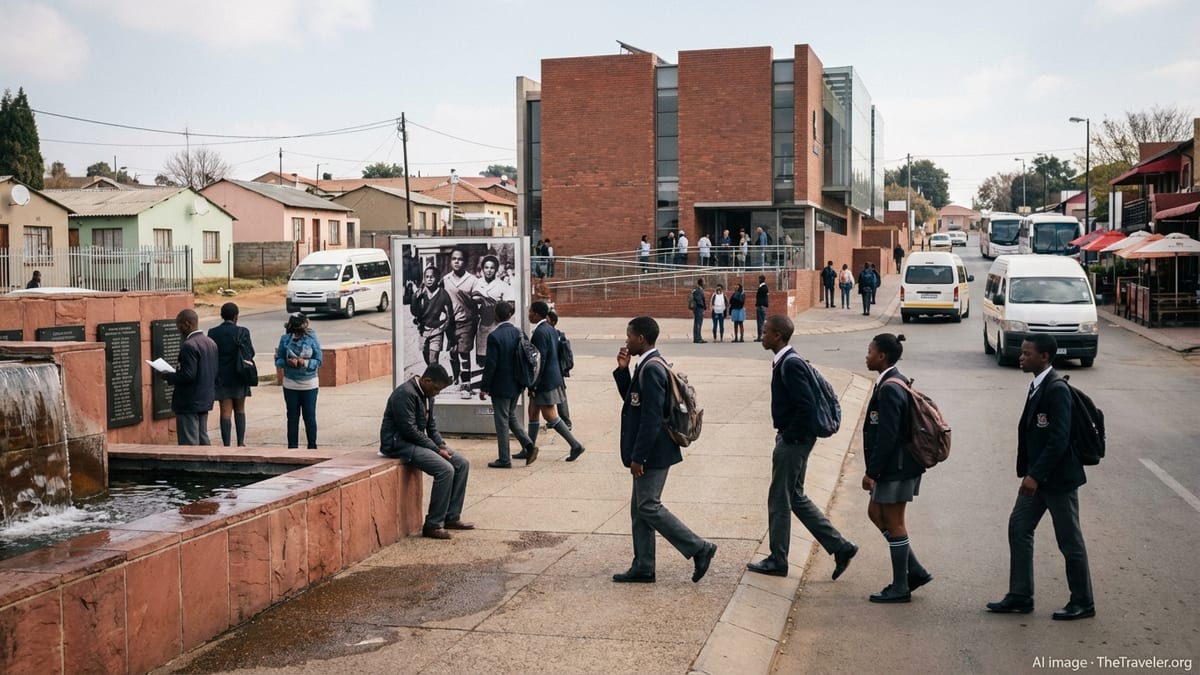
My day in Orlando West started at the Hector Pieterson Memorial, on Khumalo Street, a few blocks from where 12-year-old Hector was shot during the Soweto uprising of 16 June 1976. The memorial sits in an open public square, unfenced and very much part of the surrounding neighborhood. Kids walked past in school uniforms, taxis rattled by, and people cut across the space on their way to work. It did not feel like entering a curated attraction. It felt like stepping into a community’s living memory, with the famous Sam Nzima photograph looming large and the low murmur of visitors reading the engraved names of children who died.
Mandela House, on Vilakazi Street, feels very different the moment you arrive. The street is busy, lined with restaurants, souvenir stalls, and tour buses. The house itself is a modest red-brick “matchbox” home, but it is wrapped in a much more conventional visitor infrastructure: a controlled entrance, a reception area, ticketing desks, and guides managing groups of about 20 people at a time. Inside, the bullet holes in the walls and scorch marks from petrol bombs are still visible, but you are always aware that this is a highly managed heritage site, restructured and restored over the years to handle heavy tourist traffic.
In terms of first impressions, Hector Pieterson hit me harder. The memorial’s openness to the street, the absence of hard barriers, and the way local life flowed through the space made the history feel immediate. Mandela House, despite its authenticity and the weight of Mandela’s personal story, felt more like a museum stop on a well-trodden route. That is not inherently bad, but the emotional tone is more measured and slightly sanitized.
Understanding the History: Uprising vs Biography
Content-wise, the two sites focus on very different narratives. The Hector Pieterson Museum deals head-on with the Soweto uprising of June 1976, the student protest against the forced use of Afrikaans as a medium of instruction, and the brutal state response. Inside the red-brick building, the story unfolds in a series of ramps and interlinked spaces, lined with large photographs, oral testimonies, documents, and video footage. The design deliberately pulls you along the path of that day, from the build-up and organizing, through the first shots, to the chaos and nationwide consequences.
What struck me most was how unflinching the museum is. It does not reduce the uprising to one iconic image. It shows less-famous photographs, contradictory accounts, and even debates among historians and participants about what exactly happened and why. There is a Death Register room that lists the children who died from June 1976 into 1977. Standing there felt heavy in a way I was not prepared for. I had to slow down and sit for several minutes to process it.
Mandela House, by contrast, is about one family’s experience within the broader struggle. You walk through the tiny rooms where Nelson Mandela lived from 1946 to 1962, first with Evelyn Mase and later with Winnie Madikizela-Mandela. The guides point out personal items: the boxing belt gifted to Mandela, his boots, family photographs, and some original furnishings. The walls carry citations, honorary doctorates, and messages of solidarity. The curators have tried to preserve the sense of a lived-in home while adding interpretive panels and a visitor center.
Here, the narrative arc is biographical: a young lawyer, a growing activist, long years in prison, and a global icon of reconciliation. You feel the contrast between the smallness of the house and the scale of Mandela’s eventual influence. But the content is necessarily filtered. Controversial aspects of Winnie Madikizela-Mandela’s politics, for example, are only lightly touched on. The result is still moving, but less raw and less contested than the history on display at Hector Pieterson.
Practicalities: Cost, Hours, Crowds and Logistics
On the practical side, the two visits are very different experiences. The Hector Pieterson Memorial itself is open public space and free to access. The attached museum has posted hours that, when I visited, ran broadly from 10:00 to 17:00 on weekdays and slightly shorter on Sundays. There was no entrance fee on the day I was there, consistent with recent information that it is a publicly funded site designed for free access. I did not have to queue to get in, and at no point did it feel overcrowded, even though there were several school groups moving around.
Mandela House is not free, and the price differentials are noticeable. For international visitors, adult tickets are currently in the range of roughly 180 rand, with reduced rates for children, students with ID, and South African or African Union citizens. Local adults pay significantly less. The house is open daily, typically from late morning to the late afternoon, but it closes on Good Friday, Christmas Day, and some other major holidays. I would not arrive late in the day and assume you will walk in at the last minute. Groups are capped at around 20 people inside the house at a time, which means you may have to wait if several tour buses arrive together.
In terms of location, they are close enough to combine on foot. The Hector Pieterson Museum is in Orlando West, and from there you can walk down towards Vilakazi Street to reach Mandela House, passing some key sites related to the uprising on the way. Many organized Soweto tours follow this exact pattern. I found it manageable on my own, using a rideshare to get in and out of Soweto and walking between the two sites. If you are self-driving, parking near Vilakazi Street can be tight and a bit chaotic; car guards will usually direct you to spaces but I had to be patient and accept that it would not be seamless.
Crowd levels were another point of difference. At Hector Pieterson, even with school groups, I never felt rushed. There was space to stand in front of exhibits for several minutes without blocking anyone. At Mandela House, I sometimes felt pushed along with the group, especially inside the house where the rooms are tiny and the guides are on a timetable. If you are sensitive to crowds or want to stand and read every plaque, this can be frustrating.
Emotional Impact: Which Experience Felt More Powerful?
When I compare the emotional punch of the two visits, the Hector Pieterson Memorial and Museum is the clear winner for me. The combination of the open memorial, the engraved names, the oral histories, and the architectural design that traces the route of the march makes it incredibly immersive. I went in expecting to be affected by “that famous photo.” I left with a visceral sense of a broader tragedy and of the youth who risked everything to challenge a system that treated them as temporary, second-class beings.
There is a moment, as you work your way up the ramps inside the museum, when the large version of the Nzima photograph comes into full view. You have already absorbed the build-up to that shot through documents and testimony. Seeing it at the top of that progression felt almost like walking into the frame. I watched other visitors fall silent or step aside to wipe away tears. It was not a comfortable experience, but it was powerful in the best sense of the word.
Mandela House affected me in a quieter way. Standing in the small, low-ceilinged bedroom where Mandela once slept, with scorch marks still visible outside, I felt the claustrophobia of living under surveillance and threat. The idea that someone so globally revered came home to such a modest place, only to have it attacked with petrol bombs while he was imprisoned, is sobering. Yet, for me, the space has been curated to the point where some of the sharp edges are blunted. The gift shop, the stream of tour groups taking photos, and the buzz of nearby restaurants made it harder to hold on to that feeling for long.
If by “more powerful” we mean “more likely to shake your understanding of South African history and leave you emotionally raw,” then Hector Pieterson takes it. Mandela House, while still moving, operates more at the level of personal empathy and admiration for a single leader. Both matter, but if I had to choose only one site to understand the cost of resistance under apartheid, I would pick Hector Pieterson without hesitation.
Safety, Comfort and Visiting Style
Before I went, I read plenty of warnings about safety in Soweto. In practice, both sites felt reasonably safe during daytime, but I would not trivialize the concern. Soweto does have a higher crime rate than many Johannesburg suburbs, and you feel that you are in a real working township, not a sealed tourist zone. I chose to visit in the late morning and early afternoon, when there were lots of other visitors and school groups around, and I stuck to main roads and well-trodden routes between sites.
At Hector Pieterson, the open square design means there are many paths in and out, and locals use the space as part of their daily commute. That actually reassured me. I never felt isolated, and the presence of families and school kids made the atmosphere feel community-oriented rather than tense. Inside the museum, security staff were visible but not intrusive. Bags were checked at the entrance, which added a small delay but also a layer of reassurance.
Mandela House sits in one of the busiest tourist pockets of Soweto. On Vilakazi Street, I was constantly approached by vendors selling crafts or offering informal “guiding.” It never felt threatening, but it could be tiring if you do not enjoy repeated sales pitches. The positive side is that the street is crowded, policed, and used to foreign visitors, which lowers the perceived risk. I still kept my phone and wallet out of sight when walking, and I would not flash expensive cameras carelessly, but overall I felt more like I was in a tourist district than in a rough neighborhood.
Comfort-wise, Mandela House is more predictable. There are decent toilets, a structured ticketing area, and a more obvious system for managing visitors with mobility challenges, including wheelchair access and staff support. At Hector Pieterson, the museum building is modern and clean, but the experience involves more walking, ramps, and standing in front of exhibits. If you tire easily or have limited mobility, you might want to plan a slower pace or ask staff about the easiest route through the building.
Real Decision Moments: How I Structured the Day
The first big decision I had to make was ordering the visits. Many tours start at Mandela House and end at Hector Pieterson, but I did the opposite, and I am glad I did. Starting at the memorial meant I confronted the brutality and youth-driven nature of the uprising first. By the time I reached Mandela House, I could situate Mandela’s personal story within a broader landscape of resistance. If I had reversed the order, I suspect the emotional climax would have been less intense.
The second decision was whether to join an organized Soweto tour or go independently. Tour companies typically bundle both sites into a half-day or full-day excursion, with transport from central Johannesburg or Sandton. I chose a hybrid approach: I used a rideshare to get to Orlando West, visited Hector Pieterson on my own, then walked and used another rideshare later. That gave me more time to linger and to read the exhibits at my own pace. The downside was that I had to think more about security and navigation, and I occasionally wished I had a local guide to offer context beyond what the panels provided.
The third decision involved how much time to allocate to each place. Many guides suggest spending 45 to 60 minutes at Hector Pieterson and about 30 to 45 minutes at Mandela House. In reality, I spent almost two hours at the memorial and museum and about 45 minutes at Mandela House. I do not regret that imbalance. The Hector Pieterson exhibits are dense and emotionally demanding; rushing them feels like shortchanging the story. Mandela House, although rich in symbolism, is a much smaller physical space and easier to absorb in a shorter time.
If I were planning it again, I would book a knowledgeable local guide only for Hector Pieterson and walk Vilakazi Street and Mandela House on my own later. The uprising narrative benefits more from in-depth explanation and local memory than the relatively straightforward household story of Mandela’s years in the house.
Seasonality, Timings and Value for Money
Seasonally, both sites can be visited year-round, but your experience will change depending on when you go. June 16, Youth Day, is the most charged date to visit the Hector Pieterson Memorial. Commemorative events, school ceremonies, and official speeches often take place there. That can make the site more powerful, but also more crowded and less conducive to quiet reflection. I went in a regular week, outside major holidays, which meant I could move more freely and sit where I wanted without feeling like I was in the way of formal events.
Timing within the day also matters. I arrived at Hector Pieterson just after opening time, when it was still quiet. By late morning, more groups had arrived but it never felt packed. At Mandela House, the midday period was noticeably busier, with tour buses arriving in clusters. If you value calm, I would recommend going to Mandela House either early in the morning or later in the afternoon instead of smack in the middle of the day.
On value for money, the free access to Hector Pieterson’s memorial and the typically low or zero cost of the museum make it a remarkable resource, especially for budget travelers and for South Africans who want to revisit the history without financial barriers. It felt like a public good rather than a commercial attraction. Mandela House is more clearly part of the tourism economy. The ticket price is not outrageous by international standards, but if you are traveling on a tight budget, the cost difference is real, particularly for families.
Would I say the Mandela House ticket is justified? Yes, but with caveats. You are paying for access to a national heritage site, preservation work, and a curated narrative about one of the most important figures of the 20th century. Yet the visit is relatively short and can feel rushed if it is crowded. If you are weighing that expense against another major Johannesburg activity, you may reasonably decide it is not essential unless you have a particular interest in Mandela’s personal life and want to stand physically in his former home.
The Takeaway
If I had to answer the question of which experience is more powerful in a single sentence, I would say: the Hector Pieterson Memorial and Museum is the more transformative visit, while Mandela House is the more iconic but less emotionally disruptive one. At Hector Pieterson, the story of the uprising is told with a clarity and honesty that forced me to rethink how I understood resistance under apartheid. I left drained but grateful that I had gone. It was one of the few museums where I felt the architecture, content, and community context worked together seamlessly.
Mandela House, despite my criticisms, is still worth visiting. There is something undeniably meaningful about standing in that small red-brick house where Nelson and Winnie Mandela navigated the pressures of early family life and political struggle. Seeing the bullet holes and scorch marks in person gives texture that no biography or documentary can fully replicate. The house is also a good way to connect with the more celebratory side of Soweto’s tourism scene: music drifting from nearby restaurants, local guides sharing stories, and the knowledge that Desmond Tutu’s home stands not far away on the same street.
For travelers with limited time who want the single most powerful, historically grounded experience, I would prioritize Hector Pieterson and treat Mandela House as optional. For those deeply interested in Mandela’s personal journey or who feel a strong symbolic pull to “visit his house,” Mandela House will deliver that connection, as long as you accept the crowds and the commercial layer that comes with it.
Ideally, though, you do both. Start at Hector Pieterson, give yourself at least 90 minutes there, and then walk down to Mandela House to complete the picture. One site shows you the price children paid to challenge a system; the other shows you the cramped, vulnerable domestic space from which one of those challengers stepped out into history. Together, they turn a standard Soweto tour into something far more profound than a checklist of must-see stops.
FAQ
Q1: If I only have time for one site, should I choose Hector Pieterson Memorial or Mandela House?
I would choose the Hector Pieterson Memorial and Museum. It provides a deeper, more comprehensive understanding of the Soweto uprising and the human cost of apartheid, and the experience is less crowded and more reflective.
Q2: How much time should I plan for each place?
I would allow at least 90 minutes to two hours for the Hector Pieterson Memorial and Museum, including time to sit and process what you are seeing. For Mandela House, 30 to 45 minutes inside the house itself is usually sufficient, plus extra time to walk along Vilakazi Street.
Q3: Is it safe to visit these sites independently, without an organized tour?
During daylight hours, I felt reasonably safe visiting independently using rideshare services and walking between the sites on main streets. I kept valuables out of sight, avoided side alleys, and stayed where other visitors and locals were around. If you are nervous or unfamiliar with Johannesburg, a guided tour can add peace of mind.
Q4: Do I need to book tickets in advance?
For Hector Pieterson, I did not need any booking, and the memorial and museum operated on a simple walk-in basis. For Mandela House, I also bought my ticket on arrival, but I did have to wait for the next group slot. If you are going at peak times or with a large group, it is wise to check current policies and consider arranging through a tour operator.
Q5: Are there entrance fees for both sites?
The Hector Pieterson Memorial itself is free, and the museum has generally been free or very low cost as a public institution. Mandela House charges an admission fee, with higher prices for international visitors and reduced rates for locals, students, and children. You should plan for a meaningful cost difference between the two.
Q6: Can I visit both in a single morning or afternoon?
Yes. The sites are close enough to combine comfortably in half a day. I spent most of the time at Hector Pieterson, then walked to Mandela House and finished with a meal on Vilakazi Street. Just pay attention to opening hours so you are not rushed at the end of the day.
Q7: Which visit is more suitable for children or teens?
Both can be appropriate, but I would lean towards Hector Pieterson for older children and teens who are ready to engage with difficult history, especially if accompanied by an adult who can help explain. Younger kids might respond better to the more tangible, home-like environment of Mandela House, but some of the content at both sites is emotionally heavy.
Q8: How physically demanding are the visits?
At Hector Pieterson, the museum uses ramps and involves some walking and standing, but it is manageable for most visitors and is generally accessible. Mandela House is a small, single-story home with narrow rooms that can feel cramped when busy, but it also offers reasonable access solutions for visitors with limited mobility. Neither site requires strenuous walking if you plan your transport carefully.
Q9: Is it better to visit with a guide or explore on my own?
I found that having context is crucial at Hector Pieterson, so a knowledgeable guide or at least some pre-reading can add a lot. At Mandela House, the on-site guides already provide a structured narrative. If you are budget-conscious, you could do Hector Pieterson with a guide and then walk Vilakazi Street and Mandela House on your own.
Q10: What would I do differently if I visited again?
Next time, I would schedule even more time at Hector Pieterson, perhaps joining a small, locally led tour focusing exclusively on the uprising, and I would go to Mandela House early in the day to avoid the busiest crowds. I would also plan a quiet break between the two visits to process the emotional weight instead of rushing straight from one site to the other.