

More news on this day
China is entering 2026 with one of the most ambitious tourism offensives in its modern history, combining sweeping visa-free entry, high-profile cultural campaigns and rapidly expanding air links in a bid to position itself as the world’s must-visit destination.
Get the latest news straight to your inbox!
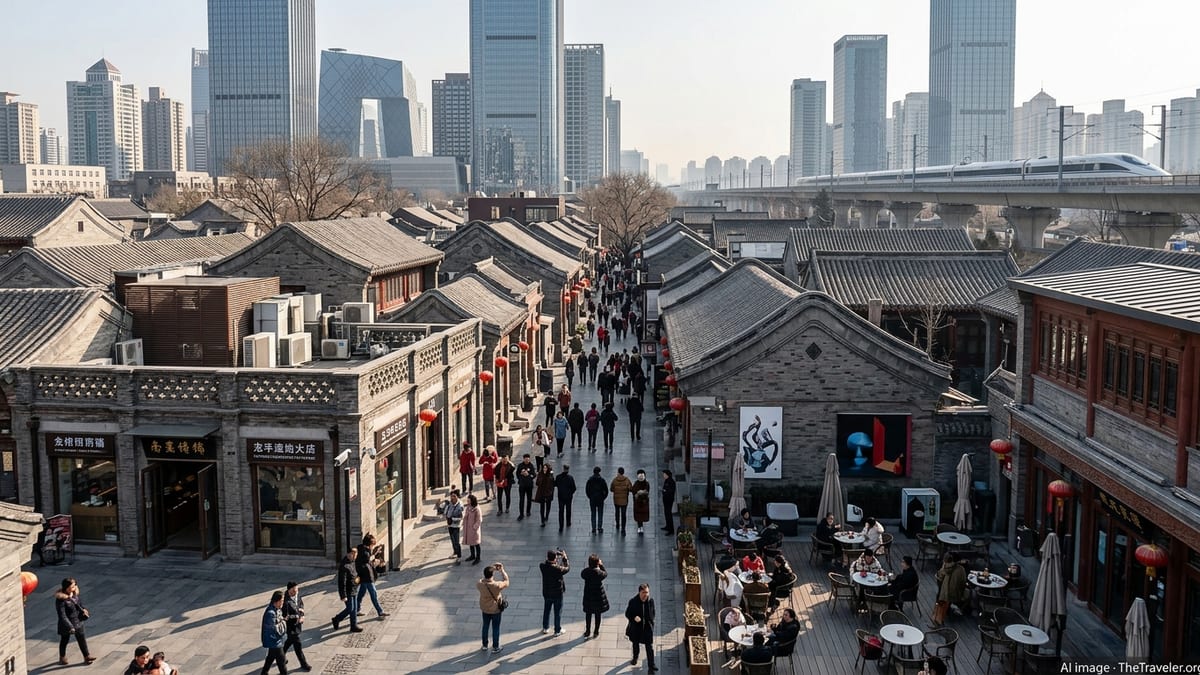
Visa-Free Access Turns Curiosity Into Bookings
Travel access, once one of the biggest obstacles to visiting China, is rapidly being relaxed. Publicly available immigration data and industry analysis indicate that the country has extended and expanded a unilateral visa-free policy through the end of 2026, allowing ordinary passport holders from a growing list of mainly European and Asia-Pacific nations to enter for up to 30 days without securing a visa in advance.
Recent policy updates add major markets such as Canada and the United Kingdom to the roster of eligible countries, pushing the total number of nations benefiting from 30-day visa-free stays to roughly 50, alongside an extended 240-hour visa-free transit scheme covering dozens more. Analysts describe the move as a cornerstone of Beijing’s wider “high-standard opening up” agenda, designed to lower friction for leisure and business travelers alike.
These measures appear to be having a measurable impact. Immigration authorities report sharp growth in the share of visitors arriving visa-free or on transit exemptions, while tourism researchers note that simplified entry is now a deciding factor for many first-time visitors weighing China against competing destinations in Asia and Europe.
The shift also signals a broader recalibration of China’s global image, recasting the country from a once notoriously paperwork-heavy destination into one of the more accessible big-ticket markets for international tourism in 2026.
‘Nihao China’ and a New Wave of Cultural Storytelling
Alongside easier entry, China is investing heavily in how it presents itself to the world. A flagship branding effort, commonly promoted under the slogan “Nihao China,” has been deployed through overseas roadshows, cultural festivals and multimedia campaigns that spotlight Chinese heritage, contemporary cities and lesser-known regions.
Events tied to the campaign range from winter tourism showcases in Harbin to World Cultural Heritage promotion seasons backed by cultural institutions and tourism alliances. These initiatives feature curated video series, photo exhibitions and destination showcases aimed at reshaping perceptions of what a trip to China can include, from imperial-era sites and Buddhist grottoes to cutting-edge art districts and high-speed rail journeys between emerging city-break destinations.
Industry observers say this emphasis on cultural storytelling is a strategic response to shifting traveler expectations. International visitors are increasingly seeking deeper, immersive experiences over checklist sightseeing, and the new Chinese campaigns place food, festivals, local crafts and living traditions at the center of the pitch.
The result is a more layered narrative that encourages travelers to see China not only as a country of mega-cities and iconic landmarks, but as a mosaic of regional identities ready to be explored on multi-stop itineraries.
Surging Arrivals and a Reconfigured Domestic Tourism Map
Tourism data released over the past two years shows a brisk rebound in both domestic and inbound travel. Official statistics for 2024 highlight more than 130 million inbound visits, with major gateways such as Beijing and Shanghai regaining their roles as primary entry points for foreign visitors and recording several million international arrivals each.
At the same time, a new geography of tourism is taking shape within China itself. Former industrial hubs and lesser-known provincial cities are repositioning as budget-friendly destinations, investing in heritage districts, museums and cultural parks to lure travelers looking beyond the traditional Beijing–Xi’an–Shanghai circuit. Cities such as Datong in northern China, once synonymous with coal, now report visitor numbers in the tens of millions after repackaging historic quarters and nearby cultural sites.
This “frugal tourism” trend aligns with changing consumer behavior. Both Chinese and foreign visitors are combining high-speed rail, affordable regional flights and competitively priced accommodation to string together itineraries that mix marquee attractions with second-tier cities offering lower costs and fewer crowds.
For international tourists, the effect is a more diverse menu of options in 2026, from classic routes along the Great Wall and the Yangtze to themed journeys through ancient grottoes, ceramic towns or wine regions, all backed by improving transport and digital booking infrastructure.
Air Connectivity and Digital Platforms Power the Rebound
China’s tourism push is closely tied to the recovery and redirection of its aviation network. Airline schedules and airport statistics point to multi-million-passenger throughput at major hubs, with carriers steadily restoring long-haul routes to Europe, the Middle East and Oceania while adding capacity to fast-growing markets in Southeast Asia.
Transit-friendly policies, including extended visa-free layovers at dozens of ports of entry, are being used to position Chinese mega-hubs as stopover gateways between the Americas, Europe and the rest of Asia. For travelers, that increasingly means the option to build a multi-day side trip in Shanghai, Guangzhou or Chengdu into longer itineraries without the cost or bureaucracy of a traditional visa.
Digital travel platforms are amplifying these trends. Large China-based online agencies have entered partnership agreements with cultural organizations to distribute promotional content, bundle flights and attractions, and push dynamic pricing for hotel and rail packages. This ecosystem makes it easier for international travelers to book complex, multi-city trips that would once have required specialist tour operators.
Travel analysts note that by 2026, China’s aviation and booking infrastructure is functioning not only as a domestic backbone, but as a competitive regional hub system that can draw in visitors who might otherwise connect through rival airports in Northeast or Southeast Asia.
What Makes China 2026 Stand Out Globally
The cumulative effect of these developments is that China enters 2026 with a tourism offer that is markedly different from the pre-pandemic era. Easier entry, more targeted branding and a broader spread of destinations mean that itineraries can be tailored to first-timers, repeat visitors and niche interest groups with far greater flexibility than before.
Comparative travel research shows that while many countries are competing for a similar pool of long-haul travelers, relatively few combine China’s scale of cultural heritage, ultra-modern infrastructure and aggressive liberalization of short-stay visa rules. For tour operators and airlines, this makes China an increasingly central pillar of Asia-focused programming for the next travel cycle.
There are challenges: global economic headwinds, diplomatic frictions with some neighbors and concerns about overdevelopment in sensitive cultural zones all shape how growth will play out. Yet the trajectory of recent policy moves and traffic numbers suggests that China is intent on recapturing, and potentially surpassing, its pre-2020 position in the global tourism rankings.
For travelers planning 2026 and beyond, the message from these shifts is clear. Whether drawn by world-famous heritage sites, evolving food scenes, snow festivals or industrial towns reimagined as cultural playgrounds, China is positioning itself not merely as open again, but as one of the most assertive and accessible major destinations on the global tourism map.