

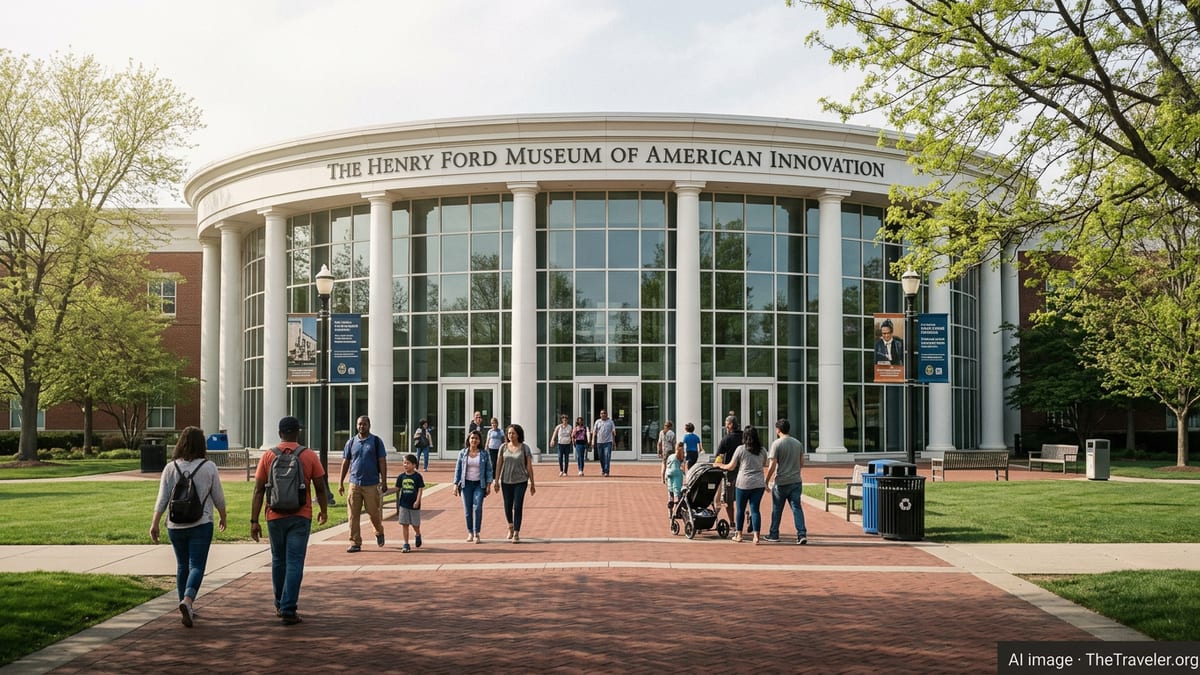
The Henry Ford Museum of American Innovation in Dearborn, Michigan is one of the country’s heavyweight museums, pairing landmark artifacts like the Rosa Parks bus and presidential limousines with the open air Greenfield Village and the Ford Rouge Factory Tour. Because the campus is large and tickets are not cheap, a little advance planning around prices, hours, and timing can make a big difference to both your budget and your experience.
Where You’re Going: The Henry Ford Campus in a Nutshell
When people say they are “going to the Henry Ford,” they are usually talking about a whole complex of attractions in Dearborn rather than a single building. At the heart of it is the Henry Ford Museum of American Innovation, an indoor museum open year round that focuses on transportation, design, industry, and social history, from massive steam locomotives to the actual Montgomery city bus where Rosa Parks refused to give up her seat.
Next door is Greenfield Village, a 90 plus acre outdoor history museum with relocated historic buildings, working farms, steam trains and Model T rides. It operates seasonally, typically from mid April through late fall, and feels more like a small town than a traditional museum. On a summer Saturday, for example, you might watch a period baseball game on the Greenfield Village Green, then step into the Wright brothers’ bicycle shop or Edison’s Menlo Park complex.
The third major piece is the Ford Rouge Factory Tour, which takes visitors into a modern Ford truck assembly plant. Timed tour buses depart from the museum and deliver you to the Rouge complex, where you can look out over the famous “living roof,” walk through multi media exhibits and watch F 150s rolling off the line on weekdays when production is running.
Because each component has its own ticket pricing and somewhat different operating schedule, it is worth thinking ahead about which parts you want to see. A family driving in from Chicago for one day in July, for instance, might prioritize a museum plus Greenfield Village combo ticket, while a local Detroit area resident might choose a museum only evening visit on a quiet winter weekday.
Current Ticket Prices and What They Include
The Henry Ford uses dynamic, seasonal pricing, but its public online chart gives a solid reference point for 2026 visits. As of early 2026, standard advance purchase tickets bought online list general admission to the Henry Ford Museum of American Innovation around 34 dollars for adults ages 12 to 61, about 30.50 dollars for seniors 62 and up, and roughly 25.50 dollars for youth ages 5 to 11. Children 4 and under are admitted free with a paying adult, which matters for families traveling with toddlers or preschoolers.
Greenfield Village is priced slightly higher than the indoor museum. Expect online general admission around 37 dollars for adults, 33.25 dollars for seniors and 27.75 dollars for youth. That reflects the added cost of operating trains, historic rides, farms, and staffed historic homes spread across the village. The Ford Rouge Factory Tour is listed at about 24 dollars for general adult admission, 21.50 dollars for seniors and 18 dollars for youth, with a small discount for members on that particular ticket.
On top of the main attractions, the Giant Screen Experience inside the museum sells separate film tickets, commonly around 10 dollars for general admission, 9 dollars for seniors and 7.50 dollars for youth, with an upcharge for 3D films. It can be a worthwhile add on if your group needs an hour off their feet, but it is not required for enjoying the museum itself, so budget conscious visitors often skip it.
Keep in mind that these prices are for online advance purchase and are explicitly labeled as discounted. The Henry Ford notes that there is an additional per ticket charge if you buy onsite at the ticket counters, so someone walking up on a busy July afternoon can expect to pay a few dollars more per person than a traveler who locked in tickets online the week before.
Discounts, Parking, and Membership: How to Save
For many visitors, the 30 plus dollar per person base price raises the question of discounts. The Henry Ford participates in several well established programs. Active U.S. military personnel, for example, receive free admission year round to either the Henry Ford Museum of American Innovation or Greenfield Village when they present valid ID onsite, a valuable perk if you are planning a summer trip while stationed in the Midwest.
The institution also participates in the national Museums for All initiative. SNAP, EBT and WIC cardholders can present their card at the ticketing counters to purchase significantly discounted admission, currently advertised at 3 dollars per person per venue for themselves and up to four guests. For a Detroit area family of five using an EBT card, that means an entire day at Greenfield Village or the museum could cost about the price of a single full fare ticket, and the museum waives parking fees for these discounted visits as part of the program.
Parking is an important line item. For regular online ticket buyers, the Henry Ford automatically adds a flat parking charge of about 9 dollars per order at checkout, regardless of how many people are in the car. A couple driving in from Toledo might see that as a modest surcharge, while a group of six friends sharing a minivan would effectively spread that fee across six tickets, making it negligible per person. Members and visitors coming only for the Giant Screen Experience are currently exempt from the parking charge.
If you think you might visit more than once in a year, it is worth running the numbers on membership. Entry to the Henry Ford Museum, Greenfield Village and the Giant Screen Experience is included for members, who also receive discounted Rouge Factory Tour tickets and event pre sales. For example, a local family of four planning a spring museum day, a summer Greenfield Village day and an autumn special event night could easily cross the break even point where an annual membership pays for itself compared to buying three separate sets of day tickets.
Hours of Operation and Seasonal Patterns
The Henry Ford Museum of American Innovation is the most predictable part of the complex. Recent schedules show the museum open daily from 9:30 a.m. to 5:00 p.m., with closures on Thanksgiving Day and Christmas Day. That means a traveler flying into Detroit on a Monday in February can reliably count on the museum being open, even if the outdoor elements of the campus are closed for winter.
Greenfield Village operates on a more traditional seasonal schedule. Typically it opens in mid April and runs through late October or early November, with extended hours or special evenings for events like summer car shows and Halloween programming. In high summer, the village often stays open later than 5:00 p.m., sometimes until 5:30 or 6:00 p.m., which allows for golden hour strolls past the farms and historic homes. In October, by contrast, regular daytime hours can be shorter, and the village may shift to limited days such as Friday through Sunday during late fall.
The Ford Rouge Factory Tour is tied to the production schedule at the Dearborn Truck Plant. The visitor center and exhibits generally operate during daytime hours, but the most compelling part of the experience is seeing actual assembly work on the line. On some holidays, weekends, or plant downtime days, the line may not be running, so visitors booking specifically for the tour should check the current calendar before locking in dates. A family that arrives expecting moving conveyor belts on a Sunday afternoon in January, for example, might instead find only the static exhibits in operation.
Because the Henry Ford periodically adjusts operating hours for special events, maintenance, or weather, it is smart to confirm your specific dates closer to travel. Looking at recent calendars, though, a pattern emerges. Winter and early spring are ideal for quieter museum days. Late spring and summer provide the fullest experience across museum, village and factory tour, but also draw more tour groups and families, particularly on weekends and school holidays.
Buying Tickets: Online vs Onsite and Timing Strategies
The Henry Ford strongly encourages visitors to buy tickets online in advance, and for most travelers this is the smarter move. Online prices are explicitly discounted compared with walk up rates, and certain experiences such as the Rouge Factory Tour and popular holiday events can sell out. Someone planning a Saturday visit in late June, for example, is far less likely to be disappointed by sold out time slots if they purchase their museum plus Rouge tickets a week beforehand.
When you buy online, expect a 3 dollar per order service fee in addition to the 9 dollar parking charge, along with applicable taxes. The system allows you to select dates and, where required, timed entries. It also offers optional ticket protection through a third party service that lets you recoup some costs if illness or unforeseen circumstances force you to cancel. A family driving from Indianapolis in winter might decide that this small extra cost is worthwhile during flu season.
Buying onsite remains an option, particularly on low demand days such as a midweek morning in January or early March. Walk up visitors should budget a bit of extra time for ticketing lines and understand they will pay slightly more per person than the posted online rates. On busier days, the museum’s main entrance can see significant queues around 10:30 a.m. when school field trip buses unload, so a traveler who absolutely must buy onsite will have the smoothest experience if they arrive right at opening.
If your schedule allows flexibility, consider checking a few different midweek dates when looking at tickets. While prices at the Henry Ford do not fluctuate as wildly as some theme parks, there can be subtle seasonal price changes, and certain special event periods like holiday nights or summer weekends may carry higher demand. Booking a Tuesday instead of a Saturday in August, for example, can make both parking and exhibits noticeably quieter.
How Much Time You Really Need: Sample Itineraries
The Henry Ford Museum of American Innovation alone is easily a four to six hour visit for a first timer, especially if you like to read exhibit labels and take photographs. Many travelers underestimate the size of the exhibition halls. An auto enthusiast might spend an entire afternoon just in the automobile and railroad sections, moving from an early Model T to the streamlined locomotives, while a social history fan dives into the With Liberty and Justice for All gallery that houses the Rosa Parks bus.
Greenfield Village is both smaller and more spread out, and it rewards slower exploration. You can technically walk the main loop of the village in an hour and a half if you move briskly and only peek into buildings. Visitors who ride the historic railroad circle around the perimeter, take a spin in a chauffeured Model T, and pause for demonstrations in the farm district or Thomas Edison’s complex should think in terms of four to five hours, particularly with kids who will want to linger at the working carousel or watch the glassblower.
Trying to “do it all” in one day is possible but intense. A common strategy for ambitious visitors is to arrive at museum opening, spend three to four focused hours indoors, then walk or ride over to Greenfield Village for a late afternoon stroll, prioritizing a few key buildings such as the Wright Cycle Shop, the Logan County Courthouse where Abraham Lincoln practiced law, and Henry Ford’s childhood home. For many travelers, however, separating the museum and village across two days leads to a more relaxed and memorable visit.
If you have only one full day and want the broadest overview, consider skipping the Rouge Factory Tour on that trip and focusing on the museum plus a shorter late day visit to Greenfield Village. Visitors with two or more days might devote one day to the museum and factory tour, then a second full day to the village, especially during pleasant weather seasons like late May or early October.
Best Times to Visit and Crowd Management Tips
Crowd levels at the Henry Ford fluctuate with school calendars, weather, and special events. On school year weekdays, the museum can feel relatively quiet at opening and in the late afternoon, but see a heavy wave of field trip groups from roughly 10:30 a.m. to 1:00 p.m. That matters if you prefer to view the Rosa Parks bus or presidential limousines without large student groups nearby. One strategy is to start your visit in the galleries farthest from the main entrance right at opening, then circle back to the high profile artifacts after lunchtime once many school buses have departed.
Summer weekends are naturally busier, especially when Greenfield Village is running popular programming. A Saturday in late June with fine weather, for instance, can bring out local families, tourists and bus tours all at once. Booking your visit on a weekday during that same week, or at least planning to arrive at 9:30 a.m. sharp, can dramatically improve your experience. You might start with two to three hours in the museum while outdoor temperatures rise, then head into Greenfield Village after lunch when the grounds feel livelier but you have already checked must see indoor exhibits off your list.
Special events attract their own patterns. The village’s Halloween nights in October often sell separate evening tickets and can reach capacity. Savvy visitors sometimes buy a daytime Greenfield Village ticket for a Sunday earlier in the month to enjoy the historic homes and fall color without the crowds, then return for the evening event another night. Similarly, automotive enthusiasts may time visits to coincide with Motor Muster or the Old Car Festival, accepting larger crowds in exchange for once a year lineups of historic vehicles operating throughout the village streets.
Weather is another factor, especially for those considering Greenfield Village. Detroit area springs can be chilly and damp, which makes good rain gear and layers essential if you book an April or early May visit. In the height of summer, afternoon thunderstorms are fairly common, so many travelers find that starting in the village in the morning, then moving indoors to the museum when storms roll through, is the most flexible way to spend the day.
Practical Planning: Food, Accessibility, and Families
Food options across the Henry Ford complex are better than many travelers expect, but they are priced in line with large attractions. Inside the museum, you will find cafeteria style service with sandwiches, salads and hot entrees suitable for a quick lunch. In Greenfield Village, several period themed eateries serve regional fare. A family might grab fried chicken and sides at a village restaurant housed in a historic building, then pick up ice cream or kettle corn from smaller stands later in the day.
Guests with dietary restrictions should plan ahead. The Henry Ford provides general information about ingredients and can often accommodate common needs like vegetarian or gluten conscious choices, but menus are somewhat limited compared with a major downtown restaurant district. Travelers with severe allergies or very specific requirements often eat a substantial breakfast before arrival and then supplement onsite snacks with items brought from home, keeping in mind any posted policies on outside food and beverages.
From an accessibility standpoint, the main museum building is modern, climate controlled, and equipped with elevators, ramps and ample seating, which makes it a comfortable option in any season for visitors with mobility challenges. Greenfield Village, by contrast, includes gravel paths, brick walkways and historic thresholds. Wheelchairs and mobility scooters are available for rent in limited numbers, and the historic train and Model T rides have specific boarding procedures that staff are accustomed to explaining and assisting with. Visitors traveling with older parents or those recovering from injury often split days so that the most physically demanding parts of the visit fall on cooler days or shorter time blocks.
For families with young children, a realistic schedule is key. A common pattern is to arrive for opening, spend about two hours in the museum while kids are fresh and curious, break for an early lunch, then ride the train or carousel in Greenfield Village before an afternoon nap back at the hotel. Parents sometimes plan a second, shorter visit the next morning rather than forcing one very long day. Compared with attempting to power through twelve hours across the campus, this split approach usually leaves both kids and adults with better memories of the trip.
The Takeaway
A visit to the Henry Ford Museum of American Innovation, Greenfield Village and the Ford Rouge Factory Tour is less like a quick museum stop and more like a small scale destination trip. With adult ticket prices in the mid 30 dollar range for the museum and high 30 dollar range for Greenfield Village, plus parking and optional add ons, the costs can add up quickly, especially for families and groups.
Planning ahead, however, can keep the experience both manageable and rewarding. Buying tickets online at the current discounted rates, taking advantage of relevant discounts such as military or Museums for All, and thinking realistically about how much you can see in a day will help you get the most value from your visit. Choosing your season, checking hours for the village and factory tour, and sketching a loose itinerary that builds in time for meals and rest will keep your trip enjoyable rather than exhausting.
Whether you are a car enthusiast tracing the evolution from the Model T to modern trucks, a history buff drawn to landmark civil rights artifacts, or a family looking for an immersive American history experience, the Henry Ford complex in Dearborn rewards those who come prepared. A bit of work before you leave home will let you spend your time on site discovering stories, stepping into historic spaces, and watching innovation in action instead of worrying about logistics.
FAQ
Q1. How much do Henry Ford Museum tickets cost right now?
As of early 2026, online general admission is typically listed around 34 dollars for adults, about 30.50 dollars for seniors and roughly 25.50 dollars for youth ages 5 to 11, with children 4 and under free. Prices can change, so use these as ballpark figures and confirm current rates before you book.
Q2. Is Greenfield Village included with a Henry Ford Museum ticket?
No, Greenfield Village is a separate venue with its own ticket. You can buy museum only, village only, or combination tickets when available. A museum ticket alone will not admit you to Greenfield Village, so make sure you select the option that matches your plans.
Q3. What are the typical hours for the Henry Ford Museum?
The Henry Ford Museum of American Innovation generally operates daily from 9:30 a.m. to 5:00 p.m., year round, except on major holidays such as Thanksgiving Day and Christmas Day. Hours for special events or rare closures can vary, so double check your specific dates before traveling.
Q4. When is Greenfield Village open?
Greenfield Village follows a seasonal schedule, normally opening in mid spring and running through late fall. Summer days usually offer the longest hours, sometimes until 5:30 or 6:00 p.m., while late season dates may be limited to certain days of the week. Winter months are typically closed for regular daytime village operations.
Q5. How much is parking at the Henry Ford?
For most standard online ticket purchases, a flat parking fee of about 9 dollars per order is added during checkout. That covers a single vehicle regardless of how many people are inside. Members and Giant Screen Experience only visitors are usually not charged this parking fee, and it is also waived for guests using Museums for All discounted admission.
Q6. Are there discounts available on tickets?
Yes. Active U.S. military personnel receive free admission to either the Henry Ford Museum or Greenfield Village with valid ID. Through Museums for All, SNAP, EBT and WIC cardholders can buy significantly discounted 3 dollar admission per person per venue for themselves and up to four guests, with parking fees waived. Group rates, memberships and occasional promotions can also reduce overall costs.
Q7. Can I see the museum and Greenfield Village in one day?
It is possible but busy. Many visitors who want a thorough experience in both venues prefer to spread their visit over two days. If you have only one day, plan to arrive right at opening, spend the morning in the museum and then choose a few priority areas in Greenfield Village for the afternoon, rather than trying to see every building.
Q8. Do I need to buy Henry Ford tickets in advance?
Advance online purchase is strongly recommended. Online prices are generally lower than walk up rates, and timed experiences such as the Ford Rouge Factory Tour and popular seasonal events can sell out. Buying ahead also saves time at arrival, particularly on weekends and during school vacation periods.
Q9. Is the Ford Rouge Factory Tour worth it?
For visitors interested in modern manufacturing, trucks or industrial design, the Rouge Factory Tour is a highlight because it lets you watch current F 150 production from elevated walkways. If your primary interest is historic artifacts or you have only a single day, you may decide to focus on the museum and Greenfield Village instead, but many travelers who add the tour rate it as a memorable part of their trip.
Q10. What is the best time of year to visit the Henry Ford?
If you want the full experience including Greenfield Village, late spring through early fall offers the most attractions and programs. For quieter museum days with smaller crowds, winter and early spring weekdays are ideal, especially if you are mainly interested in indoor exhibits. Ultimately the best time depends on your priorities, tolerance for weather, and whether you prefer lively events or more peaceful galleries.