

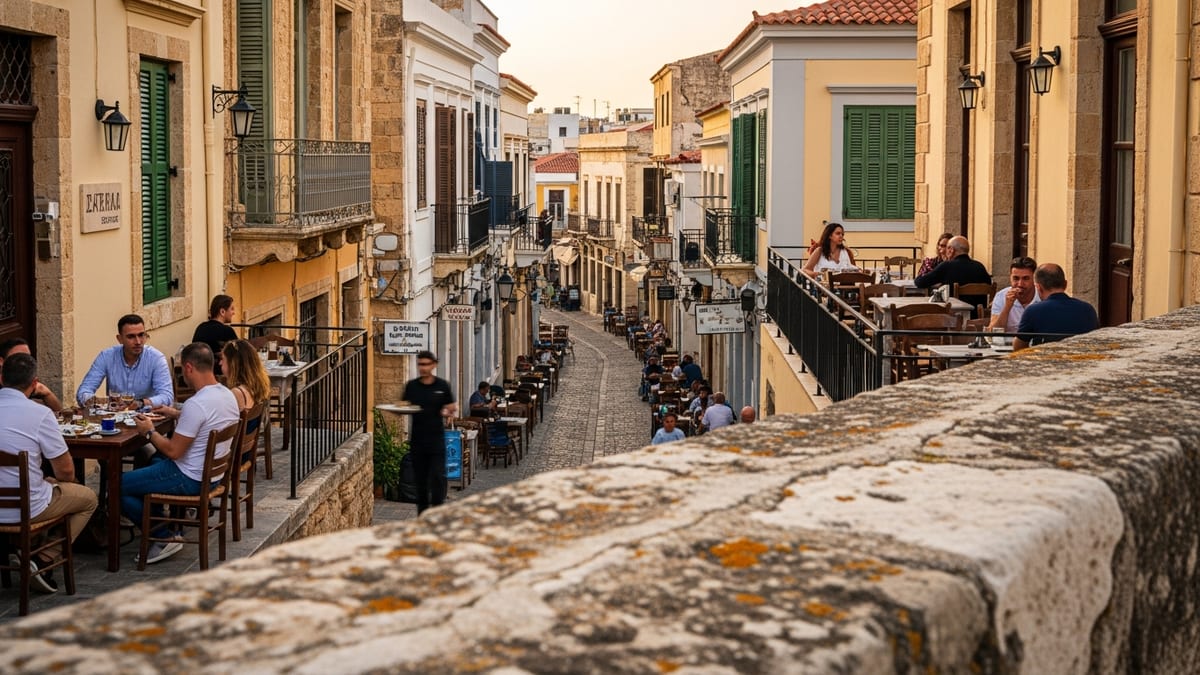
Heraklion, Crete’s lively capital, is the kind of place that grows on you slowly. At first glance it looks like a modern working city, but give it a day and its layers begin to unfold: Bronze Age palaces, Venetian fortifications, excellent museums, café terraces crowded late into the night, and a working harbor where ferries come and go across the Aegean.
This guide brings together the latest practical information and insider insight to help you decide what to see, what to skip, and what you should know before you land in Heraklion.
Getting Oriented in Heraklion
Heraklion sits roughly in the center of Crete’s north coast and functions as the island’s primary gateway, with both the main international airport and one of Greece’s busiest ferry ports. The modern city fans out behind the harbor, wrapped in massive Venetian walls that still define the old center. Most visitors stay either in and around the historic core near Eleftherias Square and Liontaria (Lion Square), or along the coastal strip running west toward Ammoudara beach. The compact center is very walkable, and you can cross much of it on foot in 20 to 30 minutes.
The airport is only about 4 to 5 kilometers from the city center, which keeps transfer times short. Public bus line 1 connects the terminal with central Heraklion and the port roughly every 10 to 15 minutes from early morning to around midnight, taking about 15 to 20 minutes depending on traffic. Tickets are inexpensive and cheaper if you buy from a kiosk or machine rather than on board. There is no metro or rail service, so your alternatives are taxis, pre-booked transfers and rental cars. Taxis cluster outside arrivals and usually charge a fixed or near-fixed rate into town, while car rental desks are prominent at the airport for those planning to explore the island independently.
The port lies at the foot of the old town, a short walk from many hotels. Long-distance KTEL buses to other parts of Crete depart from the main bus station just west of the harbor, and local city buses radiate out from stops around the center. Heraklion’s core is dense and sometimes traffic-clogged, so you may prefer to rely on walking, buses and occasional taxis while in town, renting a car only for the days you plan to venture further afield.
Top Sights You Should Not Miss
Any visit to Heraklion is inevitably shaped around the intertwined stories of Minoan Crete and Venetian power in the eastern Mediterranean. The single most important archaeological site is the Palace of Knossos, about 5 kilometers south of the city center. Widely regarded as the heart of Europe’s earliest advanced civilization, Knossos offers a maze of restored halls and courtyards associated with the myths of King Minos and the Minotaur. As of the latest pricing reforms that took effect in April 2025, full admission at Knossos is 20 euros, reflecting its status among Greece’s most visited sites. Expect crowds in peak season and try to visit early in the morning or late afternoon for a more atmospheric experience.
Complementing Knossos is the Archaeological Museum of Heraklion, which houses the world’s premier collection of Minoan artifacts. From the delicate gold jewelry and colorful fresco fragments to the famous Phaistos Disc and bull-leaping scenes, the museum puts flesh on the bones of the ruins you see at Knossos and other sites. Recent changes in the Greek heritage framework give the museum autonomy over its pricing, and winter 2025 to 2026 opening hours run roughly from mid-morning to mid-afternoon, with extended hours in summer. Published winter prices currently list full tickets at 20 euros with reduced rates available, though independent reporting in 2025 suggests seasonal variations around 12 to 15 euros depending on the period. Check on arrival for the exact rate and opening times during your stay.
Down by the water, the 16th-century Koules Fortress watches over the harbor entrance, its thick stone walls a reminder of the Venetian period when Heraklion, then called Candia, was a linchpin of maritime trade and defense routes. A walk along the pier to the fortress is one of the city’s simple pleasures, especially around sunset. Within the old town, Venetian loggias, Ottoman fountains and Neoclassical facades surround bustling squares. The Church of Agios Titos, Morosini Fountain with its stone lions, and the pedestrianized streets radiating around Liontaria reward slow wandering and a few strategic coffee stops.
Experiencing Local Life: Food, Culture and Neighborhoods
Heraklion will surprise first-time visitors with how “real” it feels compared with more overtly touristy Greek island towns. This is a working city and university hub, and much of the best food and nightlife is aimed at locals as much as visitors. Cretan cuisine is famously rooted in fresh vegetables, wild greens, olive oil and seasonal ingredients, and Heraklion’s tavernas and meze bars showcase that tradition. In and around the center you will find everything from simple grill houses serving souvlaki and gyros, to contemporary bistros reinterpreting local recipes.
Look for dishes like dakos barley rusk salads piled with tomatoes and mizithra cheese, slow-braised lamb with artichokes, snails cooked with rosemary, and a wide range of wild greens sautéed with olive oil and lemon. House wine is common and generally good value, while Cretan raki (tsikoudia) appears as both aperitif and digestif, often on the house. Lunch is unhurried and often starts later than in northern Europe, and dinner can stretch well into the night, especially on weekends, when tables spill out onto pavements.
For a sense of everyday life, walk through the central market streets and side alleys between 1866 Street and Kornarou Square, where butchers, fishmongers and grocers mingle with pastry shops, kafeneia and small boutiques. Neighborhoods west of the center, on the way to Ammoudara, blend residential streets with casual eateries and bakeries, while the area around Lion Square and the old city walls is livelier and more geared to students and young locals. Cafés are central to social life; you will see people lingering over a single coffee for an hour, chatting or playing backgammon, an easy way to tune into the city’s rhythm.
Beaches, Day Trips and the Best Time to Visit
Heraklion itself is not a traditional beach town, but it is a practical base for exploring the north coast and inland Crete. Ammoudara, a long sandy strand west of the city, is the closest classic beach resort with sunbeds, water sports and a wide choice of hotels. Frequent local buses connect Heraklion to Ammoudara in under 20 minutes. Further east, resorts such as Hersonissos, Stalis and Malia are reachable by KTEL buses from the central station and appeal to visitors who want a stronger holiday-resort atmosphere while making day trips into Heraklion for culture and dining.
Day trips from Heraklion include some of Crete’s most evocative historical and natural sites. In addition to Knossos, many travelers visit other Minoan palaces such as Phaistos and Malia, Roman and early Christian remains at Gortyn, or dramatic southern coast spots like Matala, with its caves carved into the cliffs above the beach. Entrance fees at many of these archaeological sites were revised upward in 2025 as part of a national ticketing policy that standardizes prices based on visitor numbers, so you will currently see tiers around 5, 10, 15 or 20 euros depending on the site and category.
Season matters enormously in how you experience Heraklion. June through early September is hot, bright and busy, with daytime temperatures commonly in the high 20s to mid-30s Celsius and high demand for accommodation and car rental. Spring (April and May) and autumn (late September and October) often provide a sweet spot, with warm weather, swimmable seas and fewer crowds at Knossos and other attractions. Winter is mild by northern standards, with some businesses in coastal resorts closing, but Heraklion itself remains lively as a year-round city. Many museums and sites operate shorter hours in winter, so plan your sightseeing windows carefully.
Practicalities: Money, Transport and Accommodation
Heraklion uses the euro, and card payments are widely accepted in hotels, restaurants, supermarkets and larger shops. Small, family-run tavernas and kiosks may still prefer cash, and it is sensible to keep some on hand for bus tickets, bakery runs and tips. Prices have risen in recent seasons, particularly for car rentals, fuel and entry to major archaeological sites, so budgeting a little extra for activities and transport is prudent. That said, everyday costs like local buses, simple meals and coffee remain relatively good value by broader European standards.
For getting around, the local city buses cover the airport, port, university, suburbs and nearby beaches. Tickets are zoned and cheaper if purchased from kiosks or machines before boarding, with a surcharge if bought on board. The main intercity KTEL station near the port is your starting point for trips to Rethymno, Chania, Agios Nikolaos and resort towns along the north coast. Timetables are generally reliable but can be affected by traffic and seasonal demand. Taxis are regulated and metered; always confirm that the meter is on when you set off, and do not be surprised if short journeys in city traffic feel disproportionately priced compared with long-distance buses.
Heraklion offers a range of accommodation from business-style chain hotels to boutique guesthouses tucked into restored Venetian buildings. The old town area near Lion Square and the Morosini Fountain is practical for first-time visitors, keeping you within easy walking distance of main sights, harbor and airport bus stops. Families and beach-oriented travelers often choose to stay in Ammoudara or along the coastal strip and visit the center by bus or taxi. As with much of Greece, prices spike in late June, July and August. Booking well ahead is wise if you are traveling in school holidays, especially if you want specific room types or sea views.
Staying Safe and Navigating Current Conditions
Overall, Heraklion and Crete remain very safe for visitors. Violent crime is rare, and the main risks are petty theft in crowded areas, road accidents and overexposure to sun and heat. As in any city, keep phones and wallets secure, avoid leaving bags unattended in cafés or on the beach, and use hotel safes for passports and excess cash where available. Tap water in Heraklion is generally potable, but many locals still prefer bottled, largely for taste. Pharmacies are well stocked, and English is widely spoken in tourist-facing services, easing access to help if you need it.
Two environmental realities have featured in recent headlines: wildfires in parts of Crete and seismic activity in the wider Aegean. In summer 2025, wildfires along sections of the southern coast prompted evacuations from some villages and hotels, though national foreign offices did not advise against travel to Crete more broadly. In May and July 2025, significant offshore earthquakes near Crete led to precautionary tsunami alerts and temporary instructions for people in coastal areas to move away from the shoreline. While damage was limited and no major injuries reported, these events underline that Crete sits in a seismically active and increasingly climate-stressed region.
For travelers, the practical takeaway is to stay informed rather than alarmed. Upon arrival, note your hotel’s emergency instructions and exits, and familiarize yourself briefly with what to do in an earthquake: drop, cover and hold on indoors, and move away from buildings and overhead hazards if outside. After any strong tremor, authorities may advise people near the shore to move to higher ground until the risk passes. During periods of high wildfire risk, local services may restrict access to certain hiking areas and issue alerts about strong winds or active fires. Keeping your phone capable of receiving local emergency messages and following instructions from authorities is the best safeguard.
Responsible Travel and Local Etiquette
Heraklion is a modern city but also a place where traditions and community bonds run deep. A few simple gestures of respect go a long way. Dress is casual in town and at the beach, but modest clothing that covers shoulders and knees is expected when visiting churches and monasteries. In villages and residential districts, extremely revealing swimwear away from the beach can feel out of place. Greeks commonly greet with a friendly “kalimera” in the morning and “kalispera” in the evening; using these basic words, along with “efharisto” for thank you, is always appreciated.
When it comes to tipping, service charges are not usually included in restaurant bills, and it is customary to leave a few euros or round up by 5 to 10 percent in sit-down meals if service was good. In cafés and bars, leaving small change is fine. Haggling is not a major feature of everyday shopping, though some flexibility may exist in markets or when buying higher-value items like handmade jewelry or art. Photography is widely tolerated in public areas, but ask before photographing people, especially the elderly or in religious settings.
As tourism grows, sustainable choices matter. Opting for locally owned accommodations, eating in family-run tavernas, buying Cretan products such as olive oil, honey and textiles, and using public transport where practical all help keep more of your spending in the local economy and reduce pressure on infrastructure. Be mindful of water use, particularly in summer, when drought conditions can strain supplies. On hikes and beach trips, follow leave-no-trace principles: pack out your trash, avoid disturbing wildlife, and stick to marked paths to prevent erosion and damage to fragile vegetation.
The Takeaway
Heraklion is more than an airport and a ferry port on the way to somewhere else. It is a city where the layers of Mediterranean history are remarkably close to the surface, from Bronze Age palaces to Venetian walls and Ottoman fountains, and where contemporary Cretan life carries on largely on its own terms. It rewards visitors who give it at least a full day or two rather than treating it solely as a transit point. The combination of the Archaeological Museum, Knossos, harborfront walks, good food and lively squares gives you a rounded sense of Crete’s past and present.
Planning ahead will help you get the most from your stay: check current opening hours and ticket prices for the main sites, book peak-season accommodation early, and decide whether you want to base yourself in the city, on a nearby beach, or split time between both. Staying alert to environmental conditions, from summer heat to occasional seismic events or wildfires, is part of responsible travel in this corner of the Mediterranean, but for most visitors they remain background considerations rather than defining features of the trip.
With its mix of authenticity and accessibility, Heraklion makes an excellent introduction to Crete. Whether you are passing through for a night before driving into the mountains, or settling in for a few days of museums, markets and seaside sunsets, the city offers more interest and character than its functional facade might suggest. Arrive with curiosity, a flexible schedule and a willingness to walk its streets, and Heraklion will likely become one of the most memorable chapters of your Cretan journey.
FAQ
Q1: How do I get from Heraklion Airport to the city center?
Public buses run roughly every 10 to 15 minutes from early morning to around midnight between the airport and central Heraklion and the port. The ride takes about 15 to 20 minutes and is the cheapest option, especially if you buy a ticket from the kiosk or machine instead of on board. Taxis are available outside arrivals and take around 10 to 15 minutes depending on traffic, at a higher but still reasonable cost.
Q2: Is Heraklion safe for tourists right now?
Heraklion remains generally very safe. Most visitors encounter only minor issues such as occasional petty theft in crowded places. Recent earthquakes and wildfires in parts of Crete have prompted temporary local alerts but have not led to long-term travel advisories against visiting the island. Basic precautions, awareness of emergency instructions and sensible behavior in the sun and on the roads are usually sufficient.
Q3: What is the current ticket price for Knossos and the Archaeological Museum?
As of the most recent national pricing changes in April 2025, full admission to the Palace of Knossos is set at 20 euros. The Archaeological Museum of Heraklion operates under a separate framework and has some flexibility in pricing, with recent winter information listing 20 euros for full admission and reduced tickets available. Seasonal adjustments or special rates may occur, so verify prices shortly before your visit.
Q4: How many days should I spend in Heraklion?
If you want to see Knossos, the Archaeological Museum and the main old-town sights without rushing, plan at least two full days. This allows one day focused on Minoan history and one for exploring the harbor, fortress, markets and café culture. Adding a third day gives you time for a nearby beach or a short day trip without feeling pressed.
Q5: Do I need to rent a car in Heraklion?
You do not need a car just to explore Heraklion itself, as the center is walkable and buses and taxis cover the airport, port and nearby beaches. Renting a car becomes useful if you want to visit more remote villages, archaeological sites or southern coast beaches on your own schedule. Many travelers spend their Heraklion city days without a car, then rent one specifically for their wider Crete itinerary.
Q6: When is the best time of year to visit Heraklion?
Late spring (April and May) and early autumn (late September and October) are ideal, with warm but not extreme temperatures, swimmable seas and fewer crowds at major sites. July and August bring hot weather, busier streets and higher prices, appealing if you prioritize beach time and a lively atmosphere. Winter is milder than northern Europe and suitable for cultural visits, though some tourist services on the coast operate shorter seasons.
Q7: Can I swim near Heraklion or do I need to stay in a resort town?
You can reach sandy beaches easily from Heraklion. Ammoudara, just west of the city, is the closest full-service beach area and is well connected by frequent local buses. There are also smaller swimming spots along the coast in both directions. For more resort-style settings with extensive facilities, nightlife and long strands of sand, you can base yourself in places like Hersonissos, Stalis or Malia and visit Heraklion as a day or evening trip.
Q8: What should I wear when visiting churches or monasteries around Heraklion?
When entering churches and monasteries, both men and women should cover shoulders and avoid very short shorts or skirts. Lightweight long trousers or skirts and a shirt or blouse with sleeves are appropriate. Outside religious sites and formal occasions, casual summer clothing is perfectly acceptable in the city and at the beach, though very revealing swimwear is best kept to beach and pool areas.
Q9: Is tap water safe to drink in Heraklion?
Tap water in Heraklion is generally treated and considered safe, and many visitors drink it without issues. However, some locals prefer bottled water, often because of taste or older plumbing in certain buildings. If you have a sensitive stomach, you might choose bottled water for drinking while still using tap water for brushing teeth and washing fruit.
Q10: How busy are Knossos and the museum, and can I avoid the crowds?
Knossos and the Archaeological Museum are among the busiest sites in Crete, particularly from June through September and when cruise ships are in port. To reduce waiting times and enjoy a calmer visit, aim to arrive at opening time or in the late afternoon, avoid the hottest midday hours and consider visiting on a weekday rather than a weekend. Purchasing tickets in advance where possible and joining a small-group or private tour can also streamline your experience.