

More news on this day
Rail users in Northumberland are raising fresh concerns over what they describe as a two-tier fares system, as ticket prices from Hexham and Ashington to Newcastle highlight stark discrepancies on key commuter routes across the county.
Get the latest news straight to your inbox!
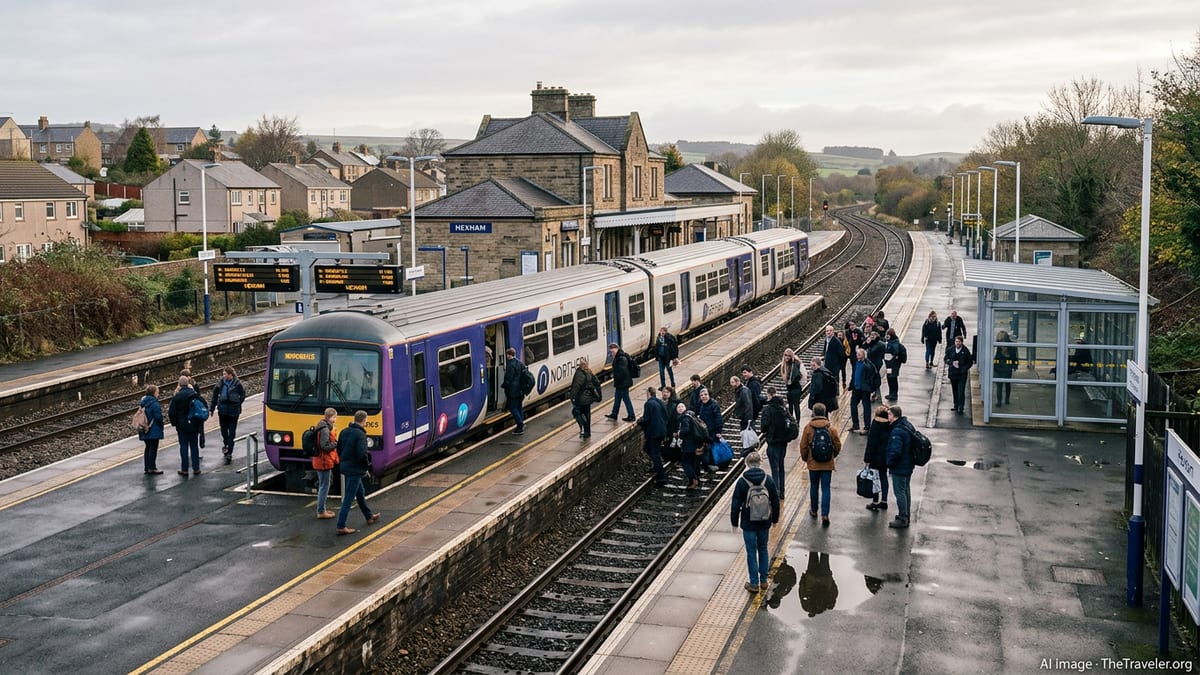
Contrasting fares on parallel routes
The reopening of the Northumberland Line has brought fast, direct trains between Ashington and Newcastle for the first time in decades, with journey times of just over half an hour. Yet as passengers begin to compare what they pay with those travelling from Hexham, a long-established rail town on the Tyne Valley Line, inconsistencies in pricing are drawing increasing scrutiny.
Publicly available information shows that standard single and return fares from Hexham to Newcastle sit alongside off peak deals and railcard discounts that have evolved over many years on the interurban corridor west of the city. By contrast, early fare structures on the Northumberland Line have been designed around a new pattern of commuter demand from Ashington, Newsham and Seaton Delaval, with a simple but sometimes less flexible menu of tickets.
On paper, the two routes serve broadly similar distances into the same regional hub, yet the final price a passenger pays can differ significantly depending on the time of travel, ticket type and whether they are using pay as you go smart cards or buying at a station. Consumer groups and local commentators argue that, taken together, these differences amount to an unequal offer for people living in different parts of the same county.
Reports indicate that some passengers perceive Ashington’s new link as more keenly priced for regular peak commuting, while others point to better off peak value on the historic Hexham to Newcastle line. The resulting patchwork of deals has become a focal point in a wider debate about how fairly the benefits of rail investment are shared across Northumberland.
Northumberland Line launch exposes gaps in integration
The Northumberland Line was promoted as a flagship regeneration project, connecting former coalfield communities such as Ashington directly into the heart of Newcastle. Services are operated by Northern, with new stations and a promise of integrated payment through the region’s Pop smart card system and capped fares on local public transport.
According to published coverage and operator information, passengers from Ashington are encouraged to use pay as you go, buying simple single and day tickets that link with bus and Metro concessions in parts of the region. However, people comparing options across the wider rail network have highlighted that long standing promotional fares or advance deals on the Tyne Valley Line between Hexham and Newcastle do not always have clear equivalents on the new route.
Transport campaign responses and local analysis suggest that this lack of symmetry is particularly visible for occasional leisure travellers and lower paid workers who cannot commit to season tickets. While Hexham based passengers may benefit from established off peak day returns and advance purchase offers, those boarding at Ashington can find themselves paying different rates for broadly similar door to door journeys into central Newcastle.
The launch of the line has also underlined how incomplete fare integration remains between rail, Metro and bus. Although regional authorities are working towards wider contactless capping across modes, passengers report that moving between a Northern train to Ashington or Hexham and local Metro or bus services still often requires multiple separate tickets, adding to both cost and confusion.
Calls for a fairer, simpler pricing structure
Across the North East, pressure has been building for clearer and more equitable public transport prices, particularly as households grapple with the cost of living. Local research into transport poverty has pointed to the burden that high, inconsistent fares place on people who rely on rail for work, education and healthcare, including those in smaller towns such as Hexham and rapidly growing settlements like Ashington.
Advocacy groups and passenger forums are using the contrast between the two corridors as a case study in how a lack of consistent rules for rail pricing can produce unequal outcomes within a single county. Their submissions to regional transport consultations argue that someone travelling a similar distance into Newcastle from the west and from the north should face a broadly comparable, clearly explained set of fares.
Public discussion has also focused on transparency. Commentators say that, while detailed fare tables for both Hexham and Ashington are available through journey planners and operator websites, understanding why one route is cheaper than another at certain times of day remains difficult. This complexity, critics contend, undermines attempts to persuade drivers to switch to rail, particularly when bus fares across the North East are now capped at a relatively straightforward maximum single price.
In response to rising concern about regional inequalities, national and regional transport strategies now emphasise integrated ticketing and clearer price signals. Written material from transport bodies highlights plans for multi operator capping and simpler zonal systems in the North East that would make the cost of travelling from places such as Hexham and Ashington easier to predict.
Regional politics and funding shape the debate
The debate over Hexham and Ashington rail fares is unfolding against a backdrop of major funding decisions for the North East. Northumberland leaders have recently argued that the county risks being overshadowed in regional transport investment, even as billions of pounds are earmarked for upgrades and network integration across the wider combined authority area.
Policy documents for the region indicate that new money is intended to support contactless payment on bus, Metro and rail, alongside improvements in walking and cycling links to stations. For rail users, this could eventually mean a move away from complex route specific fares towards a more unified structure, where cost is based on distance or zones rather than on which historical line a passenger happens to use.
However, campaign responses stress that, in the meantime, people in towns at either end of Northumberland’s rail network are living with the consequences of legacy pricing decisions. Some observers point out that the Tyne Valley Line, serving Hexham, has long been treated as an interurban spine with its own commercial logic, while the Northumberland Line has been framed largely as a regeneration tool with different political expectations on affordability.
As the new North East mayor and the combined authority review options for greater control over public transport, including potential rail style franchising models, the contrast between fares from Hexham and Ashington is expected to feature prominently in arguments for a more coherent regional approach.
Implications for everyday travellers and tourism
For residents, the practical effect of unequal pricing is felt in weekly budgets. Commuters from Hexham who rely on regular peak time trains may face higher overall costs than Ashington workers using simpler capped structures, while off peak leisure travellers from the former mining towns can pay more for spontaneous outings than their counterparts on the Tyne Valley Line enjoying longstanding day return deals.
The issue also has implications for tourism in Northumberland. Promotional material for the Northumberland Line positions Ashington and nearby coastal destinations as convenient day trip options from Newcastle and beyond, while Hexham has long been marketed as a gateway to Hadrian’s Wall and the Tyne Valley countryside. Disparate fare offers risk skewing visitor patterns or leaving some communities feeling they are not receiving a fair share of the economic uplift promised by improved rail links.
Travel writers and regional analysts note that visitors who are unfamiliar with the patchwork of fare types can struggle to understand why two journeys of comparable length into the same city can vary so much in price. This, they argue, undermines efforts to present the North East as a place where public transport is simple and accessible for those arriving without a car.
As more data emerges on passenger numbers and ticket choices from both Hexham and Ashington in the months ahead, campaigners are expected to renew calls for a single, clearly communicated framework that treats the county’s rail users even handedly. For now, the differing fares on these two emblematic routes have placed Northumberland’s fragmented pricing system firmly under the spotlight.