

More news on this day
A growing row over rail fares in Northumberland is putting the spotlight on how two towns, Hexham and Ashington, pay very different prices for near-identical journeys into Newcastle, raising fresh questions about fairness, transparency and the future of integrated ticketing across the North East.
Get the latest news straight to your inbox!
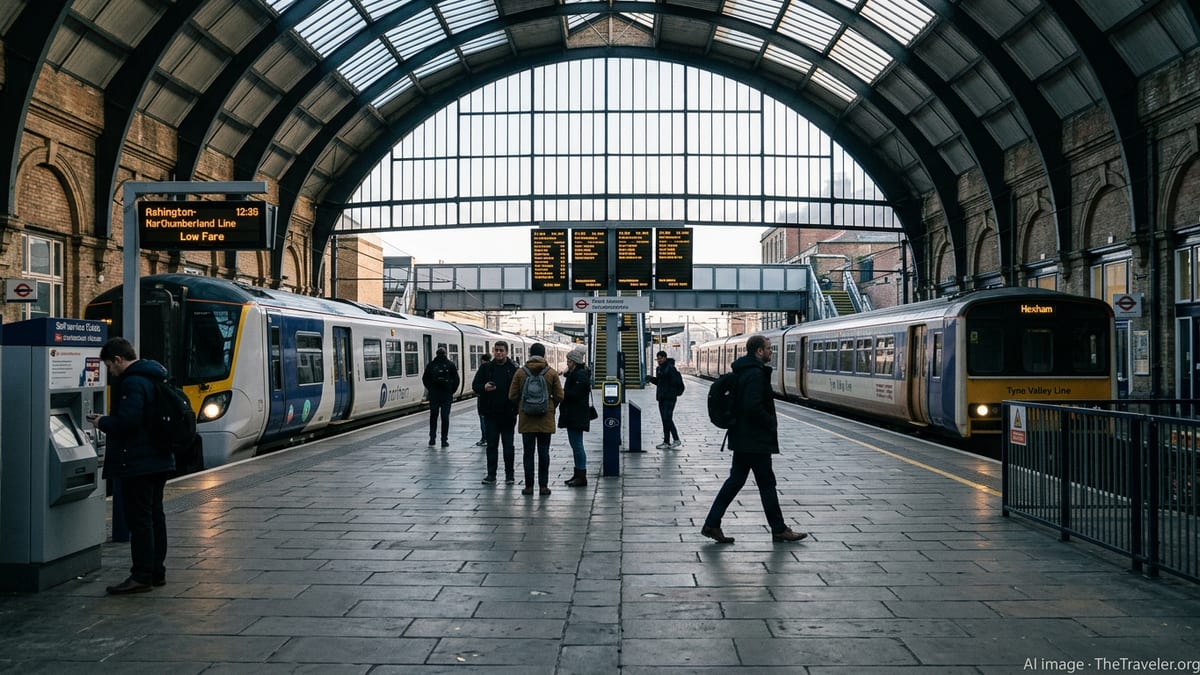
Similar Distances, Starkly Different Prices
The latest criticism focuses on the cost of peak-time travel between Hexham and Newcastle on the Tyne Valley Line compared with the newer Northumberland Line linking Ashington to the city. Reports indicate that passengers making the roughly 19-mile trip from Ashington to Newcastle pay a maximum of £3 for a peak single under the simplified fare structure introduced when the route reopened to passengers in December 2024. By contrast, travellers on the Tyne Valley Line from Hexham to Newcastle typically face significantly higher single and return prices for a comparable distance.
Local coverage highlights that this gap has become emblematic of what critics describe as a “postcode lottery” in the wider North East public transport network. While both towns sit within Northumberland and both routes feed into central Newcastle, the newer line has benefited from a modernised pricing model that caps fares at relatively low levels, while the long-established Tyne Valley corridor remains on a more traditional and often costlier tariff.
For regular commuters, the difference adds up quickly. Publicly available fare tables show that return journeys from Hexham can cost several pounds more per day than equivalent trips from Ashington, despite the similar mileage. For occasional leisure travellers and visitors, the discrepancy can also shape choices about which destinations feel affordable for a day out or short break.
Campaigners argue that, in effect, residents to the west of Newcastle are paying a premium that their counterparts to the north and east do not face, even though all are reliant on the same regional rail and urban transit hubs.
Single-Leg Pricing and Pop Integration Favour Ashington
The disparity is rooted in how the two routes have been integrated into the region’s evolving ticketing system. When services on the Northumberland Line between Newcastle and Ashington were confirmed, operator information and regional transport briefings emphasised a single-leg pricing model, with returns simply priced as double the single and a clear promise that customers would pay no more than £3 for a full-length single journey. This simplified structure was designed to be easy to understand and to showcase the line as a good-value alternative to driving.
In parallel, Northumberland Line stations were folded into the Tyne and Wear Metro-style Pop Pay As You Go product, with the line mapped into zones extending from Newcastle and Manors through Northumberland Park to Newsham, Blyth Bebside, Bedlington and Ashington. Adult Pop prices for one to four zones, along with daily caps, now apply to integrated journeys that mix mainline rail and Metro. Young people with Pop Blue cards are offered deeply discounted single fares and season ticket options, underlining the policy push toward flexible, smartcard-based pricing.
By contrast, Hexham and other Tyne Valley Line stations sit outside this new integrated framework. Although standard national rail discounts and products are available, the line has not been reshaped around single-leg caps or Pop-based zonal pricing in the same way. As a result, passengers from Hexham are still subject to more conventional rail fares that reflect historic structures rather than the simplified approach being used on the Northumberland Line.
This two-track evolution of pricing, critics say, has left one part of Northumberland plugged into a modern, digitally enabled system with clear caps, while another continues under older, less intuitive arrangements that often cost more for similar end-to-end journeys.
Local Backlash and Calls for Fairer Tyne Valley Fares
The row has moved beyond online debate and into the realm of local politics. Recent regional coverage reports that Hexham’s representatives have called for an overhaul of the Tyne Valley Line fare structure, arguing that towns on that corridor deserve parity with communities served by the Northumberland Line. The argument is framed not only around everyday affordability but also around broader questions of equity between different parts of the county.
Campaigners point out that Hexham, a historic market town and established visitor destination, relies heavily on rail links for both residents and tourists. Higher fares, they argue, risk dampening demand, deterring car-free visitors and undermining regional efforts to promote sustainable travel. By comparison, Ashington’s relatively low rail fares are being presented as a core benefit of the line’s reopening, pitched as a tool for regeneration and access to jobs and education in Newcastle and along the corridor.
Public discussion also places the Hexham–Ashington contrast within a wider pattern of perceived unfairness across North East transport. Earlier criticism of bus and multi-modal “postcode lotteries” and concerns around changing rover and day ticket products have fed into a narrative that where people live within the region can significantly influence the value they receive from public transport, even when journey distances look similar on a map.
Advocates for reform want regional decision-makers and rail operators to revisit the Tyne Valley fare tables, either by aligning them with Northumberland Line caps or by bringing the route into the same integrated ticketing architecture that underpins Pop Pay As You Go. They argue that without such changes, resentment is likely to grow as passengers compare what they pay with friends and family using the newer line.
Tourism, Sustainability and the Image of Northumberland
Beyond daily commuting, the fare imbalance is increasingly being viewed through the lens of tourism and regional branding. Hexham, with its abbey, riverside walks and proximity to Hadrian’s Wall, is one of Northumberland’s most recognisable destinations for visitors arriving via Newcastle. Travel commentators note that high relative fares can discourage spontaneous day trips by rail, especially among budget-conscious travellers weighing up multiple options within the wider North East and Scottish Borders.
At the same time, the Northumberland Line has been marketed as a cornerstone of sustainable travel between Ashington, intermediate communities and Newcastle. Promotional material emphasises low, simple fares as part of a broader invitation to “leave the car at home” and explore coastal towns and new leisure links by train. The contrast between the upbeat messaging around Ashington’s value fares and the more traditional, often pricier offer to Hexham has raised questions about whether the county’s tourism potential is being supported evenly.
Environmental advocates argue that clear, affordable pricing is central to shifting trips from road to rail. If some corridors are seen as relatively expensive, they warn, would-be passengers may opt to drive instead, undercutting climate goals and adding to congestion on key routes into Newcastle. Aligning fare structures across the county, they say, would send a stronger and more consistent signal that Northumberland is serious about making rail the default for both everyday travel and leisure journeys.
Travel industry observers suggest that over time, persistent price gaps could influence investment patterns, with areas perceived as better connected and better value attracting more development and visitor spend. For a county that markets itself on both heritage towns and coastal regeneration, the balance between Hexham and Ashington has become an unexpectedly symbolic test of joined-up transport planning.
Pressure Mounts for a Countywide Pricing Rethink
The debate around Hexham and Ashington is unfolding just as public transport operators across the North East confront tighter budgets, changing travel patterns and national policy tools such as bus fare caps. Regional ticketing bodies have promoted contactless, capped and zonal products as a way to simplify choices and entice more people out of cars. The Northumberland Line’s integration into this ecosystem is being cited as evidence of what can be achieved when a route is designed around modern fare technology from the outset.
However, existing routes like the Tyne Valley Line pose a more complex challenge. Any move toward single-leg pricing, deeper integration with Metro-style zones or new caps for rail commuters would need to be negotiated with train operators and aligned with national rail fare regulations. That process can be slower and more politically sensitive than designing fares for a brand-new or newly restored service.
As the row gains momentum, those arguing for change are framing the issue as an opportunity rather than simply a grievance. If a fairer, more consistent structure can be agreed for Hexham and neighbouring stations, they contend, the outcome could become a template for reform elsewhere in the region and beyond. The comparison with Ashington’s capped fares, visible to anyone checking prices online, ensures the pressure is unlikely to ease quickly.
For now, travellers weighing up journeys into Newcastle from opposite sides of Northumberland face a clear contrast. On one route, modern ticketing and capped fares promise predictability and value; on the other, longer-established pricing leaves many paying more for a similar ride. How local leaders and operators respond will help determine whether that gap narrows, or becomes a lasting feature of the North East rail map.