

More news on this day
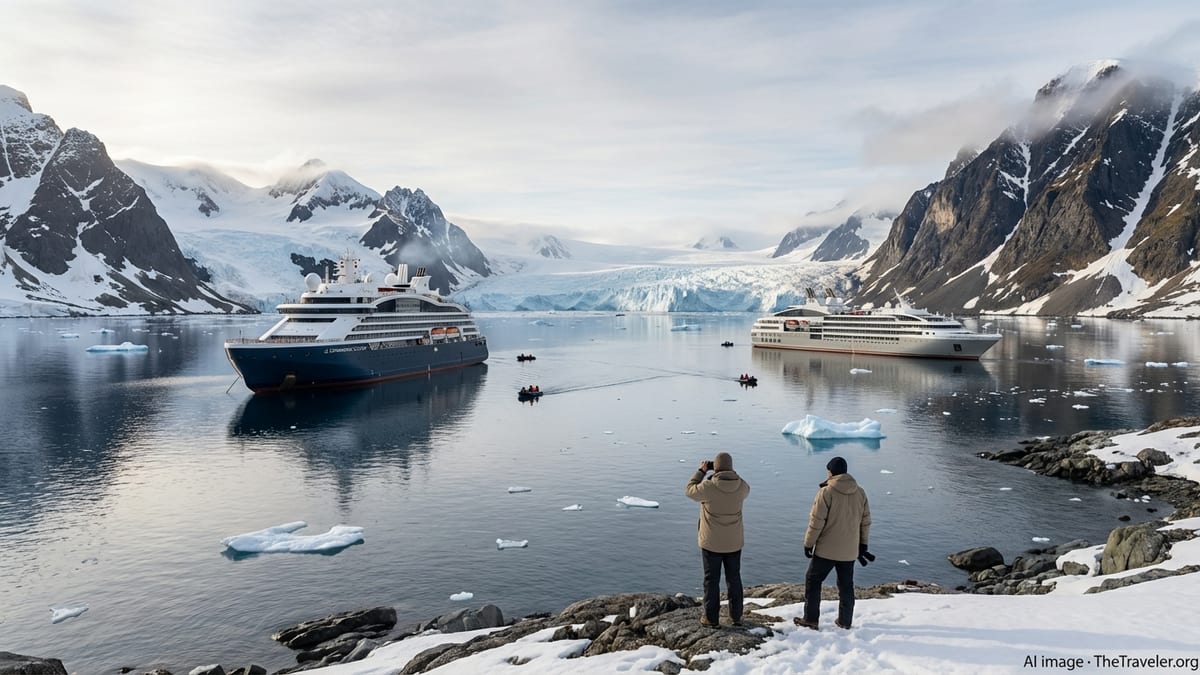
PONANT EXPLORATIONS has delivered a rare moment in the frozen south, orchestrating a meeting between two of its most advanced expedition ships in one of Antarctica’s most isolated anchorages.
The recent rendezvous of the hybrid-electric icebreaker Le Commandant Charcot and the small expedition ship L’Austral at Hidden Bay on the Antarctic Peninsula offered a vivid snapshot of how the French line sees the future of polar cruising: intimate, increasingly technical, and framed around responsible exploration.
More News
- Caribbean Travel to U.S. Upended by New Visa Freezes and Expanded Bans
- Mexico Restores E-Visas for Brazilians, Paving the Way for Borderless Tourism
- Philippine Airlines Joins Regional Carriers Powering Southeast Asia’s Tourism Boom
A Rare Antarctic Meeting in Hidden Bay
The encounter unfolded in Hidden Bay, a little-visited inlet on the Graham Land coast of the Antarctic Peninsula, where sheer cliffs and sculpted ice provide a dramatic natural amphitheatre. According to the company, the meeting was timed so that both ships could pause their respective itineraries to share a brief window of calm in one of the world’s most remote regions, giving guests on each vessel a chance to observe the other against the backdrop of glaciers and sea ice.
Hidden Bay, known for its sheltered waters and steep surrounding peaks, is not a routine stop on every Peninsula voyage. The geography of the bay, combined with weather and ice that can change in hours, means that coordinating two ships in the same place is a logistical feat in itself. Expedition leaders and bridge teams on both vessels monitored drift ice, katabatic winds and swell forecasts closely to ensure safe manoeuvring and anchoring while still allowing time for shared operations.
Onboard, the atmosphere was described as celebratory but focused. Guests on Le Commandant Charcot, accustomed to seeing scientific research vessels in the polar regions, watched L’Austral’s sleek silhouette appear among the bergs, while passengers on L’Austral saw first-hand the imposing profile of Ponant’s flagship icebreaker, usually encountered only in the high Arctic or deep in the Weddell Sea. For many travellers, it was a once-in-a-lifetime chance to witness two very different classes of expedition ship operating side by side in true polar conditions.
Why This Rendezvous Matters for Polar Travel
The meeting of Le Commandant Charcot and L’Austral is more than a photogenic moment. It signals how PONANT EXPLORATIONS is positioning itself in a rapidly evolving Antarctic market, where questions of capacity, environmental impact and guest experience are under growing scrutiny. By bringing its most technologically advanced vessel together with one of its classic small ships, the line effectively staged a live demonstration of its polar strategy for the coming decade.
Industry observers note that cruise lines are increasingly under pressure to show tangible steps toward decarbonisation and lower-impact operations, while still meeting the demand for immersive, small-group experiences. The Antarctic Peninsula has become the epicentre of this trend. The rendezvous allowed PONANT to showcase the capabilities of Le Commandant Charcot as a testbed for cleaner propulsion and scientific partnerships, while underlining that smaller, lighter-draft ships such as L’Austral still play a central role on more traditional Peninsula itineraries.
For travellers, the symbolism is clear. Guests could look from one ship to the other and see how expedition cruising has evolved in a single fleet: from classic luxury yachts designed for Zodiac landings and wildlife encounters, to a purpose-built polar platform capable of reaching heavy-ice zones well beyond the routes of conventional expedition ships. In doing so, PONANT reinforced its message that exploration and stewardship can move in parallel rather than in conflict.
Meet the Two Iconic Expedition Ships
Le Commandant Charcot is widely regarded as one of the most advanced polar cruise vessels in service. Certified to a high polar ice class, the ship is built with a reinforced hull and powerful azipod propulsion that allow it to navigate deep into pack ice and tackle conditions that would halt most conventional expedition ships. Onboard, a hybrid system combining liquefied natural gas with large battery banks enables quiet, engine-free operations for limited periods, which can be particularly advantageous when manoeuvring near wildlife or sensitive ice formations.
Beyond its propulsion, Le Commandant Charcot has been conceived as a floating base for science. The ship includes dedicated laboratories, equipment storage, and accommodation for researchers working on projects that range from oceanography and glaciology to marine biology and atmospheric studies. For guests, this translates into a schedule of expert briefings, data-sharing sessions and field interpretations that go beyond standard destination lectures, bringing real-time science into the daily rhythm of the voyage.
L’Austral, by contrast, represents the more traditional side of the PONANT fleet, though it remains a modern, purpose-built expedition yacht. With a capacity measured in the low hundreds, it is small enough to comply comfortably with Antarctic landing limits while maintaining the ambiance of a boutique hotel at sea. Stabilised hull design, extensive observation deck space and a dedicated marina platform for Zodiac operations make L’Austral well suited to Peninsula itineraries that focus on shore landings, penguin colonies and scenic cruising.
When viewed together in Hidden Bay, the two vessels illustrated complementary strengths. Le Commandant Charcot’s icebreaking bow and research capabilities are designed for pioneering routes and longer, more technical expeditions, including voyages into the Weddell Sea and other heavy-ice regions. L’Austral, with its nimble handling and established deployment in the region, excels at delivering classic Antarctic experiences efficiently and in considerable comfort for guests looking for a more conventional but still intimate expedition cruise.
PONANT’s Growing Antarctic Program
The rendezvous comes as PONANT expands its Antarctic offering across multiple ships and seasons. The operator has already opened bookings for Antarctic voyages extending through the 2026–2027 and 2027–2028 austral summers, with a program that blends iconic Peninsula routes, sub-Antarctic islands and longer Southern Ocean crossings aboard Le Boréal, Le Lyrial, Le Soléal and L’Austral. Schedules include roundtrip departures from Ushuaia, extended itineraries reaching South Georgia and the Falkland Islands, and voyages linking Patagonia with Chilean fjords and Cape Horn.
For the 2026–2027 window, itineraries such as “Emblematic Antarctica” and “The Great Austral Loop” remain the backbone of the program, targeting travellers seeking a first in-depth encounter with the White Continent. These voyages typically run between 10 and 19 days, combining Drake Passage crossings with four to six days of Peninsula exploration, depending on conditions. Onboard, passengers can expect daily briefings, Zodiac outings, shore landings and expert guidance from naturalists, ornithologists and historians.
In parallel, the company is using Le Soléal and other fleet members to operate more ambitious sailings such as Ross Sea expeditions from New Zealand, in partnership with exploration-focused organisations. These longer, often 20-plus day itineraries appeal to travellers willing to commit more time and budget for access to rarely visited regions, including historic huts, remote research stations and immense ice shelves that are inaccessible on standard Peninsula cruises.
Although Le Commandant Charcot is not scheduled exclusively in Antarctica, its presence in the Southern Ocean adds an ultra-advanced layer to the program. The ship’s ability to operate in challenging ice amplifies the company’s capacity to design one-off expeditions and special departures, and it reinforces PONANT’s role in a market where high-spec ice-class vessels are still comparatively few.
Responsible Exploration and Environmental Commitments
Central to the messaging around the Hidden Bay rendezvous is PONANT’s emphasis on “more responsible exploration.” The company highlights several pillars underpinning its polar operations, from ship design and fuel choices to strict adherence to regional guidelines set by the International Association of Antarctica Tour Operators. Both Le Commandant Charcot and L’Austral operate with low passenger counts relative to conventional cruise liners, a factor that not only helps with landing logistics but also reduces the overall footprint per sailing.
Le Commandant Charcot’s hybrid propulsion system, which combines liquefied natural gas with substantial battery capacity, is a significant part of this strategy. The configuration cuts local emissions compared with traditional marine fuels and allows parts of the voyage to be conducted with engines offline. In addition, ongoing energy optimisation, advanced waste management and careful routing aim to further minimise the vessel’s impact while in sensitive polar ecosystems.
On the operational side, PONANT emphasises reduced noise levels, careful speed management near wildlife, and strict protocols for biosecurity during landings. Guests receive detailed briefings on everything from decontamination of boots and clothing to appropriate behaviour around penguin colonies and seals. Expedition teams routinely adjust landing sites, Zodiac operations and timing in response to wildlife patterns, weather and ice to prevent stress on animal populations and to avoid disturbance to nesting or breeding activity.
The company also points to its collaborative work with scientific partners as a way of adding value to the regions it visits. By hosting researchers and contributing to long-term monitoring projects, PONANT argues that its ships can play a constructive role in understanding polar change. The Hidden Bay gathering, in that sense, was not only a meeting of two passenger vessels but also a convergence of platforms used for data collection and field research.
Guest Experience Onboard: From Science to Comfort
From a traveller’s perspective, witnessing two expedition ships meet in Antarctica is a story-rich moment, but daily life onboard remains anchored in a blend of education, exploration and comfort. On both Le Commandant Charcot and L’Austral, days typically start with weather and ice briefings, followed by landings or Zodiac cruises when conditions permit. Between sorties, guests attend lectures, photography workshops and informal Q&A sessions with the expedition team.
Le Commandant Charcot leans heavily into its science-forward identity. Its public spaces integrate interactive displays, charts and live feeds from observation instruments, allowing guests to track sea-ice thickness, bird sightings and oceanographic measurements in near real time. The ship’s design also includes lounges and observation areas that maximise views of the surrounding ice fields, enabling passengers to continue wildlife spotting even when seated with a coffee or a book.
L’Austral offers a more classic small-ship luxury profile. Cabins and suites are paired with restaurants, lounges and spa facilities that would not look out of place on a high-end yacht rather than a working ice vessel. Nevertheless, the ship retains a strong expedition character through its mudrooms, Zodiac boarding platforms and robust schedule of shore activities. The smaller guest complement means that landings can be rotated efficiently, reducing wait times and allowing more time ashore.
For guests lucky enough to be aboard during the Hidden Bay rendezvous, the overlap between these two worlds was part of the appeal. Many lined the railings with cameras and binoculars to capture the relative scale of each vessel and to record their interactions against the Antarctic backdrop. Crew members, too, took a moment to photograph colleagues on the opposing ship, underlining the sense of shared purpose across the fleet.
What This Means If You Are Planning an Antarctic Cruise
For prospective travellers considering an Antarctic voyage in the next few seasons, the meeting of Le Commandant Charcot and L’Austral offers several practical takeaways. First, it underscores how quickly the region is developing in terms of ship technology and itinerary design. Where a decade ago choices were mostly limited to refurbished research vessels and a handful of small cruise ships, travellers now face a spectrum ranging from ultra-advanced icebreakers to boutique expedition yachts, even within a single brand.
Second, the rendezvous highlights the importance of understanding the character of each vessel when booking. Le Commandant Charcot will generally appeal to travellers who prioritise cutting-edge technology, deeper forays into heavy ice and an intensive scientific component to their journey. L’Austral, on the other hand, is likely to suit guests seeking a more traditional luxury cruise experience that still delivers robust daily landings and close wildlife encounters on the Antarctic Peninsula.
Third, the event reinforces the need to plan ahead. With PONANT and other operators already selling departures into 2027 and 2028, cabins on small expedition ships often fill far in advance, especially for peak-season sailings over the December and January holiday periods. Travellers with specific preferences for ship type, cabin category or itinerary length are advised to secure space early and to work closely with a specialist agent familiar with polar operations.
Finally, the Hidden Bay meeting is a reminder that conditions in Antarctica are inherently unpredictable. Even with advanced ships and experienced crews, ice, wind and visibility will dictate the final shape of any voyage. Flexibility is a crucial asset for prospective guests, who should see the itinerary as a framework rather than an unchangeable schedule and embrace unscripted moments such as an impromptu rendezvous between ships as part of the region’s allure.
FAQ
Q1. What exactly happened during the PONANT Antarctic rendezvous?
Two PONANT EXPLORATIONS ships, the hybrid-electric icebreaker Le Commandant Charcot and the expedition yacht L’Austral, coordinated their itineraries to meet in Hidden Bay on the Antarctic Peninsula, allowing guests and crew on both vessels to share a rare joint moment in one of the region’s most remote anchorages.
Q2. Why is this rendezvous considered rare?
Bringing two expedition ships together in the same small Antarctic bay requires favourable ice, weather and sea conditions, as well as careful navigation planning. Hidden Bay is not a routine stop for every voyage, so the chance alignment of schedules, conditions and operational priorities makes such encounters uncommon.
Q3. Where is Hidden Bay and what makes it special?
Hidden Bay lies along the Graham Land coast of the Antarctic Peninsula and is known for its steep surrounding peaks, glaciers and often calm, protected waters. Its dramatic scenery and relative isolation make it a striking location for scenic cruising and photography, although access is always dependent on ice and weather.
Q4. How is Le Commandant Charcot different from L’Austral?
Le Commandant Charcot is a purpose-built icebreaking exploration ship with a high polar ice class, hybrid propulsion using liquefied natural gas and batteries, and extensive facilities for scientific research. L’Austral is a smaller expedition cruise yacht focused on classic Peninsula itineraries, offering luxury accommodations and robust Zodiac and landing operations without full icebreaking capability.
Q5. Does this event change upcoming PONANT itineraries?
The rendezvous itself does not overhaul published itineraries, but it illustrates how PONANT may continue to design special moments and collaborative operations between ships when conditions allow. The broader Antarctic program, including Peninsula routes and longer Southern Ocean expeditions, continues as scheduled across the fleet.
Q6. How does PONANT address environmental concerns in Antarctica?
PONANT emphasises small-ship operations, advanced propulsion technologies such as hybrid LNG-battery systems on Le Commandant Charcot, strict adherence to regional guidelines, and comprehensive guest briefings on wildlife and biosecurity. The company also supports scientific projects by hosting researchers and sharing data collected during voyages.
Q7. Can guests choose to sail specifically on Le Commandant Charcot or L’Austral?
Yes. Voyages are marketed by ship and itinerary, allowing travellers to select the vessel that best matches their interests, whether that means the advanced icebreaking and science-focused profile of Le Commandant Charcot or the more traditional luxury expedition atmosphere of L’Austral and its sister ships.
Q8. What kind of travellers is this Antarctic experience best suited for?
These voyages attract travellers who value small-group exploration, in-depth naturalist commentary and time spent off the ship in Zodiacs and on shore. Those particularly interested in climate science, polar history and cutting-edge ship technology may gravitate toward Le Commandant Charcot, while guests seeking a refined but less technical expedition may prefer L’Austral.
Q9. How far in advance should I book an Antarctic cruise with PONANT?
Because capacity on small expedition ships is limited and demand for prime-season departures is strong, many advisers recommend booking at least 12 to 18 months ahead, especially for specific cabin categories or longer, more specialised itineraries that sell out quickly.
Q10. What should I keep in mind when planning an Antarctic trip after hearing about this rendezvous?
Travellers should recognise that Antarctica is an environment where conditions dictate the day-to-day plan, so flexibility and a spirit of adventure are essential. Choosing the right ship, understanding the nature of the itinerary and being prepared for spontaneous moments such as ship rendezvous or unexpected wildlife sightings will help ensure a rewarding experience.