

Germany is often perceived as financially predictable, with transparent prices and stable public services. Yet many new residents underestimate a set of structural and regulatory costs that rarely appear in headline cost-of-living comparisons. These recurring fees, deposits, and local charges can materially affect a household budget and should be understood in detail before relocation decisions are made.
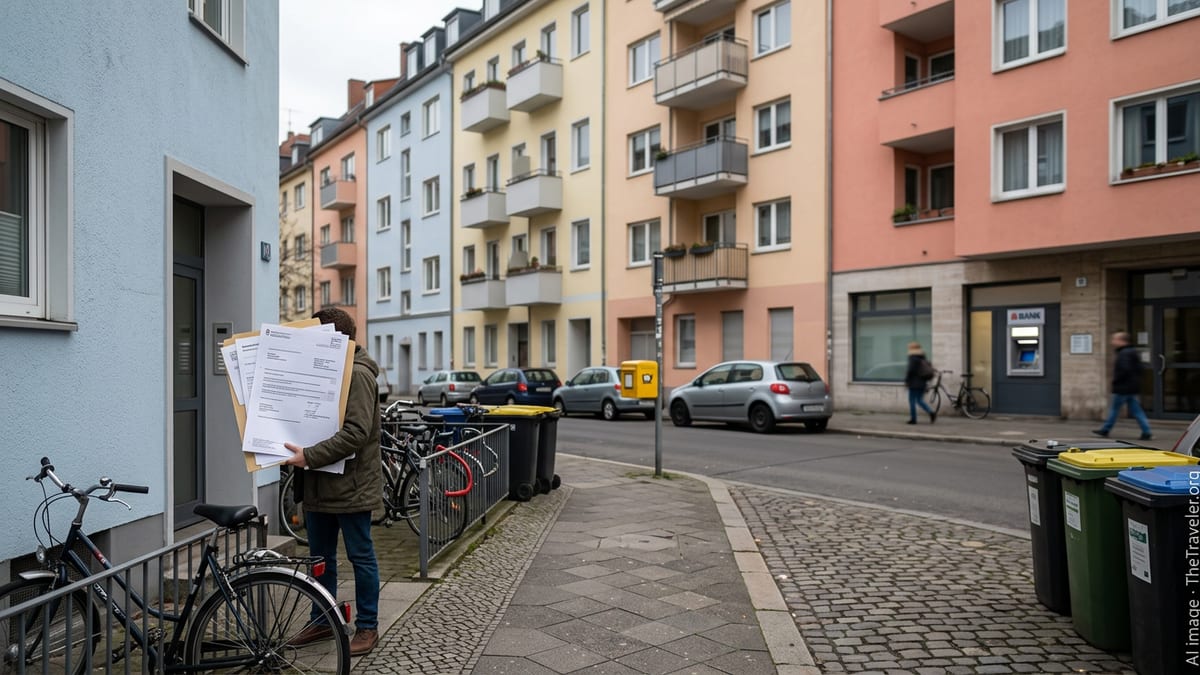
Mandatory Broadcasting Fee: The Unavoidable Household Charge
One of the most frequently overlooked expenses is the mandatory public broadcasting contribution, known as the Rundfunkbeitrag. This is a legally required fee linked to a dwelling, not to individual devices. As of 2026, the standard rate for private households is approximately 18.36 euros per month per residence, billed quarterly or annually. The amount is due regardless of whether the household owns a television, radio, or streaming device and regardless of actual usage.
Because the fee is attached to the address and cross-checked against registration records, new arrivals typically receive a payment request within weeks of registering their residence. Nonpayment can lead to backdated demands, late-payment penalties, and eventually enforcement by local authorities. For a couple or family, this equates to about 220 euros per year, which is not captured in many simplified rent or utilities estimates.
The broadcasting fee also applies in a modified form to business premises and company vehicles, which can be relevant for self-employed professionals or small business owners relocating to Germany. Even a microbusiness with a few employees may be billed a reduced but still significant contribution per month. For households, however, the main budgeting issue is simply recognizing that this is a mandatory, ongoing charge entirely separate from internet or subscription streaming services.
New residents who assume they can opt out of publicly funded media by not owning a television are often surprised to learn that this is not possible under current regulations. The only structured reductions apply to certain categories such as low-income beneficiaries or specific disabilities, which most relocating professionals will not qualify for.
Church Tax and Other Payroll Surcharges
Another major hidden cost for many newcomers is the church tax, or Kirchensteuer. Members of certain recognized religious communities are subject to an additional levy of approximately 8 percent of their income tax in two southern states and about 9 percent in most other regions. Practically, this often equates to roughly 0.2 to 1.5 percent of gross income, depending on income level and tax situation. This charge is usually deducted directly from payroll alongside regular income tax and the solidarity surcharge.
The surprise for new residents is that the obligation is triggered by declaring a religious affiliation during initial registration or within the tax system. Individuals who indicate membership in, for example, the Catholic or Protestant church will automatically be enrolled for church tax. Opting out later requires a formal process at the local registry or court, often involving a fixed administrative fee. Until that process is completed, the tax continues to accrue.
For a professional earning a mid-range gross salary, the annual church tax can reach several hundred to over a thousand euros. This is rarely reflected in simple net salary calculators used outside Germany and may only become apparent when the first payslip arrives. Employers are legally required to withhold the tax if the employee is registered as a member of a qualifying religious community, leaving limited room for negotiation at company level.
In combination with the solidarity surcharge on higher incomes and compulsory social security contributions, church tax can push effective deductions well beyond what many expatriates expect from headline income tax rates. For those who actively practice their faith and use church services, this may be accepted as part of community support. For others, it is a non-trivial hidden cost that warrants close attention at the point of initial registration.
Security Deposits and Prepayments Beyond Rent
While rental prices are widely discussed, the upfront liquidity required to secure housing in Germany is frequently underestimated. Landlords commonly request a rental deposit (Kaution) of up to three months of basic net rent, excluding utilities. For a mid-range apartment with a basic rent of 1,000 euros, this can mean a deposit of 3,000 euros, payable before or at key handover. The deposit is held in a special account and may be retained partially or fully if there are damages or unpaid ancillary costs at move-out.
In addition to the deposit, tenants typically pay the first month’s full rent in advance and often face one-time administrative fees such as charges for the issuance of keys, mailbox labels, or mandatory nameplate changes on doorbells. While each of these may be modest, the combination can easily add several hundred euros to the initial cash outlay. In competitive markets, prospective tenants may also choose to pay for credit reports or private background-check services to strengthen their applications.
Another less obvious element is the lag between move-in and the annual reconciliation of utility prepayments. Most German rental contracts include monthly advance payments for heating, water, and building costs, which are later balanced against actual consumption. New residents who underestimate their usage in the first winter can face a supplementary bill that arrives many months later. This one-off additional payment can be several hundred euros, especially in older or poorly insulated properties.
Given the structure of the tenancy system, newcomers should plan for total upfront housing-related cash needs in the range of four to five months of basic rent when including the deposit, initial rent, and incidental setup expenses. These funds are often tied up for years, which has a direct impact on relocation budgeting and liquidity planning.
Local Administrative, Registration, and Waste-Related Charges
Germany’s municipal finance model relies on numerous small but mandatory local fees that can cumulatively become a noticeable cost item. Registration with local authorities itself is usually free or low-cost, but ancillary services often carry fixed charges. Examples include fees for official certificates, address changes on residence documents, or specific confirmations needed for schools or childcare enrollment. Individually these may cost between 5 and 20 euros, but multiple family members and repeated administrative needs can multiply the total over time.
Waste disposal is another area where new residents encounter unexpected costs. While regular household waste collection is generally included in municipal fees folded into rent or ancillary charges, special waste such as bulky items, electronic equipment, or construction debris frequently attracts per-pickup or per-item fees. Municipalities may, for example, charge tens of euros for a scheduled bulky-waste collection or require payment at recycling centers for certain categories of waste. Households that move frequently, renovate, or purchase larger furniture can therefore incur several unplanned waste-related charges per year.
Some municipalities also require households to pay for specific recycling bins or for the adjustment of waste container sizes. Moving within a city can trigger changes in the underlying waste-fee schedule, which is sometimes billed directly to property owners and passed on indirectly to tenants through ancillary costs. Because these charges are highly local, they rarely appear in general cost-of-living summaries but are visible on annual building cost statements.
In addition, dog owners must factor in local dog license taxes, which can range widely by municipality and increase for additional animals or certain breeds. Combined with mandatory microchipping, registration, and liability insurance requirements in some states, pet ownership can represent a significant but often unanticipated budget line for relocating families.
Utilities, Telecommunications, and Contractual Frictions
Base tariffs for electricity, gas, mobile service, and broadband are relatively easy to compare before arrival, but several cost drivers are less visible. Energy suppliers often require security deposits or prepayments from customers without local credit history, especially if the customer opts to pay via less preferred methods. These deposits may represent one to three months of average consumption costs and are only returned after contract termination and final billing.
Telecommunications contracts frequently include one-time activation fees, router rental charges, and penalties for early termination. Standard household internet contracts commonly run for 24 months with automatic renewal if not canceled in advance. Moving within Germany does not automatically void the contract and may instead trigger relocation fees or a restart of the minimum term if service at the new address is technically different. New residents who sign multiple overlapping contracts during their first year can find themselves paying double for connectivity while transitions are processed.
Another underappreciated cost is the time and potential expense involved when technical appointments are missed or need to be rescheduled. Providers may charge for failed technician visits if the customer is not present, and waiting times for new appointments can be several weeks. This can lead to interim reliance on mobile data or temporary service solutions that are more expensive than standard broadband, effectively raising the effective communication cost during the initial months after relocation.
Because energy and telecom markets are highly competitive, there are savings opportunities through switching providers. However, the complexity of fixed contract terms, notice periods, and bundled promotional offers makes it easy for newcomers to underestimate long-term effective costs and overestimate short-term discounts, especially when language barriers are present.
Insurance Expectations Beyond Basic Coverage
Germany’s risk culture places strong emphasis on insurance, and while some forms of coverage are mandatory, others are socially expected even when not legally required. New residents may find that landlords, employers, or educational institutions strongly recommend or functionally require certain policies. The cumulative cost of these insurances can be substantial, yet they are often missing from headline cost-of-living comparisons.
Private liability insurance (Haftpflichtversicherung) is a prime example. It is technically voluntary but widely regarded as essential, and many landlords expect tenants to have it. Annual premiums are generally modest per person or family relative to the coverage provided, but they still add a recurring cost that newcomers may not anticipate. Similarly, household contents insurance covering theft, fire, and water damage is strongly encouraged, particularly in multi-unit buildings.
Vehicle ownership introduces multiple layers of insurance that are not always intuitive to those unfamiliar with the German system. In addition to mandatory third-party liability insurance, comprehensive or partial comprehensive coverage may be strongly advised for newer or financed vehicles. Insurers often differentiate premiums by postal code, driving history, and vehicle type, leading to variations that can surprise those relocating from regions with simpler tariff structures.
Other niche insurances, such as legal expenses coverage or specific educational or occupational policies, may be marketed heavily to new residents through banks and brokers. While not obligatory, they can create pressure to increase insurance spending significantly above what was customary in the origin country. Understanding which policies are truly essential versus optional is therefore a key part of realistic budgeting.
Banking, Payments, and Cash-Flow Related Costs
Banking in Germany has modernized in recent years, but certain cost structures remain that can catch newcomers off guard. Traditional banks commonly charge monthly account maintenance fees for current accounts, especially when income inflow is below a defined threshold. These fees may be modest per month but accumulate over time. Paper statements, over-the-counter transactions, or the use of non-network ATMs can each trigger separate charges.
International card usage and cross-border transfers are another source of hidden cost. While some digital banks now offer low-fee or fee-free international transactions, many high-street institutions still apply currency conversion margins and per-transaction fees that meaningfully increase the effective cost of sending money to or spending money in other countries. Relocating professionals who maintain financial ties abroad or travel frequently may see banking expenses rise well above what they were used to previously.
For those who open accounts with digital-only providers, the cost structure may be lower but not necessarily zero. Premium tiers, extra physical cards, cash deposit options via third-party retailers, or replacement cards can each attract fees. In addition, some landlords and employers still prefer or require German IBAN accounts from established domestic banks, which can limit the ability to rely entirely on low-cost fintech solutions.
Finally, late-payment charges and reminder fees are an underappreciated aspect of the German billing environment. Utility providers, landlords, and public bodies often issue formal reminders that carry fixed fees once payment deadlines are missed. Because many bills are issued quarterly or annually, it is easy for new residents to lose track and incur multiple reminder charges in a short period, adding an avoidable layer of cost to routine obligations.
The Takeaway
Germany’s hidden costs are generally not arbitrary or unpredictable; they are embedded in a dense framework of public finance, municipal regulation, and contractual norms. The challenge for new residents is that many of these expenses do not appear in simplified comparisons of rent, groceries, or headline taxes. Instead, they surface through mandatory contributions, deposits, service charges, and a strong insurance culture that collectively shift the effective cost of living upward.
Prospective movers should therefore approach Germany not only as a country of stable prices and reliable infrastructure but also as an environment where legal obligations and contractual structures require careful attention. Incorporating broadcasting fees, church tax exposure, deposits, local charges, contractual frictions, insurance expectations, and banking costs into a detailed relocation budget will yield a far more realistic picture of financial life after arrival.
Households that plan proactively for these items tend to experience fewer negative surprises in their first years and can take advantage of Germany’s strengths with a clear understanding of the true, all-in cost of residency. Those who underestimate them risk persistent budget pressure despite nominally adequate salaries. For decision-makers evaluating relocation, understanding these hidden costs is therefore as important as assessing salaries and rents.
FAQ
Q1. Is the German broadcasting fee optional if I do not own a TV?
The broadcasting fee is generally mandatory per household based on residence registration, regardless of whether a TV or radio is owned or used.
Q2. How much does the broadcasting fee add to a typical annual budget?
At a current rate of about 18.36 euros per month, households should plan for roughly 220 euros per year in broadcasting contributions.
Q3. When do I become liable to pay church tax in Germany?
You become liable if you are registered as a member of a recognized religious community in official records, typically declared during residence registration or tax setup.
Q4. Can I avoid church tax by changing my registration later?
You may formally leave the church through a defined administrative process, but until that is completed, church tax continues to apply on your income tax.
Q5. How large are typical rental deposits for apartments?
Landlords often request up to three months of basic net rent as a deposit, in addition to the first month’s rent and smaller one-time setup fees.
Q6. Are waste disposal and recycling services included in rent?
Standard household waste is usually covered via ancillary costs, but bulky items, electronics, and special waste often incur separate municipal fees.
Q7. Do internet and mobile contracts in Germany have hidden costs?
Many contracts include activation fees, equipment charges, and penalties for early termination or relocation, which raise effective long-term costs.
Q8. Which insurances are most commonly expected beyond legal minimums?
Private liability and household contents insurance are widely expected, and comprehensive vehicle coverage is strongly recommended for newer cars.
Q9. Are German bank accounts usually free of monthly charges?
Many traditional banks charge monthly account fees unless certain income thresholds are met; additional charges may apply for specific services.
Q10. How significant are reminder and late-payment fees?
Reminder fees are often modest individually, but repeated late payments across utilities, rent, and public charges can cumulatively become a noticeable annual cost.