

Relocating to Mexico can reduce headline living costs, but many foreign residents encounter a second layer of expenses that are less visible in initial calculations. These hidden costs do not usually make relocation unviable, but they can materially change the real monthly budget and should be quantified in advance. This briefing analyzes the main categories of overlooked costs that long-term expats in Mexico frequently report, with an emphasis on recurring obligations and location-specific spending patterns.
Overview of Hidden Cost Categories in Mexico
For most expats, the advertised advantages of Mexico center on lower rent, food, and services compared to major cities in North America or Europe. However, several structural features of the Mexican market introduce additional costs that are easy to miss in pre-move research. These include climate-driven utility spikes, community maintenance fees, import-related charges on goods, and service premiums for foreign-language or expat-oriented providers.
Hidden costs in Mexico tend to be cumulative rather than individually dramatic. A newcomer may underestimate electricity by 1,000 to 2,000 pesos per month, overlook building maintenance fees of a similar magnitude, and assume that online shopping or frequent cross-border purchases are tax-free. When combined, these items can add the equivalent of several hundred US dollars per month to a supposedly “low-cost” budget.
These costs are also highly location-dependent. Coastal areas with heavy air conditioning, high-end gated communities in major cities, and border regions with frequent cross-border traffic expose residents to different sets of hidden expenses. A realistic relocation plan therefore requires city-specific assumptions rather than national averages.
Electricity, Gas, and Seasonal Utility Spikes
Electricity tariffs in Mexico are heavily influenced by climate and consumption tier. The state utility uses a progressive system in which per-kilowatt-hour charges increase once household consumption surpasses a defined baseline. In hot coastal or lowland cities where air conditioning runs for much of the year, it is common for expat households to enter higher tiers, triggering bills that are significantly above the simple cost-of-living estimates often quoted in relocation marketing materials.
As a working assumption, an apartment in a temperate city with minimal air conditioning may see monthly electricity bills in the range of 400 to 1,000 pesos, while a similarly sized unit in a hot, humid area with multiple mini-split units operating daily can face bills several times higher during peak months. New arrivals who base their budget on “average” national utilities often discover that their actual electricity cost is driven more by local climate and lifestyle than by property size.
Gas and water can also create minor but persistent surprises. Many homes rely on bottled gas for cooking and water heating, paid via irregular cylinder refills or tanker deliveries. While unit prices are not extreme, the irregular nature of billing can cause budgeting difficulties. In some municipalities, water tariffs for apartment buildings rise with shared consumption, and water scarcity can encourage additional private spending on delivered water for drinking or even household use.
HOA and Community Maintenance Fees
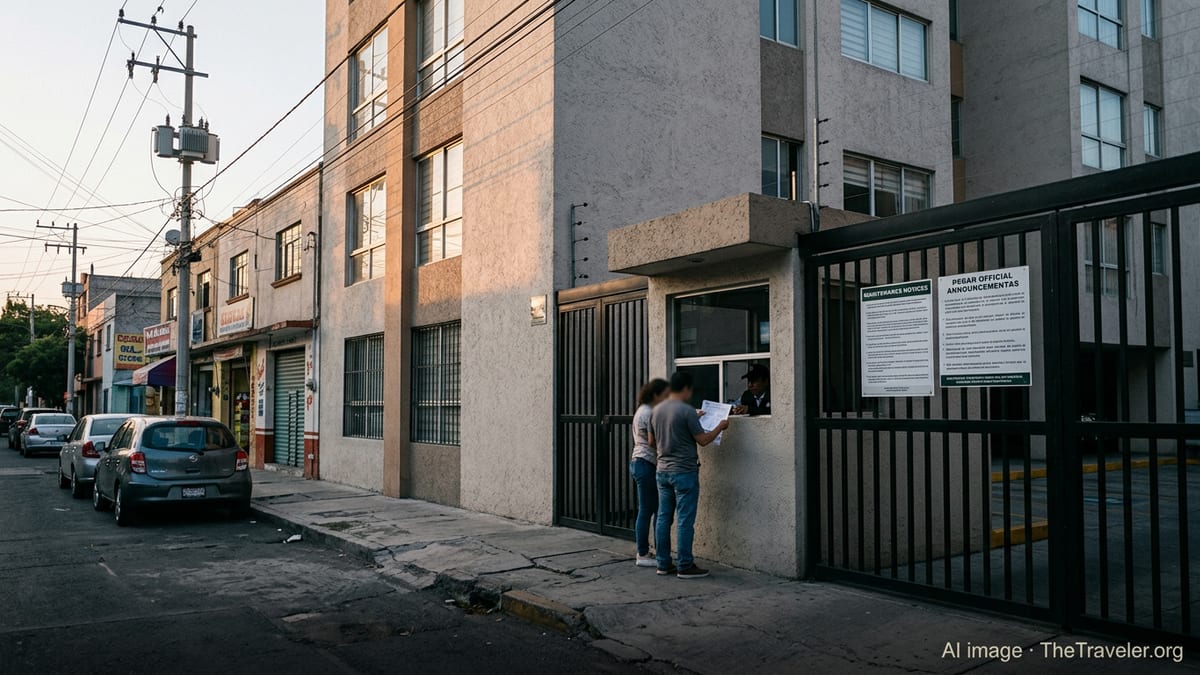
One of the most underestimated ongoing costs for expats in Mexico is the mandatory maintenance fee (cuota de mantenimiento) charged by condominium regimes and gated communities. These fees are the local equivalent of homeowners’ association (HOA) dues and fund security guards, landscaping, pool maintenance, elevator servicing, common-area electricity, and administration. In practice they can significantly change the real monthly occupancy cost of a property.
Maintenance fees vary widely depending on city, building age, services, and amenities. In mid- to upper-market complexes in large cities, monthly quotas commonly run from around 2,000 to 8,000 pesos per unit, with high-end towers or horizontal developments with extensive amenities reaching or exceeding 10,000 to 15,000 pesos per month. In some cases fees are calculated per square meter, so larger units or corner apartments carry a disproportionate share of the community budget.
Expats frequently discover additional “extraordinary” fees. These are special assessments raised to cover major repairs, reserve fund shortfalls, or infrastructure upgrades such as elevator replacement or structural work. Extraordinary assessments can equal several months of regular fees and may be payable within a narrow timeframe. Buyers and long-term tenants who did not ask about the solvency of the building’s reserve fund or upcoming projects can be surprised by these one-off charges.
Nonpayment of maintenance fees has legal and practical consequences. Community bylaws and state condominium laws typically allow administrators to apply penalties or even restrict certain services until arrears are cleared. In addition, condominium rules are usually enforceable regardless of whether an individual owner uses all amenities, so residents cannot opt out of paying for a pool, gym, or security that they personally rarely use.
Security, Gated Communities, and Insurance Add-ons
Public safety concerns drive many expats to choose gated communities, buildings with 24-hour security, and private services that go beyond what is common in their origin country. The financial impact of this choice is often embedded within other fees rather than visible as a standalone line item, which contributes to underestimation during planning.
In residential complexes across major Mexican cities, a significant share of the maintenance fee covers salaries for on-site guards, CCTV monitoring, perimeter maintenance, and visitor control systems. A community that chooses to upgrade from a single daytime guard to 24-hour coverage or adds additional staff positions will see monthly quotas rise for all owners. Over several years, incremental security enhancements can lift maintenance fees by thousands of pesos per month per unit compared with the original estimates provided by developers or landlords.
Beyond community security, expats may also incur higher costs for personal and property insurance. Contents insurance, additional coverage for seismic events in some regions, and vehicle insurance that includes cross-border clauses or English-language support often carry premiums above the basic products marketed to local residents. In some cases, insurers treat foreign drivers or high-value imported vehicles as higher risk, which increases required coverage levels and premiums. These recurring costs can add another layer to the real price of “peace of mind” in the chosen location.
Import Duties, Online Shopping, and Cross-Border Purchases
Many expats assume they will continue buying high-value items from their home country or from major international platforms with minimal added cost. In practice, customs rules, import duties, and value-added tax on imported goods can make this strategy significantly more expensive than expected. Mexico applies taxes on many imports above relatively low value thresholds, and customs holds or brokerage fees can add both delay and cost.
For online purchases shipped into Mexico from abroad, duties and value-added tax are generally assessed when the declared value of the shipment exceeds a modest de minimis level, or when the product category is specifically protected. Certain categories such as electronics and textiles are more tightly controlled and more likely to incur charges even at lower values. Recent policy changes have also increased effective tax rates on small packages from countries without a free trade agreement with Mexico, which affects popular low-cost shopping platforms.
Expats who live near the United States border or who travel frequently often assume that personal shopping trips are duty-free. In reality, Mexican customs grants a limited exemption per traveler, which varies by arrival mode and season. Purchases above that allowance are subject to assessment and tax, and customs officers have broad discretion in valuation and enforcement. Newcomers who build a relocation plan around regularly importing furniture, electronics, or specialty goods from abroad may find that real costs are substantially higher once taxes, brokerage costs, and occasional storage fees for held packages are included.
The combined effect is that certain goods which appear similarly priced abroad become more expensive once all import-related costs are considered. For long-term residents, it is often more cost-effective to adjust buying habits toward locally available brands and models rather than relying on constant cross-border imports or parcel forwarding services.
Expensive Preferences for Imported and Specialty Goods
Another common hidden cost arises not from formal taxes but from lifestyle expectations carried over from the home country. Imported food brands, international wines and spirits, niche health products, and specialized hobby equipment may all be available in Mexico, but often at premium prices compared with domestic equivalents. These premiums reflect import costs, distribution margins, and lower volumes, and can be notably higher in smaller cities and resort areas.
Supermarkets and specialty stores in expat-heavy neighborhoods typically stock more foreign products than standard outlets, but the pricing of these goods often includes a mark-up that can reach multiples of the domestic alternative. An expat household that insists on replicating its original consumption basket of imported cereals, dairy substitutes, snacks, supplements, or organic goods can easily add several thousand pesos per month to its grocery budget compared with a household that shifts toward mainstream Mexican brands.
Specialized sports equipment, electronics accessories, and niche hobby materials follow a similar pattern. Limited local supply and distribution lead to higher retail prices or reliance on importation, which then triggers the customs-related costs described previously. For some individuals this is an acceptable trade-off, but from a relocation budgeting perspective it is important to treat “maintaining home-country consumption patterns” as a deliberate cost decision rather than an incidental detail.
Foreign-Facing Services and Payment Frictions
Foreign residents in Mexico frequently rely on service providers that offer English-language support, international standards, or familiarity with foreign documentation. While this can reduce administrative friction, it often comes with higher fees than comparable local services. Examples include accountants familiar with foreign tax issues, property managers specializing in expat clients, relocation consultants, and some medical, dental, or legal practices that target international residents.
Banking and payments can also introduce hidden friction costs. Account maintenance charges, ATM withdrawal fees for foreign cards, and currency conversion spreads between peso and foreign-currency accounts can cumulatively be significant, especially for retirees or remote workers who draw income from abroad. Some expats pay repeated cross-border transfer fees or use high-margin consumer remittance services rather than more efficient channels, simply because they were unaware of domestic options on arrival.
In the property context, foreign owners who rent out Mexican homes on a short-term basis may incur additional costs for specialized property management, online listing optimization, and tax compliance services. While these are business-related rather than personal living expenses, they often stem from the same core issue: reliance on English-speaking intermediaries to navigate Mexican administrative and commercial systems.
The Takeaway
Headline comparisons between Mexico and higher-cost countries tend to emphasize lower rents, labor, and everyday services. For relocation planning purposes, however, it is essential to incorporate the additional layer of expenses that expats routinely encounter once they settle. Electricity in hot climates, mandatory building maintenance fees, security-related spending, taxes on imported goods, premiums for foreign brands, and higher fees for English-speaking professional services all contribute to a more complex cost reality than simple “cost of living index” tables suggest.
The magnitude of these hidden costs depends heavily on location, housing type, and lifestyle choices. A resident in a modest apartment in a temperate inland city who relies primarily on local products and services will experience far fewer surprises than a resident in a coastal gated community who imports goods frequently and insists on replicating home-country consumption patterns. From a decision-making standpoint, the most effective approach is to quantify each of the categories described above using city-specific and property-specific data before committing to a long-term lease or purchase.
For prospective expats, a disciplined budgeting exercise that adds realistic estimates for utilities, maintenance fees, security, import-related expenses, and service premiums to the advertised rent or purchase price will provide a more accurate view of Mexico’s affordability. This, in turn, supports better decisions about city selection, housing type, and lifestyle adjustments needed to achieve the desired balance between cost savings and quality of life.
FAQ
Q1. How much extra should be budgeted for hidden costs when moving to Mexico?
A conservative planning approach is to add 20 to 30 percent on top of the basic rent and everyday local expenses initially assumed, then refine that estimate once specific information on utilities, maintenance fees, and import-related costs is available for the chosen city and property.
Q2. Are electricity costs in Mexico always higher than in the United States or Europe?
Not necessarily. In temperate Mexican cities with low air-conditioning use, monthly bills can be modest. However, in hot or humid regions where air conditioning runs for many hours per day, tiered tariffs can make electricity a larger expense than many expats initially expect.
Q3. What is the typical range for HOA or maintenance fees in Mexican condominiums?
In mid- to upper-market developments, monthly fees commonly fall between roughly 2,000 and 8,000 pesos, with high-amenity or luxury complexes sometimes reaching 10,000 pesos or more per month, depending on services and unit size.
Q4. Can residents refuse to pay for amenities they do not use, such as a pool or gym?
In most condominium regimes and gated communities, all owners are obliged to pay the full maintenance quota established by the bylaws, regardless of individual usage of specific amenities, because the fees fund overall operation and preservation of the property.
Q5. How significant are import duties and taxes on personal online shopping to Mexico?
They can be material for frequent or high-value purchases. Many shipments above relatively low thresholds are subject to duty and value-added tax, and certain categories like electronics and textiles are more strictly controlled, increasing total landed cost.
Q6. Is it cheaper to bring household goods in personal luggage rather than ship them?
For small volumes and modest values, bringing items as personal luggage can be cost-effective within the customs exemption allowed to travelers. Beyond those allowances, taxes may apply and the advantage over formal shipping diminishes.
Q7. Are imported food and specialty products always expensive in Mexico?
Not always, but imported brands, niche health products, and specialty items often carry noticeable premiums compared with domestic equivalents, especially outside major metropolitan areas, and can significantly raise a household’s monthly grocery and lifestyle budget.
Q8. Do expats have to live in gated communities to manage security risks?
No. Many foreign residents live in standard neighborhoods with routine precautions. However, those who choose gated communities or 24-hour security typically pay higher maintenance fees that embed the cost of guards, surveillance, and access control.
Q9. Why are some professional services more expensive for foreign residents?
Service providers who offer English-language support, experience with foreign regulations, or concierge-style assistance often target an international clientele and price accordingly. Their fees are usually higher than purely local-market alternatives.
Q10. How can prospective expats reduce the impact of hidden costs before moving?
Key steps include obtaining written confirmation of maintenance fees and any planned special assessments, asking for recent utility bills for specific properties, limiting reliance on imported goods, comparing local versus foreign-facing service providers, and building a contingency margin into the first-year budget.