

Thailand is widely perceived as a low-cost destination, yet many foreign residents underestimate or overlook a range of recurring and situational expenses that can materially change their budget once they are on the ground. These hidden costs are often small in isolation but frequent, fragmented across different systems, and sometimes specific to foreigners, which can make the real cost of living meaningfully higher than initial desk research suggests.
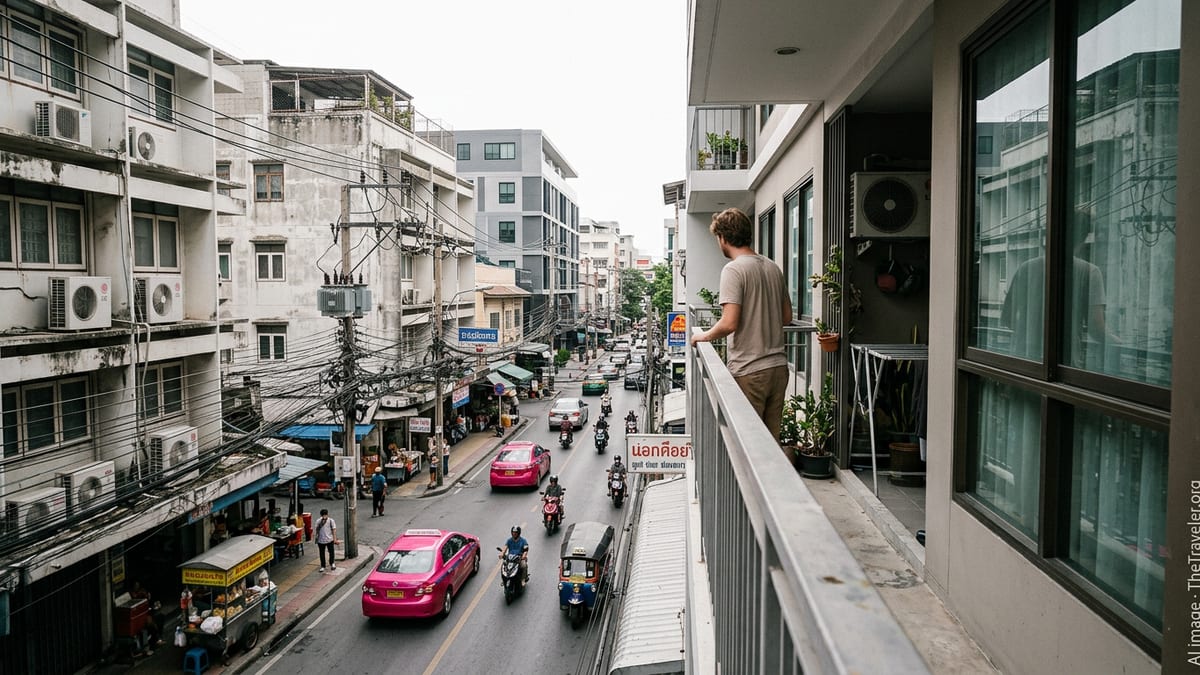
Rental Add-ons and Building Charges Beyond the Advertised Rent
Headline rental prices in Thailand can appear very competitive compared with major Western cities, but the advertised figure often excludes mandatory building-related charges. In many apartment-style buildings, particularly in tourist and expat-heavy areas, landlords may add monthly “service” or “common area” fees that range from a few hundred to over 1,500 baht per month depending on building size, facilities, and location. These can cover security, cleaning of common areas, basic maintenance, and management office costs, and are sometimes not disclosed until the contract signing stage.
Some lower-cost apartment blocks also bundle utilities into fixed surcharges rather than passing on the official utility bills. For example, a landlord may quote 1,000 to 1,500 baht per month as a flat “utilities” charge regardless of actual usage, which can be significantly higher than paying the government tariff directly for modest consumption levels. In higher-end condominiums where tenants pay the official bills, juristic (building management) fees are usually paid by the owner, but ad hoc building charges, move-in deposits for use of lifts, or keycard fees may still be passed to tenants.
It is also common practice to require an initial security deposit equivalent to one to two months of rent, plus the first month’s rent upfront. While this is not strictly a hidden cost, expats sometimes underestimate the cash tied up for the duration of the lease, particularly where refunding the deposit can be slow or subject to deductions for cleaning, repainting, or minor wear and tear at the landlord’s discretion.
For expats relocating with pets, additional pet deposits or recurring pet fees are increasingly common in urban buildings. These charges can be substantial relative to rent, particularly in Bangkok and other major cities where pet-friendly stock is limited and landlords price in risk or additional cleaning at lease end.
Utility Pricing Variations and Climate-Driven Consumption
Utility costs in Thailand are not inherently high by international standards, but two factors frequently produce budget overruns for new arrivals: variable pricing by landlords and high air-conditioning usage. The official electricity tariff averages around 4 to 5 baht per kilowatt-hour for residential users in 2026, and residential water in major metropolitan areas is often around 10 to 20 baht per cubic meter. However, many private apartment buildings and some condominium landlords charge markups on these government rates, particularly for short-term or foreign tenants, which can increase effective electricity rates to 6 to 8 baht per kilowatt-hour and water charges to several times the state tariff.
This markup, combined with heavy air-conditioning use in hot season, can push monthly electricity costs significantly higher than remote cost-of-living estimates assume. Rough benchmarks from recent expat-focused guides suggest that a single person in a one-bedroom unit using air-conditioning daily can easily reach 1,500 to 2,500 baht per month for electricity in a condominium, with heavier use pushing costs to 4,000 baht or more during the hottest months. Water is usually a small component of the budget, but when charged at inflated building rates or bundled into fixed fees, it may no longer be negligible.
Additional household-running costs include garbage collection or municipal service charges (sometimes embedded in rent or building fees), and connection or installation fees when setting up new internet or pay-TV services. While headline home fiber plans may advertise monthly fees in the 400 to 800 baht range for mid-tier speeds, one-time installation, router deposits, or early termination penalties if leaving before the contract term can add to the effective cost of connectivity over a short or medium-term stay.
Expats choosing older or poorly insulated buildings also face higher cooling requirements. Units with large west-facing windows or without effective shading typically require more air-conditioning. Over the course of a year, this building-specific factor can create material differences in electricity expenditure between two apartments with similar floor areas and rental prices.
Banking, Cards, and Cross-Border Money Movement Costs
Foreign residents often absorb a range of small but frequent banking-related charges, particularly before establishing a local account and smooth transfer routines. Foreign-issued debit and credit cards are typically subject to local ATM usage fees that can be around 150 to 220 baht per withdrawal, in addition to any charges from the home bank or network. With frequent cash withdrawals, this quickly becomes a non-trivial expense relative to typical monthly local expenditure.
Transferring funds into or out of Thailand also carries less obvious costs. Traditional bank wires into Thailand may involve a sending bank fee in the origin country, a Thai receiving bank fee, and potentially intermediary bank charges deducted from the principal. Thai bank fee schedules commonly list inbound international transfer handling fees plus an additional percentage commission in lieu of exchange for foreign currency conversions, often around 0.25 percent of the transfer value with minimum thresholds, meaning that even moderate transfers can incur several hundred baht in bank charges.
For outbound transfers from Thailand to an overseas account, large Thai banks typically charge a flat fee per transaction plus any correspondent bank fees. Publicly available fee tables show outbound international transfer charges in the range of several hundred to over 1,000 baht per transaction depending on options chosen, with additional percentage-based exchange commissions in some cases. For expats making regular remittances for mortgages, pensions, or family support, these charges reduce effective income and should be treated as a recurring cost of living.
Foreign exchange spreads represent a further embedded cost. The difference between mid-market exchange rates and retail bank or money transfer provider rates means that expats effectively lose a percentage of each transfer’s value. Even where low-fee fintech providers are used, small per-transaction fees and spreads remain. Over time, this can equate to a meaningful hidden tax on income earned in one currency and spent or invested in another, particularly for retirees or remote workers drawing foreign pensions or salaries.
Transport Frictions, Dual Pricing, and Urban Mobility Costs
At first glance, local transport in Thailand appears inexpensive relative to Western cities, with low official fares on mass transit and affordable motorcycles and taxis. However, there are several less obvious cost drivers that can disproportionately affect foreigners. In major cities, ride-hailing and taxi prices can surge significantly during peak periods, bad weather, or in tourist-focused zones. Expats who rely heavily on ride-hailing instead of a mix of public transport and walking may see monthly transport costs that are substantially higher than headline averages suggest.
Outside dense mass-transit areas, many expats find they need either a personal vehicle or extensive use of motorcycle taxis. The base fare for motorcycle taxis for short distances is low, but frequent short hops quickly accumulate, particularly in areas where safe or practical walking routes are limited. For expats uncomfortable riding motorcycles themselves, the reliance on drivers can convert what seems like a minor convenience into a standing monthly budget line.
Additionally, foreign residents often encounter informal dual pricing, where certain services or facilities quote higher prices to foreigners than to Thai nationals. While formal dual pricing is most visible in tourist attractions and national parks and therefore more of a leisure than a living cost, informal differential pricing can extend to parking, local services, and ad hoc dealings with repair services or small vendors in heavily touristed zones. Even where the absolute amounts are relatively small, systematic differentials can lead to higher recurring outlays on relatively mundane services over time.
For those choosing to own a car or motorcycle, there are ongoing costs for registration, compulsory insurance, optional higher-coverage insurance, and regular maintenance. Many expats underestimate the impact of frequent short-trip urban driving on maintenance schedules. Independent workshops may be inexpensive by global standards, but the frequency of use, occasional parts import requirements for certain foreign models, and the need for periodic safety upgrades or replacements can add complexity and cost that is not immediately visible in initial relocation budgets.
Immigration-Linked Administrative Fines and Compliance Costs
While immigration status and visas are separate topics, their associated ongoing compliance costs are an important hidden financial factor in daily life. Thailand strictly enforces overstay rules. Official guidance indicates a standard overstay fine of 500 baht per day, with cumulative caps and potential bans from re-entry in cases of prolonged non-compliance. Even a short unintentional overstay due to miscalculation, delayed border trips, or illness can result in several thousand baht in fines payable on departure or at the immigration office.
For long-stay residents on extensions of stay, there is a legal requirement to report their address to immigration every 90 days when remaining in the country. Failure to submit this 90-day report on time can result in fines, commonly cited by practitioners and recent cases as up to 2,000 baht per missed reporting. While not a frequent event for well-organised residents, occasional lapses or confusion after travel can lead to unexpected administrative penalties that are not factored into standard living cost calculators.
There is also the TM30 notification system, under which property owners or managers must report the presence of foreign guests within 24 hours of arrival. In practice, some landlords do not comply voluntarily and may try to shift the administrative burden and associated fines onto the tenant. Reports from practitioners and recent guidance indicate fines for unreported stays in the low thousands of baht per instance, sometimes higher in cases of repeated non-compliance. Some landlords pre-emptively charge tenants small recurring fees or one-off payments for handling TM30 reporting, effectively converting a regulatory duty into a billable service.
Where visa runs, border hops, or agent-assisted extensions are used to maintain status, transport to immigration offices or border points, agent service fees, and opportunity costs of time away from work all contribute to the real cost of maintaining lawful presence. Although individual amounts may be modest compared with rent or schooling, these are often overlooked when prospective expats model monthly living budgets.
Documentation, Translations, and Local Bureaucracy Charges
Accessing a range of services as a foreign resident typically requires supporting documentation that carries its own costs. For example, opening certain bank accounts, purchasing vehicles, obtaining local driving licences, or signing long-term leases may require certified translations of foreign documents, notarisation, or official letters from embassies or local authorities. Translation services into Thai, notarisation, and certified copies often cost several hundred to a few thousand baht per document set, especially for legal or financial documents.
Residence certificates issued by immigration or local authorities, which may be required for banking, vehicle registration, or licensing, frequently involve application fees and, in practice, may involve additional service fees if processed through agents or facilitating service companies. These costs are usually once-off per major administrative process, but for expats who change addresses, banks, or vehicles, they can recur several times over a multi-year stay.
Obtaining or converting a foreign driver’s licence to a Thai licence, although relatively straightforward compared with some jurisdictions, includes examination fees, health certificates from clinics, potential mandatory training costs, and periodic renewal fees. Each element is individually minor, but combined they form an ancillary category of expenses directly related to bureaucratic integration rather than day-to-day consumption.
Expats establishing small businesses or working as freelancers may also face registration costs, mandatory accounting fees, and statutory filings even where revenue is modest. While these are part of business operating expenses rather than household consumer expenditures, they can significantly shape the overall financial profile of life in Thailand for those whose relocation is intertwined with self-employment or small enterprise activity.
The Takeaway
Thailand remains relatively affordable in global terms, but the real cost of living for expats is more complex than simple rent and food comparisons. A series of smaller, often foreigner-specific or behaviour-dependent expenses accumulate: building service charges, utility markups, international banking fees, transportation frictions, and immigration-linked fines or service payments. These costs tend to be fragmented and irregular, making them easy to omit when planning and difficult to benchmark against headline “average” budgets.
Prospective residents evaluating relocation to Thailand should include contingency margins in their financial planning to account for these hidden or underappreciated costs. A prudent approach is to treat online cost-of-living estimates as a baseline and add a flexible buffer to capture building-specific charges, elevated utilities, periodic documentation and compliance costs, and a realistic allowance for international money movement. Doing so improves the likelihood that a move to Thailand aligns with long-term financial expectations and reduces the risk of budget-related stress after arrival.
FAQ
Q1. How much extra should expats budget for hidden costs beyond published cost-of-living estimates?
A reasonable guideline is to add a buffer of 15 to 25 percent on top of baseline estimates to cover building fees, utility markups, banking charges, and administrative costs, although the exact figure will depend on lifestyle and location.
Q2. Are utility costs in Thailand generally cheap for expats?
Base tariffs are moderate, but effective costs can rise due to landlord markups and heavy air-conditioning usage. In practice, many expats underestimate electricity usage during hot months and encounter higher-than-expected bills.
Q3. Why are my electricity and water rates higher than what official tariffs suggest?
Many private apartments and some landlords in condominiums charge per-unit rates above government tariffs or bundle utilities into fixed monthly amounts, especially for foreign or short-term tenants, which increases actual costs.
Q4. How significant are ATM and banking fees for daily living?
Foreign card ATM fees of around a couple of hundred baht per withdrawal can add up quickly, and international transfer fees plus exchange-rate spreads can reduce the value of income moved into or out of Thailand over time.
Q5. Do immigration fines and reporting requirements materially affect the cost of living?
They can if neglected. Overstay fines and penalties for missed 90-day reports or unfiled TM30 notifications can reach several thousand baht per incident, so occasional lapses may noticeably impact annual costs.
Q6. Are building service charges included in advertised rent?
Not always. In some cases, common area or service fees are billed separately or disclosed only at contract stage, particularly in managed apartments and some condominiums, so they should be explicitly confirmed before signing.
Q7. Is dual pricing a major financial issue for long-term residents?
Dual pricing is most visible in leisure and tourism contexts, which affects discretionary rather than core living costs. However, in heavily touristed areas it can also influence day-to-day services and should be factored into local budgets.
Q8. How often will I face document and translation costs?
Most translation and certification costs arise during setup phases such as banking, licensing, and leasing. However, expats who change jobs, addresses, or vehicles frequently may incur these costs multiple times over several years.
Q9. Can using local banks and transfer services significantly reduce hidden costs?
Yes. Opening a local bank account, minimising foreign card withdrawals, and choosing efficient international transfer solutions can reduce recurring fees and foreign exchange losses, although some residual costs will always exist.
Q10. What is the best way to avoid unexpected financial shocks after relocating?
The most effective approach is to request full cost breakdowns from landlords and service providers, plan for immigration and documentation fees, track small recurring charges from the outset, and maintain a contingency buffer in the monthly budget.