

Headline cost-of-living indicators in the United Arab Emirates can appear straightforward, particularly in major hubs such as Dubai and Abu Dhabi. However, many expatriates underestimate or overlook a range of structural fees, usage-based charges and indirect taxes that materially change the real cost of day-to-day life. Understanding these hidden or easily missed expenses before relocating is essential for accurate budgeting and for negotiating compensation packages that match actual on-the-ground costs.
Municipality and Housing Fees Embedded in Utility Bills
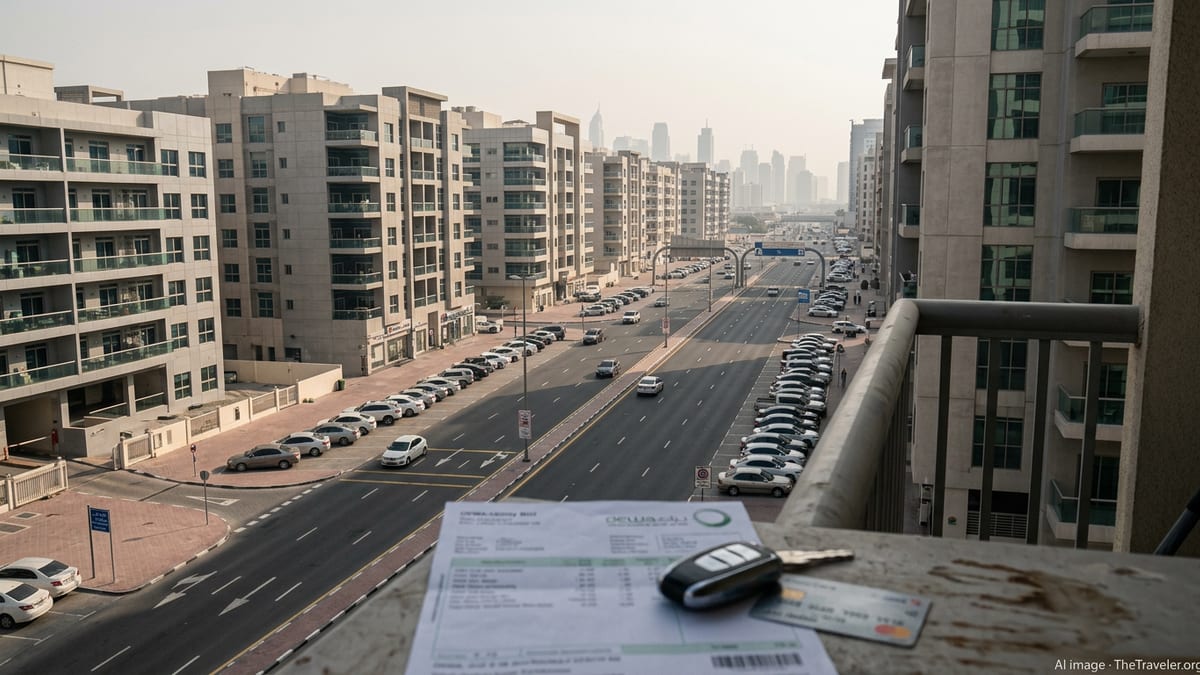
One of the most frequently overlooked costs is the municipality or housing fee applied to tenants, usually collected through electricity and water bills. In Dubai, expatriate residents are typically charged a housing fee calculated as approximately 5 percent of the annual rental value, divided over 12 months and added to the DEWA (Dubai Electricity and Water Authority) bill as a separate line item. For an annual rent of AED 100,000, this translates into roughly AED 5,000 per year, or about AED 417 per month, in addition to normal utility consumption charges.
Abu Dhabi has a similar mechanism, with a municipality fee of around 5 percent of the annual rent collected via ADDC (Abu Dhabi Distribution Company) bills for most non-national tenants. Official guidance indicates the fee is based on either the declared rental value or a reference rental index, whichever is higher, and then invoiced monthly. This means that even if a tenant negotiates a below-market rent, the municipality may still apply a higher reference value, raising the effective cost of occupation beyond the signed lease price.
Other emirates can apply different percentages or structures, but the principle is similar: a recurring housing-related levy that is not always highlighted in headline rent figures. For new arrivals who base their budget solely on advertised rent, discovering that utility invoices contain an additional several hundred dirhams each month for municipality fees can significantly narrow discretionary income. It is therefore essential to clarify, by emirate, how housing or municipality fees are calculated and whether they apply to the specific accommodation type and visa category.
These housing fees are generally not negotiable with landlords, because they are set at municipal level and collected by utility providers on behalf of local authorities. In effect, they function as a quasi-property tax on tenants, which is particularly important for expatriates coming from countries where such levies are paid by landlords or embedded in overall rent rather than appearing as a separate recurring charge.
Utility Deposits, Connection Charges and Tiered Tariffs
A second area where new expatriates often underestimate costs is utility initiation and ongoing pricing. In Dubai, setting up a DEWA account normally requires both an activation fee and a refundable security deposit. Recent schedules indicate a typical activation fee of around AED 110 to 130 plus VAT for apartments, and a refundable deposit of about AED 2,000 for apartments and approximately AED 4,000 for villas. Similar deposit requirements exist in other emirates under their respective distribution companies. While deposits are returned when the account is closed and bills are settled, they create an immediate cash outlay that can be material during the move-in period.
Connection or administration charges may also apply for services such as district cooling, which is common in many modern buildings. In addition to per-unit chilled water consumption, some providers levy fixed monthly demand charges, metering fees and connection charges. These fixed elements can add several hundred dirhams per month regardless of actual cooling usage, particularly in larger units, which can surprise new residents who assumed that cooling costs would track only seasonal air-conditioning use.
Beyond one-off initiation costs, the UAE uses progressive and seasonal tariff structures for electricity and water that can push bills sharply higher than headline per-unit rates suggest. For example, tariff bands often distinguish between “green” (efficient) and higher consumption ranges, with significantly higher prices per kilowatt-hour or per cubic meter once certain thresholds are exceeded. In hot months, high air-conditioning use in villas or larger apartments can easily move households into more expensive bands, especially where insulation is poor or where multiple air-conditioning units run simultaneously.
It is also important to recognize that some service charges are billed separately from utilities. In many multi-unit developments, building service charges for common area maintenance, security and facilities can be embedded in rent, but in some arrangements they may be passed through to tenants. Published ranges of AED 9 to 40 per square foot per year for service charges in certain emirates illustrate how, for larger apartments or townhouses, these fees can rival or exceed the utility bill itself. New expatriates should therefore ask for a full breakdown of all recurring charges tied to their address, not just electricity and water.
Transport-Related Costs: Tolls, Parking and Vehicle Ownership
Transport expenditure extends beyond fuel and car purchase costs, and several UAE-specific elements are often missed in relocation budgets. In Dubai, toll gates branded under an electronic road-toll system charge a fixed amount per gate pass, typically in the range of AED 4 per crossing, capped per day in certain structures. While each individual toll appears modest, daily commuting across multiple gates can accumulate to AED 200 to 300 per month or more for frequent drivers, especially those living in suburbs and working in central districts.
Parking is another area where new expatriates can encounter hidden expenditure. In central business districts and high-density residential areas, metered on-street parking and paid parking lots are common. Hourly rates, while modest on a single-visit basis, translate into substantial monthly totals for residents who cannot secure free parking at home or at work. Some apartment buildings offer only one allocated space per unit, meaning households with a second car may need to pay for additional parking in the building or rely on street parking fees where permitted.
Vehicle registration, periodic inspection and insurance also carry recurring charges that may be higher than new arrivals expect when converting from their home currency. Annual registration and testing fees are generally not excessive individually, but they layer onto tolls, parking and financing costs. Insurance premiums can be significantly affected by factors such as vehicle age, type, the driver’s license origin and claims history. For expatriates arriving from jurisdictions viewed as higher risk or with limited driving history in the region, comprehensive insurance quotes can be noticeably higher than expected, particularly for larger SUVs popular in the UAE market.
Finally, those relying primarily on ride-hailing and taxis should recognize that surge pricing during peak hours, weekend nights and high-demand periods can push monthly transport expenditure above what initial fare tables suggest. While public transport offers cost-effective options in certain corridors, many residential zones still require some reliance on private vehicles or ride-hailing for everyday mobility, and these cumulative, usage-based costs are easy to underestimate at the planning stage.
Education and Child-Related Extras Beyond Tuition
Families relocating to the UAE usually expect to pay for private or international schooling, but often underestimate the full ecosystem of education-related fees beyond the published annual tuition. Across Dubai and Abu Dhabi, international school tuition for expatriate children frequently ranges from around AED 25,000 to more than AED 80,000 per year, depending on curriculum and reputation. However, parents are also charged application fees, registration fees, capital or development levies, and sometimes assessment fees for new students. These can collectively add several thousand dirhams per child in the first year alone.
On an ongoing basis, many schools charge supplementary amounts for transportation, uniforms, extracurricular activities, educational trips and examination fees. School bus services can represent several hundred dirhams per month per child depending on distance and emirate. Uniform packages, mandatory devices such as tablets or laptops for older students, and optional but socially important activities can substantially enlarge the true annual education cost compared with headline tuition figures.
Another often overlooked element is inflation in school fees. While regulators in some emirates cap annual increases through index-linked formulas, schools can still apply for approved fee hikes, especially where they invest in new facilities or achieve stronger inspection ratings. Over a multi-year assignment, families can therefore experience cumulative increases in schooling costs beyond normal inflation, which can strain budgets if education allowances from employers are fixed rather than indexed.
For younger children, nursery and early years fees can also be high on a per-hour basis, and often come with registration charges similar to those in primary and secondary schools. Families with multiple children under school age can find that combined nursery, childcare and schooling outlays consume a large share of household income, even when headline tuition appeared manageable at first glance.
Consumption Taxes, “Sin” Goods and Lifestyle-Linked Charges
Although the UAE has no broad personal income tax on employment income, indirect taxation affects many everyday purchases and can be underestimated by new expatriates. Value-added tax at a standard rate of 5 percent applies to most goods and services, which is relatively modest but still meaningful when applied to large purchases and regular household spending. More material for certain lifestyles, however, are excise taxes on selected goods considered harmful to health.
Since 2017, carbonated drinks and energy drinks, along with tobacco products, have been subject to excise tax, initially set at 50 percent for many soft drinks and 100 percent for energy drinks and tobacco. In subsequent years, coverage expanded to include a broader range of sweetened beverages and vaping liquids. Retail prices for these products therefore incorporate significant tax components, making them considerably more expensive than in many expatriates’ home markets.
The excise framework for sweetened drinks is in the process of changing again. Announced reforms moving from a simple percentage-of-retail-price model towards a tiered volumetric system based on sugar content are scheduled to take effect from early 2026. Under this approach, beverages with higher sugar concentrations will attract higher per-liter excise rates, while low or zero-sugar alternatives will see little or no excise levy. Although the specific per-liter amounts vary by sugar band, the overall policy direction suggests that regular consumption of high-sugar drinks will remain a relatively expensive habit, especially for families with children.
For expatriates who smoke, use e-cigarettes, or frequently purchase energy drinks and sugary beverages, these indirect taxes can meaningfully increase monthly discretionary spending. When combined with the 5 percent VAT applied at the final retail stage, effective price uplifts for some products can be substantial. Relocation candidates who benchmark living costs using pre-tax or wholesale prices in other regions may therefore under-budget for everyday consumer items that fall into excise categories.
Banking, Telecoms and Administrative Friction Costs
Another set of hidden costs arises from financial and administrative services, which often involve recurring fees higher than expatriates are accustomed to in their home countries. Local banks may require minimum balance thresholds on current or savings accounts, with monthly maintenance fees applied when balances fall below specified levels. International transfer fees, currency conversion spreads and credit card annual charges also contribute to the cost of financial life for expatriates moving funds in and out of the UAE.
Telecoms services represent a further area where headline plan prices may not capture the final bill. Mobile and home internet packages are typically contracted on fixed-term plans with defined data and voice allowances. Exceeding data caps, adding roaming bundles, or subscribing to premium TV and streaming packages can rapidly push monthly telecoms costs significantly above base plan marketing rates. Equipment charges, router deposits and early termination fees can also apply, particularly when residents move homes or exit the country before contracts expire.
On the administrative side, there are also costs associated with routine documentation required for daily life, such as attestations, translations, document stamping, and certification for use in schools, banks or government processes. While individual service fees can appear small, the volume of documentation required at the start of an assignment can lead to a noticeable one-time outlay. For example, notarizing degree certificates, translating marriage or birth certificates where required, and obtaining multiple certified copies can collectively run into several thousand dirhams for a family.
In addition, some expatriates encounter periodic charges for PO box rental, courier delivery of official documents, and the use of government service centers or private typing offices that assist with form submission. These are not usually presented in standard cost-of-living indices yet are structurally embedded in the way resident services operate and therefore deserve explicit line items in a comprehensive relocation budget.
The Takeaway
Headline narratives about the UAE often emphasize relatively high salaries and the absence of personal income tax, which can give prospective expatriates the impression that net disposable income will be significantly higher than in their current location. However, a detailed review of hidden or easily underestimated costs reveals a more complex picture. Municipality housing fees added to utility bills, security deposits and tiered tariffs for utilities, transport-related tolls and parking, education extras beyond tuition, excise taxes on selected consumer goods, and a variety of banking, telecom and administrative fees all combine to create a cost structure that is not immediately visible in rent prices or simple cost-of-living comparisons.
For decision-grade relocation planning, it is therefore important to construct a granular budget that captures both recurring and one-off charges over at least the first 12 to 24 months in the country. Employers designing relocation packages should distinguish between visible costs, such as base rent and school tuition, and systemic hidden costs, such as housing fees, deposits and excise-inflated consumer prices. Individual assignees should also stress-test their household budgets against realistic scenarios that include seasonal peaks in utilities, full transport usage including tolls, and lifestyle-related spending on taxed goods.
Accurate awareness of these hidden costs does not negate the advantages of a UAE posting, but it does enable more realistic expectations and better financial outcomes. Candidates able to factor these elements into salary negotiations, housing choices and everyday consumption patterns are more likely to experience sustainable living standards and to avoid financial stress that can otherwise emerge several months into an assignment when the full cost structure becomes clear.
FAQ
Q1. What is the municipality or housing fee in the UAE and who pays it?
In most emirates, a housing or municipality fee of around 5 percent of annual rent is charged to tenants, particularly expatriates, and collected via monthly utility bills rather than being paid by landlords.
Q2. How much should new expatriates budget for utility deposits and connection charges?
New arrivals should expect refundable deposits of roughly AED 2,000 for apartments and AED 4,000 for villas, plus activation or connection fees and, where applicable, separate charges for district cooling services.
Q3. Are electricity and water tariffs in the UAE higher than they first appear?
Yes. Tariffs are often tiered, with lower rates for efficient usage and higher rates above certain thresholds, which can significantly increase bills during hot months when air-conditioning demand is high.
Q4. How expensive are road tolls and parking for drivers in Dubai and other emirates?
Electronic toll gates typically charge a few dirhams per crossing, but daily commuting can total AED 200 to 300 or more per month, while paid parking in dense areas can add a similar amount depending on usage.
Q5. What education-related costs are commonly missed when evaluating a UAE move?
Beyond tuition, families often underestimate application, registration and capital fees, school bus charges, uniforms, devices, extracurricular activities and exam fees, which can add thousands of dirhams per child annually.
Q6. How do UAE excise taxes affect the cost of everyday consumer goods?
Excise taxes significantly increase prices for carbonated drinks, energy drinks, tobacco products and many sugary beverages, meaning regular consumers of these items face much higher monthly spending than basic price lists suggest.
Q7. Will the new sugar-based beverage tax from 2026 change living costs for expatriates?
The shift to a tiered, sugar-content-based tax is likely to keep high-sugar drinks relatively expensive while favoring lower-sugar options, so households that maintain high consumption of sweetened beverages may see continued elevated costs.
Q8. Are banking and telecom fees in the UAE meaningfully different from other markets?
Many banks apply minimum balance and transfer fees, while telecom providers charge for exceeding data limits, roaming and premium content, so combined banking and telecom costs can be higher than in some expatriates’ home countries.
Q9. What one-off administrative expenses often surprise new residents?
Certification, translation and attestation of documents, PO box rentals, courier charges and fees paid to service centers or typing offices can collectively represent a notable, though often overlooked, setup cost in the first year.
Q10. How can relocation candidates realistically plan for these hidden costs before moving?
They should obtain full breakdowns of housing-related fees, utility deposits, schooling extras and transport charges by emirate, then integrate conservative estimates for excise-taxed goods, banking fees and telecom services into a detailed household budget.