

More news on this day
Across Europe, a wave of lesser-known destinations is drawing solo travelers seeking culture, landscapes and a sense of personal freedom, with emerging data and recent coverage pointing to smaller towns, islands and rural regions as compelling alternatives to traditional city breaks.
Get the latest news straight to your inbox!
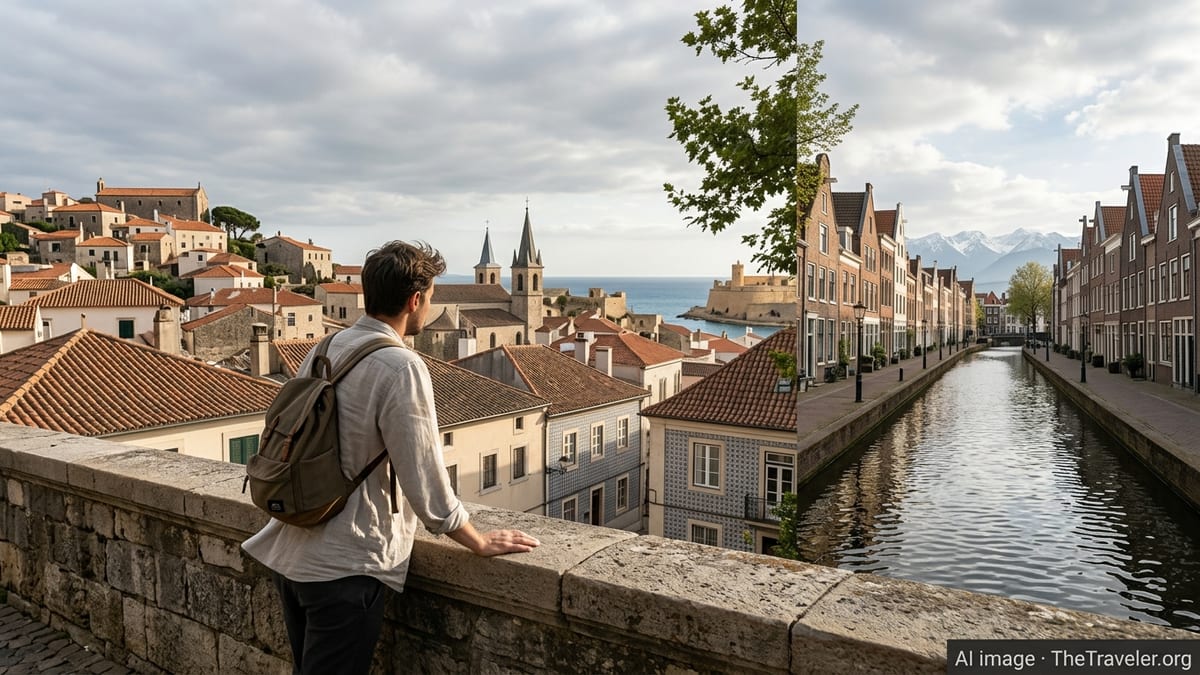
Solo Travel Trends Push Beyond Europe’s Usual Hotspots
Recent travel trend reports indicate that experiential and culture-focused trips are growing faster than traditional sightseeing, with many travelers now prioritizing crowd avoidance and deeper connections with local life. Analysts tracking 2024 and 2025 tourism patterns note that visitors are increasingly looking beyond capital cities toward secondary regions and rural areas that promise authenticity alongside basic infrastructure and safety.
Industry research on cross-border tourism suggests a marked rise in demand for “local culture first” experiences, from neighborhood food markets to heritage crafts and community-led tours. This shift is particularly visible among solo travelers, who often favor flexible itineraries, walkable centers and access to public transport over all-inclusive resorts or rigid group tours.
Across Italy, Malta, Portugal, Romania, France, the Netherlands, Slovenia and Norway, publicly available information highlights a similar pattern: well-known hubs such as Rome, Paris or Amsterdam remain busy, but smaller islands, medieval towns and coastal villages are attracting increased attention. These places are being framed as spaces where solo visitors can explore at their own pace while still finding social contact in cafés, cultural venues and outdoor activities.
Specialist tour operators focused on solo holidays are also expanding programs in these countries, promoting itineraries that combine landscape, history and independent time. Recent brochures highlight “secret” or “hidden” experiences in Malta, Slovenia and Norway, signaling that the market for quieter, culture-rich escapes is broadening beyond niche adventure travel.
Italy, Malta and Portugal: Islands, Villages and Slow Coasts
In Italy, coverage of emerging destinations frequently points to islands and lesser-known coastal stretches rather than the familiar art cities. Sardinia in particular has been profiled in recent travel features as an “emerging” Mediterranean destination, with reports of rising visitor numbers from North America and renewed interest in the island’s prehistoric stone structures and rural interior. These accounts describe a mix of clear-water beaches, small agricultural villages and archaeological sites that suit solo travelers who are comfortable renting a car or using regional buses.
Elsewhere in Italy, smaller towns in regions such as Puglia, Umbria and Trentino are being promoted by regional tourism bodies and independent guides as alternatives to crowded hotspots. Public information stresses walking-friendly historic centers, local trattorie and proximity to hiking or cycling routes, making them appealing bases for solo visitors seeking both culture and outdoor time.
Malta, meanwhile, is seeing increased positioning as a compact, navigable destination ideal for solo travelers. Tour catalogues for 2025 and beyond feature itineraries that pair Valletta’s fortified skyline with lesser-known bays, fishing villages and inland hilltop towns described as “hidden gems.” The country’s dense bus network, English as an official language and year-round ferry links between islands are often cited as factors that reduce friction for first-time solo visitors.
In Portugal, attention continues to expand beyond Lisbon and Porto toward smaller Atlantic islands and regional centers. Recent solo travel coverage highlights the appeal of coastal neighborhoods and viewpoints in Lisbon for meeting other travelers, while separate guides emphasize rural wine regions and quieter coastal towns as options for those wanting more space. Islands such as Madeira and the Azores are frequently described by travel writers and online communities as dramatic, nature-focused destinations where independent travelers can mix hiking, whale watching and village stays.
Romania and Slovenia: Rural Heritage and Alpine Quiet
Romania has emerged over the past year as a favored “surprise” destination in online solo travel discussions, particularly for its combination of affordability, historic architecture and rural landscapes. Travel coverage of Transylvania notes a growing interest in fortified villages and Saxon towns, where cobbled streets, defensive churches and pastel houses create a strong sense of place. Articles also describe a “renaissance” of interest in traditional crafts, guesthouses in restored manor estates and heritage-led rural tourism projects.
Smaller Romanian towns such as Sibiu and Sighișoara are frequently mentioned in recent features and traveler accounts as places where solo visitors can explore medieval centers on foot and easily connect by train or bus. Other sources highlight wellness-focused spa towns, pottery centers like Horezu and regional folklore festivals that introduce visitors to local music, dance and costume. Together, these threads suggest that Romania’s less-publicized regions are gaining momentum among independent travelers who value culture over nightlife.
In Slovenia, official and independent travel guides have begun to publish dedicated “off the beaten path” itineraries, steering visitors beyond Ljubljana and Lake Bled toward alpine valleys and traditional villages. Resources produced by national and regional tourism bodies describe areas such as the Solčava region and the Logar Valley, where panoramic roads, wooden hayracks and family-run farms characterize the landscape. These locations are framed as quiet, scenic bases for hiking, cycling and slow exploration.
Additional coverage from hiking blogs and solo travel sites points to coastal villages like Piran and Koper, as well as small inland communities, as rewarding stops for travelers seeking local seafood, Venetian-influenced architecture and smaller guesthouses. Reports emphasize that distances are short and public transport is relatively straightforward, a combination that suits solo travelers who want mountain trails, sea views and manageable logistics in a single trip.
France and the Netherlands: Beyond Capital Crowds
While Paris and Amsterdam remain two of Europe’s most visited cities, recent travel writing and community discussions increasingly highlight secondary French and Dutch cities as more relaxed options for solo explorers. In France, towns such as Colmar and Strasbourg in the east, along with smaller centers in regions like Provence, Brittany and the Loire, are promoted as walkable, culture-rich bases that avoid the capital’s high prices and summer congestion.
Regional tourism campaigns and guidebook updates point to canal-lined old towns, local food markets and frequent regional rail connections as key advantages for solo travelers. The combination of compact historic districts and clear signage allows visitors to navigate independently, while museums, seasonal festivals and vineyard routes offer structured activities that can be joined for a day without committing to a group tour.
In the Netherlands, recent commentary from travelers describes cities such as Utrecht as underrated alternatives to Amsterdam, with similar canals and gabled houses but a more relaxed pace. Public information from Dutch tourism sources promotes mid-size cities including Haarlem, Leiden and Den Bosch, emphasizing their art museums, historic cores and easy rail access from the capital and Schiphol airport.
These cities are often cited as particularly suitable for solo visitors due to their strong cycling infrastructure, extensive café culture and generally high level of English proficiency. Such conditions reduce the friction of navigating alone and encourage spontaneous exploration of neighborhoods, waterfronts and cultural venues.
Norway and the New Appeal of Space and Silence
Norway’s long coastline and dramatic fjord landscapes have long attracted organized tours, yet more recent itineraries aimed at solo travelers emphasize small-scale experiences and the appeal of wide-open spaces. Specialist operators now feature trips combining northern lights viewing, husky sledding and stays in remote lodges, marketed as safe yet adventurous options for those traveling alone.
Tourism reports and national promotional materials continue to highlight Norway’s strong transport infrastructure, including coastal ferries and rail lines, which allows solo visitors to move independently between cities, fjords and Arctic regions. Smaller destinations beyond Oslo and Bergen, such as coastal fishing villages, island communities and inland hiking hubs, are increasingly referenced in travel media as places where visitors can experience local life at a slower pace.
Travel trend analysis for 2024 and 2025 notes that “reverse tourism” and crowd avoidance are shaping many travelers’ choices, and Norway’s low-density landscapes position it strongly within this movement. For solo travelers, this often translates into journeys organized around daylight hours, weather windows and seasonal phenomena, rather than around packed urban schedules.
Across all of these countries, the growing focus on cultural depth, natural scenery and personal freedom is reshaping how and where solo travelers move through Europe. Instead of racing through landmark checklists, more visitors are using emerging information about hidden gems to design quieter, longer stays anchored in local rhythm, whether that means a hilltop village in Malta, a Transylvanian hamlet in Romania or an alpine valley in Slovenia.