

More news on this day
A sharp rebound in global air travel has set up 2026 to be one of the busiest years for flight bookings since the pandemic, yet behind record demand and expanding route maps, a fast-rising tide of ancillary charges and opaque pricing is adding a hidden billion-dollar burden to what passengers actually pay.
Get the latest news straight to your inbox!
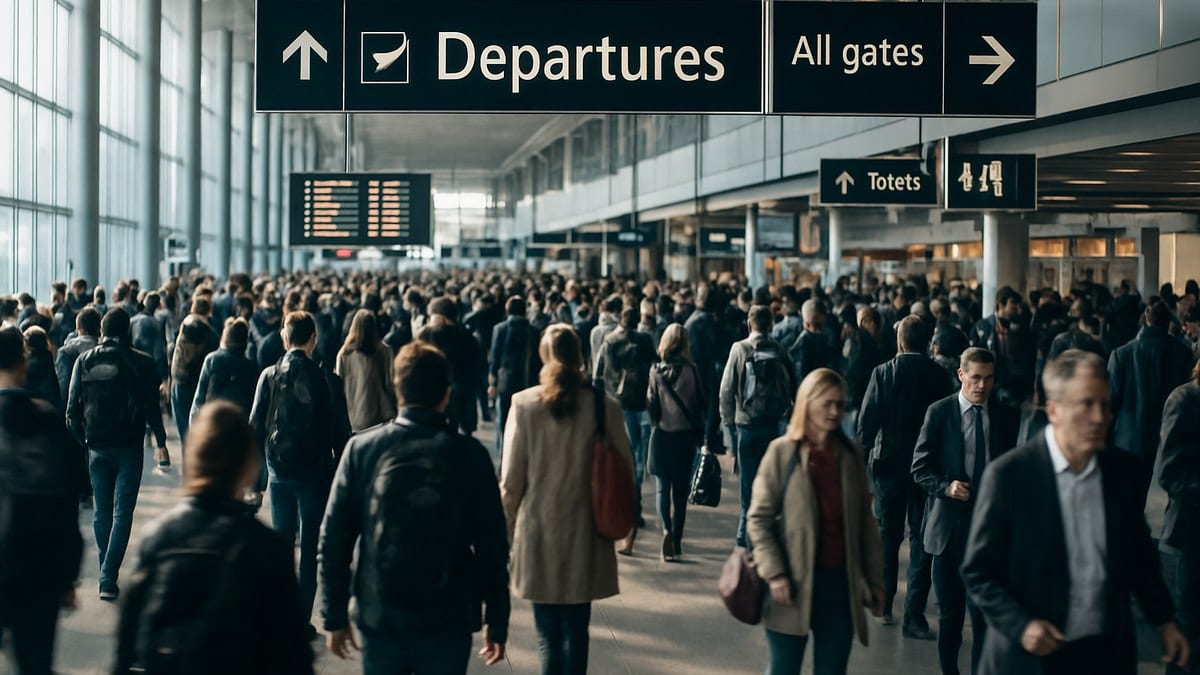
Record Demand Fuels a New Wave of 2026 Bookings
Industry forecasts point to a sustained boom in air travel through 2025 and into 2026, as leisure and business flyers continue to prioritize trips despite higher living costs. Data compiled by the International Air Transport Association indicates that total airline revenue is projected to pass 1 trillion dollars, with passenger traffic still growing faster than global economic output. Travel technology providers are also reporting steady increases in air bookings, suggesting that consumers are committing to flights earlier and in greater numbers for the 2026 travel year.
Published outlooks for 2026 show airlines collectively on track to post a record net profit of around 41 billion dollars, with a net margin of roughly 3.9 percent. While these returns remain modest compared with other sectors, they underline the strength of underlying demand as carriers add capacity, reopen long-haul markets and launch new seasonal routes aimed at price-sensitive leisure travelers.
Reports on business aviation trends underscore the broader momentum. One global analysis found that March 2026 business jet departures rose by nearly a quarter compared with a year earlier, highlighting how corporate travel and premium leisure segments are also recovering. This layered growth across commercial and private flying is feeding a robust pipeline of bookings for peak seasons in late 2025 and 2026.
For passengers, however, headline fares and capacity tell only part of the story. Much of the industry’s improved financial outlook rests not on the base ticket price, but on the expanding universe of optional and sometimes unavoidable fees that accompany a booking from the first search screen to check-in at the airport.
Ancillary Revenue Becomes a Core Profit Engine
According to IATA’s latest financial outlook, airlines are expected to generate about 145 billion dollars in ancillary and other non-ticket revenues in 2026, up more than 5 percent from the prior year and accounting for a growing share of overall income. These revenues include baggage charges, seat selection and upgrade fees, priority boarding, change penalties, onboard sales and a range of bundled services sold during and after the booking process.
Independent analyses of airline profit drivers highlight that ancillary fees now represent close to 14 percent of industry revenue, a marked increase from pre-pandemic levels. In some markets and on certain low-cost carriers, ancillary income per passenger has become as important as the base fare itself, shaping how tickets are marketed and how travelers perceive value.
In the United States, congressional and regulatory scrutiny has focused in particular on baggage and seat assignment fees. A Senate subcommittee report cited in 2024 coverage estimated that just five large U.S. airlines collected more than 12 billion dollars in seat selection fees over a six-year period, with bag fees bringing in more than 25 billion dollars over the same window. Those figures have continued to grow as airlines refine dynamic pricing algorithms and segment cabins into a wider variety of paid seating options.
For the 2026 booking season, this means that the apparent recovery in airline profitability is closely tied to a business model where a significant portion of passenger spending is captured outside the base fare. The boom in bookings helps sustain route networks and aircraft investments, but it also magnifies the financial impact of even small changes in fee levels across millions of tickets.
‘Junk Fee’ Crackdowns Struggle to Reach Airfares
Regulators in major markets are moving to confront opaque pricing practices, but air travel sits in a complex and evolving regulatory space. In the United States, the Department of Transportation has issued a series of rules intended to improve fee transparency, including requirements that key ancillary charges be disclosed the first time a fare is displayed on airline or travel agency sites. Trade groups representing major carriers have pushed back, arguing in court filings that new disclosure rules exceed regulatory authority and risk confusing consumers by overloading them with information.
Separately, the Federal Trade Commission announced a wide-ranging “junk fees” rule in late 2024 targeting bait-and-switch pricing and hidden charges in sectors such as live-event ticketing and short-term lodging. The rule is designed to ensure that advertised prices reflect mandatory fees at the outset, with enforcement actions focused on companies that bury essential charges deep in the checkout process. While airfares are governed primarily by transportation regulators rather than this specific FTC rule, consumer advocates view it as part of a broader shift toward all-in pricing standards that could eventually influence airline practices.
Other jurisdictions are taking parallel steps. European regulators and several national consumer authorities have long pressed airlines and online travel agencies to present clearer, upfront prices, including all unavoidable taxes and surcharges. Industry monitoring shows some progress in how fares are displayed across major booking platforms, but travelers still report encountering add-ons that are difficult to avoid in practice, particularly for baggage and seat choice.
The result for 2026 is a patchwork environment in which regulatory pressure is rising, but enforcement remains uneven and many rules are either contested in court or limited to specific industries. This creates room for airlines and intermediaries to adjust how and where they present fees without necessarily reducing the overall amounts charged.
The Hidden Billion-Cost Behind a Single Trip
As millions of travelers lock in 2026 itineraries, the cumulative impact of ancillary charges is poised to reach new highs. Forecasts combining airline financial outlooks with recent growth in fee categories suggest that, globally, passengers will pay tens of billions of dollars in non-ticket charges in 2026 alone, with at least several billion more added to the total compared with the previous year.
Many of these costs arise from choices that did not previously exist or were once included in the fare. Basic economy products that restrict changes and boarding priority, expanded “preferred” seat maps, and automatic seat selection charges for families seeking to sit together all reshape the effective price of a trip. For budget-conscious travelers who must check luggage or who are flying on routes dominated by a small number of carriers, avoiding these fees can be difficult.
Publicly available data from airline financial statements and distribution companies show that revenue per booking has risen not only because of higher base fares, but also due to more aggressive cross-selling of extras such as insurance, airport transfers and lounge access. In some global distribution systems, average revenue per booking has grown faster than overall traffic, underlining the success of strategies that encourage passengers to spend more after choosing an initial fare.
For households planning long-haul trips or multi-stop itineraries in 2026, the hidden bill can be substantial once all legs and travelers are considered. A relatively modest fee applied per bag, per segment or per seat can compound into hundreds of extra dollars on a family booking, magnifying the shock when final totals are compared with early fare searches that did not fully surface every charge.
What 2026 Flyers Should Expect at Checkout
While policy debates continue, current trends suggest that 2026 travelers should expect the booking process to remain complex, even as some websites improve how they present prices. Consumer groups advise watching carefully for pre-selected extras, minimum fare types that exclude standard inclusions, and seat maps that make it challenging to choose non-premium options without incurring fees.
Industry reports indicate that some airlines and travel sellers are experimenting with more transparent, all-in pricing displays for competitive reasons, betting that clear totals will win trust and repeat business. Others continue to emphasize low headline fares in search results, only revealing the full cost of bags, seats and other essentials deeper in the flow. The coexistence of these approaches means that comparison shopping across multiple sites remains one of the few reliable ways to understand the real cost of a journey.
Analysts following airline profitability expect ancillary revenue to remain a critical buffer against volatility in fuel prices, labor costs and macroeconomic conditions. As long as fee income underpins balance sheets, the economic incentives that created the current system are unlikely to weaken on their own, even as regulators and consumer advocates push for clearer disclosures.
For now, the 2026 flight booking boom is set to continue, supported by resilient demand and an expanding global network. Yet behind the cheerful statistics on passenger growth and record industry profits, the hidden billion-cost of add-ons and “junk fees” is increasingly central to how air travel is priced, perceived and experienced.