

More news on this day
Flight delays in the United States are costing passengers far more than missed connections and frayed tempers, with new 2026 estimates suggesting U.S. travelers collectively shoulder around 18 billion dollars a year in lost time and out-of-pocket expenses that rarely show up on their tickets.
Get the latest news straight to your inbox!
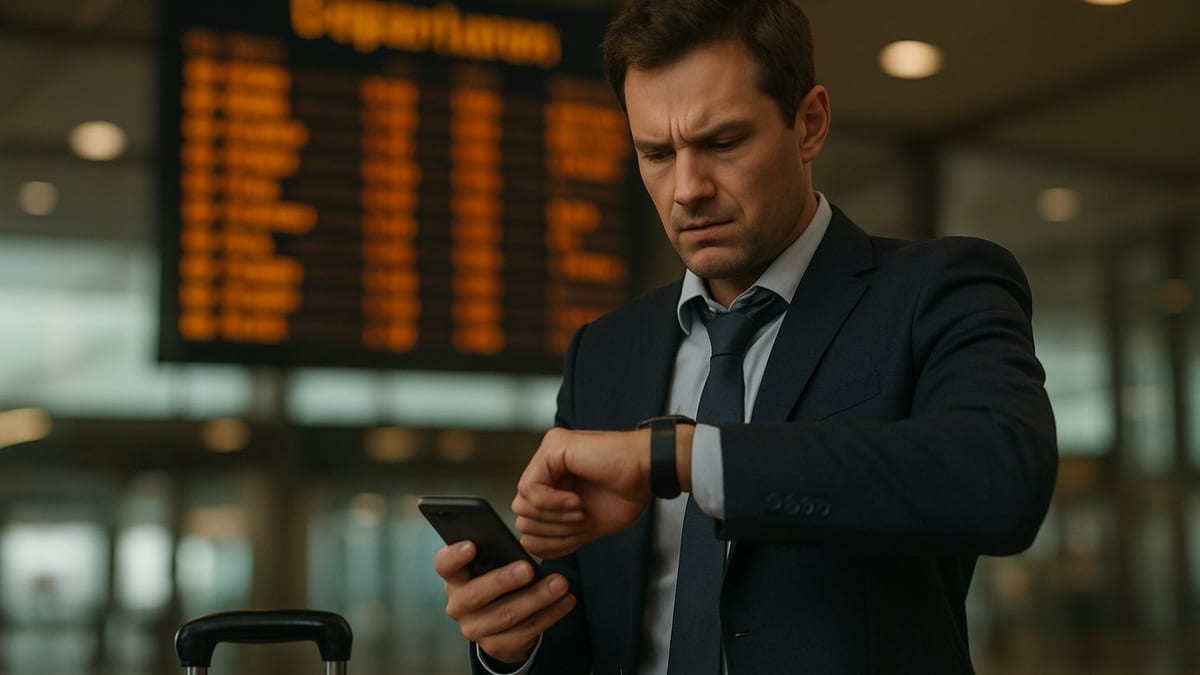
A Growing Economic Burden Behind the Departure Board
Publicly available data from industry groups and travel analytics firms show that flight disruptions have become a persistent feature of U.S. air travel. Recent reports indicate that roughly one in five domestic flights has arrived late in recent years, with average delays of around 20 to 30 minutes and frequent spikes during peak travel periods. While airlines and regulators often focus on operational and safety metrics, the cumulative impact on passengers’ wallets and time is increasingly drawing attention.
Studies of the U.S. aviation system have long put a multibillion-dollar price tag on delays, but these totals usually combine airline and passenger costs. New syntheses of 2023 and 2024 data on delay minutes, the number of disrupted passengers, and commonly used values of time suggest that roughly one third of the total economic impact is borne directly by travelers. When applied to the latest delay volumes and inflation-adjusted values of passenger time, that share translates into about 18 billion dollars in annual costs to U.S. travelers in 2026.
These figures build on methodologies used by the Federal Aviation Administration, which has estimated tens of billions of dollars in yearly delay impacts across the national airspace system, and by private analysts that track delay minutes and on-time performance by carrier and airport. By isolating the passenger portion of that impact, the new estimates highlight a hidden tax on flying that is not captured in headline ticket prices.
Travel data providers tracking 2025 and early 2026 performance point to recurring disruption patterns: weather-related slowdowns, traffic-management initiatives, staffing constraints in air traffic control, and operational issues at individual airlines. The combined effect is a system where chronic modest delays add up to a substantial nationwide burden on travelers’ time.
How Analysts Arrive at an $18 Billion Passenger Price Tag
The estimated 18 billion dollar figure for 2026 is derived from three main building blocks: the number of delayed passengers, the length of those delays, and an economic value assigned to each hour of traveler time. Airlines for America and other industry sources have previously used hourly values in the range of 45 to 50 dollars to quantify passenger time lost in delays. Economic research on shutdowns and major disruptions has applied similar values when calculating the cost of additional waiting time at airports.
Recent disruption reports indicate that in 2024 more than one billion passengers flew from U.S. airports, with over 23 percent experiencing some form of delay and millions facing waits longer than three hours. When these volumes are combined with typical delay lengths of about an hour for late departures and considerably longer in severe disruption periods, they produce billions of lost passenger-hours each year. Multiplying those hours by standard time valuations yields a passenger-time cost that alone reaches into the low tens of billions of dollars.
On top of time lost, surveys and insurance claims data suggest that travelers spend billions out of pocket on hotels, meals, ground transport and rebooked flights when delays force missed connections or overnight stays. Separate analyses have placed total delay-related costs to the broader U.S. economy in the 30 to 35 billion dollar range in recent years, including airline operational expenses and productivity losses. Allocating a substantial share of those costs directly to travelers, and updating for current passenger volumes and prices, results in an estimated 18 billion dollars in 2026 borne by U.S. passengers themselves.
This approach does not account for every impact. Analysts note that stress, disrupted family events, missed medical appointments and long-term shifts in travel behavior are difficult to quantify. As a result, the 18 billion dollar figure is generally viewed as a conservative estimate of the financial component of delay costs, rather than a full measure of the broader social burden.
Policy Shifts, Refund Rules and Remaining Gaps
Regulators have taken steps in recent years to increase transparency around disruptions, but passenger advocates argue that many hidden costs still fall on travelers. New rules finalized in 2024 require airlines to issue automatic cash refunds for canceled flights and for what the U.S. Department of Transportation defines as “significant” delays, generally three hours or more for domestic itineraries and six hours for international trips. The regulation also sets clearer refund standards for delayed baggage.
These measures are designed to remove some of the friction that previously forced travelers to navigate complex airline policies or lengthy customer-service processes. However, the rules do not cover every kind of disruption. Recent federal guidance clarified that airlines are not obligated to pay for hotels or meals when delays stem from aircraft recalls, and carriers continue to make case-by-case decisions about compensation when weather, air traffic control initiatives or infrastructure issues are involved.
Enforcement actions have also highlighted persistent reliability problems. In early 2025, transportation regulators imposed penalties on a major U.S. carrier over chronically delayed flights, citing hundreds of operations that repeatedly ran far behind schedule. Consumer advocates view these cases as examples of systemic issues that, while costly to airlines in fines and refunds, remain far more expensive for travelers in terms of lost time and disrupted plans.
Policy debates in Washington continue to focus on the balance between passenger protection and the financial health of carriers and airports. Industry groups point to rising labor and fuel costs, constrained airport capacity and air traffic control staffing challenges, while consumer organizations argue that clear, enforceable standards for delays and cancellations are needed to limit the ongoing transfer of disruption risk onto passengers.
Which Travelers Feel the Pain Most
Not all passengers experience delay costs in the same way. Travel insurance and booking platforms that monitor disruptions report that large connecting hubs in regions with volatile weather regularly see the highest total volumes of delay minutes. Rankings of on-time performance for 2026 show that some major airports average delay times approaching or exceeding an hour for affected flights, magnifying the risk of missed connections and overnight stays for travelers on tight itineraries.
Business travelers often bear particularly high implicit costs, as their trips tend to be shorter and more time-sensitive. Economic studies examining disruption episodes have found that delays during work trips translate directly into lost productivity and additional labor costs, especially when meetings must be rescheduled or trips extended unexpectedly. For leisure travelers, the burden may be more visible in the form of prepaid hotel nights lost, missed cruise departures or shortened vacations.
Geography and seasonality also matter. Analyses of delay patterns by state indicate that summer remains the most challenging period across much of the country, when peak demand overlaps with thunderstorms, heat-related ground stoppages and, in some regions, hurricane season. Winter storms and low-visibility events drive similar spikes in delays in northern hubs, affecting travelers throughout the network as aircraft and crews fall out of position.
Low-cost carriers and ultra-low-cost airlines can present a mixed picture. While some have improved on-time performance, their leaner schedules and fewer reciprocal agreements with other airlines can leave passengers with limited rebooking options during disruptions. This can amplify out-of-pocket expenses compared with travelers on major network carriers that may offer more alternatives when a flight goes severely off schedule.
What Travelers Can Realistically Do to Protect Themselves
Experts who analyze disruption data say that, although passengers cannot control infrastructure or weather, they can take steps to reduce their exposure to the costliest delays. Historical delay statistics show that early-morning departures are more likely to leave on time, before the day’s disruptions ripple through the system. Direct flights, while sometimes more expensive, eliminate the risk of missed connections that often trigger overnight stays and rebooked tickets.
Travel insurance providers report a noticeable uptick in policies that include trip delay and missed-connection benefits, particularly among travelers departing from airports with a track record of congestion. These products can reimburse hotel nights, meals and onward travel arrangements when disruptions meet certain thresholds, although coverage varies widely and requires careful review of policy terms.
Consumer advocates also encourage travelers to make use of new refund rules by closely monitoring the length and cause of delays. Under the updated framework, many passengers whose flights are pushed back by several hours may now qualify for automatic cash refunds instead of vouchers, especially when the cause lies within an airline’s control. Understanding carrier-specific “customer service commitments” published on government dashboards can help travelers determine what support they can reasonably request during a disruption.
Ultimately, analysts say the estimated 18 billion dollars in annual passenger costs underscores how deeply delays are woven into the fabric of U.S. air travel in 2026. For now, the burden is spread across millions of individual travelers, each absorbing a small share of the system’s inefficiencies every time a departure board quietly shifts from “on time” to “delayed.”