

More news on this day
Flight delays in the United States are quietly draining travelers’ wallets, with new analyses indicating that passengers now shoulder as much as $18 billion annually in hidden, out-of-pocket expenses and lost time.
Get the latest news straight to your inbox!
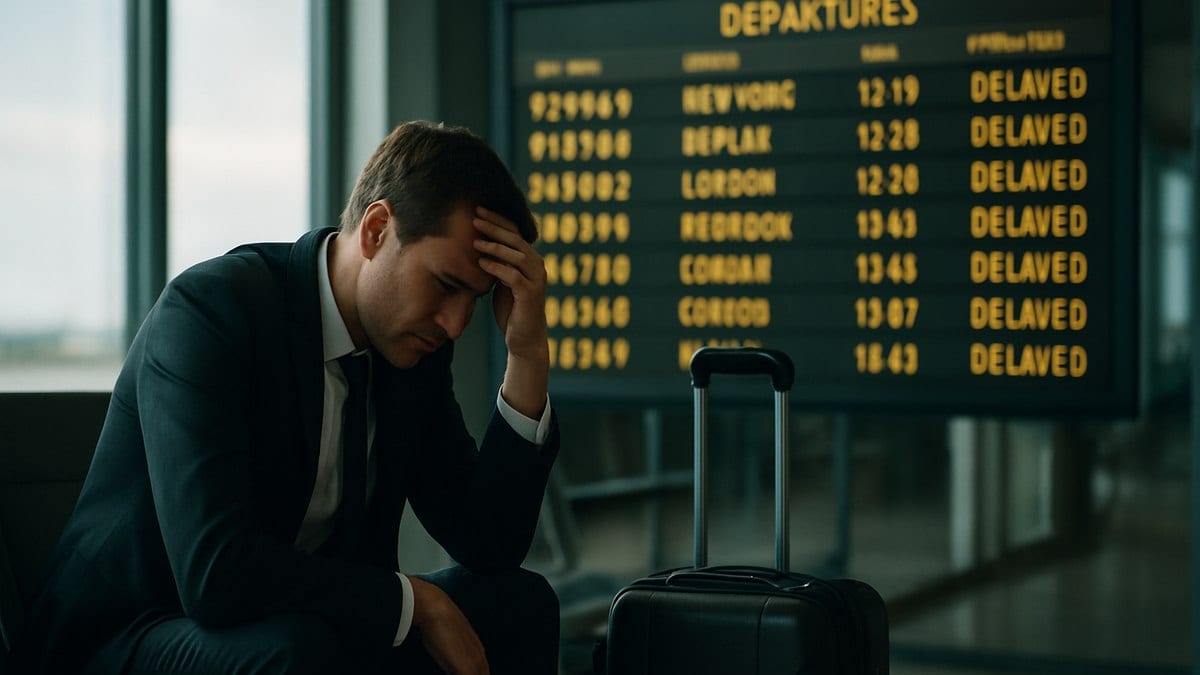
New Analyses Put a Price Tag on Passenger Time
While aviation statistics often focus on what delays cost airlines and the wider economy, a growing body of research is zeroing in on what those disruptions mean for individual passengers. Studies drawing on Bureau of Transportation Statistics data and past federal economic assessments indicate that lost passenger time alone can reach into the tens of billions of dollars each year in the U.S. air system, with roughly $18 billion attributable specifically to travelers’ personal costs.
The estimate builds on methodologies used in earlier government-backed “total delay impact” studies, which assigned an hourly dollar value to each traveler and multiplied it by aggregate delay minutes. Updated with current delay volumes and higher values for traveler time, economists and industry analysts calculate that U.S. passengers effectively “pay” billions in forfeited hours waiting at gates, sitting on tarmacs, or rebooking missed connections.
Recent market data reports underline how persistent the problem has become. Publicly available summaries of airline performance show that more than one in five U.S. domestic flights arrived at least 15 minutes late in 2023, with average delays in the mid-20-minute range across hundreds of thousands of flights. As traffic has climbed back above pre-pandemic levels, even small disruptions scale into millions of lost hours, magnifying the personal financial toll.
Separately, industry compilations estimate that flight delays cost the broader U.S. economy more than $30 billion a year in lost productivity and operational waste. Within that total, analysts flag a substantial share as effectively borne by passengers, either through lost earnings or extra spending that would not have occurred if flights had run on time.
Out-of-Pocket Bills: From Meals and Hotels to Missed Events
Beyond the value of their time, U.S. travelers are incurring billions of dollars in direct, out-of-pocket costs when flights run late. Recent coverage of new survey data on flight disruptions highlights how passengers routinely pay for last-minute airport meals, overnight hotel stays, alternative transportation, and replacement tickets when original plans unravel.
According to one widely cited data set summarized by Newsweek in March 2026, disrupted travelers reported average lost earnings of nearly five hundred dollars per incident from missed work or business opportunities, alongside hundreds of dollars in nonrefundable accommodation and activity costs. When extrapolated across the tens of millions of U.S. passengers affected by delays and cancellations each year, those figures translate into several billion dollars in hidden traveler expenses layered on top of the value of lost time.
These hidden costs often extend far beyond the airport terminal. Travelers may forfeit prepaid vacation rentals, tours, or event tickets; incur childcare or pet-care penalties for returning late; or pay surge pricing for rideshares and last-minute hotel bookings near major hubs. Consumer surveys cited in industry reports also point to a spike in travel insurance claims related to delay and disruption, with insurers reporting double-digit percentage increases in claims compared with pre-pandemic years.
Because many of these expenses are scattered across millions of individual trips and rarely reimbursed, they rarely appear in airline financial statements or headline economic numbers. Analysts argue that when such spending is fully counted, the financial burden on passengers rivals what airlines themselves spend managing disruption.
Why U.S. Passengers Shoulder More of the Burden
One reason the hidden cost of delays for U.S. travelers is so high, analysts say, is the limited scope of domestic consumer protections compared with regimes in other regions. In the European Union, for example, long delays and cancellations caused by airlines can trigger automatic cash compensation under air passenger rights rules, as well as strict obligations to provide meals and accommodation. By contrast, in the United States, compensation is not guaranteed in most delay scenarios, and many out-of-pocket costs can fall entirely on the traveler.
Publicly available policy analyses show that past efforts to mandate broader U.S. compensation rules have stalled or been scaled back. In one high-profile example reported by national outlets in 2025, a proposed rule that would have required airlines to compensate stranded passengers with cash, lodging, and meals for carrier-caused disruptions was abandoned before taking effect. More recent Department of Transportation guidance has also clarified that airlines are not required to cover passenger expenses such as hotels or meals when cancellations or long delays stem from certain safety-related aircraft recalls.
In practice, major U.S. airlines advertise customer-service commitments for controllable disruptions, such as free rebooking or meal and hotel vouchers when delays result from crew or maintenance issues. However, these policies vary by carrier and are often discretionary or contingent on availability. Weather, air traffic control constraints, and other common causes of disruption may leave passengers with no formal right to reimbursement, even when their additional costs are substantial.
Consumer-rights advocates and travel analysts note that this patchwork approach contributes directly to the rising hidden bill. With no universal rule requiring compensation, many travelers either do not know what they can claim or choose not to pursue complaints, effectively absorbing the costs themselves.
Record Disruption Levels Magnify the Financial Hit
The scale of recent disruption is amplifying the economic burden on U.S. flyers. According to data compiled by AirHelp and cited in recent media coverage, more than 1 billion passengers departed from U.S. airports in 2024, with almost one in four experiencing a delay or cancellation. That translates into hundreds of millions of disrupted journeys in a single year.
An updated U.S. disruption report published in early 2026 indicates that more than 230 million passengers faced significant delays or cancellations departing from U.S. airports in the previous year alone. While only a fraction of these passengers may qualify for legal compensation under international rules on specific routes, most incur some form of soft or hard cost, from extra meals and transportation to disrupted work schedules and missed connections.
Operational pressures have contributed to the growing problem. Industry data show that a sizeable share of delays are linked to factors within airlines’ control, such as maintenance, aircraft rotations, and crew availability. Other delays stem from the broader aviation system, including congestion, weather-related traffic management, and infrastructure constraints. Government shutdowns, technology outages, and safety inspections have periodically produced sharp spikes in cancellations and long delays, demonstrating how fragile the system can be under stress.
As carriers schedule more flights to meet strong demand, even minor disruptions can cascade across networks for hours or days. Analysts note that once delays start to stack up in a hub-and-spoke system, each missed connection or late arrival multiplies the number of travelers affected, making the aggregate passenger cost curve considerably steeper.
Calls for Transparency and Stronger Passenger Tools
The growing recognition of an $18 billion annual hit to U.S. travelers is fueling calls for clearer reporting and stronger passenger tools. Policy groups and air-travel analysts argue that delay statistics should be paired with more explicit estimates of passenger costs, including both the value of time and typical out-of-pocket expenses, so that travelers and lawmakers can better understand the trade-offs in airline operations and infrastructure investment.
Some consumer advocates have urged regulators and legislators to revisit comprehensive compensation frameworks, pointing to international examples where automatic cash payments and standardized care obligations appear to have boosted awareness of rights and shifted more costs off passengers. Industry groups, in turn, caution that expansive mandates could drive ticket prices higher or push airlines to cut marginal routes, particularly to smaller communities.
In the meantime, third-party services and legal-tech platforms are stepping into the gap, helping travelers calculate potential compensation under foreign regulations and pursue claims when flights touch jurisdictions with stronger protections. Data from these firms, including the latest surveys reported in U.S. media, underscore both how common disruptions have become and how little most Americans know about the rights they do have.
With passenger volumes expected to keep rising and climate-related weather volatility forecast to increase, analysts see little sign that delay pressures will ease quickly. Unless policy, technology, and infrastructure improvements meaningfully reduce disruption, the quiet, distributed tax of flight delays on U.S. travelers is likely to keep climbing well beyond the current $18 billion mark.