

More news on this day
Flight delays in the United States are costing travelers far more than missed dinner plans, with new economic analysis indicating that hidden passenger expenses tied to disruptions now total about 18 billion dollars a year.
Get the latest news straight to your inbox!
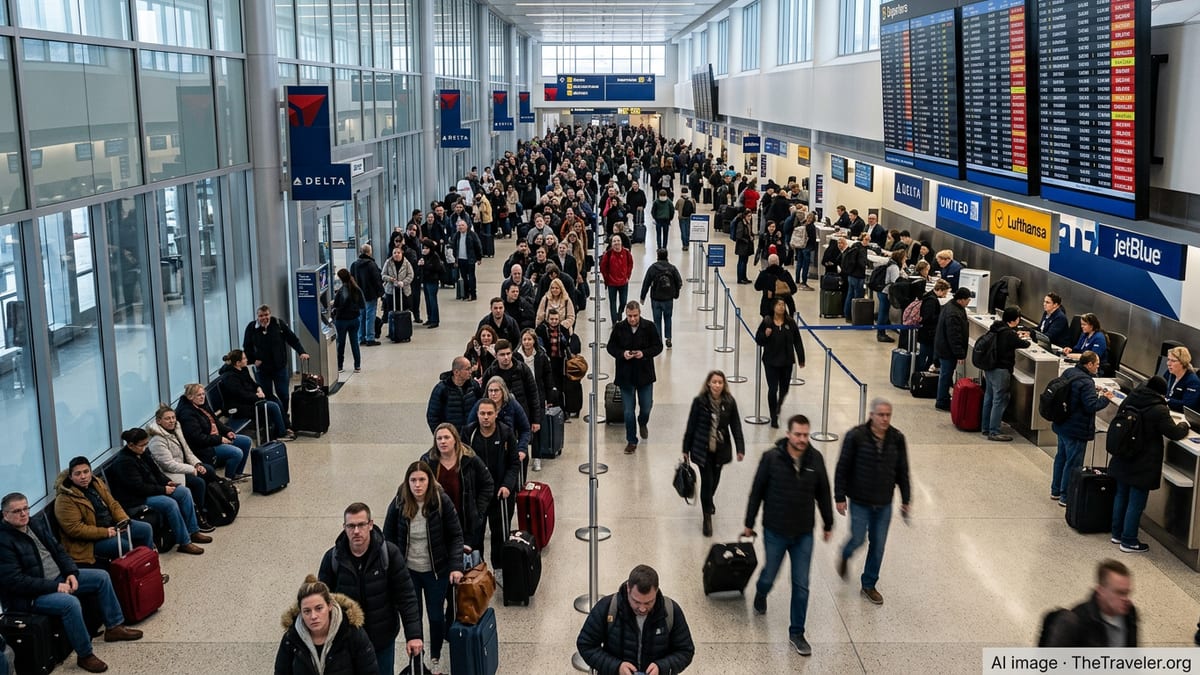
A Rising Price Tag on Passenger Time
Recent research on the U.S. National Airspace System shows that the total cost of flight delays is growing, driven increasingly by what travelers themselves lose in time and extra spending rather than by airline operating costs alone. While previous estimates often focused on the burden to carriers, newer modeling separates out passenger impacts such as lost work hours, missed connections, and reshuffled itineraries.
Publicly available aviation analyses describe how the overall cost of delays includes four main components: direct expenses to airlines, the value of time lost by passengers, lost demand from travelers who avoid flying, and broader knock-on effects across the economy. Within that total, the passenger share has risen in recent years. One government-linked technical presentation on delay economics notes that the passenger component of delay impact has climbed to roughly 18.1 billion dollars, up from about 16.4 billion dollars in earlier assessments, signaling a steady increase in what individuals personally bear.
These figures cover both business and leisure travelers. For employers, delayed staff can mean missed meetings and reduced productivity. For families, the same disruption might translate into forfeited vacation days, unused event tickets, or additional childcare costs at home. Although these losses do not appear on any airline invoice, they are central to understanding how an 18 billion dollar burden quietly accumulates each year.
From Airport Benches to Hotel Bills: Where the Money Goes
The hidden nature of delay costs is partly a matter of where the money is spent. Travelers often shoulder expenses far from the departure gate, paying for last-minute hotel rooms, surge-priced rideshares, rebooked tickets, and meals that were never budgeted into the original itinerary. Consumer travel sites and advocacy groups routinely document cases where a multi-hour delay or missed connection forces travelers to absorb hundreds of dollars in unplanned spending.
Studies of disruption economics point out that direct out-of-pocket costs are only one slice of the problem. The value of time spent queuing at customer service desks, waiting on the tarmac, or sitting in crowded terminals is typically calculated using standard economic valuations of an hour of travel time. When multiplied across millions of passengers, these hours are valued in the billions, even before accounting for the stress and uncertainty that cannot easily be quantified.
The growth of ancillary travel purchases has also complicated the picture. Nonrefundable vacation rentals, prepaid tours, event tickets, and tight cruise embarkation windows all magnify the financial hit when a flight arrives late or not at all. Public policy analyses released over the past two years estimate that broad categories of “flight disruptions” now cost the U.S. economy more than 30 billion dollars annually, with passenger losses making up a substantial share.
Why Delays Are Getting Harder to Escape
Technical papers examining U.S. flight operations from 2010 through the post pandemic period indicate that the system has become more vulnerable to knock-on delays. Weather remains a dominant factor, but newer modeling points to evolving patterns in security screening queues, congestion at major hubs, and tightly wound aircraft and crew schedules that leave little room to recover once disruption begins.
Machine learning based research on large U.S. airline data sets shows that departure and arrival delays tend to cluster at certain airports and times of day, then propagate across the network. When an aircraft is late into a hub, subsequent legs often push back behind schedule, extending the cascade to travelers far beyond the original problem airport. This interconnectedness helps explain why even a seemingly minor hold at one point in the system can ultimately translate into missed connections and overnight stays several time zones away.
The growing strain on infrastructure and staffing is another factor. Federal budget documents outline how air traffic control and airport systems are operating close to capacity in several regions. Industry forecasts also note that airlines are running high load factors with lean scheduling to protect thin profit margins. Together, these trends mean that recovering from disturbances like severe storms or technology outages can take longer, driving up both visible and hidden costs.
Policy Debates Leave Travelers Exposed
As the bill for delays has grown, the policy conversation in the United States has intensified. In the past two years, federal transportation regulators have floated, and in some cases withdrawn, proposals to require more robust compensation for passengers affected by airline related delays and cancellations. Consumer advocates often point to European style rules that mandate standardized payouts, arguing that similar protections could shift some of the 18 billion dollar passenger burden back onto carriers.
Industry groups, in filings and public comments, counter that such requirements would raise operating costs and potentially reduce service on marginal routes. Some submissions estimate that European style penalty structures could cost U.S. airlines several billion dollars a year, leading to higher fares, more built in schedule padding, or both. That tension between consumer relief and system economics has kept major compensation reforms on a slow track, even as high profile disruptions and enforcement actions against individual airlines keep flight reliability in the headlines.
For now, publicly available information shows that travelers remain largely responsible for managing their own financial risk. Travel insurance products, credit card protections, and flexible booking policies can soften the blow in particular cases, but these tools are unevenly distributed and often limited by strict fine print. In aggregate, the data indicate that the majority of delay related costs still land on passengers, reinforcing the significance of the 18 billion dollar estimate.
How Travelers Can Respond to an Expensive New Normal
While the structural drivers of delay are mostly beyond individual control, analysts suggest that travelers can take steps to minimize their exposure. Historical delay data have long shown that early morning departures are less likely to be severely disrupted than evening flights, because the daily ripple of operational issues has not yet spread through the network. Choosing longer connection windows, especially at known congestion points, can also reduce the odds of paying for an unscheduled hotel night.
Consumer guidance from travel experts emphasizes carefully checking the details of airline “travel protection” offers and third party insurance policies, since not all will cover expenses from carrier related delays. Some policies focus on medical emergencies or cancellations, while others provide limited reimbursement for meals and lodging after a specified number of hours. Understanding those distinctions before departure can help travelers recoup at least part of the hidden costs if a trip goes off schedule.
As air traffic volumes remain high and extreme weather events become more frequent, the economic toll of delays on U.S. travelers is unlikely to fall quickly. The latest estimates of an 18 billion dollar annual hit to passengers highlight how a few hours lost at the airport can carry significant financial weight, turning what seems like a minor schedule change into a costly disruption across the broader travel economy.