

More news on this day
As another scorching summer approaches and traditional hill stations like Shimla and Manali brace for packed highways and sold-out hotels, a quieter story is unfolding across the Indian Himalaya, where little-known valleys and villages are positioning themselves as refuges for travelers seeking peace, slower travel and cooler air.
Get the latest news straight to your inbox!
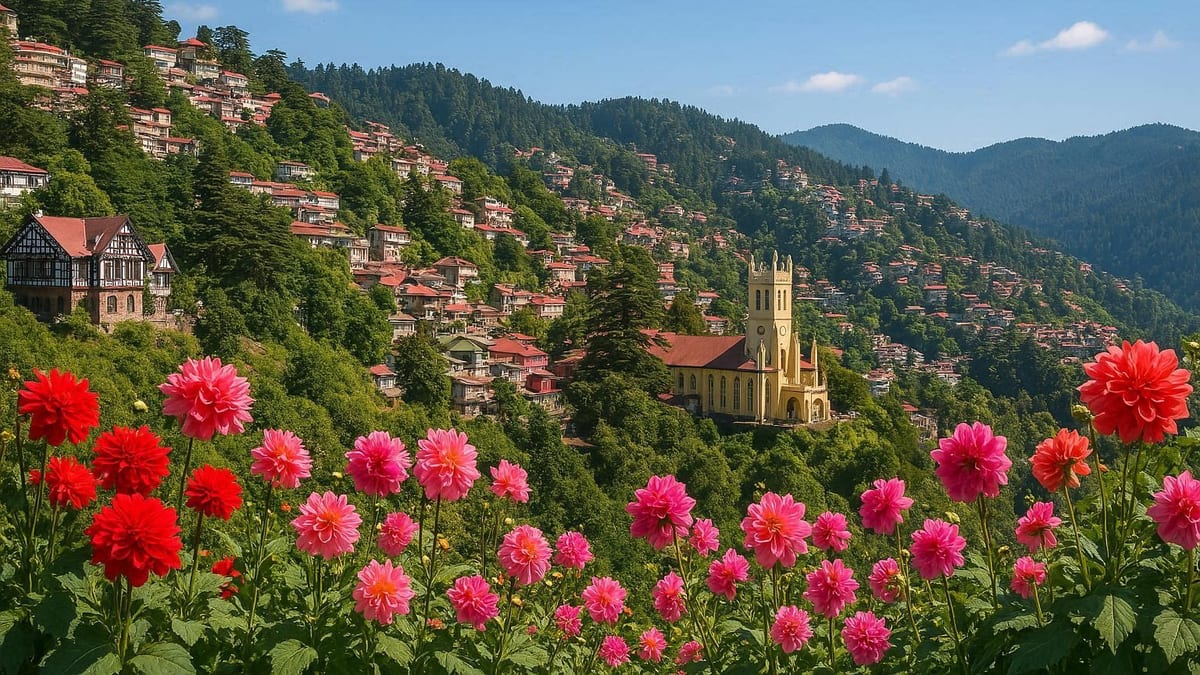
Image by Travel and Tour World – Tourism, Airline, Destination, MICE, Gobal Travel Market, Hotel news that you will find only over here.
Tirthan Valley: Himachal’s Quiet Answer to Overtourism
In recent seasons, travel coverage has increasingly highlighted Tirthan Valley in Himachal Pradesh as a tranquil counterpoint to the congestion now associated with Manali. Reports describe the valley as what many visitors once imagined the Kullu region to be, with pine forests, clear rivers and traditional wooden homes replacing neon-lit markets and dense traffic.
Situated on the edge of the Great Himalayan National Park, a UNESCO-listed conservation area, Tirthan offers forest trails, birdwatching and riverside walks that remain relatively uncrowded even in school holiday periods. Travel features published in early 2026 point to the valley’s blend of soft adventure, such as short hikes and trout fishing, with long stretches of unstructured time ideal for reading, reflection or remote work.
Accommodation here still leans toward small-scale homestays and family-run lodges, many of which emphasize local produce and low-impact tourism. Publicly available information shows that tourism stakeholders in the area are framing Tirthan as a slow-travel base rather than a checklist destination, encouraging visitors to stay several nights rather than rush through on a circuit.
Getting in usually involves traveling via Aut or Banjar and then following the Tirthan River deeper into the mountains, a route that naturally limits volume compared with the highway that feeds Manali. For travelers weary of holiday gridlock, that extra effort is increasingly being viewed as part of the appeal.
Jibhi and Shoja: Forest Hamlets for Slow Travel
Just over the ridge from Tirthan, the small settlements of Jibhi and Shoja have moved from word-of-mouth recommendations to regular mentions in offbeat travel round-ups. Coverage in national lifestyle and business publications through 2025 and early 2026 describes these villages as peaceful alternatives to busier Himachali hotspots, with cedar forests, wooden cottages and limited commercial development.
Jibhi, strung along a mountain stream, has become known for its compact cluster of homestays and cafés that still operate at a far smaller scale than hubs like Old Manali. Writers describe village lanes leading to short forest walks and viewpoints that, for now, remain largely free of large groups and honking traffic.
Slightly higher up, Shoja offers cooler temperatures and broad views across the Seraj region. A handful of small guesthouses overlook terraced fields and thick forest, and travel features characterize evenings here by the sound of wind in the trees rather than music systems. Recent magazine coverage positions Shoja as a base for those who want to hike by day and return to quiet nights rather than nightlife.
These linked hamlets are reachable from the same access road that serves Tirthan, but their limited parking and compact size naturally cap daily footfall. For visitors planning a week in the mountains, combining a stay between Tirthan, Jibhi and Shoja is increasingly being presented as a way to experience varied landscapes while remaining far from the busiest corridors.
Harsil Valley: Uttarakhand’s Riverside Retreat
Across the state border in Uttarakhand, the small village of Harsil on the road to Gangotri is drawing renewed attention as a peaceful alternative to more commercialized hill stations. Official geographic records describe Harsil as a high-altitude settlement on the banks of the Bhagirathi River, surrounded by deodar forests and apple orchards.
Travel blogs and regional magazines portray Harsil as a place where the soundscape is dominated by the river and temple bells rather than traffic. Unlike larger centers such as Mussoorie or Nainital, the village remains compact, with a modest cluster of homestays, government guesthouses and family-run lodgings that tend to host long-stay visitors, pilgrims and nature enthusiasts.
Daylight hours here are typically shaped around simple routines: riverside walks, short hikes to nearby villages and orchard visits in season. The relative lack of nightlife or shopping has, paradoxically, become one of Harsil’s main selling points, particularly for urban professionals seeking digital detox breaks in summer.
Access still requires a scenic but time-consuming drive from Uttarkashi, which helps keep numbers in check. For travelers willing to trade convenience for quiet, publicly available guidance suggests planning at least three nights to adjust to the pace and take in nearby viewpoints without rushing.
Champawat and the Kumaon Quiet Zone
In the Kumaon region of Uttarakhand, lesser-known hill towns are also emerging on lists of peaceful getaways. Public records note that Champawat district has been cited by Indian media outlets and civil society rankings as one of the country’s more tranquil regions, with relatively light tourist traffic compared with destinations around Nainital and Almora.
The small town of Champawat itself sits amid pine-covered hills with views toward distant Himalayan peaks. Nearby, viewpoints and small lakes provide low-key excursions suited to slow mornings and cooler evenings rather than high-adrenaline activity. Travel coverage emphasizes nature walks, birdwatching and village visits over crowded viewpoints or amusement parks.
Further afield in Kumaon, towns such as Mukteshwar and Kanatal are often mentioned in traveler discussions as calmer options for those who still want road access and basic infrastructure. These settlements combine orchards, forest trails and a scattering of cottages, making them appealing to families and solo travelers seeking solitude without going completely off-grid.
While road access from Delhi and other northern cities has improved, these destinations remain outside the traditional mass-tourism loop. For now, that positioning allows them to offer the cool climes and mountain panoramas associated with Uttarakhand without replicating the density of more famous resorts.
Mechuka and the Far Northeast’s High Valleys
For travelers prepared to go much farther from the main circuits, high valleys in India’s Northeast are being showcased as some of the subcontinent’s most secluded mountain landscapes. One of the most prominent examples is Mechuka in Arunachal Pradesh’s Shi Yomi district, where official descriptions highlight snow-capped ridges, grasslands and the Siom River cutting through a wide valley near the border region.
Mechuka has begun to feature in national travel lists of hidden gems, with coverage stressing its remoteness and the strong presence of local tribal cultures. The settlement’s mix of wooden houses, monasteries and suspension bridges has been contrasted with the dense hotel clusters that now dominate older hill stations.
Reaching Mechuka generally involves flying to a regional airport in Assam or Arunachal Pradesh and then continuing by road, a journey that can take more than a day. That logistical barrier effectively screens out short-break tourism, resulting in fewer visitors and more unstructured space for those who make the trip.
As word spreads, regional tourism campaigns are framing Mechuka as a destination for mindful, low-volume travel rather than mass-market holidays. For summer visitors seeking both solitude and a sense of discovery well beyond the better-known Himalayan corridors, these northeastern high valleys present a markedly different version of a mountain escape.