

More news on this day
Global professionals eyeing the United States on H-1B visas are confronting a new kind of gateway, where higher salary thresholds and layered travel surcharges now shape who comes, how they fly and what it costs to stay compliant.
Get the latest news straight to your inbox!
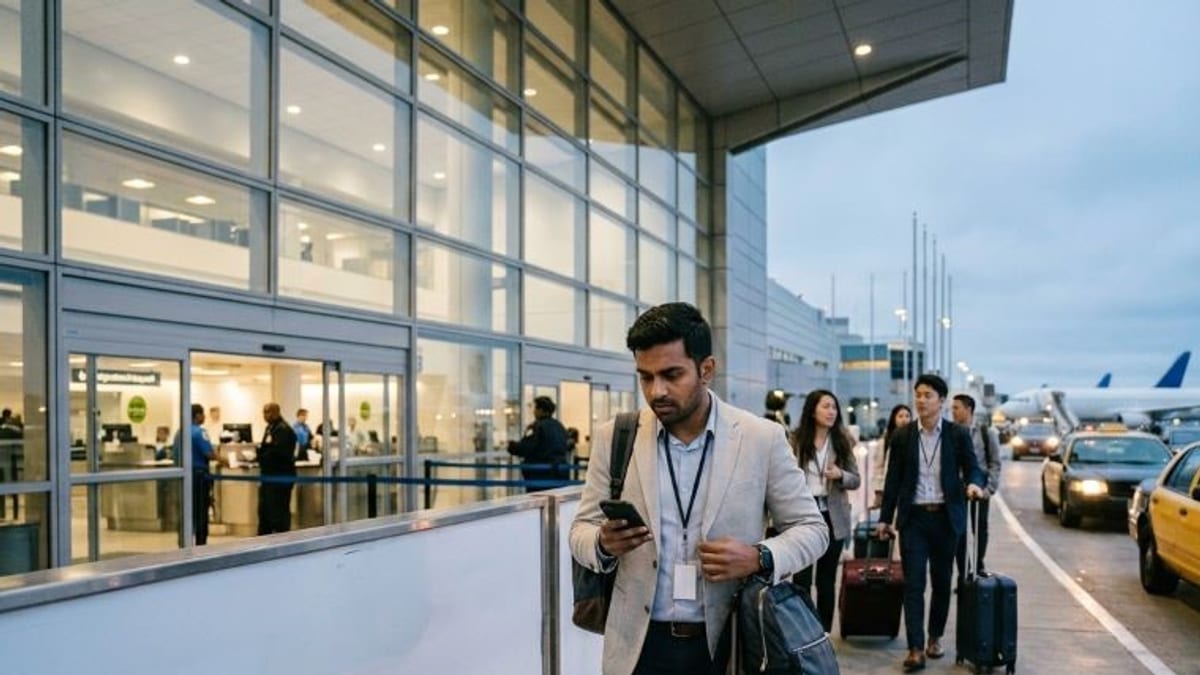
Image by Travel and Tour World – Tourism, Airline, Destination, MICE, Gobal Travel Market, Hotel news that you will find only over here.
Wage-Weighted H-1B Selection Recasts the Talent Pipeline
Recent regulatory changes are shifting the H-1B program away from a purely random lottery and toward a model that favors higher-paid roles. A wage-weighted selection system, scheduled to govern the fiscal year 2027 cap season, is designed so that workers offered salaries at higher Department of Labor wage levels receive multiple entries in the cap selection pool, while those at lower wage levels receive fewer. Publicly available guidance indicates that this approach is intended to reward employers committing to pay closer to the top of the prevailing wage scale.
For global travelers, this quietly redraws the map of opportunity. Early-career professionals and cost-sensitive employers may find it harder to secure H-1B status if they cannot meet elevated wage expectations. In contrast, experienced specialists in sectors such as artificial intelligence, semiconductor design and advanced manufacturing are more likely to see offers structured at Level III or Level IV wages, giving their registrations an outsized chance in the new system.
The timing is critical for planners. The wage-based rule links selection directly to the details entered at registration, including job title, wage level and location. Travel planners and corporate mobility teams are responding by synchronizing contract negotiations, assignment locations and even start dates with the annual H-1B cap calendar, knowing that a misaligned wage figure at registration could derail an entire move.
Some immigration analysts note that this change may push more companies toward alternative pathways, such as intracompany L visas or treaty-based categories, particularly for junior hires who can no longer compete effectively in a wage-tiered H-1B environment. That, in turn, reshapes travel flows, with more staff routed through multinational hubs before eventually entering the United States.
Rising Filing Fees and Employer Surcharges Raise the Threshold
Alongside wage reforms, a series of fee increases has raised the financial bar for sponsoring H-1B workers. A final fee rule that took effect in April 2024 increased base filing costs for many employment-based petitions and introduced a mandatory Asylum Program Fee of 600 dollars for most employers filing Form I-129 or Form I-140. Subsequent adjustments under new legislation have layered additional charges on top of the existing schedule, creating a complex fee landscape for companies and workers.
Breakdowns published by immigration law firms show that, for a large employer using premium processing, government charges on a single H-1B petition can easily exceed 6,000 dollars when the base fee, fraud prevention fee, training fee, asylum-related surcharge and premium processing costs are combined. These figures do not include legal fees, relocation allowances or travel budgets, all of which remain significant for global assignments.
The financial impact is particularly acute for smaller technology firms and start-ups that once used H-1B visas as a core tool for scaling engineering teams. Many now report reassessing the number of petitions they can justify each year, prioritizing senior roles that clearly generate enough revenue to offset the rising costs. This triage affects travel patterns, with fewer junior staff sent on long-term U.S. assignments and more short-term business visits used to bridge gaps.
At the same time, higher fees have nudged some employers to expand nearshore and offshore hubs in Canada, Mexico and Europe. These locations allow companies to tap global talent without immediately incurring the full stack of U.S. immigration and travel-related charges, turning gateway cities such as Toronto, Monterrey and Lisbon into waypoints on an extended route toward eventual H-1B migration.
New Visa Surcharges Touch the Wider Travel Ecosystem
The cost of reaching the United States is also increasing at the consular stage. A new Visa Integrity Fee set at 250 dollars is scheduled to be added to most nonimmigrant visa categories, including tourist, student, exchange and work visas such as H-1B and H-4. Analyses by travel and business associations suggest that this surcharge, when combined with existing machine-readable visa fees and reciprocity charges, will significantly raise the upfront price of a U.S. visa application in many countries.
Travel industry groups warn that the integrity fee functions like an additional tax on international visitors, including high-skilled workers and their families. Forecasts cited by tourism and aviation analysts point to a potential reduction in inbound demand, especially from price-sensitive markets already coping with currency fluctuations and higher airfares. For H-1B workers, these new costs will be felt on every trip that requires a fresh visa stamp, from initial relocation to routine home visits and job changes.
Airlines and global travel managers are already modeling different scenarios. If the surcharge dampens visitor numbers around major events such as the 2026 World Cup, carriers may be forced to adjust frequencies or redeploy aircraft to regions where demand is more resilient. Corporate travel programs are also revisiting budgets, knowing that a single long-term H-1B assignment can now involve thousands of dollars in recurring visa and compliance costs over a typical three-year cycle.
Family members of H-1B workers are not exempt from this shifting cost structure. Dependents traveling on H-4 visas face the same integrity surcharge, which compounds the financial burden on households that already juggle school enrollment fees, housing deposits and frequent transoceanic flights to maintain ties with their home country.
Premium Processing, Timing Pressures and Itinerary Risk
Premium processing has long been the safety valve for time-sensitive H-1B cases, but it too is becoming more expensive. Updated fee schedules published for 2026 increase the price of Form I-907 requests, extending a trend that has steadily raised the cost of expediting decisions on H-1B and related employment petitions. For employers managing strict project timelines, premium processing is often seen as nonnegotiable, effectively turning the higher fee into an embedded cost of international hiring.
For travelers, the consequences show up in itinerary risk. When companies hesitate to pay for premium processing, approvals can arrive closer to planned departure dates, increasing the probability of last-minute changes or cancellations. Travel managers report that they are building more slack into flight and accommodation bookings, sometimes reserving fully refundable tickets and flexible long-stay rentals to hedge against immigration delays.
Higher government fees also intersect with new compliance expectations. Guidance on the wage-weighted H-1B cap system stresses that material changes to a role, salary or worksite after registration can jeopardize approval. This makes it harder to pivot an assignment once a worker is in transit or already on the ground, locking itineraries more tightly to the original petition details and discouraging spontaneous redeployments across U.S. offices.
These timing pressures are being felt most acutely in global tech hubs like Bengaluru, Hyderabad and Shenzhen, where large cohorts of H-1B-bound professionals previously planned their U.S. moves around predictable lottery results and consular slots. With more variables now tied to wages, surcharges and processing speeds, the once-familiar migration calendar is fragmenting into a series of high-stakes checkpoints.
Global Mobility Strategies Adjust to a Pricier American Entry Point
The combined effect of wage prioritization, filing fee increases and new visa surcharges is prompting a broad rethink of global mobility strategy. Large multinationals are segmenting their talent pipelines more sharply, reserving H-1B sponsorship and associated long-haul travel for senior specialists and critical project leaders, while junior staff build experience in lower-cost locations before attempting the U.S. route.
Some firms are also experimenting with hybrid arrangements, in which H-1B workers spend part of the year onsite in the United States and the rest working remotely from their home country or a regional hub. This approach reduces the number of visa renewals and international trips while still allowing teams to benefit from periodic in-person collaboration.
Education and tourism sectors are watching the trend closely. Prospective H-1B candidates often begin their journey as international students, and higher travel and visa costs at each stage can influence where they choose to study, intern and eventually work. If the American gateway becomes perceived as significantly more expensive and complex than competing destinations, student and visitor flows may increasingly tilt toward countries with simpler, lower-cost entry regimes.
For now, the United States remains one of the most sought-after destinations for high-skilled migrants. But the evolving mix of higher wages, new surcharges and more intricate rules is transforming H-1B travel from a straightforward ticket to opportunity into a carefully budgeted, multi-leg journey, where every stop from registration to boarding pass carries a higher price tag.