

More news on this day
Himachal Pradesh is accelerating a broad new phase of tourism development, combining transport upgrades, sustainable infrastructure and women-focused policies in a bid to cement its position as a leading mountain destination in India.
Get the latest news straight to your inbox!
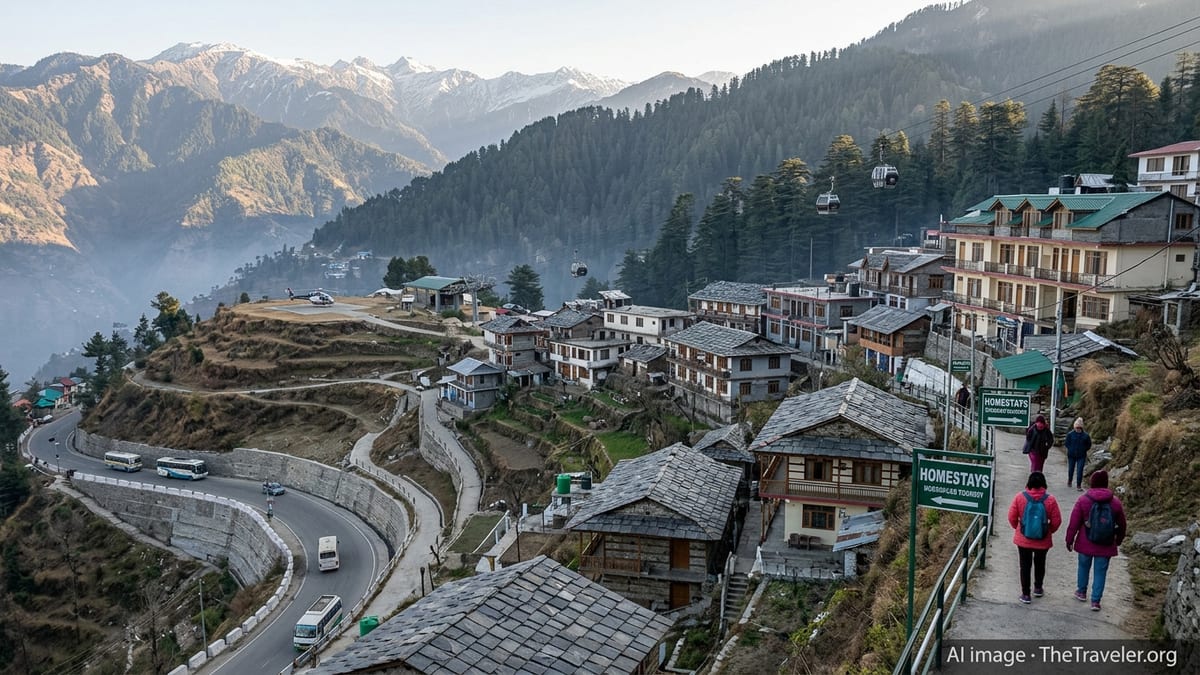
Major Investments in Transport and Tourism Infrastructure
Recent budget documents and economic surveys indicate that Himachal Pradesh is tying its tourism growth strategy closely to improved physical connectivity. State plans outline a network of new heliports at key destinations, many of them linked to the national Regional Connectivity Scheme, intended to shorten travel times to hill stations and tribal districts that are difficult to reach by road. Official figures for 2024 and 2025 describe 16 proposed heliports, with several already under development, and a clear emphasis on using air connectivity as a catalyst for higher-spending, short-stay tourism.
Transport upgrades extend beyond aviation. Economic survey data point to ongoing work on highways and approach roads designed to improve year-round access, particularly to snow-prone and landslide-sensitive regions. The objective is to reduce seasonal bottlenecks that have historically concentrated visitor flows into just a few months, straining local infrastructure while leaving tourism-dependent communities vulnerable in the off-season.
In parallel, authorities are pursuing a strategy to decongest overburdened town centers. Plans highlight structured parking facilities, peripheral access improvements and alternative modes of transport to ease pressure on historic cores such as Shimla and other popular hill destinations. The broader narrative positions infrastructure as both an economic lever and a way to make travel more predictable and comfortable for domestic and international visitors.
Ropeways, Eco-Projects and Low-Carbon Mobility
Himachal Pradesh is positioning ropeway projects and other low-emission mobility options at the heart of its tourism expansion. Coverage of recent approvals for a long urban ropeway corridor in and around Shimla, supported by international financing institutions, underscores the aim of shifting tourists out of private vehicles and into cable-propelled transport. Project documents describe plans for multiple stations and integration with local transit, with solar panels proposed on cabins and stations to cut energy-related emissions.
Beyond flagship ropeways, the state’s tourism and infrastructure portfolios point to a series of smaller ropeway and aerial projects in high-traffic pilgrim and scenic belts. These links are framed as tools to reduce road congestion, lower accident risk on steep, winding routes and provide barrier-free access for older visitors and families, while also creating new viewing points and visitor experiences.
Energy and mobility initiatives connect to a wider push for sustainable tourism infrastructure. Recent economic survey chapters describe efforts to expand electric vehicle charging infrastructure at dozens of locations across Himachal Pradesh, particularly along tourism corridors. This is coupled with watershed and climate-resilience programmes in mid-Himalayan landscapes, aimed at stabilising slopes, protecting water sources and safeguarding the very ecosystems that underpin the state’s tourism appeal.
Sustainable and Inclusive Tourism Development Projects
Project documents for a Sustainable and Inclusive Tourism Development initiative in Himachal Pradesh outline a multi-pronged approach that goes beyond roads and heliports. The programme is structured to upgrade tourist facilities in key hubs such as Dharamshala and other growth centres, while channelling benefits to local communities and micro, small and medium enterprises. Publicly available information highlights priorities including upgraded promenades, sanitation, interpretation centres and nature-based recreation sites.
Environmental safeguards are central to these projects. Planning reports point to impact assessments, careful siting of new structures and efforts to use eco-sensitive materials in trails, viewing decks and riverside amenities. The intention is to manage visitor loads in fragile mountain environments, steering tourists toward designated areas with better services and clear signage instead of allowing unregulated sprawl.
Equally significant is the programme’s focus on inclusive growth. Project frameworks call for capacity-building among local entrepreneurs, with an explicit emphasis on women-led tourism businesses and community-based tourism models. Training modules, market-linkage support and small-scale infrastructure grants are being used to help homestay operators, guides, artisans and adventure providers improve quality standards and tap into emerging market segments such as experiential and wellness travel.
Women-Led Tourism and New Policy Initiatives
Himachal Pradesh is coupling its infrastructure drive with policy tools designed to position the state as a safer and more enabling space for women travellers and women entrepreneurs. Recent coverage of a forthcoming SheTravel Policy for 2026 describes an ambition to significantly increase the share of solo women travellers by the end of this decade. The policy framework, according to reports, proposes targeted safety audits of trails and transit points, clearer information channels and training for service providers to address women’s travel needs.
Regulatory changes in the homestay sector are also being aligned with gender objectives. The Homestay Rules 2025 update registration norms and quality standards, while offering financial incentives and fee concessions in certain categories, including for women hosts and remote-area properties. An associated interest subvention scheme under a tourism start-up initiative in the hospitality sector aims to make it easier for small, often family-run, units to access credit for expansion and upgrades.
The focus on women extends into skill development. Policy notes and budget announcements highlight targets to train thousands of women as trekking guides, homestay owners, tour leaders and safety marshals over the next few years. The approach links tourism policy with wider state-level efforts around rural livelihoods, transport subsidies for women and social protection, reflecting a view of tourism as both an economic engine and a platform for women’s economic participation.
Strengthening Himachal’s Competitive Tourism Position
With tourism and hospitality reported to contribute a notable share of Himachal Pradesh’s gross state domestic product, the current wave of initiatives is framed as a strategic investment rather than a short-term push. State economic surveys describe tourism arrivals recovering strongly after the pandemic, and plans for heliports, ropeways, eco-tourism sites and upgraded airports are presented as tools to capture higher value from this rebound while redistributing visitors more evenly across regions and seasons.
Competitive positioning is especially important as other Indian hill states and international destinations court the same domestic traveller base. By highlighting green mobility, climate resilience and women-led initiatives, Himachal Pradesh is attempting to differentiate its tourism brand as both progressive and responsible. The development of Buddhist circuits, border tourism in collaboration with defence authorities and niche adventure offerings in tribal and high-altitude areas are all part of an effort to broaden the state’s product mix.
At the same time, recent public debates and commentary within the state underline the need to balance growth with environmental safeguards in a landscape that has suffered repeated climate-related disasters. Policy documents increasingly refer to carrying-capacity assessments, stricter norms for hill construction and stronger enforcement in the homestay sector. How effectively these checks are implemented, alongside ambitious infrastructure and women-led initiatives, is likely to determine whether Himachal Pradesh can consolidate its tourism gains while preserving the natural and cultural assets that draw visitors to its mountains.