

More news on this day
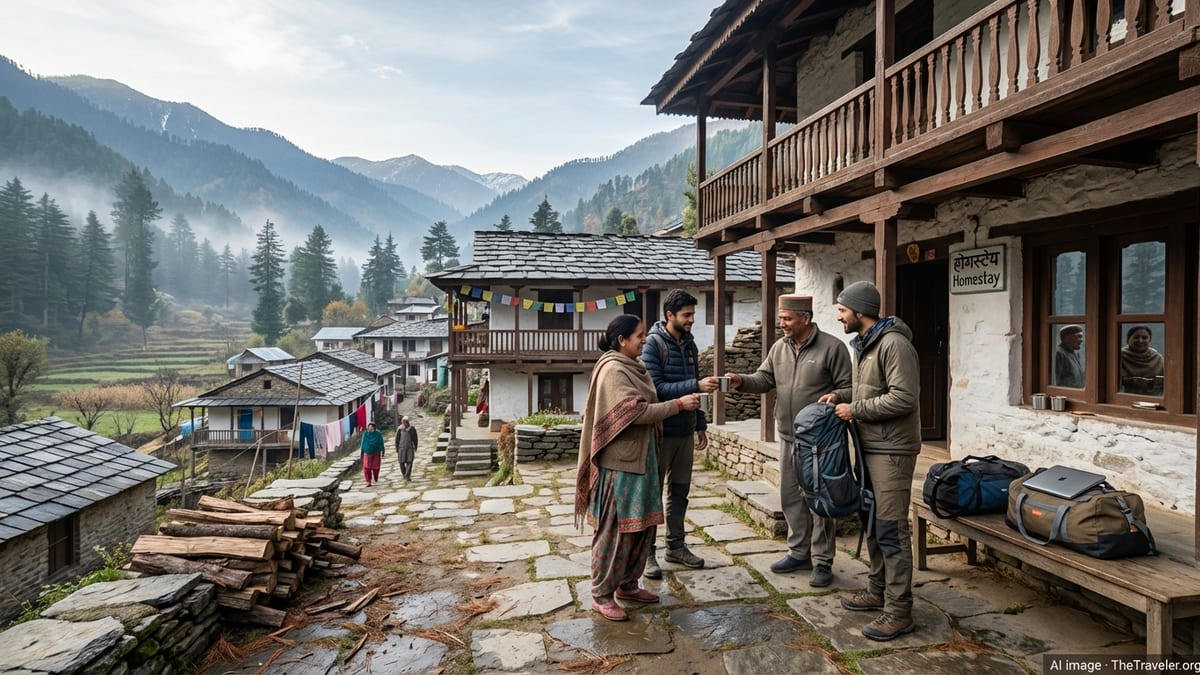
Himachal Pradesh has been named among India’s Most Welcoming Regions for 2026, joining Kerala, Goa, Rajasthan, Uttarakhand, Assam, Karnataka and others in a nationwide line up that underscores how hospitality is emerging as one of India’s strongest travel assets.
The recognition, driven by Booking.com’s Traveller Review Awards 2026, is powered by hundreds of millions of verified guest reviews and reflects how travellers are increasingly rewarding places that combine natural beauty with genuine, people first service.
More News
- Caribbean Travel to U.S. Upended by New Visa Freezes and Expanded Bans
- Mexico Restores E-Visas for Brazilians, Paving the Way for Borderless Tourism
- Philippine Airlines Joins Regional Carriers Powering Southeast Asia’s Tourism Boom
Himachal Pradesh Extends Its Winning Streak Into 2026
In the latest edition of Booking.com’s Traveller Review Awards, Himachal Pradesh has been named the Most Welcoming Region in India for 2026, continuing a remarkable run that has seen the hill state sit at or near the top of the rankings for several consecutive years. The 2026 list confirms Himachal Pradesh not only as a domestic favourite but also as a contender on the global hospitality map.
The awards are based on guest scores left by verified travellers, rewarding destinations where a high proportion of accommodation partners consistently achieve strong ratings. According to Booking.com’s data for 2026, Himachal Pradesh again tops the India chart and also secures a coveted place among the Top 10 Most Welcoming Regions on Earth, putting it alongside established favourites in Europe, North America and Southeast Asia.
For local hoteliers, homestay owners and tour operators, the recognition is more than an accolade. It is an endorsement of a style of travel that leans into slow itineraries, small scale stays and close contact with communities. From apple orchard homestays around Shimla to eco lodges in the Tirthan Valley and traditional guesthouses in Spiti, travellers have been signalling that they value warmth and authenticity as much as they do mountain views.
The 2026 honours also reflect how visitor patterns have evolved. Once known mostly for a few marquee hill stations, Himachal Pradesh now draws repeat guests into lesser known valleys and villages. Many of these smaller destinations appear frequently in guest reviews, where words like “helpful,” “family like” and “home cooked” sit alongside mentions of snow treks and monasteries.
Kerala, Goa, Rajasthan, Uttarakhand, Assam and Karnataka Round Out a Diverse Top Tier
Himachal Pradesh’s latest accolade comes within a broader Indian story. The 2026 Traveller Review Awards place Kerala and Goa directly behind Himachal in second and third position among India’s Most Welcoming Regions, reinforcing a pattern that has been building since at least 2024 and 2025. Other regions, including Rajasthan, Jammu and Kashmir, Uttarakhand, Puducherry, Assam, Karnataka and Haryana, also feature in Booking.com’s extended list for 2026, underlining how geographically diverse India’s hospitality hotspots have become.
Kerala in particular is enjoying sustained recognition. In 2025 it was ranked second among India’s Most Welcoming Regions and has also been spotlighted by international guidebook publishers as one of the world’s top destinations to visit in 2026. That combination of global visibility and high guest satisfaction is helping to push demand for its backwaters, hill stations and coastal towns beyond the traditional winter season.
Goa, long associated with beaches and nightlife, continues to gain from a growing portfolio of boutique hotels, yoga retreats and community focused homestays in both the state’s coastal belts and its forested hinterland. Guest feedback highlights not only service standards but also the ease with which travellers can navigate the state, mixing heritage walks in Latin Quarter lanes with quiet time on relatively uncrowded beaches or spice farm visits inland.
Rajasthan, Uttarakhand, Assam and Karnataka each represent a different face of Indian tourism. Rajasthan blends desert fort cities with rural palace stays. Uttarakhand offers Himalayan trekking, yoga centres and pilgrimage towns. Assam provides riverine landscapes, tea estates and wildlife tourism anchored around national parks. Karnataka combines UNESCO listed ruins, coffee country, beaches and technology driven city breaks. Their appearance among India’s Most Welcoming Regions for 2026 signals that travellers are not just chasing scenery; they are seeking destinations where warm interactions and dependable service cut across price points and property types.
Inside the Traveller Review Awards 2026: How “Welcoming” Is Measured
The Traveller Review Awards, now in their 14th year, have become a barometer for how travellers perceive hospitality in real time. For 2026, Booking.com reports a record 1.81 million partners recognised worldwide, including 17,575 award winners in India. The core metric is the average review score given by guests after a completed stay, activity, car rental or taxi ride, with only verified customers able to submit feedback.
The list of “Most Welcoming Regions” is determined by the share of partners within a destination that receive an award, rather than total visitor numbers or marketing spend. That methodology tends to favour places with dense networks of highly rated small and mid scale accommodations, and it explains why states like Himachal Pradesh, Kerala and Goa, with their large pools of homestays, guesthouses and boutique hotels, perform strongly year after year.
Globally, apartments remain the most awarded accommodation type, while homes, guesthouses and family run stays see some of the fastest growth. In India, too, there has been a steady rise in recognition for non hotel categories. A growing number of homestays across Himachal Pradesh, Uttarakhand and Karnataka now meet or exceed guest expectations on cleanliness, local insight, digital connectivity and food, often at a fraction of big city prices.
For domestic and international travellers planning 2026 itineraries, the awards provide a shorthand way of identifying destinations where satisfaction is consistently high across many different properties. For local tourism boards and businesses, the data offers granular insight into what guests value most, from responsive hosts and flexible check in to on going communication via digital platforms before and after a stay.
Mountain Hospitality: Why Himachal Pradesh Keeps Resonating With Travellers
While the awards rely on quantitative scoring, traveller narratives from Himachal Pradesh reveal a cluster of recurring themes. Many highlight the ease of connecting with hosts who live on site, the informal yet attentive style of service and a sense that itineraries can be tailored day by day. Unlike some highly developed mountain resorts elsewhere, Himachal’s smaller centres still feel embedded in working villages, which creates opportunities for travellers to join seasonal farm work, local festivals or short treks guided by residents.
Destinations such as Bir, Jibhi, Tirthan, Dharamkot and Chitkul have moved from backpacker word of mouth into the mainstream over the past five years, but they continue to lean heavily on low rise accommodation that can adapt quickly to changing guest expectations. In Bir, now repeatedly recognised as one of India’s Most Welcoming Cities, guesthouses and homestays have learned to balance the demands of paragliding enthusiasts with those of remote workers seeking longer stays.
At the same time, state and local authorities have been under pressure to manage footfall in a region increasingly affected by climate risks, landslides and traffic congestion. Conversations around sustainable tourism are filtering into how hospitality is delivered. Many properties are adopting rainwater harvesting, limiting single use plastics and investing in solar power, moves that resonate with an audience that is increasingly climate conscious and vocal in reviews.
Winter tourism, once confined largely to a few snowbound weekends, is evolving as better road connectivity and flexible work arrangements allow visitors to spend longer periods at altitude. That shift favours accommodation providers who can offer reliable heating, internet access and workspace alongside the traditional draws of bonfires and mountain views. Guests frequently reference these practical comforts when describing why they felt so well looked after in the state’s highland towns.
Coastlines, Backwaters and Deserts: How Other Welcoming Regions Are Positioning for 2026
While Himachal Pradesh captures headlines as India’s most welcoming region for 2026, its peers are using the recognition to reinforce their own narratives. Kerala, already placed prominently on global lists of destinations to visit in 2026, is connecting its hospitality credentials with a push towards responsible tourism. Campaigns spotlight homestays in traditional villages, canoe tours through less trafficked backwaters and hill stations where tea and spice plantations host guests in restored bungalows.
Goa’s tourism stakeholders have been leaning into the state’s neighbourhood by neighbourhood diversity. North Goa’s beach belts continue to draw partygoers and families alike, but there is growing emphasis on the quieter stretches of South Goa and inland talukas where laterite mansions and small museums complement eco tourism experiences. The most highly rated properties often sit outside the densest resort clusters, a pattern that mirrors global trends towards dispersed, small scale hospitality.
In Rajasthan, the welcoming narrative is centred on heritage and storytelling. Many of the properties earning strong guest reviews are family owned havelis and forts that have been converted into hotels but retain long standing community ties. Travellers routinely mention guided village walks with hosts, cooking lessons in palace kitchens and performances by local musicians as highlights that make them feel less like passive spectators and more like participants.
Assam, Karnataka and Uttarakhand similarly rely on a mix of nature and culture. Tea garden bungalows along the Brahmaputra floodplains, homestays in the coffee slopes of Coorg and plantation retreats around Chikmagalur, or yoga and rafting hubs near Rishikesh, are all contributing to a network of high scoring stays. Many of these properties operate at modest scale, but their aggregated impact in review platforms is now strong enough to pull their respective states into the “most welcoming” conversation.
India’s Hospitality Sector by the Numbers in 2026
Behind the individual stories of friendly hosts and memorable stays lies a tourism sector that is growing rapidly in both capacity and sophistication. Booking.com’s 2026 awards highlight 17,575 winning partners in India, up from 15,674 in 2025. That jump points to two parallel trends: an increase in the sheer number of accommodations listed online and an improvement in service standards as competition intensifies.
Hotels still account for a large share of award winners, but homes, homestays, guesthouses and serviced apartments are expanding quickly, reflecting a shift towards stays that feel more residential. These formats proved resilient during and after the pandemic years and are now firmly embedded in the travel planning habits of both domestic and foreign visitors.
The regional spread of winners also underscores how hospitality growth is not limited to the bigger state capitals or iconic tourist cities. Smaller municipalities in Himachal Pradesh, Kerala, Karnataka and Assam, along with heritage towns in Rajasthan and sacred centres in Uttarakhand, are increasingly represented among award recipients. That diffusion of quality can help distribute visitor spending more evenly and ease pressure on overburdened hotspots.
For India’s tourism planners, the data emerging from platforms such as Booking.com is doubling as an informal performance scorecard. States that consistently rank among the most welcoming are now using those results in their marketing, investment pitches and policy discussions, while states yet to break into the top tier are studying how peer regions have cultivated guest satisfaction, often with limited budgets and infrastructure.
What This Means for Travellers Planning India Trips in 2026
For travellers, the emergence of Himachal Pradesh, Kerala, Goa, Rajasthan, Uttarakhand, Assam, Karnataka and other regions as hospitality leaders offers a practical roadmap for 2026 itineraries. Choosing a state that features prominently in the Most Welcoming Regions list is not a guarantee of a flawless trip, but it significantly raises the odds of consistent service standards across different budgets and property types.
India’s rail, road and air networks make it increasingly feasible to combine multiple “welcoming” regions in a single journey. A visitor might, for instance, pair a week in Himachal Pradesh’s high valleys with time on Kerala’s coast and backwaters, or combine a heritage loop through Rajasthan with coffee country stays in Karnataka. Because guest satisfaction scores are now widely visible, properties have strong incentives to maintain those standards, whether they are hosting first time international visitors or domestic travellers on repeat trips.
The awards also encourage travellers to look beyond the most obvious cities and resort strips. Some of the warmest feedback in recent years has gone to properties in smaller towns, from paragliding hubs in Himachal Pradesh to lesser known coastal villages in Kerala and plantation hamlets in the Western Ghats. For those prepared to travel a little further from major hubs, the pay off can be quieter stays, deeper community interaction and, frequently, better value.
At a time when overtourism debates are intensifying globally, India’s most welcoming regions are under pressure to balance growth with environmental and cultural safeguards. Travellers who are attentive to local guidelines on waste, water use and behaviour in sensitive landscapes will play a role in ensuring that the same warmth that has secured these regions their accolades remains intact for future visitors.
FAQ
Q1. What does it mean that Himachal Pradesh is among the Most Welcoming Regions in India for 2026?
It means that, based on verified guest reviews compiled by Booking.com for its 2026 Traveller Review Awards, a high proportion of accommodation partners in Himachal Pradesh achieved strong satisfaction scores, placing the state in the top tier of Indian regions for hospitality.
Q2. Which other Indian regions are recognised as most welcoming for 2026?
Alongside Himachal Pradesh, regions highlighted include Kerala, Goa, Rajasthan, Jammu and Kashmir, Uttarakhand, Assam, Karnataka, Puducherry and Haryana, reflecting India’s diversity from the Himalayas to coasts, deserts and tea or coffee country.
Q3. How are the Traveller Review Awards decided?
The awards are based on average scores from verified guest reviews on Booking.com. Only travellers who have completed a stay, experience, car rental or taxi booking through the platform can leave a review, which is then aggregated to identify high performing partners and regions.
Q4. Is Himachal Pradesh the only Indian region to feature in global rankings?
No. While Himachal Pradesh appears among the Top 10 Most Welcoming Regions on Earth for 2026, other Indian states such as Kerala also receive international recognition in separate rankings and travel lists that highlight top global destinations for the year.
Q5. What types of accommodation are most common in these welcoming regions?
Travellers will find a mix of hotels, guesthouses, homestays, apartments and boutique resorts. In states like Himachal Pradesh, Uttarakhand and Kerala, homestays and small guesthouses are particularly prominent and often draw some of the highest review scores.
Q6. Are these awards relevant for budget travellers?
Yes. The Traveller Review Awards span all price points, and many award winning stays are budget friendly homestays, guesthouses and smaller hotels. High review scores usually reflect cleanliness, safety, good communication and friendly service as much as luxury amenities.
Q7. How can travellers use this information when planning a 2026 trip?
Travellers can prioritise regions and cities that appear in the Most Welcoming lists, then look for highly rated properties within those destinations. Combining official rankings with recent guest reviews helps identify stays that align with individual preferences and budgets.
Q8. Does being a “most welcoming” region mean places are overcrowded?
Not necessarily. Some destinations, such as major beach belts or iconic hill stations, can get busy in peak seasons, but many award winning properties lie in smaller towns and rural areas where visitor numbers are more manageable and experiences feel slower paced.
Q9. Are there sustainability concerns linked to the growth of these destinations?
Yes. Mountain regions like Himachal Pradesh and Uttarakhand face climate and infrastructure stresses, while coastal and backwater areas contend with erosion and waste. Authorities and businesses are increasingly promoting responsible tourism, and travellers are encouraged to follow local guidelines to help reduce pressure.
Q10. Will the list of Most Welcoming Regions stay the same every year?
No. The rankings are recalculated annually based on the latest guest reviews and partner performance. While some regions such as Himachal Pradesh and Kerala have shown strong continuity in recent years, shifts in service quality, new openings and traveller behaviour can change the picture over time.