

More news on this day
A rapidly intensifying nor’easter is poised to unleash blizzard conditions from Delaware through New Jersey, Pennsylvania, New York, Connecticut, Rhode Island and Massachusetts on Sunday and Monday, threatening to paralyze road, rail and air travel at the height of the winter tourism season along the busy Northeast corridor.
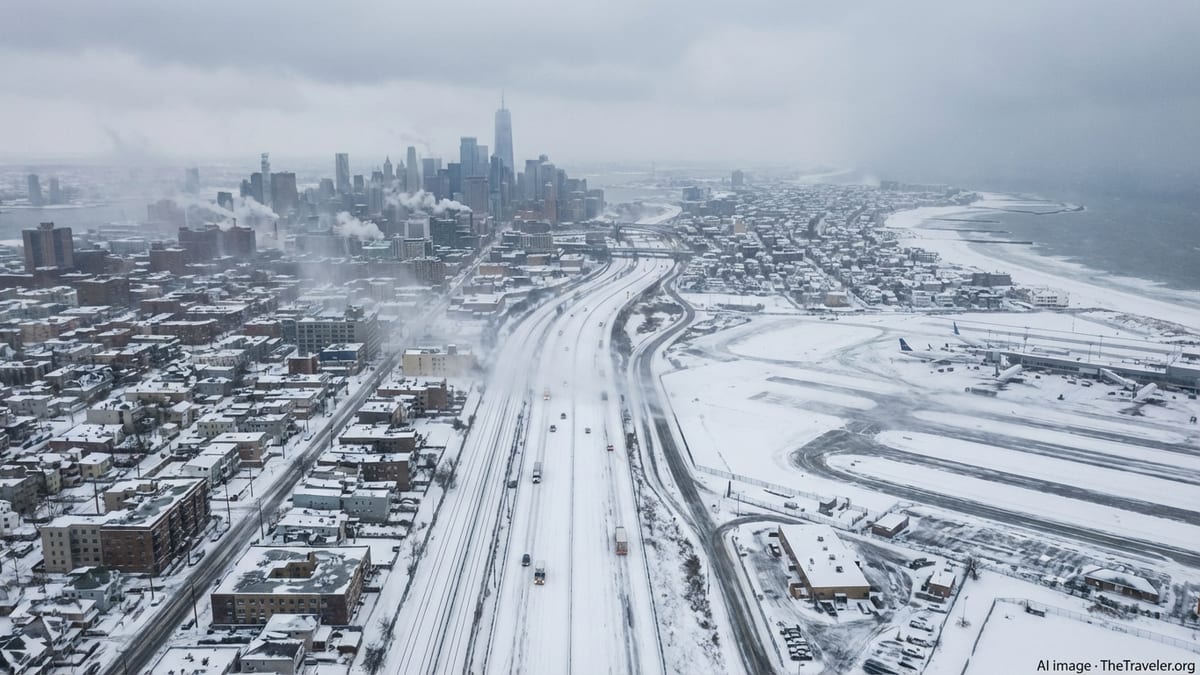
Blizzard Warnings Expand From Delaware to Southern New England
On Saturday, February 21, the National Weather Service expanded blizzard warnings along the Mid-Atlantic and New England coasts, placing southern Delaware, the Jersey Shore, New York City, Long Island and coastal Connecticut in the highest risk zone for heavy snow and damaging winds. Forecasters say the developing nor’easter will intensify off the Mid-Atlantic coast on Sunday before racing northward and “bombing out,” rapidly deepening into a powerful winter storm.
Meteorologists expect the system to deliver one to two feet of heavy, wet snow in a swath from Delaware through coastal New Jersey and into southeastern New England, with localized totals higher where intense snow bands stall. Along coastal Delaware, New Jersey, Long Island, Rhode Island and eastern Massachusetts, winds could gust between 40 and 70 miles per hour, producing whiteout conditions, deep drifts and near-zero visibility.
Officials are warning that the storm has the potential to become the most disruptive snow event in several years for some major cities. In New York City, a blizzard warning has been issued for the first time since the late 2010s, underlining the expectation of sustained high winds and blowing snow during the height of the storm from early Sunday through Monday.
Farther inland, including parts of Pennsylvania, interior New York and western New England, totals will vary with distance from the coast and subtle shifts in the storm track. Even where blizzard criteria are not met, forecasters say heavy snow and gusty winds will still make travel dangerous and may cause scattered power outages.
Travel Disruptions Spread Across Highways, Airports and Rail Lines
The storm’s timing is particularly troublesome for travelers. The worst conditions are expected from Sunday afternoon through Monday, overlapping with both weekend getaways and the Monday morning commute in major metropolitan areas from Philadelphia to Boston. Transportation agencies across Delaware, New Jersey, Pennsylvania, New York, Connecticut, Rhode Island and Massachusetts are bracing for widespread disruptions.
Highway authorities in several states have already urged drivers to avoid nonessential travel once snow begins accumulating. Portions of Interstate 95, one of the nation’s busiest travel arteries, are likely to see periods of near-total shutdown as heavy snow combines with strong winds to create whiteout conditions. State police are warning that stranded vehicles could slow plowing operations and lengthen road closures long after the heaviest snow ends.
Air travel is also expected to suffer major impacts. Airlines serving Philadelphia International, Newark Liberty, LaGuardia, John F. Kennedy, Boston Logan and regional airports along the corridor have begun issuing travel alerts and flexible rebooking policies. With blizzard conditions forecast at several of these hubs, aviation analysts say hundreds, if not thousands, of flights could be canceled or significantly delayed from Sunday into Tuesday as carriers work through backlogs.
Amtrak and regional rail operators are preparing for snow-covered tracks, downed tree limbs and power issues that could force reduced schedules or suspensions. Past nor’easters of similar strength have temporarily halted rail service in parts of the Northeast, and travelers are being advised to check for real-time updates and be ready for last-minute cancellations.
Tourism Hotspots Brace for Lost Revenue and Safety Challenges
From Delaware’s coastal towns to the ski slopes of northern New England, the storm is striking during a critical period for winter tourism. Many destinations rely on late February weekends for a final surge of hotel bookings, restaurant business and seasonal events before spring travel patterns take over.
In Delaware and New Jersey, popular beach communities that have increasingly promoted year-round festivals and off-season getaways are now facing sweeping cancellations. Hotel managers in Rehoboth Beach, Cape May and Atlantic City report a wave of calls from guests seeking to postpone or shorten stays, especially among visitors driving in from the Mid-Atlantic and Midwestern states.
Farther north, coastal tourism hubs such as New York City, Providence, Newport, Cape Cod and the islands off Massachusetts are adjusting plans for walking tours, museum days and waterfront dining. While some venues intend to stay open to serve nearby residents who can travel on foot, many are revising operating hours, moving programs online or closing for at least part of the storm’s duration due to employee safety concerns and expected transit shutdowns.
Paradoxically, the nor’easter may also offer opportunity for certain destinations. Ski resorts in Pennsylvania, New York, Vermont and New Hampshire hope that new natural snow will freshen slopes after an inconsistent winter. Yet operators caution that the same blizzard conditions that improve snowpack can make it impossible for guests to reach the mountains safely, especially on mountain passes and rural roads that are prone to drifting and icing.
States of Emergency, School Closures and Coastal Flood Threats
Governors and local officials across the Mid-Atlantic and Northeast spent Saturday moving to free up resources ahead of the storm. With more than 40 million people under winter storm watches, warnings or advisories, multiple states have already declared emergencies or pre-deployed National Guard units, snowplow fleets and utility repair crews.
School districts in Delaware, New Jersey, Pennsylvania, New York, Connecticut, Rhode Island and Massachusetts are announcing closures or remote learning plans for Monday, citing concerns over bus safety and the ability of staff and students to navigate unplowed side streets. Many universities are signaling a shift to online instruction at the start of the week if conditions deteriorate as expected.
In addition to snow and wind, forecasters are closely watching the risk of coastal flooding. Onshore winds coinciding with high tides from coastal Delaware and the Jersey Shore through Long Island, Rhode Island and eastern Massachusetts could push water levels high enough to cause minor to moderate flooding in low-lying neighborhoods, marinas and waterfront business districts. Emergency managers are advising property owners to move vehicles from flood-prone lots and secure outdoor equipment.
For tourism businesses along the shore, coastal flooding is a double blow. Not only can floodwaters damage boardwalks, piers, parking lots and first-floor shops, but cleanup operations can drag on for days, forcing closures beyond the immediate weather threat and discouraging spontaneous travelers who might otherwise take advantage of post-storm scenery.
Residents and Visitors Urged to Rethink Nonessential Trips
Public safety agencies throughout the region are issuing blunt warnings about the dangers of traveling during the height of the nor’easter. Officials in Delaware and New Jersey, where some of the most intense bands of snow are projected to set up, have stressed that even experienced drivers in four-wheel-drive vehicles can quickly become stranded when visibility drops to near zero and drifts begin piling up.
Tourism boards and convention bureaus from Philadelphia to Boston are updating messaging to encourage visitors to stay put, reschedule or pivot to local experiences within walking distance instead of attempting long drives or intercity journeys. Many are coordinating with local hotels to publicize flexible cancellation policies and special rates for stranded travelers who may need to extend stays after flight or train disruptions.
Travel advisers recommend that anyone planning to fly into or out of major Northeast airports over the next several days build flexibility into their itineraries, monitor airline apps closely and avoid tight connections that could be easily missed if the storm’s worst impacts linger. For those already in popular city destinations such as New York, Boston or Philadelphia, officials suggest embracing a “shelter in place” mindset by stocking up on essentials, identifying indoor attractions within a short distance and staying abreast of local emergency alerts.
In coastal resort towns, where second-home owners and weekend visitors may be less familiar with local hazards, authorities are urging residents to check on neighbors, especially older adults or newcomers. Tourism offices are using social media and visitor email lists to share multilingual guidance on staying safe in heavy snow, recognizing signs of hypothermia and avoiding downed power lines.
Airlines, Hotels and Attractions Adjust Policies in Real Time
As forecast confidence has increased, the travel industry’s response has shifted from watchful waiting to active contingency planning. Airlines serving major Northeast hubs are issuing travel waivers that allow passengers to change flights without standard penalties for trips scheduled through the early part of next week. Carriers hope that encouraging travelers to shift itineraries away from the storm window will reduce the need for last-minute cancellations.
Major hotel chains and independent properties across Delaware, New Jersey, Pennsylvania, New York, Connecticut, Rhode Island and Massachusetts are adopting more flexible cancellation and rebooking rules. In some city centers and airport districts, hotels are offering discounted “weather rates” for airline crews, essential workers and stranded passengers who may be unable to leave once conditions deteriorate.
Many cultural institutions, from museums and theaters to aquariums and historic sites, are also preparing to modify hours or temporarily close. Some venues have begun moving scheduled performances, tours and lectures to virtual platforms, hoping to salvage ticket revenue and maintain engagement with visitors who cannot attend in person. Others are planning special post-storm promotions to entice guests back once transportation networks stabilize.
Travel planners note that the rapid evolution of the forecast underscores the importance of flexible bookings. They recommend that visitors favor refundable tickets, no-penalty hotel rates and attraction passes that can be used on multiple days rather than tied to a single, high-risk date.
Storm Adds to Season of Repeated Winter Weather Blows
This latest nor’easter arrives on the heels of an already turbulent winter for the United States. Recent weeks have seen a string of impactful storms across the country, including a deadly late January system that brought heavy snow from Texas to Maine and exposed vulnerabilities in power and transportation infrastructure. For communities from Delaware to New England, the new blizzard threat adds fresh strain to already stretched municipal budgets and weary residents.
Snow removal costs, overtime for public works employees and emergency shelter operations are mounting in cities that have repeatedly faced winter weather over the past month. Tourism-dependent businesses, too, are grappling with a stop-and-start season marked by alternating thaws and disruptive storms that can wipe out carefully planned events and compress revenue into fewer safe travel windows.
Climate researchers caution that while no single storm can be directly attributed to long-term trends, the pattern of intense, moisture-laden coastal systems affecting the Northeast is consistent with a warming ocean and atmosphere capable of supporting heavier precipitation. For travel and tourism planners, that raises questions about how to design more resilient seasons, diversify offerings and communicate risks without deterring visitors entirely.
For now, the primary focus remains immediate safety. Officials across Delaware, New Jersey, Massachusetts, Pennsylvania, New York, Connecticut and Rhode Island continue to stress that residents and visitors alike should heed local advisories, stay off the roads once snow and wind intensify and prepare for the possibility of extended power outages and lingering transportation disruptions even after skies begin to clear.