

More news on this day
A powerful nor’easter is unleashing blizzard conditions along the US East Coast on Sunday, disrupting travel from Washington DC to Boston and forcing airlines to cancel more than 3,000 flights at some of the nation’s busiest airports, including New York, Newark, Philadelphia and Boston.
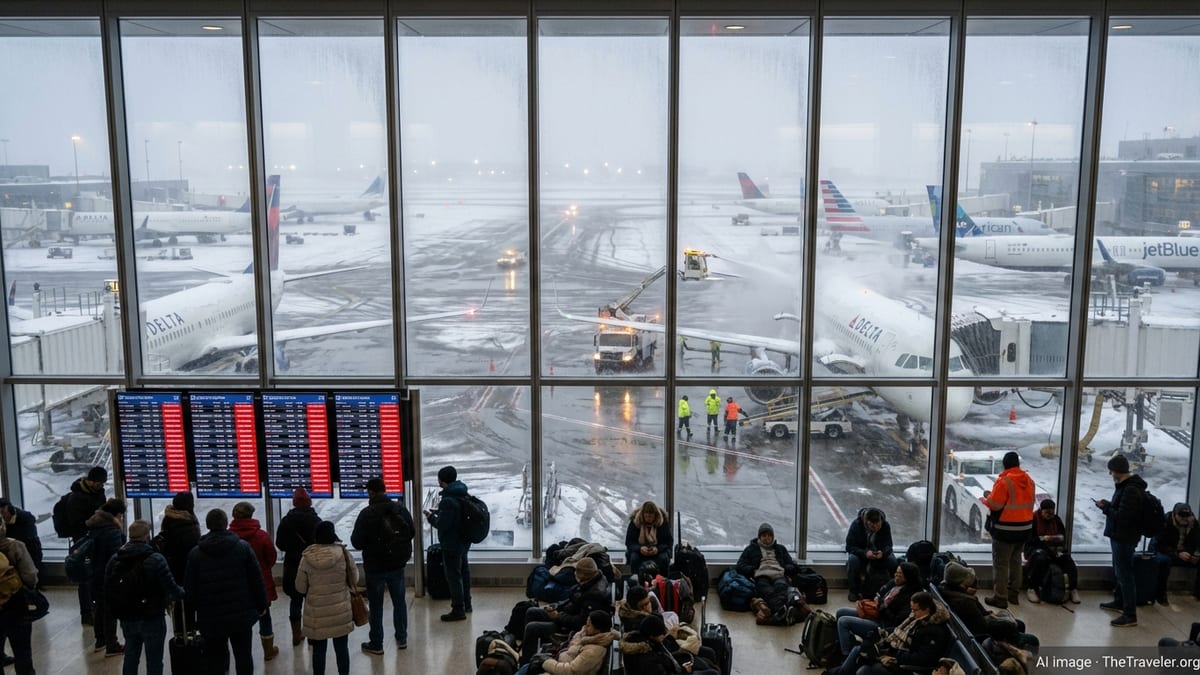
Blizzard Threat Turns Northeast Corridor into No-Fly Zone
The fast-developing winter storm, unofficially dubbed Winter Storm Hernando by some media outlets, is bearing down on the densely populated Northeast corridor with forecasts calling for 18 to 24 inches of snow in and around New York City and significant totals from Philadelphia to Boston. Forecasters warn of whiteout conditions as wind gusts approach or exceed 60 miles per hour, producing dangerous wind chills and near-zero visibility at the height of the event.
Blizzard warnings and winter storm warnings stretch from the Mid-Atlantic through New England, covering major metropolitan centers including Washington DC, Baltimore, Philadelphia, New York City and Boston. In New York, officials describe the nor’easter as potentially historic for both snowfall rates and wind intensity, with the heaviest snow expected from late Sunday into Monday morning before gradually tapering off.
The National Weather Service has cautioned that travel could become nearly impossible during the peak of the storm, with snowfall rates of two to three inches per hour during the most intense bands. Coastal areas of New Jersey, Long Island and southeastern New England are also bracing for coastal flooding and beach erosion as strong onshore winds coincide with high tides.
More than 3,000 Flights Axed as Major Airlines Brace for Impact
Airlines moved aggressively ahead of the worst conditions, scrapping thousands of flights and warning of rolling disruptions that could ripple across domestic and international networks for days. By Sunday afternoon, more than 3,000 flights in and out of the Northeast had been canceled, with New York’s JFK, LaGuardia and Newark Liberty International among the hardest hit, along with Boston Logan, Philadelphia International and Washington-area airports.
Delta Air Lines, American Airlines, JetBlue and United Airlines implemented broad schedule cuts centered on the storm’s projected path. JetBlue, which has a large presence at JFK, LaGuardia, Boston and Newark, suspended a substantial share of its Sunday operations and preemptively trimmed Monday schedules to allow time for deicing and runway clearing. American Airlines temporarily halted service at New York’s major airports and Philadelphia during the worst of the storm, with a tentative plan to resume limited operations on Tuesday, subject to weather and airport conditions.
United and Delta also issued systemwide weather waivers for affected airports, allowing travelers to rebook without change fees or fare differences on specific dates and routes. The goal, carriers say, is to encourage customers to shift trips away from the storm’s peak to avoid being stranded and to give ground crews the time and space needed to safely clear snow and ice from aircraft and runways.
Budget and regional carriers, including Frontier and Spirit, likewise canceled scores of flights serving East Coast hubs, while major cargo operators adjusted schedules to avoid the most dangerous conditions. Aviation analysts note that canceling early, rather than attempting to operate through deteriorating weather, has become a core strategy after several high-profile meltdowns in recent years.
New York, Boston, Philadelphia and Washington DC Feel the Brunt
In New York City, the storm is expected to bring the first true blizzard conditions in several years, with officials warning residents to avoid nonessential travel. Snow began intensifying through Sunday with forecasts calling for more than a foot and a half of accumulation in the five boroughs, and higher amounts possible in outlying suburbs. All three major New York-area airports have reported waves of cancellations and delays, with many terminals crowded by travelers scrambling to rebook or find alternate routes.
Boston Logan International, a critical hub for New England and transatlantic travel, is also in the storm’s direct line. Airlines there slashed operations as heavy snow and strong crosswinds reduced runway capacity and forced extensive deicing procedures. Airport authorities urged passengers not to arrive at the terminal until they had confirmed that their flight was still operating, noting that conditions could change rapidly as the storm’s bands pivot across the region.
Further south, Philadelphia International Airport reported hundreds of cancellations as sustained snowfall and gusty winds created treacherous operating conditions. In Washington DC and Baltimore, lighter totals are forecast than in New York and Boston, but the combination of snow, sleet and freezing rain still poses serious challenges for airlines and airport crews. Carriers have warned that even airports on the fringe of the storm may see disruptions due to aircraft and crews being out of position.
Newark Liberty International in New Jersey has emerged as one of the flashpoints of the disruption, with a large concentration of United and international carriers canceling or rerouting flights. The airport’s role as a major transatlantic and transcontinental gateway means that delays and cancellations there have an outsized effect on schedules in the Midwest, West Coast and even Europe.
International Routes from Europe, the Gulf and India Snarled
The nor’easter’s reach extends well beyond North America, disrupting long-haul flights linking the East Coast to Europe, the Middle East and Asia. Airlines based in the Gulf region have announced cancellations and delays on routes into New York and Newark, citing deteriorating conditions and the potential for protracted airport closures. Flights scheduled to depart overnight into Monday have been particularly affected as carriers seek certainty on runway availability and air traffic flow restrictions.
European carriers are also trimming operations to New York, Boston, Philadelphia and Washington DC, with some flights rerouted to alternate airports less affected by the storm or rescheduled to later in the week. Passengers heading to or from major European hubs have been advised to expect missed connections and last-minute gate or schedule changes as operations are rebalanced once the storm passes.
From South Asia, airlines have canceled multiple services to New York and Newark, adjusting schedules to protect crew duty times and aircraft rotations. Travelers bound for North America from cities such as London, Dubai, Doha and Mumbai are being urged to stay in close contact with their airlines and to monitor airport advisories as conditions evolve.
Travel industry experts note that, because this storm is hitting during a busy winter travel period, the knock-on effects could stretch well beyond the two main days of intense weather. Repositioning aircraft and crews, clearing backlogs and restoring normal schedules at congested airports like JFK and Newark can take several days even after the last snowflake falls.
States of Emergency, Road Closures and Rail Disruptions
Governors and mayors across the region have declared states of emergency and mobilized snow-removal fleets, warning that roads could become impassable at the height of the storm. In New York, Long Island and parts of New Jersey, local officials have cautioned that banding in the storm could deliver intense snowfall in short bursts, quickly overwhelming plowing operations and creating drifts that block smaller roadways.
Highway authorities from Virginia to Massachusetts have deployed thousands of plows and salt trucks, but urge drivers to stay off major routes such as Interstate 95 during the worst conditions. Reduced visibility and slick pavement increase the risk of multi-vehicle accidents, which can in turn impede emergency and maintenance crews trying to reach trouble spots.
Rail operators are also bracing for significant disruptions. Along the Northeast Corridor, Amtrak and regional commuter rail systems have warned of reduced schedules, slower speeds and possible service suspensions if blowing and drifting snow obstructs tracks or if overhead power lines are damaged. Some rail services were preemptively curtailed to limit the number of stranded passengers should conditions deteriorate faster than expected.
In urban centers, public transit agencies are racing to keep key bus and subway routes open for essential workers while also preparing for the possibility of service cuts where buses cannot safely navigate unplowed streets. Transit officials are urging riders to check real-time apps and service alerts before heading out.
Travelers Confront Long Lines, Uncertainty and Limited Options
Inside terminal buildings, the human toll of the storm is immediately visible. Families cluster around charging stations, business travelers tap furiously at laptops and phones, and long queues snake in front of airline customer service desks as passengers seek rebookings and refunds. Many travelers describe difficulty finding available seats for several days, particularly on popular routes connecting through New York and Boston.
For those already in transit when the wave of cancellations hit, overnight stays at airport hotels have quickly sold out, pushing some passengers to seek shelter in terminal seating areas. Airport staff and volunteers in several cities have been distributing blankets and basic supplies, while concessionaires work to keep restaurants and shops open despite reduced staffing due to the storm.
Travel advisers recommend that stranded passengers prioritize securing new itineraries digitally rather than waiting in line at the airport, using airline apps, websites or call centers to rebook. They also suggest exploring secondary airports within driving distance, such as Hartford, Providence or smaller regional fields, which may recover more quickly than the largest hubs once the storm moves offshore.
Still, with many flights fully booked for days ahead and aircraft scattered across the network, travelers are being warned to prepare for continued delays and to build flexibility into their plans. Those with nonessential trips are being urged to postpone travel entirely until airlines and airports can work through the backlog.
Officials Urge Caution as Another Test of East Coast Resilience
Officials across the Northeast say they have learned hard lessons from previous winter storms that snarled airports and highways, and insist that early closures and widespread flight cancellations are designed to save lives and reduce chaos. By thinning schedules and keeping nonessential vehicles off the roads, they hope to give snow-removal and emergency crews a better chance of staying ahead of the storm.
City and state leaders are using press briefings and social media to emphasize personal preparedness, urging residents to stock up on essentials, charge devices, and check on vulnerable neighbors and relatives. With the possibility of power outages due to heavy, wet snow and strong winds, utility companies have pre-staged repair crews and warned that downed lines could take time to fix if conditions remain hazardous.
For the travel sector, the storm represents yet another stress test for an aviation system that has faced repeated weather shocks in recent seasons. Airlines, airports and regulators will be closely scrutinized for how quickly they restore normal operations and how well they communicate with passengers during and after the disruption.
As the nor’easter continues its march up the coast, authorities say the key message is simple: if you do not absolutely need to travel, stay home, stay informed and give the region’s overstretched transportation networks time to dig out.