

More news on this day
One of Santo Domingo’s most storied hotels, Hodelpa Nicolás de Ovando in the Colonial City, is enhancing its appeal to leisure travelers by positioning itself as a pet-friendly option for visitors exploring the Dominican capital with their animals.
Get the latest news straight to your inbox!
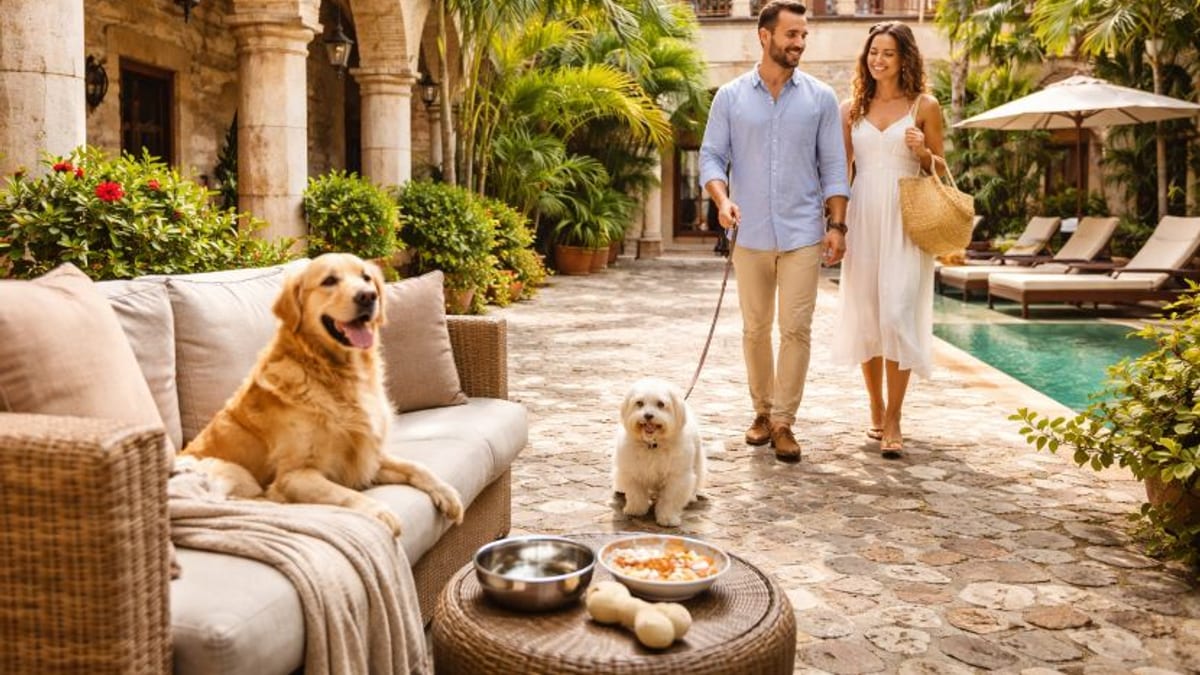
Image by International Hotels News, Hotel Industry & Hospitality News
A Heritage Landmark Welcoming Modern Travelers
Hodelpa Nicolás de Ovando occupies a group of meticulously restored 16th century residences on Calle Las Damas, the first paved street in the Americas, in the heart of Santo Domingo’s Colonial City. Publicly available information describes the property as part of a UNESCO World Heritage listed urban ensemble, where fortified walls, cobbled streets and centuries old masonry form a rare historic backdrop for a stay in the Caribbean capital.
The building complex traces its origins to the early 1500s, when the residence of Governor Nicolás de Ovando was established along the Ozama River. Reports on the hotel’s history note that these former governor’s houses and adjacent structures were later adapted into a luxury hotel that blends original stone walls, inner courtyards and heavy timber ceilings with contemporary comforts such as air conditioning, Wi Fi and modern bathrooms.
Travel and hotel review platforms highlight the property’s dual personality as both a historic monument and a full service urban hotel. Guests encounter cloistered courtyards, river views and colonial facades, but also amenities typical of an upscale address, including an outdoor pool, small fitness facilities, meeting spaces and on site dining. This combination has helped position Hodelpa Nicolás de Ovando among the most prominent lodging options in the Colonial Zone for international and domestic visitors.
The hotel’s current positioning as a pet friendly property builds on this legacy, offering an updated take on heritage hospitality that aligns with shifting traveler expectations in Santo Domingo and across the Caribbean region.
Pet-Friendly Positioning in the Colonial City
Industry directories and tourism listings for Santo Domingo indicate that Hodelpa Nicolás de Ovando and other hotels in the Hodelpa portfolio are now categorized as pet friendly, reflecting a broader move within the Dominican hospitality sector to serve travelers who prefer to bring animals on their trips. Trade documents circulated by national hotel and tourism associations include the property in line ups where pet acceptance is specifically flagged, signaling that the hotel is marketing this feature as part of its core offer.
While individual hotel policies on size limits, permitted areas and surcharges may vary, the pet friendly designation typically means that guests can reserve rooms while traveling with dogs or other small companion animals, subject to house rules. Publicly available descriptions for Hodelpa Nicolás de Ovando present the hotel as a high service environment, suggesting that pet stays are being woven into an already established framework of concierge style assistance, room amenities and tailored services for leisure and business visitors.
The move is notable in the context of Santo Domingo’s Colonial City, where many buildings are centuries old and space can be constrained by historic layouts. Incorporating animals into that environment requires attention to circulation, noise and cleaning standards in order to maintain both heritage preservation and guest comfort. The pet friendly positioning of a landmark address indicates that this balance is increasingly seen as achievable, and commercially desirable, within the city’s oldest quarter.
For travelers, the practical effect is an expansion of lodging choices when planning a visit with pets to the Dominican capital. Instead of limiting stays to newer districts or resort zones, visitors can now consider accommodations inside the Colonial City’s stone ramparts without necessarily leaving four legged companions behind.
Exploring Santo Domingo’s Colonial City With Pets
Staying at a property such as Hodelpa Nicolás de Ovando situates guests, and their animals, within a short walking radius of many of Santo Domingo’s most recognizable historic sites. Public guides to the Colonial City describe a compact grid where landmarks line the corridor leading from Parque Colón to the riverfront, with Calle Las Damas running past museums, religious buildings and former administrative residences.
From the hotel, visitors can step into streets that feature views of the Ozama River, fortified walls and plazas that tell the story of early Spanish settlement in the Americas. Published coverage of the area notes that attractions such as the First Cathedral of the Americas, the Alcázar de Colón and the National Pantheon are located within a relatively small area, making the district well suited to exploration on foot. For pet owners, this can translate into a series of short walks structured around shaded squares, narrow lanes and occasional river breezes.
However, traveling with animals in an urban, historic area also requires added planning. Local regulations typically call for leashes in public spaces, and common sense etiquette suggests avoiding crowded interiors, religious sites and museums that may not permit pets. Pet owners choosing a hotel in the Colonial City are therefore likely to focus on early morning and late afternoon strolls, when heat is lower and streets are quieter, while relying on the hotel’s interior courtyards or designated outdoor corners for shorter breaks during the day.
Urban infrastructure such as narrow sidewalks, uneven stones and low steps, often highlighted in descriptions of the Colonial City’s character, may also influence how and when guests choose to move with their animals. Lightweight harnesses, collapsible water bowls and attention to paw safety on hot pavements are increasingly part of the packing list for visitors planning to base themselves in this historic quarter with pets.
Balancing Comfort, Services and Historic Character
Hotel review sites that profile Hodelpa Nicolás de Ovando emphasize the way its 92 rooms and four suites are divided between colonial and contemporary categories, with exposed brick, high ceilings and traditional shutters appearing alongside more streamlined interior schemes. This range allows guests to choose spaces that match their preference for period ambiance or modern layouts, a flexibility that can matter for travelers bringing animals that may require more open floor area or easier access to outdoor spaces.
Reports indicate that standard amenities such as minibars, flat screen televisions and complimentary Wi Fi are available across categories, while higher tier options add river views or access to dedicated lounges. For pet owners, room location within the complex, proximity to exits, staircases and elevators, and the presence of tiled rather than carpeted floors may all be factors that shape booking decisions. Although these details are not always specified in public listings, they form part of the practical calculus of combining pet travel with a historic city stay.
The property’s shared areas, including a pool terrace with views of the Ozama River and a series of internal patios, also contribute to the experience. Travel features often mention the peaceful quality of these courtyards, which are framed by arches and cloisters that buffer street noise. Integrating pets into such environments depends on clear etiquette, from keeping animals under control in communal pathways to respecting designated no pet zones in dining or event spaces.
The operational side of pet friendly hospitality in a building of this age can include reinforced cleaning protocols, room inspection routines and staff training on interactions with animals and owners. While these processes mostly remain behind the scenes, they help maintain the equilibrium between the hotel’s status as a protected heritage structure and its role as a contemporary, pet accommodating lodging option in Santo Domingo.
What Pet Owners Should Know Before Booking
Travelers interested in exploring Santo Domingo’s Colonial City with their pets are likely to weigh several factors before committing to a stay at Hodelpa Nicolás de Ovando or any comparable property. Published hotel descriptions and tourism board materials suggest that climate, neighborhood atmosphere and transportation logistics should all be part of the planning process.
Santo Domingo’s tropical weather, with high humidity and strong sun, can be demanding for animals, particularly during peak daytime hours. Guests may need to schedule outdoor activities during cooler periods and rely on air conditioned interiors at other times. The hotel’s solid walls and interior patios can provide welcome shade, but hydration and rest remain critical for pets unaccustomed to Caribbean conditions.
Noise and activity levels in the Colonial City also deserve consideration. Although the area retains its historic character, it functions as a living neighborhood with residents, restaurants and nightlife. Some streets can become busy in the evenings or during festivals, so pet owners may prefer rooms facing inner courtyards over those overlooking active thoroughfares. Checking current house rules on maximum number of pets per room, accepted species, vaccination requirements and any extra fees is advisable before arrival.
Access to the Colonial City from the wider metropolitan area typically involves taxis, rideshare services or private transfers. Visitors traveling with animals may wish to confirm in advance that their chosen transport provider accepts pets, particularly when arriving from Santo Domingo’s international airport or connecting from resort destinations elsewhere in the country. Once settled in, the walkable scale of the district helps reduce reliance on vehicles, which can be an advantage for guests exploring primarily on foot with leashed companions.