

More news on this day
Japan’s reputation for precision rail engineering and meticulous hospitality is set to converge in a new way, as Hitachi prepares a next-generation luxury train for 2028 that puts fine dining and immersive regional travel at the center of the journey.
Get the latest news straight to your inbox!
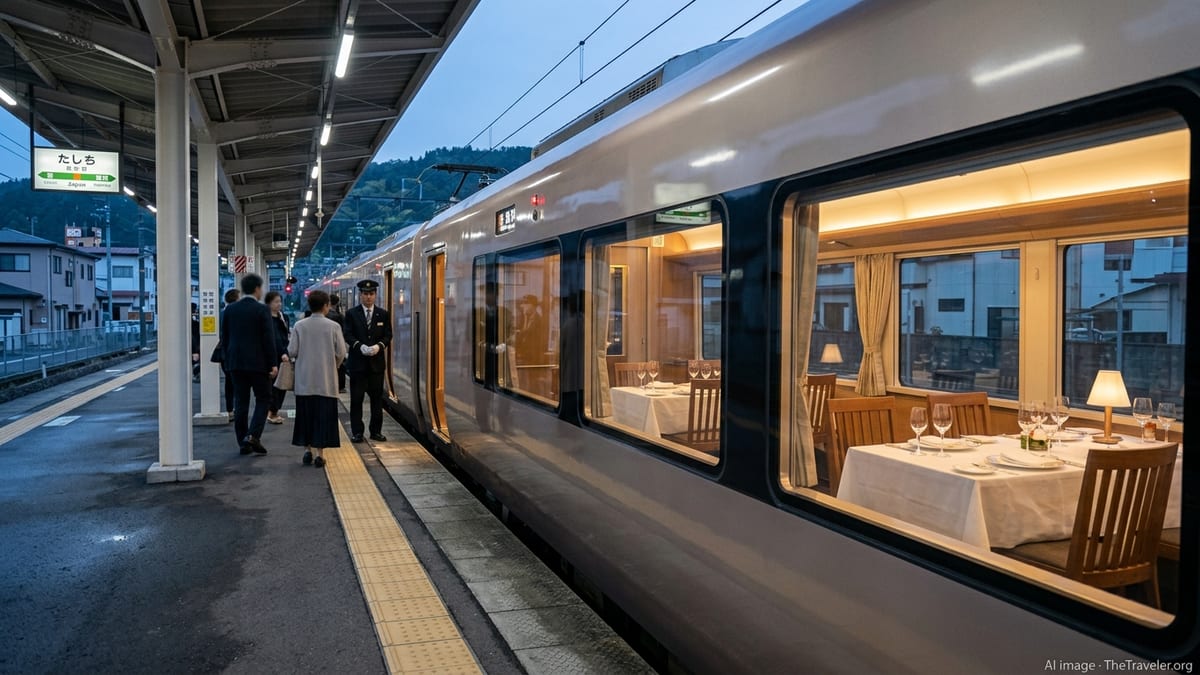
A New Flagship for Japan’s Gourmet Rail Experiences
Japan already hosts an array of themed and restaurant-style trains, from Kyushu’s cruise-style sleepers to fine-dining day services in Tohoku, but the upcoming Hitachi-built train planned for 2028 is being positioned as a new benchmark in the country’s rail tourism ecosystem. Publicly available information indicates that the project will combine Hitachi’s long-running expertise in premium rolling stock manufacturing with the growing market for high-end, reservation-only culinary journeys that emphasize local ingredients and regional storytelling.
While detailed branding for the new service has not yet been formalized, reports suggest it will operate as a dedicated restaurant train rather than a standard express with a dining option. The concept aligns with a wider trend in Japanese rail, in which operators design entire trains around gastronomic itineraries, curated menus and slow-travel routes that encourage passengers to savor landscapes at a more relaxed pace than the typical shinkansen hop between major cities.
Industry coverage notes that Hitachi has been a key partner in several of Japan’s most sophisticated luxury and excursion trains, supplying or co-manufacturing coaches for services that put premium cabins, lounge cars and elaborate dining spaces at the heart of the onboard experience. This legacy is informing the new 2028 project, which is expected to use advanced materials, efficient traction systems and high-spec interiors to deliver a quietly luxurious ride that foregrounds the dining table as much as the timetable.
Full-Course Dining at Speed: Inside the Onboard Culinary Concept
The forthcoming Hitachi train is being developed around a full-course restaurant concept, with itineraries structured so that each leg of the journey is paired to specific stages of the meal. According to coverage from Japanese rail and travel outlets, passengers can expect multi-course menus highlighting seasonal produce sourced along the route, prepared in a dedicated onboard kitchen and served in spacious dining cars designed more like contemporary urban restaurants than conventional rail coaches.
Unlike older dining cars that treated meals as a supplement to long-distance travel, the 2028 service treats the gourmet experience as the primary reason to board. Seating layouts under discussion prioritize generous table spacing, large picture windows and coordinated lighting that shifts subtly from bright daytime service to warmer tones for evening departures, aiming to mirror the ambience of high-end city dining rooms while still emphasizing the constantly changing scenery just beyond the glass.
Menu details have not yet been finalized, but the project is expected to follow the model of existing Japanese restaurant trains that rotate chefs or collaborate with well-known regional restaurants for limited-time menus. Reports indicate an emphasis on tasting-style courses that pair local seafood, mountain vegetables and regional meats with carefully chosen wines and non-alcoholic pairings, presented in a way that tells the story of each stop on the line.
Design Language: Hitachi’s Next-Level Rail Comfort
Hitachi’s recent projects for Japanese private railways and luxury excursion services provide clues to the design language likely to appear on the 2028 train. Current-generation limited express and sightseeing models emphasize clean lines, large panoramic windows, subtle indirect lighting and material palettes that mix warm woods, textured fabrics and brushed metals to create a sense of calm, understated luxury rather than ostentatious décor.
Reports from Japan’s rail industry press highlight that Hitachi has been incorporating advanced sound insulation, low-vibration bogies and smart climate control into its premium rolling stock, all features expected to be present in the new gourmet train. The intention is to create an environment where cutlery, glassware and conversation remain undisturbed by track noise, allowing the culinary experience to unfold smoothly even as the train crosses viaducts, tunnels and coastal sections.
Digital integration is also anticipated to play a quietly supportive role. While the focus remains firmly on analog pleasures like food, scenery and conversation, publicly available information on Hitachi’s broader rail strategy points to discreet use of sensors and control systems that optimize ride comfort, energy use and schedule reliability behind the scenes. Passengers are instead likely to encounter technology in subtler ways, such as dynamic window tinting, smart lighting presets for each course of the meal, and reservation systems that coordinate seating layouts, dietary preferences and timing before departure.
Route, Operations and the 2028 Launch Timeline
Japanese media and rail industry reports describe 2028 as the target year for introducing the new Hitachi-built luxury restaurant service, aligning with broader investment in tourism-oriented rail products ahead of anticipated demand later in the decade. Exact route details have not yet been finalized, but indications point toward corridors that offer a mix of coastal vistas, traditional townscapes and access to renowned food-producing regions, ensuring that the onboard menu can be tightly connected to the landscapes outside.
The operational model is expected to follow the pattern of existing restaurant trains that run on fixed days with limited seat counts, sold as package experiences that bundle the rail journey with the meal itself. This structure allows operators to preserve a sense of exclusivity while managing procurement, staffing and rolling stock maintenance around a stable timetable. It also makes the train appealing to both domestic travelers seeking a special-occasion outing and international visitors looking for a curated slice of regional Japan without the need to self-navigate complex local dining reservations.
From a technical standpoint, the 2028 train is projected to use energy-efficient traction and braking systems consistent with Japan’s current generation of premium limited express stock, balancing environmental considerations with the need for smooth acceleration and deceleration along scenic but sometimes curving regional lines. Although top speed is not the focus for this service, maintaining punctuality and a refined ride quality remains central to the project’s appeal.
Setting a New Benchmark in Global Rail-Based Gastronomy
Japan’s upcoming Hitachi-built luxury train arrives at a time when rail operators worldwide are exploring ways to differentiate their services through experience-driven offerings. High-end overnight trains in Europe, gourmet day services in Asia and heritage lines with chef-led dining experiences have all helped reframe railways as moving venues for slow travel and fine food. The 2028 project builds on this global momentum while leveraging Japan’s deep rail infrastructure, culinary culture and reputation for detail-oriented service.
Observers in the travel sector suggest that the new train is poised to strengthen Japan’s position at the forefront of rail-based gastronomy, sitting alongside existing cruise-style sleepers and regional restaurant trains but adding a fresh layer of design sophistication and culinary ambition. Its launch is expected to generate strong interest from both rail enthusiasts and food-focused travelers, particularly those seeking experiences that combine comfort, sustainability and a clear sense of place.
As more concrete details emerge in the lead-up to 2028, prospective passengers can anticipate a service that treats the journey as a multi-sensory narrative: the landscape providing the backdrop, the menu interpreting local flavors, and the Hitachi-built train itself acting as a moving showcase of contemporary Japanese craftsmanship. If early indications hold, this next-level luxury service will not only enrich Japan’s domestic tourism offer, but may also influence how rail operators elsewhere think about the possibilities of dining at speed.