

More news on this day
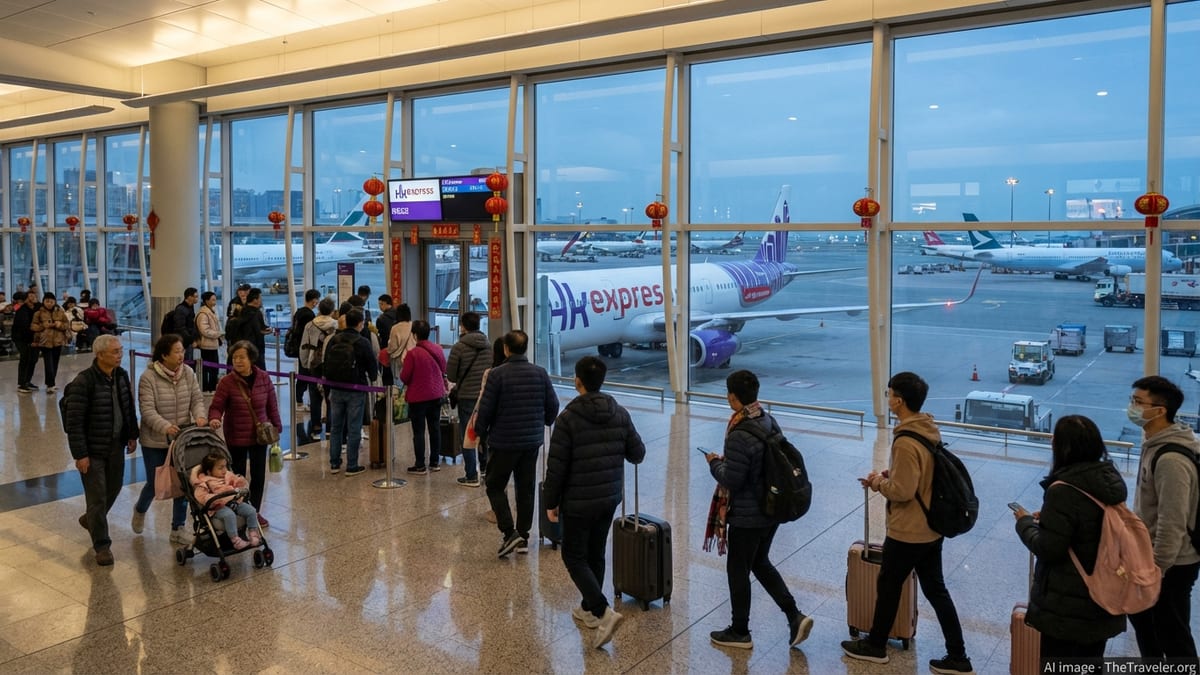
HK Express has reported a sharp rise in passenger numbers over the Lunar New Year peak, underscoring booming demand for short-haul regional escapes as the mainland’s longest Spring Festival break in years fuels a travel surge across Asia.
Record Holiday Volumes for Hong Kong’s Low-Cost Carrier
During the core Lunar New Year travel window in February 2026, HK Express carried more than 280,000 passengers, a year-on-year increase of about 15 per cent, according to figures released by the airline. The carrier also set a new single-day record on 20 February, transporting over 30,000 travellers as airports and border checkpoints across the region reported heavy traffic.
The strong Spring Festival results extend a broader growth streak. Parent Cathay Group reported that HK Express carried around 780,000 passengers in December 2025, up 24 per cent year on year, helping lift the group to a record of more than 126,000 passengers carried in a single day across its airlines at the turn of the year. For full-year 2025, HK Express passenger numbers rose about 30 per cent versus 2024, reflecting the resurgence of leisure demand and the rapid recovery of Hong Kong’s role as a regional aviation hub.
The Lunar New Year peak this year was supported by an extended nine-day holiday on the Chinese mainland, which encouraged more residents to look beyond traditional home visits and embrace longer regional getaways. That calendar shift, combined with a growing network of affordable routes from Hong Kong, helped fill HK Express cabins across its Asia-wide network.
Airline executives said the carrier focused on tightly matching capacity with demand, adding flights on days and routes forecast to be busiest. That strategy, honed across several recent holiday peaks, has allowed HK Express to capture surging demand while maintaining healthy load factors critical to the low-cost model.
Mainland and Hong Kong Travellers Drive Double-Digit Growth
HK Express said passengers originating in the Chinese mainland led the Lunar New Year surge, with numbers climbing more than 50 per cent compared with the same festive period last year. Hong Kong-origin traffic also proved resilient, jumping by over 30 per cent as residents sought quick breaks across Northeast and Southeast Asia without the time or expense of long-haul journeys.
The airline’s expanded mainland footprint, now covering multiple secondary cities, has been pivotal. HK Express reported carrying more than 97,000 inbound passengers into Hong Kong during the festive peak, an increase of over 20 per cent year on year. Inbound travellers from the mainland alone rose nearly 20 per cent, a sign that budget-conscious holidaymakers are using Hong Kong as both a destination and a convenient jumping-off point to the wider region.
The trend dovetails with broader data from Hong Kong authorities, which show a steady rebound in visitor arrivals during recent peak seasons and a sharp rise in cross-boundary passenger trips during major holidays. With immigration checkpoints again operating near or above pre-pandemic levels, carriers such as HK Express are benefiting from renewed confidence in air travel and a shift back to spontaneous, experience-led trips.
HK Express chief executive Jeanette Mao said the carrier saw particularly strong flows from the Greater Bay Area as travellers used Hong Kong International Airport as their main gateway. She added that the airline’s low fares and dense schedule of short-haul flights gave customers the flexibility to time their journeys around family commitments and public holiday patterns.
Emerging Beach and Island Destinations Win Over Holidaymakers
While established favourites such as Seoul, Bangkok and Taichung remained among HK Express’s top performers, some of the most eye-catching gains during this year’s Spring Festival came from emerging leisure destinations. The airline reported triple-digit percentage growth on its Penang route, where passenger numbers were up about 118 per cent compared with the previous Lunar New Year period.
Jeju and Phu Quoc, both marketed as relaxed island escapes within a short flight of Hong Kong, also recorded standout increases, with passenger growth of roughly 83 per cent and 65 per cent respectively. Airline analysts say these figures highlight how travellers are increasingly trading traditional city breaks for beach-focused itineraries that combine outdoor activities, local food and a slower pace.
To accommodate this shift, HK Express lifted frequencies on select routes into Southeast Asia and Korea during the holiday window. Additional services to Seoul and Busan were scheduled alongside extra flights to Bangkok and Taichung, giving travellers more departure-time choices and helping to spread demand across the busiest days.
Industry observers note that these patterns mirror wider regional trends, with Asian low-cost carriers racing to add capacity to secondary sun-and-sea destinations that were once considered niche. As more airports upgrade facilities and local tourism boards court visitors with holiday events and promotions, carriers like HK Express are positioning themselves as the natural first choice for quick, affordable escapes.
Transit Traffic Underscores Hong Kong’s Hub Ambitions
Beyond point-to-point leisure travel, transit traffic via Hong Kong has quietly become a major growth engine for HK Express. During the Lunar New Year peak, passengers connecting through the city on the airline’s network increased by roughly 90 per cent compared with last year, according to company figures.
That surge in connecting travellers reinforces Hong Kong International Airport’s efforts to reclaim its status as a premier regional hub, bridging the Greater Bay Area with destinations across Northeast and Southeast Asia. HK Express has been working closely with other Cathay Group carriers to streamline transfers, align schedules and promote Hong Kong as a convenient transfer point for price-sensitive travellers.
The airline’s growing role in hub traffic is also linked to its expanding network. Over the past year, HK Express has launched or announced a string of new routes across Japan, Korea, Vietnam and Malaysia, supported by recognitions such as being named one of the most improved connected airlines in Northeast Asia. Many of these services are designed with transit passengers in mind, offering well-timed connections to and from the mainland.
For Hong Kong’s tourism and retail sectors, the trends are welcome. Transit passengers increasingly add stopovers or short stays to their itineraries, spending on hotels, dining and shopping before continuing to their final destination. With hotel occupancy rates in the city already high over recent festive periods, local businesses are closely watching whether the Spring Festival momentum will extend into the Easter and summer peaks.
Network Expansion Positions HK Express for Further Growth
Looking beyond the immediate holiday rush, HK Express and the wider Cathay Group are signalling confidence that demand for regional escapes will remain strong through 2026. Group data show the low-cost carrier’s passenger tally in early 2025 grew more than 30 per cent year on year, with capacity, measured in available seat kilometres, also rising sharply as new aircraft and routes came online.
HK Express has been particularly active in Japan and Korea, announcing new points such as Komatsu, Cheongju and Daegu while adding services to established favourites. In Southeast Asia, Nha Trang and other coastal cities have joined the network, broadening the choice of holiday spots reachable within four hours’ flying time from Hong Kong.
The airline says it will continue to calibrate growth to match demand, with a focus on markets that show strong repeat travel and off-peak potential. Executives are also watching booking patterns closely, noting that many customers are now purchasing tickets closer to departure, especially outside major holidays. That shift makes flexible planning and rapid capacity adjustments more important than ever.
As the dust settles on the Spring Festival travel rush, HK Express’s latest numbers suggest that the appetite for quick regional trips has not only returned but evolved. With more travellers seeking diverse, experience-rich escapes across Asia, the carrier appears well placed to ride the next wave of growth while helping cement Hong Kong’s position as a super-connector for the Greater Bay Area.