

More news on this day
HK Express has reported a 15% year-on-year rise in passenger traffic over the 2026 Lunar New Year peak, with surging demand on routes to Seoul, Penang and Jeju underscoring the renewed strength of regional travel across Asia.
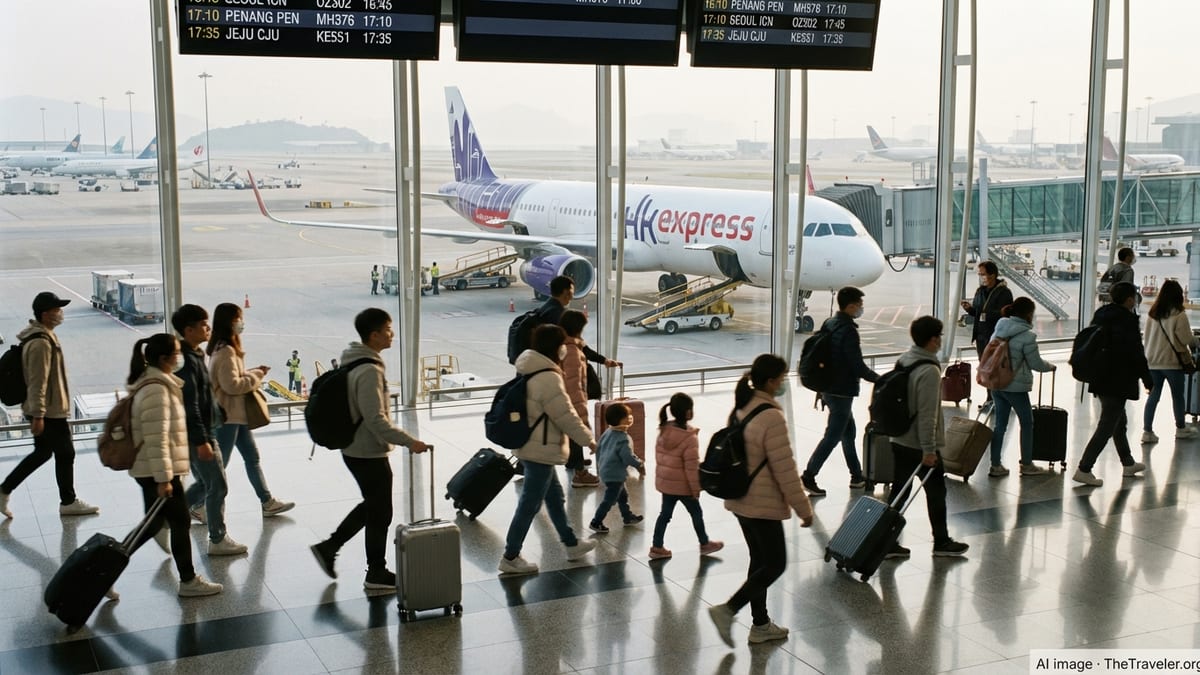
Record Lunar New Year Peak for Hong Kong Low-Cost Carrier
The Hong Kong-based low-cost airline said it carried more than 280,000 passengers during the Lunar New Year travel window from 13 to 22 February 2026, supported by the extended nine-day Spring Festival holiday on the Chinese mainland. The carrier also set a new internal record on 20 February, transporting over 30,000 passengers in a single day as travellers returned from family reunions and short-haul vacations.
Demand was particularly strong from the mainland and Hong Kong. Passenger numbers originating in the Chinese mainland rose by more than 50% compared with the same festive period last year, while Hong Kong-origin traffic climbed by over 30%. The figures highlight the role of Hong Kong International Airport as a key departure point for residents of the Greater Bay Area seeking affordable regional flights.
HK Express, part of the Cathay Group, said the festive surge validates its strategy of rebuilding capacity quickly on popular leisure routes while adding new cities across Northeast and Southeast Asia. The carrier operates a single-class, all-economy fleet that is heavily geared toward price-sensitive holidaymakers and visiting-friends-and-relatives traffic.
Emerging Destinations Lead Growth: Penang and Jeju Stand Out
While established hubs remained busy, the most eye-catching gains came from newer leisure destinations on the HK Express map. Penang in Malaysia recorded a 118% year-on-year jump in passenger numbers during the Lunar New Year period, the strongest growth across the network. The airline only launched Penang in late 2024 and has since doubled frequencies for the current winter season, banking on the island’s appeal as a heritage and beach break for travellers from Hong Kong and the mainland.
Jeju in South Korea also posted robust numbers, with passenger traffic up 83% over last year’s Lunar New Year. The volcanic island, popular for self-drive holidays, hiking and romantic getaways, is benefiting from HK Express’s wider push into secondary Korean cities, which gives travellers more options beyond Seoul and Busan.
Vietnam’s Phu Quoc rounded out the list of top performers, with passenger numbers rising 65% during the festive peak. Together, the three destinations illustrate how travellers are increasingly willing to look beyond traditional metropolises in search of warmer weather, nature and lower on-the-ground costs, especially during school and public holidays.
Seoul Remains a Star Performer in HK Express Network
Even as newer destinations take off, South Korea remains one of HK Express’s strongest markets. Seoul was among the airline’s busiest routes over the Lunar New Year, buoyed by the enduring popularity of Korean food, culture and shopping among Hong Kong and mainland travellers, as well as steady inbound interest in Hong Kong.
To absorb holiday demand, HK Express added flights to several high-traffic cities, increasing frequencies to Seoul and Busan alongside Bangkok and Taichung. The additional capacity was timed around the peak outbound dates before the holiday and the heavy return flows that followed, allowing the carrier to push aircraft utilisation while maintaining a relatively simple point-to-point schedule.
The performance in Korea builds on the airline’s recent expansion in the country. In mid-2025, HK Express launched services to Cheongju and Daegu, establishing itself as the only airline in the Greater Bay Area with direct links to five Korean cities, including Seoul and Jeju. That footprint has helped distribute demand more evenly across the network, while giving repeat travellers new city combinations for multi-stop itineraries.
Inbound, Transit and Greater Bay Area Flows Strengthen
HK Express’s Lunar New Year results were not limited to outbound holidaymakers. The airline carried more than 97,000 inbound passengers into Hong Kong during the same 10-day period, an increase of over 20% on the previous year. Travellers from the Chinese mainland, Taiwan and South Korea were the largest inbound groups, reflecting Hong Kong’s continued draw as a shopping, dining and events hub.
Transit traffic via Hong Kong recorded particularly strong growth, rising by around 90% compared with last Lunar New Year. More passengers used HK Express and its Cathay Group partners to connect through the city to other Asian destinations, adding momentum to Hong Kong International Airport’s recovery as a regional transfer hub for the Greater Bay Area.
Executives at the airline said the long holiday in the mainland encouraged more residents of nearby cities to start their trips in Hong Kong, either by cross-border bus and rail links or via the Hong Kong–Zhuhai–Macau Bridge. That trend is expected to continue as infrastructure and ticketing options become more integrated, allowing budget travellers to combine ground and air segments more seamlessly.
Airline Bets on Network Expansion and Affordable Fares
HK Express plans to build on the Lunar New Year momentum by further expanding its Asian network and tying more closely into the Cathay Group’s broader connectivity. The airline currently flies to 35 destinations and is positioning itself as the group’s dedicated low-cost brand, complementing Cathay Pacific’s full-service model while jointly strengthening Hong Kong’s role as a regional aviation hub.
Management has signalled that additional capacity will be directed to markets showing the strongest structural demand, including South Korea, Southeast Asia and the Chinese mainland. The festive surge in Penang, Jeju and Phu Quoc supports that strategy, suggesting strong appetite for short-haul leisure trips that combine competitive fares with new and distinct experiences.
With Asia’s travel recovery now well established and regional competition intensifying, HK Express is betting that a mix of disciplined growth, targeted new routes and sustained low fares will keep planes full through future holiday peaks, from Easter to the summer season and beyond.