

More news on this day
New York Governor Kathy Hochul has announced a 43 million investment package tied to Micron’s massive semiconductor project in Central New York, a targeted infusion aimed at preparing the region’s workforce, housing market and community infrastructure for the unprecedented economic expansion expected around the company’s planned megafab north of Syracuse.
Get the latest news straight to your inbox!
Targeted Support for a Once-in-a-Generation Chip Megafab
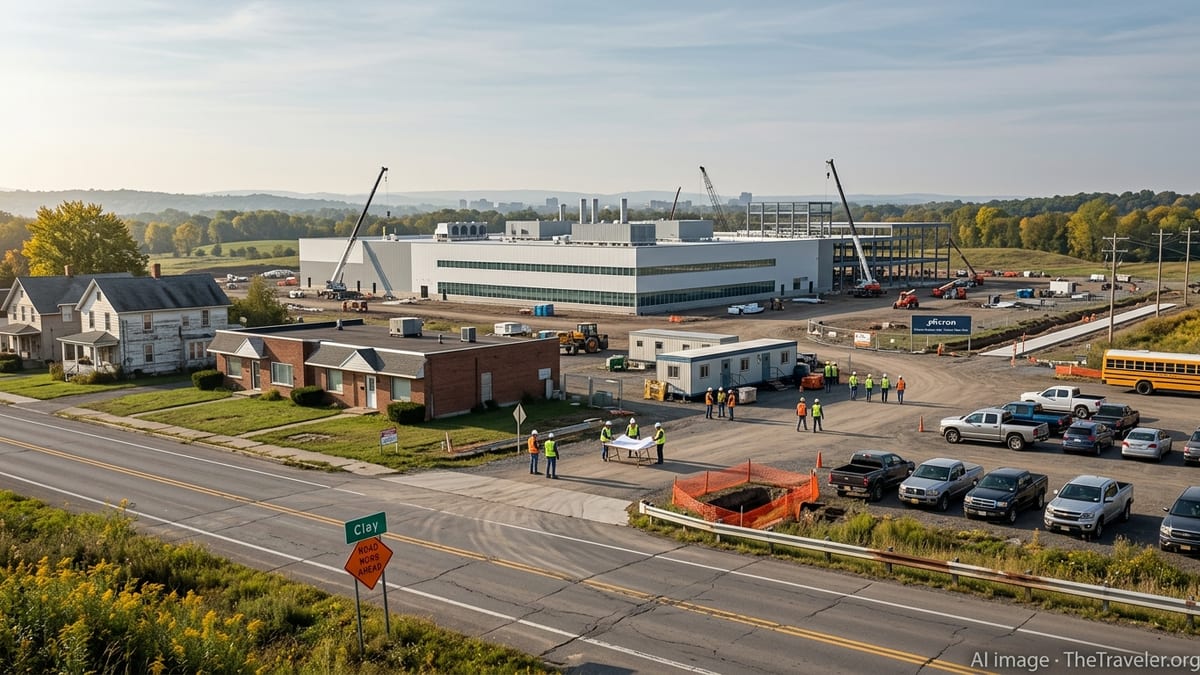
Publicly available information shows that Micron plans to invest up to 100 billion dollars over more than two decades to build a leading-edge memory manufacturing complex in the town of Clay, just outside Syracuse, positioning Central New York as one of the largest semiconductor hubs in the United States. State and local planning documents describe the project as the largest private investment in New York’s history, with tens of thousands of direct and indirect jobs projected across construction, manufacturing and supporting industries.
The newly announced 43 million dollar commitment from New York State is framed as an early, strategic tranche within a much larger public-private effort intended to anchor that growth. Budget materials and regional development reports indicate that the funds are being directed toward priority needs identified in the run-up to Micron’s arrival, including workforce training, housing supply, transportation links and services that allow more residents to participate in the emerging chip economy.
Economic development analyses prepared for Onondaga County and the state project that Micron’s buildout will generate sustained demand for skilled labor, suppliers and community services, with job creation estimates reaching roughly 50,000 positions statewide over time. The new 43 million package is described as a way to accelerate readiness so that local residents, from current high school students to mid-career workers, can seize opportunities as construction ramps up and the fabs move toward production later in the decade.
Workforce Pipeline From Classroom to Cleanroom
According to published coverage and state briefing materials, a significant share of the 43 million dollars is being steered toward workforce development, including training centers, apprenticeship pathways and partnerships with regional colleges. The goal is to create a seamless pipeline from classroom to cleanroom, with curricula tied directly to advanced manufacturing, mechatronics, maintenance and other roles crucial to chip fabrication.
Central New York has been expanding technical training capacity in anticipation of Micron’s arrival, with community colleges, trade organizations and labor unions already rolling out new or expanded programs. Reports indicate that the state investment will help fund additional instruction in semiconductor-related disciplines, upgrade labs and equipment, and support short-term credential programs targeted at dislocated workers and underrepresented groups.
Regional planning documents emphasize that the Micron project requires not only engineers and technicians, but also thousands of skilled trades workers in construction and facility operations. The 43 million package is expected to complement existing apprenticeship initiatives in fields such as electrical work, ironworking and HVAC, aligning their pipelines with the tight construction schedules projected for the megafab site.
State economic development reports also underscore a focus on equitable access. The funding is being linked to outreach in communities that have historically been left out of high-wage manufacturing, including women, people of color, rural residents and veterans, with the aim of broadening the pool of talent feeding into Micron and its suppliers.
Housing and Community Infrastructure Under Pressure
Housing market studies commissioned by New York’s economic development agencies warn that Central New York’s existing stock is not prepared to absorb the full wave of workers, families and support businesses expected to follow Micron. Analysts project a sharp rise in demand for rental units and workforce housing, alongside pressure on transportation systems, utilities and social services.
Within that context, the 43 million dollar package is being portrayed as an early intervention to mitigate housing shortages and avoid displacement. Public documents indicate that a portion of the funding is slated for planning, site preparation and incentives that can accelerate new multifamily projects and rehabilitate underused properties near job centers. The intent is to synchronize housing delivery with the construction and hiring timelines associated with the megafab.
Local governments around Syracuse have already begun updating zoning, infrastructure plans and brownfield redevelopment strategies to unlock additional residential capacity. The new state support tied to Micron is expected to help finance critical enabling work, from road improvements and utility upgrades to environmental remediation, so that private builders can move more quickly.
Advocates tracking the Micron buildout argue that pairing industrial investment with deliberate housing and infrastructure planning is essential to ensuring that existing residents benefit from the boom. By dedicating a slice of state funding now, New York is attempting to avoid the bottlenecks and affordability crises that have accompanied rapid tech-sector growth in other regions.
Child Care, Education and Quality-of-Life Investments
Beyond jobs and housing, a growing body of planning material around the Micron project highlights child care and education as key determinants of whether local residents can actually take the new positions being created. Publicly available information from the Central New York Community Engagement Committee notes that the broader Micron agreement includes a 500 million dollar Community Investment Fund to support services such as child care, K-12 and higher education, transportation and neighborhood revitalization.
The 43 million dollar initiative announced by Governor Hochul sits alongside that larger fund and is designed to reinforce early, high-impact priorities. Reports indicate that state resources are being deployed to expand child care capacity near major employment nodes, support programming in local school districts and bolster community-based organizations that will face higher demand as the population grows.
Education partners, including regional universities and training centers, are positioning new programs that emphasize STEM pathways and dual-enrollment opportunities, with the goal of guiding more Central New York students into high-demand careers at Micron and related firms. The state’s latest commitment is expected to provide flexible support for these efforts, from scholarships and faculty hires to facility upgrades.
Community groups involved in the planning process have stressed that quality-of-life investments need to keep pace with industrial growth. That includes public spaces, health services and transit options that knit together the fast-changing suburbs north of Syracuse with established neighborhoods across the region. The new funding is intended to complement federal support and Micron’s own community commitments, filling gaps and accelerating projects that enable inclusive growth.
Positioning Central New York in the National Chips Race
New York’s partnership with Micron is unfolding against the backdrop of the federal CHIPS and Science Act, which is channeling tens of billions of dollars toward domestic semiconductor manufacturing and research. Central New York’s leaders have been working to secure a share of those resources, pitching the Syracuse region as a cornerstone of a broader Upstate technology corridor stretching toward Buffalo and Rochester.
Economic analysts note that the 43 million dollar state package, while modest relative to Micron’s projected 100 billion dollar capital plan, plays an important signaling role. By backing housing, workforce and community infrastructure so early in the process, New York is aiming to demonstrate that it can deliver not just land and incentives, but also the social and physical foundations required for a sustainable chip ecosystem.
Regional planning documents suggest that success will be measured not only in the number of fabs or suppliers attracted, but also in how well Central New York manages rapid growth. Benchmarks include wage gains for local residents, diversified small-business activity, stable housing costs and improvements in educational attainment tied to new training pipelines.
As site work advances in Clay and additional public and private investments are announced, the 43 million dollar initiative marks a pivotal moment in translating an abstract promise of semiconductor resurgence into tangible change on the ground. For Central New York communities long defined by population loss and industrial decline, the combination of Micron’s megafab and targeted state support is reshaping expectations about the region’s economic future.