

Few European cities can rival Vienna for imperial grandeur, and nowhere is that legacy more visible than in its two great palaces: Hofburg and Schönbrunn. Both were central stages of Habsburg power, both are packed with museums and historic interiors, and both feature prominently on every first-time itinerary.
With limited time, however, travelers often have to choose between them. This in-depth comparison unpacks the experience at each site, from history and architecture to ambiance, logistics and cost, to help you decide which Vienna palace best suits your style of travel.
Imperial Icons: How Hofburg and Schönbrunn Shaped Vienna
Schönbrunn Palace began as a hunting lodge on the edge of Vienna and evolved into the Habsburgs’ primary summer residence. From the 18th century until 1918 it was the favored retreat of emperors and empresses, including Maria Theresa and Franz Joseph, with a history that mirrors three centuries of dynastic politics and court life. Its Baroque architecture, vast gardens and ceremonial halls reflect a carefully orchestrated display of power in a more relaxed, pastoral setting outside the dense medieval city.
Hofburg, by contrast, was the beating heart of the Habsburg empire. Located in the very center of Vienna, it served as the main imperial residence and seat of government, growing over seven centuries into a sprawling complex of wings, courtyards, chapels and ceremonial spaces. Here the emperors slept, signed decrees, held audiences and received foreign dignitaries. The palace’s layered architecture, from Gothic remnants to Baroque façades and 19th-century additions, tells the story of the dynasty’s rise, expansion and eventual decline.
Today, both palaces are among Austria’s most important cultural monuments. Schönbrunn and its gardens are inscribed as a UNESCO World Heritage Site, recognized as one of Europe’s best preserved Baroque ensembles and a textbook example of the “total work of art” ideal in architecture and landscape design. Hofburg, while not a single unified building, concentrates many of Austria’s top museums and collections in one central campus, from the Imperial Apartments to the Imperial Treasury. Together, they form a complementary pair: one outward looking and landscaped, the other urban and institutionally dense.
Atmosphere and Setting: City Palace vs Garden Escape
The most immediate difference travelers notice is the setting. Hofburg unfolds in the historic core of Vienna, surrounded by major landmarks, cafes and shopping streets. Step outside its gates and you are moments from the Ringstrasse, the State Opera, the Albertina and St. Stephen’s Cathedral. The palace itself feels very much like part of the living city, woven into everyday traffic, trams and office buildings. This makes Hofburg exceptionally convenient if you are exploring on foot or have only a brief stop in Vienna.
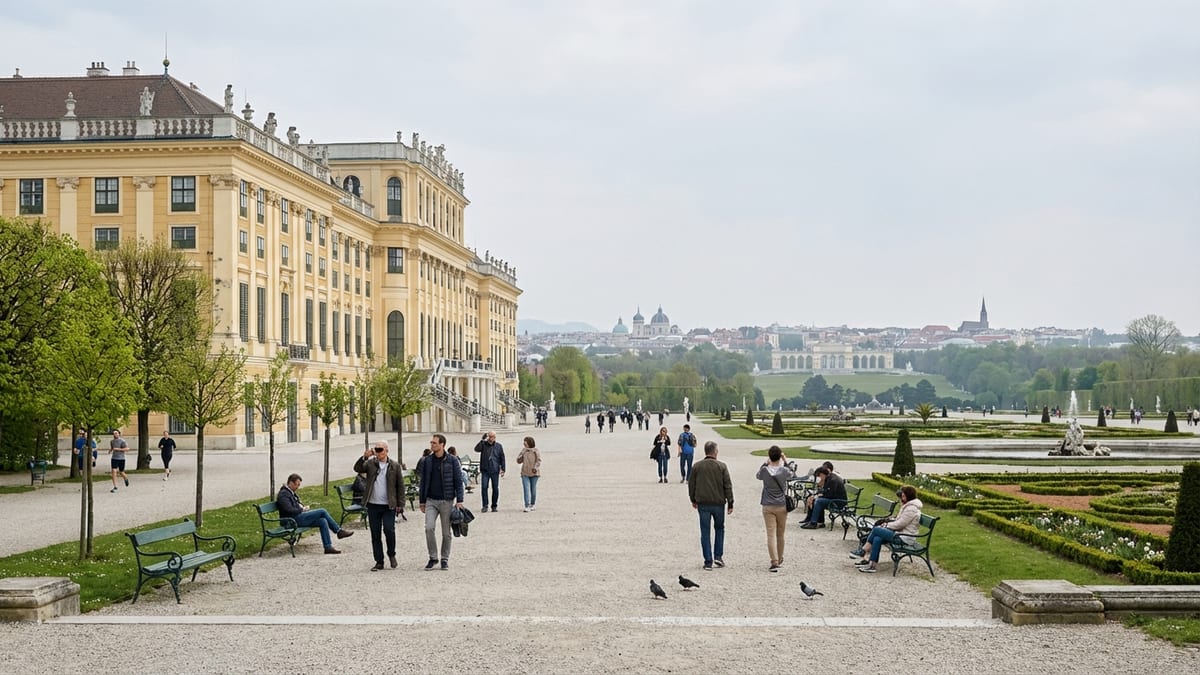
Schönbrunn, on the other hand, feels like a self-contained world. Located in the district of Hietzing in western Vienna, it is set back from the street behind grand forecourts and opens onto expansive axial gardens that stretch up to the hilltop Gloriette. The moment you pass through the gates, the city noise drops away and you are in a landscape of formal parterres, fountains, tree-lined avenues and woodland paths. It is as much a park as a palace, and for many visitors it provides a welcome dose of greenery during an urban trip.
Season also shapes the atmosphere. In winter, Schönbrunn’s gardens can feel stark but atmospheric, often complemented by a popular Christmas market in late November and December. In spring and summer, the flower beds and lawns come into their own, and local residents treat the grounds as a favored jogging route or picnic spot. Hofburg remains lively year-round, with less dependence on good weather because most of its highlights are indoors. If you are visiting in the colder months or during a rainy spell, Hofburg has a slight edge for comfort.
What You See Inside: Museums, Apartments and Collections
Both palaces offer a combination of historic rooms and themed museums, but the focus differs. At Schönbrunn, most visitors begin with a self-guided audio tour of the state rooms and private apartments. The shorter “Imperial Tour” typically covers around 22 rooms, while the “Grand Tour” extends to approximately 40, including the Great Gallery, the Chinese Cabinets and Franz Joseph’s modest study and bedroom. The interiors are richly decorated with Rococo stucco, gilded panels, chandeliers and period furniture that evoke the personal worlds of Maria Theresa, Empress Elisabeth and Emperor Franz Joseph.
Hofburg’s core ticket brings together three distinct experiences: the Sisi Museum, the Imperial Apartments and the Silver Collection. The Sisi Museum examines the life and myth of Empress Elisabeth through personal belongings, reconstructed dresses and a narrative that places her in the context of 19th-century court expectations. The Imperial Apartments recreate the residential and working spaces of Franz Joseph and Elisabeth in the city, while the Silver Collection displays the ceremonial tableware and household objects that sustained a vast court. Together they offer a concentrated immersion into imperial daily life, with a particular emphasis on Sisi’s enduring cultural footprint.
Beyond these headline attractions, Hofburg hosts several additional institutions that may sway your choice. The Imperial Treasury holds the crowns and regalia of the Holy Roman Empire and the Austrian Empire, along with extraordinary liturgical and dynastic treasures. The Spanish Riding School, based in the complex, stages morning training sessions and classical performances with Lipizzaner stallions. The Austrian National Library, with its baroque State Hall, and nearby museums such as the Weltmuseum add further depth for culture-focused visitors. Schönbrunn counters with its own ancillary attractions: the Carriage Museum, the Children’s Museum and the Orangery, which hosts concerts and seasonal events.
Gardens, Views and Outdoor Experiences
If your picture of a Viennese palace involves long walks under clipped lime trees and panoramic city views, Schönbrunn is the stronger choice. Its gardens stretch over roughly 1.6 square kilometers, arranged in formal French-style parterres near the palace that dissolve into more naturalistic English-style areas as you move outward. At the far end, the Neptune Fountain creates a dramatic visual focus, while paths continue to climb toward the Gloriette, a colonnaded structure that crowns the hill and offers one of the best viewpoints over Vienna’s rooftops and the palace below.
The estate also encompasses the world’s oldest zoo, Tiergarten Schönbrunn, founded in 1752 within the gardens and still in operation today. Covering 17 hectares, it houses hundreds of species, from big cats and giant pandas to tropical birds and reptiles, and is especially popular with families. Additional features in the landscape include the Palm House, a 19th-century iron and glass greenhouse filled with exotic plants, a maze and labyrinth, small follies and romantic “ruins” constructed in the 18th century. Many of these elements lie outside the ticketed palace interior, meaning you can enjoy significant parts of the site even with a simple park visit.
Hofburg’s outdoor appeal is more urban and compact. Its courtyards and squares open directly onto two major green spaces: the Burggarten, a former private imperial garden turned public park, and the Heldenplatz, a grand open square fronting the Neue Burg wing. These lawns and statues provide attractive framing for photos and are pleasant for a short break, but they lack the immersive, self-contained parkland experience of Schönbrunn. For travelers who prioritize walking, photography and fresh air along with history, Schönbrunn offers far more scope.
Logistics, Tickets and Crowds
Practical considerations often determine which palace fits more comfortably into your itinerary. Schönbrunn is easily reached from the city center via Vienna’s U4 metro line, with stations at Schönbrunn and Hietzing providing access to different gates. From central hubs such as Karlsplatz or Schwedenplatz, the ride generally takes under 15 minutes. Once on site, expect significant walking if you plan to combine the palace interior with a stroll to the Gloriette or a visit to the zoo. Comfortable footwear and some buffer time in your schedule are essential.
Hofburg has the advantage of near-universal centrality. Multiple tram and metro lines converge around it, and many visitors simply approach on foot while touring the Innere Stadt. This makes it easy to weave a palace visit into a larger day of museum-hopping and cafe stops without committing to a half-day excursion. For those with only one full day in Vienna or travelers who tire easily, Hofburg is easier to integrate seamlessly into sightseeing.
Both sites use timed-entry systems at busy periods, with self-guided audio tours the standard for the main apartments and specialist guided tours offered at set times. Ticket structures change periodically, but Hofburg typically sells bundled tickets for the Sisi Museum, Imperial Apartments and Silver Collection, with optional add-ons for the Treasury and Spanish Riding School. Schönbrunn offers different interior tour lengths, combined tickets that include the Carriage Museum or zoo, and seasonal packages. Booking ahead is strongly recommended in high season, especially for Schönbrunn in summer and around the Christmas markets, and for Spanish Riding School performances at Hofburg.
Crowding is a real factor at both palaces. At Schönbrunn, mornings and early afternoons see long lines and busy corridors, particularly when large tour groups arrive. Early entry or a late-afternoon slot can provide a calmer experience, and the sheer size of the gardens means you can always escape the crowds outdoors. Hofburg’s interior spaces are more constrained, so peak times can feel congested, especially in the Sisi Museum. Again, aiming for opening time or later in the day improves the experience.
Which Palace Suits Which Traveler?
For first-time visitors trying to prioritize, it helps to think in terms of interests. If you are most drawn to imperial court life, dynastic history and collections of objects, Hofburg usually delivers more depth for the time invested. You can explore Elisabeth’s enduring legend at the Sisi Museum, see the office where Franz Joseph worked long days, and then descend into the Treasury to view crowns and regalia that symbolize centuries of European politics. The Spanish Riding School adds a living tradition that connects past and present, while the surrounding museums and library make Hofburg a full-day hub for culture enthusiasts.
Travelers who picture palaces in relation to sweeping gardens and grand exteriors, on the other hand, may find Schönbrunn closer to their expectations. The axial approach to the palace, the symmetry of the parterres and the perspective up to the Gloriette create a powerful sense of stagecraft that continues outdoors. Families appreciate the layering of experiences: parents can enjoy the interiors while children look ahead to the maze or the zoo. Couples and photographers often value the romantic vistas, particularly at sunset from the hilltop. In good weather, Schönbrunn feels as much a day in the park as a museum visit.
Time constraints are decisive. With just one night in Vienna and a tight schedule, Hofburg demands less logistical effort and integrates naturally into city-center exploration. With two or more days and at least one clear morning or afternoon, Schönbrunn becomes more attractive and rewarding. Some visitors with three full days of sightseeing choose both, but many report that one palace visited well is more satisfying than two rushed experiences. Thinking honestly about your pace, mobility and tolerance for back-to-back historical sites will help you avoid fatigue.
Experiences Through the Seasons
Vienna’s strong seasonality shapes what each palace offers at different times of year. From late spring through early autumn, Schönbrunn arguably provides the more compelling experience, as its gardens are in bloom, pathways are dry and the hilltop views are at their clearest. Outdoor cafes often operate within the grounds, and the zoo’s animals are more visible and active. This is the ideal window for travelers who prioritize photography, strolling and a slower rhythm.
In winter, Hofburg’s largely indoor nature becomes a clear advantage. With many of its museums connected or a short walk apart, you can spend hours moving between the Sisi Museum, Imperial Apartments, Treasury and adjacent collections without braving prolonged time outdoors. Cafes and restaurants are abundant in the surrounding streets, making it simple to break up your day. Schönbrunn remains open year-round, and the palace interior is still enjoyable in cold weather, but the full appeal of its grounds is diminished.
Holiday periods add another layer. Both palaces host Christmas markets, with Schönbrunn’s Advent market set against the illuminated palace façade creating a particularly atmospheric backdrop. Crowds surge correspondingly, and tickets for evening events and concerts can sell out well in advance. Shoulder seasons in early spring and late autumn strike a balance between manageable visitor numbers and reasonable weather, offering good conditions at both sites without peak-season congestion.
The Takeaway
Choosing between Hofburg and Schönbrunn is less about which palace is “better” and more about what kind of imperial Vienna you want to experience. Hofburg embodies the administrative and ceremonial core of Habsburg power, dense with collections and institutions. It suits travelers who value central location, extensive indoor exhibits and a close-up look at court life, symbolism and political history. Its museums, Treasury and Spanish Riding School can easily fill a full day within the city’s historic heart.
Schönbrunn, by contrast, offers a more theatrical and expansive encounter with imperial grandeur. As a former summer residence and landscape ensemble, it combines ornate interiors with a monumental garden setting, panoramic viewpoints and the world’s oldest operating zoo. It shines in good weather and appeals strongly to families, photographers and anyone who imagines palaces in relation to fountains, lawns and long vistas. It does, however, require more time and walking to appreciate fully.
For travelers with just one full day in Vienna, Hofburg is often the more efficient choice, allowing you to pair it with other central sights. With two days or more, allotting a half day or more to Schönbrunn provides a complementary perspective that rounds out your sense of imperial Vienna. If you are particularly interested in Empress Elisabeth, you might prioritize Hofburg for the Sisi Museum; if you are traveling with children or love gardens and animals, Schönbrunn may be more rewarding.
Ultimately, both palaces tell different facets of the same story: how a dynasty used architecture, ritual and landscape to project its power and values. Whichever you choose, taking the time to slow down, listen to the audio guides, and explore beyond the headline rooms will turn a photogenic stop into a memorable encounter with the layers of Viennese history.
FAQ
Q1: If I can visit only one palace, should I choose Hofburg or Schönbrunn?
For a short visit focused on central Vienna, Hofburg is usually the better choice thanks to its location and dense collections. If you have at least half a day free and enjoy gardens, walking and views, Schönbrunn often feels more spectacular overall.
Q2: How much time should I plan for each palace?
Most visitors spend about two to three hours at Hofburg’s main attractions, more if adding the Treasury or Spanish Riding School. Schönbrunn can be done in about three hours for the interiors and a quick garden walk, but a relaxed visit with the hilltop Gloriette or zoo can easily take half a day or longer.
Q3: Are both palaces suitable for children?
Yes, but in different ways. Hofburg’s museums are more traditional and object-focused, better for older children or teens interested in history. Schönbrunn provides more open space, a maze, a dedicated Children’s Museum and a large zoo, which tend to engage younger kids more effectively.
Q4: Which palace is easier to reach by public transport?
Hofburg is embedded in the city center and reachable by several metro and tram lines, as well as on foot from many hotels. Schönbrunn is straightforward to access via the U4 metro line, but requires a short additional walk from the station and a bit more planning in your daily route.
Q5: Do I need to book tickets in advance?
Advance booking is strongly recommended for both palaces in high season and around major holidays. Schönbrunn in particular can sell out popular time slots for its longer tours, while the Spanish Riding School at Hofburg often books up for performances and some training sessions.
Q6: Which palace is better in bad weather or winter?
Hofburg has the clear advantage in poor weather because most of its highlights are indoors and closely clustered. Schönbrunn’s interior is still worthwhile, but much of its charm lies in the gardens, which are less appealing in heavy rain, snow or extreme cold.
Q7: Are there significant differences in accessibility?
Both complexes have made efforts to improve accessibility, with elevators and ramps in many areas, but some historic sections have limitations. Schönbrunn’s extensive grounds involve more walking and some inclines, while Hofburg’s interior routes are more compact yet can still include stairs. Checking current accessibility details before visiting is advisable if mobility is a concern.
Q8: Can I see both palaces in one day?
It is technically possible but not ideal. You would spend much of the day in transit and likely rush both sites, leading to “palace fatigue.” A more satisfying option is to focus on one palace in depth and pair it with smaller, contrasting experiences such as a museum or a coffeehouse visit.
Q9: Where will I get better photos?
For sweeping exteriors, landscaped perspectives and skyline views, Schönbrunn is superior, especially from the Gloriette and around the Neptune Fountain. Hofburg excels for atmospheric urban palace shots, intricate architectural details and images that situate imperial grandeur within Vienna’s street life.
Q10: Are there good food and drink options at each palace?
Hofburg benefits from its central location, with numerous cafes, bakeries and restaurants just outside the complex, making it easy to sample classic Viennese coffeehouse culture. Schönbrunn offers cafes and seasonal stands within or near the grounds, but choices are more limited and often geared toward visitors, so many travelers plan a main meal back in the city center.