

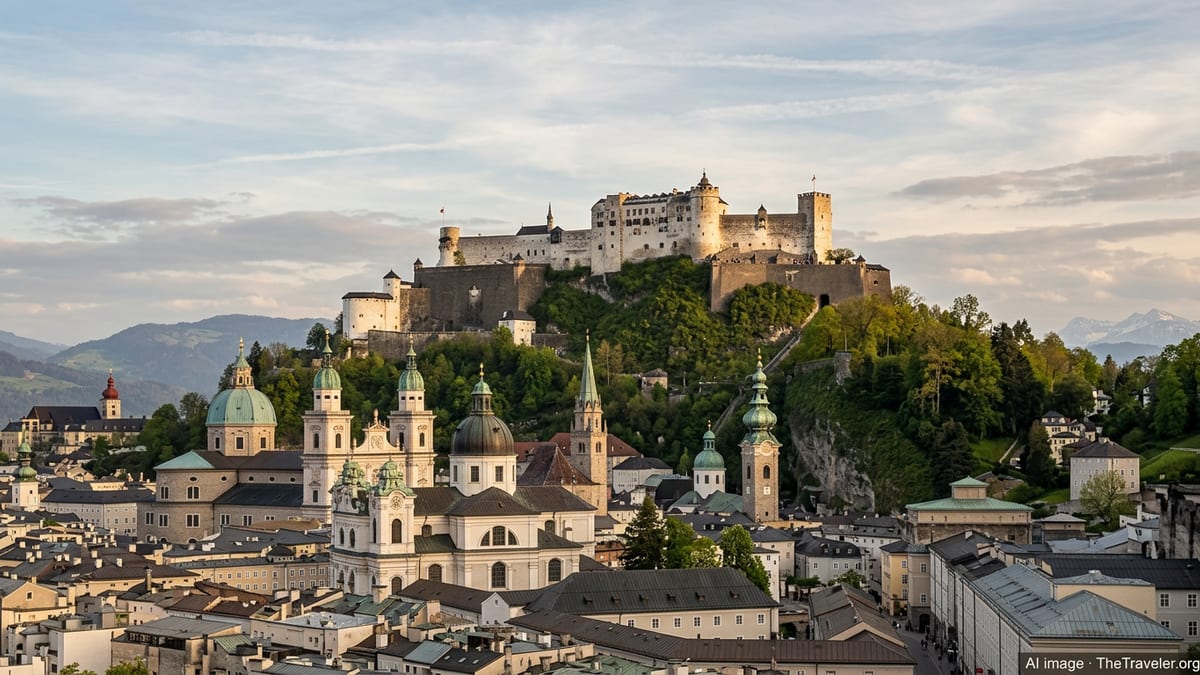
High above Salzburg’s baroque rooftops, Hohensalzburg Fortress dominates the skyline like a stone crown. This vast stronghold, whose origins reach back to the 11th century, is not only one of Europe’s largest and best preserved medieval castles but also one of Austria’s most visited attractions. For modern travelers it combines spectacular city views, atmospheric courtyards and princely apartments with practical visitor facilities and easy access by funicular. This guide brings together up to date information and on the ground details to help you get the most out of a visit to this landmark fortress.
A Fortress Above Salzburg: Why Hohensalzburg Matters
Hohensalzburg Fortress sits on the Festungsberg hill at around 500 meters above sea level, watching over Salzburg’s UNESCO listed Old Town and the Salzach River below. With a footprint of roughly 250 meters by 150 meters and a total area of about 32,000 square meters, it ranks among the largest intact castle complexes in Central Europe. Centuries of expansion have turned what began as a small 11th century stronghold into a self contained world of ramparts, bastions, chapels, courtyards and residential wings.
The fortress was built and enlarged by the powerful prince archbishops of Salzburg, who combined religious and secular authority. In practical terms it served as both a defensive bulwark and a statement of prestige. Walking through the inner courtyards today, with their whitewashed facades, Gothic and Renaissance windows and looming defensive walls, it is easy to imagine how intimidating this complex must have appeared to anyone approaching from the valley.
For visitors, Hohensalzburg is more than a photogenic backdrop for Salzburg. It offers panoramic views of the city, the Salzach valley and on clear days the Northern Alps. Concerts, special exhibitions and evening openings turn it into a living cultural venue rather than a static monument. A typical traveler might ride up by funicular in the late afternoon, wander the ramparts, then stay for a Mozart chamber concert in one of the atmospheric halls before descending after dark with the city lights below.
The fortress also anchors a wider network of historic sites in and around Salzburg. Its hilltop presence connects visually with the cathedral, the archiepiscopal Residenz and, further down the Salzach, with its former sister stronghold at Hohenwerfen. Understanding Hohensalzburg in this broader context makes a visit feel like stepping into the fabric of an entire region’s history rather than a single isolated attraction.
A Thousand Years of Power: A Brief History
Construction began around 1077 during a time of conflict between the Holy Roman Emperor and the papacy. Salzburg’s Archbishop Gebhard ordered the first fortifications to secure his position. At that stage the complex was comparatively modest, essentially a fortified refuge. Over the following centuries different archbishops added defensive towers, curtain walls and residential quarters as military technology and political conditions evolved.
Major building phases in the late Middle Ages and early modern period gave Hohensalzburg much of its present silhouette. Under Archbishop Leonhard von Keutschach around 1500, the fortress gained thicker walls, enhanced bastions and upgraded living quarters that reflected the growing wealth of Salzburg, whose prosperity was tied to salt mining and trade. Decorative features such as the onion domes of towers and the heraldic shields carved over gateways also date from this era.
Interestingly, Hohensalzburg was never taken by enemy force, although it did endure sieges and internal tensions. During the Peasants’ War in the 16th century, rebellious farmers surrounded the fortress, but the stronghold held out. In later centuries, as artillery changed warfare, the military importance of the castle declined and its role shifted more toward a symbol of authority, a prison and a storage site.
By the 19th century the Habsburg Empire no longer needed medieval hilltop fortresses for defense. Hohensalzburg began to be restored and reimagined as a historic monument. The opening of the Festungsbahn funicular in 1892 signaled a new era in which tourists rather than soldiers became the main regular visitors. Today the fortress is owned and managed as a heritage site, with ongoing conservation work ensuring that its Romanesque, Gothic and Baroque elements survive in good condition for future generations.
Exploring the Castle: Highlights You Should Not Miss
Most visits begin at the main inner courtyard, where you can orient yourself among the cathedral like fortress chapel, the white facades of the residential wings and the steep steps that lead up toward the bastions. Many travelers choose to follow the signed panorama tour, which threads together viewpoints, towers and exhibitions with audio-guide commentary available in multiple languages.
One of the standout interior spaces is the set of princely chambers, which showcase late medieval and early Renaissance taste. The Golden Chamber and Golden Hall are especially striking, with richly painted wooden ceilings, decorative wall panels and a distinctive tiled stove. While these rooms are smaller than the great halls of some royal castles, their intimate scale and detailed craftsmanship give a strong sense of how Salzburg’s prince archbishops wanted to live and impress their guests.
The fortress also houses several compact but worthwhile museums. The Fortress Museum focuses on the building’s military history, including armor, weapons and models that show how the complex expanded over time. The Rainer Regimental Museum traces the story of a local infantry regiment through uniforms, photos and personal items. The Marionette Museum, located in vaulted rooms, displays historic puppets and sets from the famous Salzburg Marionette Theatre, which can be particularly engaging for families with children.
Even if you are not usually a museum enthusiast, it is worth stepping into at least one or two of these spaces. On a rainy autumn afternoon, for instance, you might spend an extra hour in the exhibits while waiting for the clouds to lift. On a clear summer day, you may prefer to linger outside on the bastions, walking the perimeter walls and comparing the views toward the Alps, the Old Town and the newer districts of Salzburg.
Views, Walks and Seasonal Experiences
Hohensalzburg’s elevated position is one of its biggest attractions. From various terraces and battlements you get different perspectives on Salzburg. The western and southern sides open toward forested slopes and the distant ridgelines of the Northern Limestone Alps. The northern and eastern sides look down onto the compact Old Town, with the green dome of Salzburg Cathedral, the Glockenspiel tower and the Salzach River all visible in a single sweep.
For photographers, the light changes dramatically across the day. In the morning the eastern facades of the fortress glow as the sun rises over the city. In late afternoon and early evening, the stone walls catch warm light while the Old Town below gradually falls into shadow. Many visitors plan their ascent for around two hours before sunset, allowing time to tour the interior, then step outside for golden hour views. Winter brings a different atmosphere, with snow dusting the rooftops and mountains, while the early dusk often sees the city illuminated well before dinnertime.
The Festungsberg hill itself offers rewarding walks. If you arrive by funicular, consider descending on foot along the signposted paths that wind through woodland and past viewpoints. One common route leads down toward the cathedral square, another contours along the Mönchsberg ridge toward the Museum of Modern Art, from where you can take an elevator down to the city. These walks are not overly long but they do involve steps and sometimes steep paved sections, so sturdy shoes are sensible.
Seasonal events add extra layers to a visit. In Advent, small Christmas markets often appear in the fortress courtyards, combining views with stalls selling mulled wine, roasted chestnuts and local handicrafts. In summer, classical concerts and special evening openings allow guests to experience the fortress after regular hours, when the tour groups have gone and the ambience is quieter. Planning your visit to coincide with one of these events can turn a straightforward sightseeing stop into a memorable highlight of a Salzburg trip.
Tickets, Opening Hours and How to Get There
Hohensalzburg Fortress is open year round, with slightly shorter hours in the colder months. As of early 2026, typical opening times run from mid morning to late afternoon in winter, and extend into early evening in spring and summer, although exact schedules can vary by month and for special events. It is wise to check the latest times just before your visit, particularly if you are planning an evening ascent or traveling outside peak season.
Most visitors purchase a ticket that combines fortress entry with a ride on the Festungsbahn funicular, the short but steep railway that climbs from the Old Town up to the lower courtyard. Current official prices for a standard all inclusive adult ticket with funicular typically fall in the high teens in euros, with reduced rates for children aged roughly 6 to 14. Basic tickets without certain extras are a few euros cheaper. Families can sometimes benefit from bundled offers, and online tickets may allow you to bypass the main ticket line at busy times.
The Salzburg Card, a city pass sold for 24, 48 or 72 hours, usually includes both the funicular ride and admission to the fortress and its main museums. If you plan to visit several attractions in one or two days, such as Mozart’s Birthplace, the cathedral museum and Hellbrunn Palace, the card can represent good value alongside free use of city buses. Many travelers pick up the card at the main train station, airport or hotel reception, then time their fortress visit for a clear weather window within its validity period.
Reaching the fortress on foot is also possible and costs nothing beyond your entry ticket. From the cathedral area it takes around 15 to 20 minutes to climb via a mixture of steps and sloping lanes. The route is steep in places, so the funicular is a better option for those with limited mobility or traveling with young children in hot weather. However you arrive, keep in mind that the last funicular descent departs shortly after the indoor areas close. After that, only special late evening services or the walking paths remain available.
Planning Your Visit: Timing, Crowds and Practical Tips
Salzburg receives large numbers of day trippers and tour groups, especially between May and September and during the weeks of the Salzburg Festival in late July and August. This means that Hohensalzburg Fortress can be very busy in the middle of the day. If your schedule allows, plan to arrive soon after opening or later in the afternoon after 4 pm. Early visitors often find quieter rooms and less crowded ramparts, while late afternoon guests get softer light and a more relaxed pace once groups have departed.
Budget wise, a typical independent traveler in 2026 might expect to spend around 20 euros for a full ticket with funicular, a few extra euros on a coffee and pastry at the fortress cafe, and possibly more if attending a concert. Families should factor in children’s tickets and consider whether they will buy souvenirs such as miniature castle models or postcards. Using the Salzburg Card can simplify these calculations, since the fortress visit is then included in the flat card price along with other attractions.
Clothing and footwear matter more than many short stay visitors expect. Even on warm summer days it can feel noticeably cooler and breezier on the exposed ramparts than in the sheltered streets below. A light jacket and comfortable closed shoes make it easier to linger on viewpoints and navigate uneven cobblestones. In winter and early spring, icy patches in shaded courtyards and on access paths are common, so non slip soles and gloves are practical rather than over cautious.
Time wise, allow at least two hours for a satisfying visit that covers the main courtyards, a walk along the walls, the princely rooms and one or two museums. Travelers with a strong interest in history or photography may easily spend three or more hours exploring in detail. If your stay in Salzburg is short, you could still combine the fortress with a walking tour of the Old Town in a single day, using the funicular to save time and energy.
Accessibility, Families and Food on the Hill
Thanks to the Festungsbahn funicular, Hohensalzburg Fortress is considerably more accessible than many medieval sites. The funicular cabins allow visitors with limited mobility to bypass the steep climb, and there are step free or low step routes to certain courtyards and viewpoints once on the hill. However, the fortress remains a historic structure with uneven surfaces, narrow doorways and some staircases that cannot be avoided for specific rooms or tower sections. If you use a wheelchair or have difficulty with stairs, it is worth checking the latest accessibility notes before arrival and allowing extra time to navigate.
Families often find the fortress one of the more engaging activities in Salzburg for children. The train like funicular ride tends to be a highlight in itself, and the interactive elements in the exhibitions, such as models, audio effects and historic instruments, help bring the story to life. Outside, open spaces in the courtyards provide safe areas for children to move around under supervision while adults enjoy the views. Parents should still be alert near rampart walls and steep steps, although safety barriers are in place.
Food and drink options within the fortress range from casual kiosks to sit down restaurants with terrace seating. Prices are higher than in off hill neighborhood cafes but broadly in line with other major European attractions. As of 2026 you might pay around four to five euros for a cappuccino and slightly more for a slice of cake, with full main courses costing notably more. Many visitors opt for a mid morning coffee break or a late afternoon drink while enjoying the panorama, then return to the city for a larger meal at one of Salzburg’s traditional inns.
Restrooms are available in several locations, and signage throughout the complex is clear in both German and English. In high season some facilities can experience short queues at peak times, so using restrooms before starting a long walk along the walls or before an evening concert can help avoid inconvenient waits.
Linking Hohensalzburg with the Rest of Salzburg
One of the pleasures of visiting Hohensalzburg Fortress is how seamlessly it fits into a wider exploration of Salzburg. The lower funicular station lies only a short stroll from the cathedral square and the narrow shopping street of Getreidegasse, home to Mozart’s Birthplace and a mix of international brands and traditional shops. A common itinerary sees travelers spend the morning in the Old Town, break for lunch in a nearby beer hall or cafe, then head up to the fortress in the afternoon for views and museums.
If you have a full day in the city, you might start at Mirabell Gardens on the opposite bank of the Salzach, walk across one of the pedestrian bridges into the historic core, visit the cathedral and archiepiscopal Residenz, then ride the funicular to Hohensalzburg. After descending, you could continue along the river or up to the Mönchsberg Museum of Modern Art for more viewpoints. Using a Salzburg Card simplifies transport between these sites and spares you from handling separate tickets on local buses or during short rain showers when a quick ride can be welcome.
Travelers spending several days in the region often use Salzburg as a base for excursions to destinations such as Hallstatt, the ice caves at Werfen or the lakes of the Salzkammergut. Hohensalzburg Fortress works well as an anchor attraction on your arrival or departure day, since it is close to many central hotels and can be visited in a half day around train or flight schedules. For example, a traveler arriving from Vienna at midday might check into a hotel near the station, walk into the Old Town, visit the fortress in the afternoon and enjoy dinner in a traditional restaurant before an evening stroll along the Salzach.
The fortress also provides a useful orientation tool. After seeing the city from above and noting landmarks such as church spires, bridges and the main rail lines, you may find it easier to navigate at street level. Some visitors even take a printed map or offline app and match what they see from the bastions to what appears on the page or smartphone, turning the view into a practical city overview.
The Takeaway
Hohensalzburg Fortress is far more than a postcard image perched above Salzburg. It is a sprawling, remarkably intact medieval stronghold that encapsulates nearly a thousand years of regional history, from the power of the prince archbishops to the rise of tourism in the modern era. Its scale, varied architecture and commanding views make it one of the most rewarding hilltop castles in Europe to explore.
For travelers, the combination of easy access by funicular, clear visitor information and flexible ticket options makes a visit straightforward to plan. Whether you devote a quick two hour window during a busy city itinerary or linger for half a day with museum visits, a cafe stop and a circuit of the walls, you are likely to come away with a deeper appreciation of Salzburg’s setting and story.
By timing your visit to avoid the heaviest crowds, dressing for the conditions on a windswept hill and considering tools such as the Salzburg Card, you can focus less on logistics and more on the experience. Standing on a bastion as church bells ring below and the Alps frame the horizon, it becomes clear why this fortress has guarded Salzburg’s skyline for centuries and continues to draw visitors from around the world.
FAQ
Q1. How much time should I plan for a visit to Hohensalzburg Fortress?
Most travelers find that two to three hours is enough to ride the funicular, explore the main courtyards, visit the princely rooms and see at least one or two museums. If you enjoy photography or detailed historical exhibits, allowing three to four hours lets you move at a more relaxed pace and include a cafe stop on the hill.
Q2. What does a typical ticket to Hohensalzburg Fortress cost in 2026?
As of early 2026, a standard adult ticket that includes a round trip on the funicular and access to the main museums and princely rooms generally costs in the high teens in euros, with reduced prices for children and occasional family or group offers. Exact prices can change, so it is wise to check current rates shortly before your visit.
Q3. Is the Salzburg Card worth it for visiting the fortress?
The Salzburg Card usually includes both the funicular ride and entry to Hohensalzburg Fortress along with many other city attractions and public transport within Salzburg. If you plan to visit several sights in one or two days, such as Mozart related museums, Hellbrunn Palace and a river cruise, the card often works out cheaper than buying separate tickets and also simplifies logistics.
Q4. Can I walk up to the fortress instead of taking the funicular?
Yes, you can reach Hohensalzburg Fortress on foot via a steep but clearly signposted route from the Old Town, which typically takes around 15 to 20 minutes. Many visitors choose to ride up on the funicular and then walk down to enjoy forested paths and extra viewpoints. The funicular remains the better choice for anyone with limited mobility or traveling with small children in hot or icy conditions.
Q5. Is Hohensalzburg Fortress suitable for visitors with limited mobility?
The funicular makes access to the hilltop much easier, and some areas of the fortress, including certain courtyards and viewpoints, can be reached with minimal or no steps. However, the complex is historic and includes uneven surfaces, cobblestones and staircases that cannot be avoided for specific rooms and tower sections. Visitors with limited mobility should review the latest accessibility information and may wish to focus on the more level areas.
Q6. When is the best time of day to visit to avoid crowds?
The quietest times are usually shortly after opening in the morning and later in the afternoon, especially outside school holiday periods and major festivals. Midday hours in peak season often see the largest tour groups, so arriving early or visiting after 4 pm can mean shorter lines, more space on the ramparts and softer light for views and photos.
Q7. Are there guided tours available inside the fortress?
Yes, Hohensalzburg Fortress typically offers a mix of scheduled guided tours and audio guide options in multiple languages, covering highlights such as the history of the fortifications, the princely rooms and special exhibitions. Tour availability and languages can vary across the year, so checking current offerings on the day of your visit or in advance helps you choose the format that suits you best.
Q8. Can I visit Hohensalzburg Fortress in bad weather?
The fortress is open year round and can be visited in rain or snow, with indoor museums and historic rooms providing shelter and interest even when views are limited. In poor weather it is sensible to wear waterproof layers and non slip shoes, as courtyards and paths can become wet or icy. On changing days, some travelers start with indoor exhibits and move to the ramparts once the clouds lift.
Q9. Are there places to eat or drink at the fortress?
Yes, there are cafes and restaurants on the hill where you can buy drinks, snacks and full meals, often with terrace seating and panoramic views over Salzburg. Prices tend to be higher than in neighborhood cafes down in the city but are comparable to other major European tourist attractions, making a coffee with a view a popular treat during a visit.
Q10. Is Hohensalzburg Fortress suitable for children?
Many families find the fortress very enjoyable for children, thanks to the funicular ride, open courtyards and engaging museum displays such as models, uniforms and marionettes. Parents should keep an eye on youngsters near walls and steps, but with normal supervision the site works well as a half day outing that combines history with fresh air and expansive views.