

More news on this day
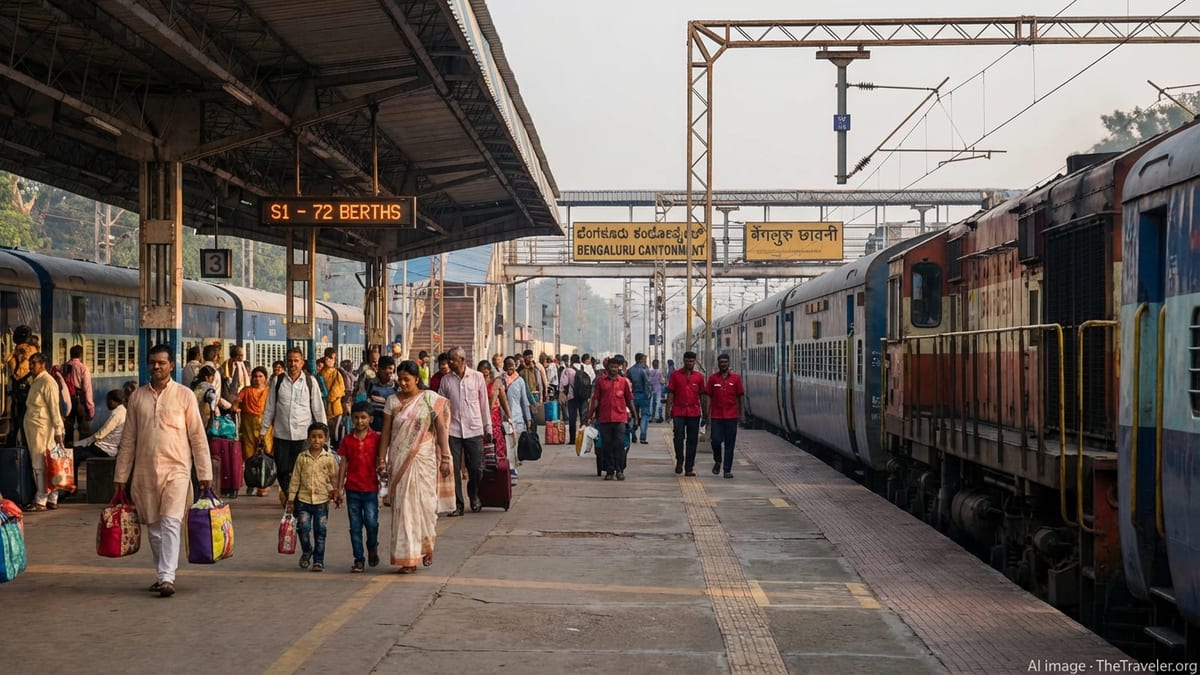
South Western Railway has rolled out a new round of Holi special trains linking Bengaluru with Kolkata, Bidar and Kalaburagi, significantly improving festive-season rail connectivity for passengers across Karnataka and eastern India.
New Holi Specials Anchor Bengaluru as a Festive Hub
The latest round of Holi special trains positions Bengaluru as a major hub for festival travel, with new and extended services designed to ease the annual rush of passengers heading home or visiting family. Railway officials say the temporary timetable, which runs through late March 2026, is calibrated to match peak demand in the days leading up to and just after Holi.
Under the plan, South Western Railway has scheduled additional services that directly link the state capital to Kolkata in the east and to Bidar and Kalaburagi in northern Karnataka. These routes are historically busy around major festivals, when regular trains tend to be booked out weeks in advance. The new specials are expected to provide much-needed capacity while also reducing pressure on long-distance services that pass through Karnataka.
The Holi timetable is part of a wider national push to ramp up capacity across the network. Indian Railways has announced that more than a thousand special train services will operate across zones in March to clear the festive rush, with South Western Railway contributing several dozen trips on its own network to support the surge in demand.
Bengaluru to Bidar: Extended Specials Meet Strong Demand
One of the biggest winners from this year’s planning is the Bengaluru to Bidar corridor, where strong passenger demand has already prompted Indian Railways to extend special services well into 2026. The bi-weekly SMVT Bengaluru–Bidar special, operated as train numbers 06539 and 06540, has been running in response to sustained crowds, particularly around holidays and long weekends.
The service, which departs Sir M Visvesvaraya Terminal Bengaluru for Bidar on Fridays and Sundays and returns from Bidar on Saturdays and Mondays, now forms a backbone of Holi travel between the state capital and the northern Karnataka district. Railway officials have maintained the same timings and halts that passengers have become familiar with over recent months, in order to minimise confusion during the festival period.
For passengers, the continuity of this special train means more predictable options at a time when Tatkal quotas and waitlists on regular services typically fill up quickly. Travel agents in both cities report that advance bookings on the Bidar specials surged as soon as Holi dates were set, reflecting how crucial this corridor has become for students, migrant workers and government employees shuttling between Bengaluru and their hometowns.
Dedicated Bengaluru–Kalaburagi Service Enhances North Karnataka Access
Kalaburagi, a key city in the Kalyana Karnataka region, is also set to benefit from enhanced Holi connectivity. South Western Railway has notified a weekly special train between Bengaluru Cantonment and Kalaburagi that will operate through the festival window, adding capacity on a route where overnight buses and regular trains routinely run full in the weeks around Holi.
While exact days of operation vary within the timetable, the Bengaluru Cantonment–Kalaburagi special is structured to provide at least one additional direct link per week between the state capital region and this important northern district. The train offers reserved accommodation across popular classes, giving passengers an alternative to crowded unreserved coaches and relatively expensive last-minute bus bookings.
The service also addresses long-standing complaints from residents in Kalaburagi district who have sought more direct connectivity to Bengaluru for work, education and medical travel. By aligning the special train’s schedule with peak festive demand, South Western Railway is using Holi as an opportunity to test and refine additional capacity that could inform future, more permanent timetable decisions.
New Bengaluru–Kolkata Special Opens Eastward Corridor
For long-distance travellers bound for eastern India, this Holi season will see a direct special train linking Yelahanka in Bengaluru with Santragachi on the outskirts of Kolkata. The Yelahanka–Santragachi Holi special has been scheduled as a temporary service through late March, providing a dedicated connection between southern and eastern India at a time when migrant and family travel is at its peak.
The train is charted to run via established trunk routes and key junctions, allowing passengers from intermediate stations to board without having to rely solely on heavily booked regular expresses. With reserved accommodation including sleeper and air-conditioned coaches, the service is timed to arrive in the Kolkata region ahead of major festival dates, giving travellers enough margin for onward journeys within West Bengal and neighbouring states.
Rail observers note that the Bengaluru–Kolkata special underscores how Holi demand patterns are no longer restricted to traditional Hindi heartland corridors. Increasing numbers of professionals from eastern India now live and work in Bengaluru, and the dedicated special is expected to draw strong patronage from those heading home for the long Holi weekend as well as students returning to campuses after term breaks.
Bidar and Kalaburagi Gain Visibility in Holi Connectivity Map
The decision to run or extend special trains to Bidar and Kalaburagi during Holi is being read by local stakeholders as a sign that northern Karnataka is finally gaining the attention it has long sought in railway planning. Both districts have historically complained of being on the periphery of major route maps, despite large populations and substantial numbers of residents who migrate to Bengaluru and other metros for work and study.
In Kalaburagi’s case, local representatives have argued for years that better alignment under responsive railway zones and more direct services would unlock regional economic potential. The weekly special from Bengaluru Cantonment is therefore seen as more than just a seasonal arrangement; for many it is a test case that could lead to more frequent or even regular services if strong ridership numbers are sustained over the Holi period.
In Bidar, where the extended SMVT Bengaluru–Bidar special already has a track record of high occupancy, the continuation of bi-weekly services into the Holi window signals that passenger demand is being taken seriously at the zonal level. Civic groups and business associations say the improved connectivity is helping to deepen ties with the capital, making it easier for professionals to commute for work stints while maintaining family homes in the north of the state.
Network-wide Push: SWR’s Festival Strategy
The latest Holi specials form part of a larger strategy by South Western Railway to use targeted, time-bound services to handle festival peaks. According to recent announcements, the zone plans to operate several dozen special trains across March 2026 to manage the surge in demand, while also proposing additional services on select inter-zonal routes subject to Railway Board approval.
In previous years, similar approaches were tested during major festivals such as Diwali and Christmas, with specials running from Karnataka cities to destinations in Tamil Nadu, Andhra Pradesh and beyond. Railway planners say data gathered from those operations has been fed into this year’s Holi timetable, allowing them to fine-tune departure days, intermediate halts and coach compositions to better match actual booking patterns.
The broader national context is also important. Indian Railways has indicated that more than 1,400 Holi special services will run across zones, with some, such as East Central Railway and Western Railway, operating hundreds of extra trips on dense corridors to Bihar, Uttar Pradesh and Gujarat. Within that framework, South Western Railway’s focus on Bengaluru–Kolkata and intra-Karnataka routes reflects its role as a bridge between the southern metros and the heartland belt where Holi remains one of the biggest travel events of the year.
What Passengers Should Expect This Holi Season
For travellers, the new special trains will not eliminate all crowding, but they are expected to provide a noticeable easing of pressure on key days around Holi. Officials caution that popular classes, particularly sleeper and third AC, are likely to see high demand, and that tickets on the Bengaluru–Kolkata, Bengaluru–Bidar and Bengaluru–Kalaburagi specials may still sell out quickly unless booked well in advance.
Passengers are being encouraged to plan journeys early, keep track of waitlist positions and remain flexible about travel dates when possible. Travel agencies in Bengaluru report that families are increasingly planning staggered departures to secure berths, while solo travellers often choose slightly less convenient days or timings to improve their chances of confirmed reservations.
Onboard, the special trains will follow standard Indian Railways protocols for safety and basic amenities, with emphasis on cleanliness and punctual running. Zonal officers say rakes are being turned around with additional attention to cleaning, given the heavy utilisation expected through March. Security staff presence is also likely to be enhanced on nights when trains are full, particularly on long-distance routes such as Yelahanka–Santragachi.
Early Signals for Longer-Term Connectivity Upgrades
Although the Holi special trains are officially temporary, transport analysts say the way they perform over the coming weeks could shape future connectivity for Bengaluru, Kolkata, Bidar and Kalaburagi. Strong patronage on the Yelahanka–Santragachi sector, for example, could strengthen the case for more frequent or upgraded eastbound services linking the tech hub with eastern India’s population centres.
Similarly, consistently high occupancy on the Bengaluru–Bidar and Bengaluru–Kalaburagi specials is likely to bolster the argument that northern Karnataka’s rail needs go beyond seasonal peaks. Data from ticket sales, waitlists and onboard checks will give planners a clearer picture of latent demand, which could translate into new regular trains, additional stoppages on existing services or changes in coach composition to add more berths where needed.
For now, passengers in Karnataka and beyond are focused on the immediate benefit: more seats, more routes and better chances of reaching home in time for Holi celebrations. If the experiment with special trains succeeds, this year’s festival travel rush could mark the beginning of a more connected future for some of the state’s most important but historically under-served rail corridors.