

More news on this day
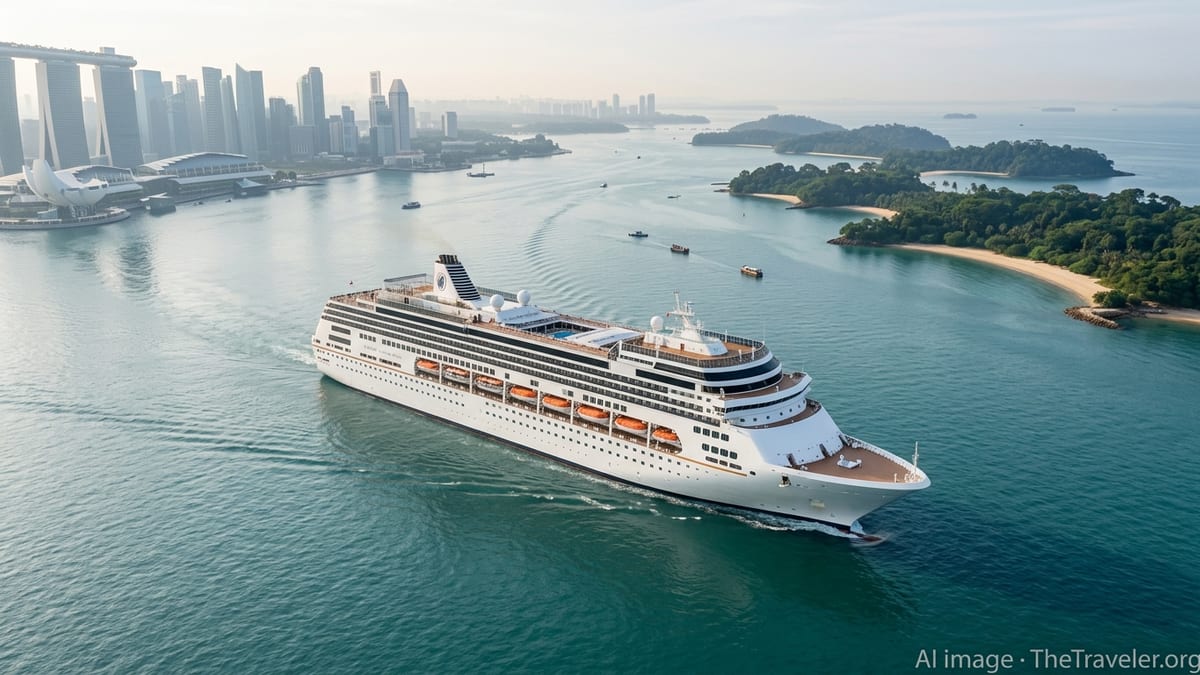
Holland America Line is sharpening its focus on Asia for 2027-28, adding a new eight-day Southeast Asia cruise to its deployment and underscoring how major lines are leaning into the region’s post-pandemic tourism recovery.
Get the latest news straight to your inbox!
Expanded Asia Program Centers on Regional Growth
Publicly available itineraries for Holland America Line’s 2027-28 season show a broad Asia program built around the mid-sized Noordam, operating from September 2027 through April 2028 with a mix of longer voyages and new shorter options that include an eight-day Southeast Asia sailing. The expanded schedule follows an earlier wave of deployment announcements that highlighted new ports in Japan, extended stays in marquee Asian cities and a push toward more intensive regional exploration.
The addition of an eight-day route is notable in a program otherwise dominated by longer 13 to 15 day sailings across Asia. Industry observers view shorter cruises as a bridge product that can attract newer-to-cruise travelers from within the region, particularly first-time guests from markets such as Singapore, Malaysia and Thailand who may be more likely to try a weeklong itinerary than a multi-week voyage.
Travel trade coverage indicates that Holland America’s 2027-28 Asia lineup emphasizes destination immersion, overnights in major hubs and calls at smaller ports that larger ships cannot easily access. Within that broader framework, the eight-day Southeast Asia cruise is positioned as a concentrated snapshot of the region, combining marquee city experiences with coastal scenery and cultural shore excursions.
The move aligns with a wider trend across the cruise sector, where lines are rebalancing deployments toward Asia as air connectivity improves, ports modernize and demand rebounds from both international visitors and a growing base of regional cruisers.
Inside the New Eight-Day Southeast Asia Itinerary
Booking engines and cruise planners list an eight-night Asia voyage on Noordam in late November 2027, reflecting Holland America’s strategy to weave shorter cruises into its longer sailings. While specific port sequences can vary, the pattern for these Southeast Asia departures typically connects Singapore with a cluster of destinations in the Gulf of Thailand and the broader region, creating a compact circuit of urban and resort-style calls.
Singapore appears as a logical turnaround port for the eight-day program, offering efficient air links, a modern cruise terminal and established tourism infrastructure. From there, itineraries commonly feature calls in Thailand and Vietnam, along with additional Southeast Asian ports that provide a balance of temples, colonial districts, beach resorts and food-driven city neighborhoods.
The eight-day length allows for a mix of sea days and port-intensive stretches, giving guests time to explore ashore while still experiencing onboard amenities such as regional dining, enrichment talks and cultural performances. Travel agency descriptions highlight opportunities for excursions to historic sites, floating markets and UNESCO-listed attractions, appealing to experienced travelers who want depth without committing to nearly a month at sea.
Industry analyses suggest that these shorter cruises can also be combined with longer segments to create “collector” voyages, effectively stitching an eight-day Southeast Asia loop into a 20-plus-day itinerary that crosses multiple Asian subregions.
Strategic Role of Southeast Asia in Holland America’s Network
Southeast Asia has become a central pillar of Holland America’s Asia planning, complementing its high-profile Japan itineraries for 2027-28. While the line has emphasized new Japanese ports such as Hitachinaka, Nagoya and Maizuru, the eight-day Southeast Asia cruise demonstrates an ongoing commitment to the warm-weather arc stretching from Singapore toward the Gulf of Thailand, Vietnam and the Philippines.
Reports on the 2027-28 program indicate that Noordam’s size allows access to ports that are off limits to larger megaships, including smaller resort islands and compact city harbors. In Southeast Asia, that flexibility can translate into more varied port calls and easier docking in locations where terminal capacity remains limited or under development.
For regional governments and port authorities, the presence of a premium international brand on repeat deployments often supports investment cases for terminal upgrades, shore power installation and new tour products. Analysts note that sustained cruise calls can help diversify tourism beyond over-visited city centers, steering visitors toward emerging coastal communities and secondary cultural sites.
The eight-day cruise format may be particularly attractive for travelers combining a voyage with land-based stays in Singapore, Bangkok or Ho Chi Minh City. This cruise-and-stay pattern is frequently cited by tourism boards as a way to boost visitor spending and spread economic benefits across hotels, restaurants, guides and local transport providers.
Implications for Asia’s Cruise Recovery and Competition
The timing of Holland America’s 2027-28 rollout, including the eight-day Southeast Asia itinerary, reflects growing confidence in Asia’s cruise recovery trajectory. Over the past two years, major brands have gradually restored or expanded deployments in the region, responding to easing travel restrictions, improved airlift and pent-up demand from repeat cruisers.
Industry coverage points to a sharpening competitive landscape in Asia, with premium and contemporary lines vying for port slots during peak seasons and experimenting with new combinations of city and island calls. In this context, Holland America’s emphasis on longer itineraries, new ports and immersive overnight stays, balanced by select eight-day options, is seen as a way to differentiate on depth rather than shipboard spectacle.
Travel advisors report increased interest in Asia sailings that go beyond classic “sampler” cruises, favoring itineraries that spend more time in fewer places and offer a broader range of culturally focused excursions. The new eight-day Southeast Asia cruise fits this profile by concentrating on a defined geographic area while still offering a variety of port experiences.
As other brands deploy larger ships to marquee Asian ports, Noordam’s moderate capacity positions Holland America to focus on quieter destinations and shoulder-season dates, potentially easing congestion in popular harbors and broadening the calendar of available voyages for travelers planning far in advance.
Outlook for Southeast Asia Cruise Tourism Through 2028
Looking ahead to 2028, analysts expect Southeast Asia to gain further prominence within global cruise deployment, supported by investments in new terminals in Singapore and across Thailand and Vietnam, along with upgraded facilities in Indonesia and the Philippines. Holland America’s decision to program an eight-day Southeast Asia cruise into its 2027-28 season is viewed as part of a longer-term alignment with this growth trajectory.
Regional tourism data and commentary from travel trade publications indicate that cruise passengers often act as repeat visitors, returning on land-based trips to destinations first sampled during port calls. This pattern can be especially significant in Southeast Asia, where proximity between countries makes multi-destination itineraries feasible within a weeklong cruise.
For North American and European travelers, the availability of a clearly defined, eight-day Southeast Asia option within a broader Asia portfolio may lower the barrier to entry for a first long-haul cruise in the region. For source markets within Asia, the same itinerary offers a manageable holiday-length voyage that can be paired with regional public holidays and school breaks.
As bookings for 2027 and 2028 continue to open across the industry, Holland America’s eight-day Southeast Asia cruise is likely to serve as both a standalone product and a building block for longer collectors’ voyages, reinforcing Southeast Asia’s position as a cornerstone of the line’s Asia strategy.