

More news on this day
Honduras and the United States are moving in tandem in a high-profile lawsuit targeting Norwegian Cruise Line after a serious all-terrain vehicle accident during a shore excursion in Roatán raised new questions about cruise safety oversight and shared legal responsibility.
Get the latest news straight to your inbox!
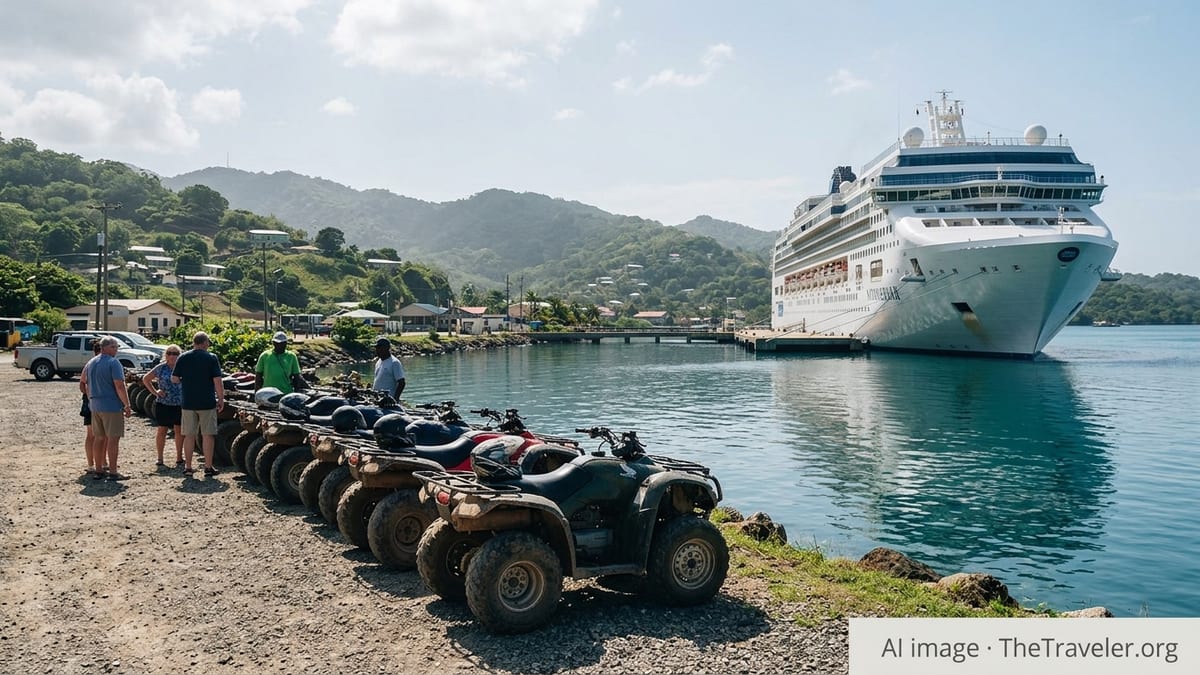
Joint Legal Action Targets Cruise Operator and Local Partners
According to recent court filings and published legal coverage, the lawsuit centers on an ATV tour sold to passengers on a Norwegian Cruise Line vessel calling at Roatán, Honduras, a popular Western Caribbean cruise stop. The excursion was marketed as a guided off-road adventure, but the complaint describes a crash that allegedly left at least one traveler with significant injuries.
The legal action names Norwegian Cruise Line along with Honduran excursion operators and related entities, asserting that both the cruise company and its local partners failed to provide a reasonably safe experience. The filings indicate that Honduran authorities have aligned with United States litigants by recognizing local jurisdictional interests, while the case itself proceeds in a U.S. court, reflecting the dual-national stakes involved.
Publicly available information shows that the plaintiffs accuse the cruise line of negligence in vetting, monitoring, and supervising third-party providers, as well as in warning guests about terrain, equipment, training, and emergency-response limitations. The complaint also seeks to hold Honduran-based tour companies liable for alleged operational failures on the ground, ranging from inadequate instruction of riders to poor maintenance of vehicles and trails.
The cooperation between Honduras and the United States in this context underscores how modern cruise tourism often straddles multiple legal systems. As a result, governments and courts in both countries are watching the case as a potential benchmark for how responsibility is divided when accidents occur in ports of call.
ATV Excursion Accident Highlights Known Risk Pattern
Although the lawsuit focuses on a specific incident, the circumstances echo a broader pattern of injuries associated with high-adrenaline shore excursions such as ATV riding, zip lines, and off-road tours. Legal analyses and prior case summaries involving various cruise brands describe recurring allegations of insufficient pre-ride briefings, limited enforcement of safety rules, and challenging road or trail conditions that can surprise inexperienced participants.
In the Roatán case, the plaintiffs claim that the ATV route exposed riders to steep grades, loose gravel, and sharp curves without adequate signage or explanation of the hazards. The lawsuit contends that basic risk-mitigation steps, such as assessing riders’ skill levels, spacing vehicles appropriately, and enforcing speed limits, were not consistently followed, increasing the chance of loss of control and collision.
Safety advocates note that these excursions are often marketed as family-friendly adventures, sometimes with age and weight minimums that suggest a controlled experience despite the inherently risky nature of off-road vehicles. Published commentary in travel and legal publications points out that guests may reasonably assume that products sold through a cruise line, even if operated by third parties, meet a uniform corporate safety standard.
For Roatán and other Caribbean destinations that rely heavily on cruise tourism, ATV and similar tours are important economic drivers, supporting local guides, mechanics, and small transport providers. The lawsuit is therefore being followed closely on the island, where any tightening of safety requirements or changes to cruise contracts could have ripple effects across excursion businesses.
Questions Over Duty of Care and Third-Party Excursion Contracts
A central issue in the case involving Honduras, the United States, and Norwegian Cruise Line is the legal duty of care when an injury occurs on an excursion run by an independent local operator. Cruise contracts routinely describe these vendors as separate entities, a structure that has historically helped cruise lines limit direct liability for onshore incidents. However, courts in prior maritime cases have increasingly examined whether marketing, ticketing, and quality-control practices effectively tie the excursion to the brand.
In this ATV lawsuit, the plaintiffs argue that Norwegian Cruise Line promoted and sold the experience through its own channels, bundled tickets with the cruise fare or onboard accounts, and presented the activity as a curated, vetted option. Publicly available filings indicate that the claimants view these factors as evidence that the cruise company assumed a heightened responsibility to ensure that the excursion was safe and that riders were properly supervised and equipped.
Legal commentators observing the case note that Honduran involvement adds another layer to questions of jurisdiction, applicable law, and enforcement of any eventual judgment. While the passengers are U.S.-based and the cruise line is headquartered in the United States, the crash itself occurred on Honduran soil, involving Honduran businesses and infrastructure. That combination has prompted closer scrutiny of how liability is apportioned between a global brand that organizes the trip and local partners that deliver it.
The outcome could influence how future passenger tickets and excursion contracts are written. Industry analysts suggest that if courts side with the plaintiffs on key negligence theories, cruise companies might respond by tightening safety auditing of local providers, limiting the types of vehicles and routes approved, or adding more explicit disclaimers and warnings to booking materials.
Potential Impact on Cruise Safety Standards in Roatán and Beyond
The lawsuit arrives at a moment when Caribbean ports, including Roatán, are reassessing tourism development after the disruptions of the past several years. Public discussions in travel forums and regional media have highlighted both the economic importance of cruise traffic and resident concerns about congestion, environmental stress, and safety on roads and trails used by tour operators.
If the plaintiffs prevail or secure a significant settlement, legal analysts expect cruise lines to reevaluate not only ATV tours but a wider portfolio of high-risk excursions. That could involve stricter requirements for guide training, more frequent equipment inspections, clearer language about physical demands, and better alignment between advertised difficulty levels and ground realities.
For Honduras, the case may reinforce ongoing efforts to professionalize adventure tourism. Local business associations and training groups have promoted standardized safety protocols, better record-keeping, and closer collaboration with municipal authorities to improve signage and emergency response along popular excursion routes. A high-visibility legal outcome could accelerate those trends, particularly if it highlights specific gaps in existing practices.
Travel advisers are already noting that some cruise guests are increasingly cautious about powered-vehicle excursions following a series of reported incidents across different destinations. While demand for adventure remains strong, public commentary suggests that many travelers now prioritize excursions where safety briefings are thorough, group sizes are smaller, and vehicles appear well maintained.
What the Case Means for Future Cruise Passengers
For future passengers booking Western Caribbean itineraries, the Honduras and U.S. lawsuit against Norwegian Cruise Line functions as a reminder to read excursion descriptions and liability terms carefully. Consumer advocates point out that even when a cruise brand sells a tour, the fine print may state that a separate local company is responsible for operation and that certain claims must be brought within short time limits under maritime law.
Published guidance from travel-law specialists generally advises guests to pay close attention to health and mobility disclosures, minimum ages, and restrictions involving back, neck, or cardiac issues, particularly for ATV rides and other high-impact activities. Prospective riders are also encouraged to evaluate their own comfort level with off-road driving, especially in unfamiliar terrain and tropical weather conditions that can change trail surfaces quickly.
The joint involvement of Honduras and the United States in this ATV excursion lawsuit is being watched as an indicator of how governments and courts may cooperate in cross-border tourism disputes going forward. If it leads to clearer standards or more transparent communication about risk, the case could ultimately reshape expectations around how shore excursions are marketed and managed in Roatán and similar ports.
As the litigation progresses, cruise operators, local tour businesses, and travelers alike are monitoring updates, aware that the final outcome may affect not only one injured passenger but the broader framework that governs adventure tourism in the global cruise industry.