

More news on this day
Hong Kong International Airport is preparing for a major milestone on 27 May 2026, when its fully rebuilt and expanded Terminal 2 will come into full operation, cementing the hub’s post-pandemic revival and supporting the city’s three-runway system.
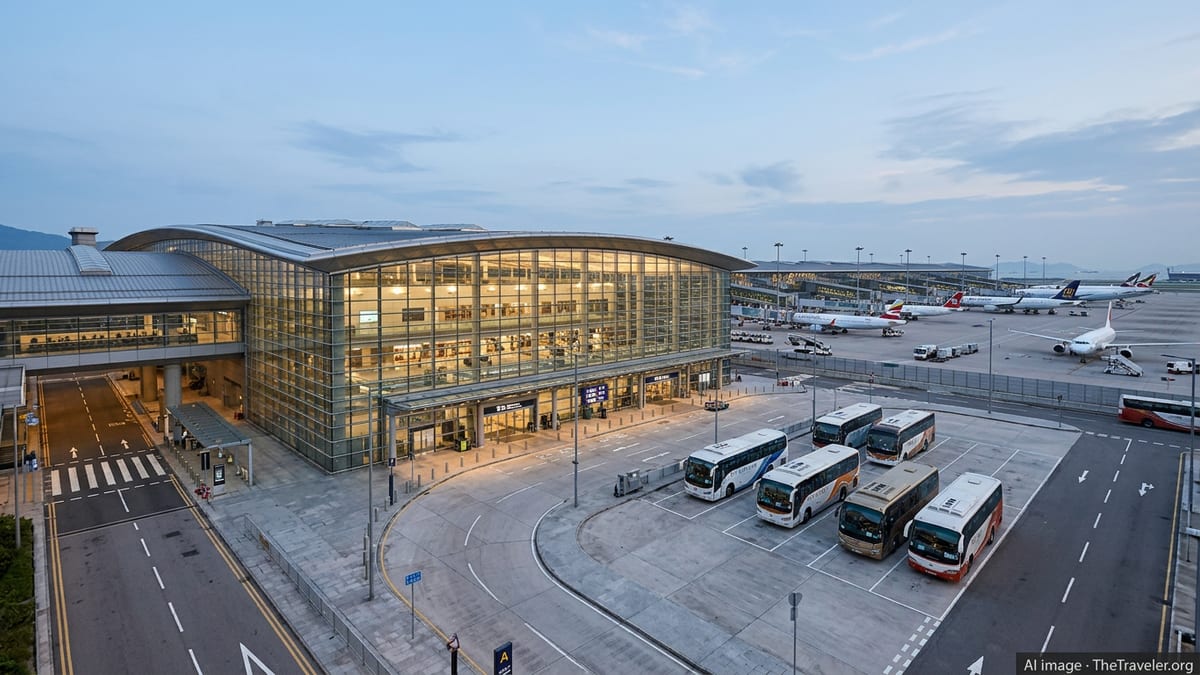
A New Era for Hong Kong’s Second Terminal
The Airport Authority confirmed that the expanded Terminal 2, closed since 2019 for works linked to the three-runway system, will transition from its current limited operations to a full-service departure terminal from 27 May 2026. The opening date follows the successful launch of the terminal’s new indoor coach hall in September 2025 and the phased return of airline check-in counters in early 2026.
Once fully opened, Terminal 2 will handle both traditional and self-service check-in for a cluster of regional and short-haul carriers, taking pressure off the airport’s main Terminal 1. Officials say the enhanced capacity is critical as passenger volumes at Hong Kong International Airport climb back toward and beyond pre-pandemic levels, supported by the fully operational three-runway system.
The completion of Terminal 2 marks one of the last major deliverables in a multibillion-dollar upgrade programme that has reshaped the airport’s airfield, terminal layout and ground transport links. Together, the new runway and expanded terminal infrastructure are expected to significantly boost the hub’s competitiveness in Asia.
What Passengers Can Expect Inside the New Terminal 2
The rebuilt Terminal 2 has been designed as a bright, open and more leisure-focused space, with a mix of traditional counters and extensive self-service options. The departure level will feature dozens of full-service check-in desks alongside a large bank of self-service kiosks and bag-drop machines, giving time-pressed travellers faster handling at peak periods.
Security and immigration processes are being upgraded with additional e-gates and smart-lane screening technology similar to that already implemented in Terminal 1. These systems are intended to shorten queuing times, with officials projecting meaningful reductions in minimum connection times for some regional itineraries once the terminal is fully integrated into the three-runway operating plan.
Beyond the processing zones, passengers will find expanded retail, dining and relaxation areas. Airport planners have sought to position Terminal 2 as a more lifestyle-oriented environment, with a broader mix of casual eateries, grab-and-go outlets and mid-range shopping aimed at regional travellers who may have shorter dwell times than long-haul passengers.
New lounges and quiet zones are also expected to feature prominently in the final layout, reflecting growing demand from both full-service and low-cost carriers for dedicated premium and pay-per-use spaces.
Airlines Shifting Operations to the Reborn Terminal
From spring 2026, roughly 15 airlines are scheduled to move their check-in operations into Terminal 2 in phases, setting the stage for full opening on 27 May. The line-up is expected to be dominated by regional carriers and budget airlines operating short-haul routes across mainland China, North Asia and Southeast Asia.
Hong Kong Express, Hong Kong Airlines and Greater Bay Airlines are among the carriers confirmed to relocate from Terminal 1, joining other Asia-focused operators that see advantages in the new facility’s layout and its close integration with ground transport connections. Their move will free up capacity in Terminal 1 for long-haul and trunk routes as traffic rebounds.
Initially, passengers using Terminal 2 will continue to access boarding gates via the airport’s automated people mover and connecting concourses, but by late 2026 and into 2027 the wider three-runway system layout is expected to be fully synchronised with the terminal’s operations. That will allow airlines to benefit more directly from the new airfield configurations and additional gate positions.
Airport managers say close coordination with carriers during the transition period will be essential, with extensive trials, staff training and contingency planning scheduled ahead of the late-May switchover.
Seamless Ground Transport and Regional Connectivity
One of the defining features of the upgraded Terminal 2 is its integration with the Airport Express rail station and the airport’s expanding ground transport network. On arrival by train, passengers will find Terminal 1 on one side and Terminal 2 on the other, both linked by air-conditioned, step-free walkways to simplify transfers between terminals and onward to ground transport.
The indoor coach hall, which opened in September 2025 beneath the new terminal, consolidates tour buses, cross-boundary coaches, limousines and resident services under a single roof with 41 parking bays. That reorganisation has already eased curbside congestion around Terminal 1 and nearby car parks, and it positions Terminal 2 as a primary gateway for mainland visitors and tour groups.
Over the next few years, Terminal 2 will also be tightly linked to the SkyCity commercial and entertainment district developing on the airport island, including major retail, dining and events venues. For transit passengers and visitors alike, this is expected to create a more integrated “airport city” experience, allowing travellers with longer layovers to access amenities without long transfers.
Officials argue that this combination of improved terminal facilities, smoother ground access and a wider air services network will reinforce Hong Kong’s role as a connector between mainland China and the rest of Asia, as well as emerging markets in South America, Africa and the Middle East.
A Cornerstone of Hong Kong’s Aviation Recovery Strategy
The full opening of Terminal 2 comes as the Hong Kong government pursues new and expanded air services agreements with partners across multiple regions, aiming to restore and grow the city’s route network after the pandemic. With the three-runway system already in full service and Terminal 2 poised to add significant terminal capacity, officials see 2026 as a pivotal year for rebuilding Hong Kong’s aviation footprint.
Transport and logistics authorities have highlighted that revised and newly signed bilateral agreements with countries in South America, Europe and Africa will only deliver their full potential if the airport can process more flights and passengers efficiently. Terminal 2’s smart-processing design and additional check-in and security capacity are central to that strategy.
Industry analysts note that other regional hubs are also in the midst of expansion, making the timely completion of Hong Kong’s upgrade programme critical to maintaining competitiveness. By bringing Terminal 2 fully online in May 2026, the city aims to send a clear signal to airlines and travellers that its main gateway is not only back in business, but equipped for the next phase of growth.
For passengers, the change will become most visible in the coming northern summer season, when more flights, more airlines and more convenient terminal options converge in a significantly transformed Hong Kong International Airport.