

More news on this day
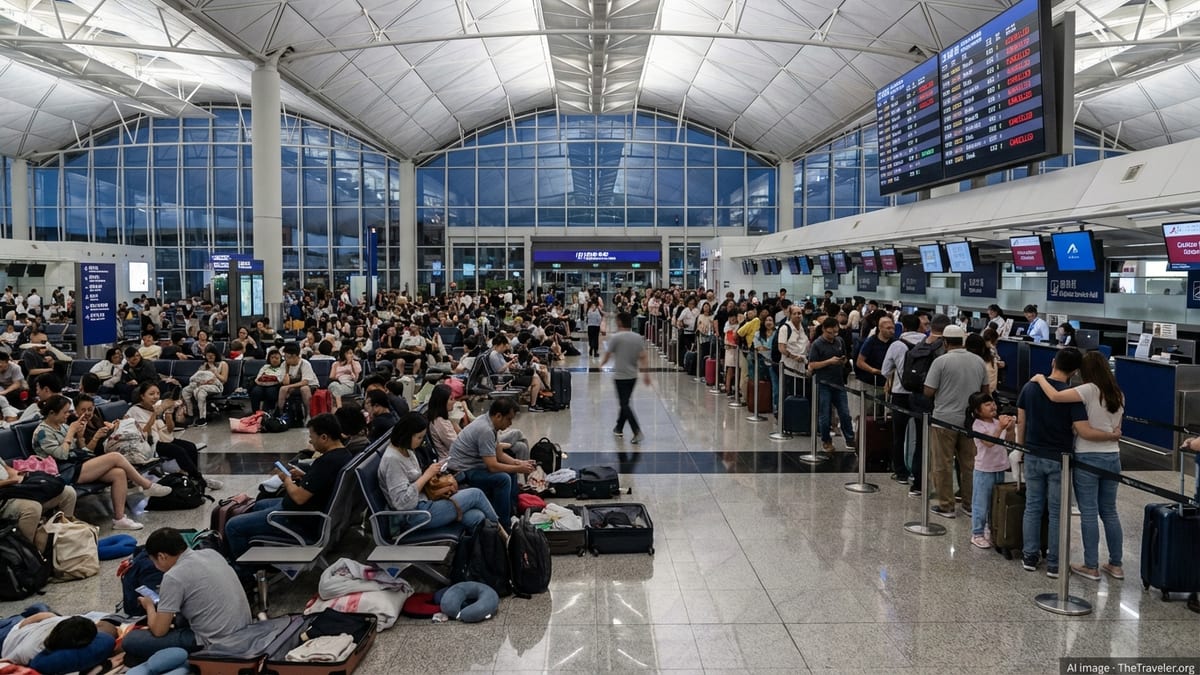
Hundreds of passengers were left sleeping on terminal floors and queuing at service counters at Hong Kong International Airport this weekend, as a sudden wave of flight cancellations to Riyadh, Doha and Dubai rippled out from a new US-Israeli airstrike on Iran and the unprecedented shutdown of key Middle Eastern airspace.
US-Israeli Strikes on Iran Trigger Fresh Shock to Global Aviation
The disruption began after coordinated US and Israeli strikes on targets across Iran early Saturday local time, in what officials in Washington described as a major escalation in the long-simmering confrontation with Tehran. Iran responded with missile and drone attacks on US-linked sites and cities across the Gulf, prompting governments from Iran and Iraq to Qatar, Kuwait, Bahrain and the United Arab Emirates to close or severely restrict their airspace.
The closures instantly choked one of the world’s busiest aviation corridors between Europe, Asia and Africa, forcing thousands of flights to divert or abort journeys. Flight tracking maps showed vast swathes of normally crowded skies over the Gulf nearly empty, while airlines began announcing rolling ground stops and suspensions to cities including Dubai, Doha, Abu Dhabi, Riyadh and Tel Aviv.
Aviation data firms estimate that more than three thousand flights to or from the Middle East were cancelled over the weekend, with knock-on delays and diversions affecting tens of thousands of additional services worldwide. Industry analysts say the shock is the worst sudden jolt to global aviation since the early days of the Covid pandemic, with routings once again having to snake around a new conflict zone.
Hong Kong Passengers to Riyadh, Doha and Dubai Left in Limbo
At Hong Kong International Airport, the fallout quickly became visible on departure boards as services to Gulf hubs were marked delayed, then cancelled outright. Flights to Riyadh, Doha and Dubai, long used by Asia-based travelers to connect to Europe, Africa and the Americas, were among the hardest hit.
Airport Authority Hong Kong said at least a dozen Middle East bound flights scheduled across Saturday and Sunday were either cancelled or heavily delayed, and warned the tally could rise as airlines reassessed safety and routing options. Ground staff reported passengers camping out near closed boarding gates, while lines for airline service desks snaked deep into the terminal.
Local carriers that serve the Gulf routes have responded by suspending or rescheduling key services. Cathay Pacific’s parent group has halted operations across the region, affecting passenger flights to Dubai and Riyadh and associated freighter runs, and is offering fee waivers for rebooking and rerouting on affected tickets over the coming days. Several Gulf and European airlines that normally operate daily services to Hong Kong have also scrubbed flights or suspended sales while they await clarity on airspace access.
For travelers with onward connections from Riyadh, Doha or Dubai, the cancellations have been particularly painful. Many had stitched together complex itineraries via Gulf hubs to reach destinations in Europe, the Middle East and Africa, only to find both their first and onward legs abruptly grounded, with limited spare capacity on alternative routes through East Asia or via southern corridors.
Riyadh Joins Doha and Dubai in Regional Shutdown
Saudi Arabia’s capital has rapidly become a pressure point in the evolving crisis. While Riyadh’s airspace is not formally shut to the same extent as Qatar or the United Arab Emirates, national carrier Saudia and other airlines have cut a swathe of services in and out of the kingdom in response to neighboring closures and security advisories. Flights between Riyadh and major Gulf hubs such as Dubai, Abu Dhabi and Doha are among those most affected, curtailing its role as an alternative bridge between Asia and Europe.
In parallel, Doha and Dubai, which sit at the heart of many Asia-Europe and Asia-Africa itineraries, have seen extensive groundings. Emirates, Qatar Airways and Etihad have temporarily suspended large parts of their schedules, citing the evolving security picture and airspace shutdowns over surrounding states. That in turn has slashed available connections for Hong Kong passengers who normally rely on Gulf super-connectors to reach secondary cities across Europe, the Middle East and Africa.
The combined effect is that Hong Kong travelers who would typically have several daily options via Doha, Dubai or Riyadh now face a patchwork of cancellations, uncertain departure times and limited alternatives. Even where some flights operate, airlines are re-routing around closed skies, significantly lengthening journey times and increasing fuel and crew costs.
What Stranded Travelers at Hong Kong Airport Can Expect
For passengers already at the airport, the immediate priority is to establish whether their flight is operating at all. Airlines are urging customers not to proceed to the terminal without first checking their flight status and any travel advisories, as departure times remain volatile and some services are being cancelled just hours before boarding.
Most major carriers serving the Middle East have activated special waivers, allowing travelers to rebook onto later dates or alternative destinations without change fees, and in some cases to request refunds. However, rebooking is proving challenging: with so many flights grounded, remaining services via other hubs such as Singapore, Bangkok and Seoul are rapidly selling out, and economy cabins on long-haul routes from Hong Kong are under heavy pressure.
Passengers who are stranded overnight are seeing a mixed response on care and assistance. Some airlines are providing hotel vouchers and meal coupons, while others are offering only basic refreshments and asking customers to make their own accommodation arrangements, reflecting varying contractual obligations based on the point of origin and ticket type. Airport facilities, including lounges and rest areas, have grown crowded as families with children, elderly travelers and business passengers wait for updated itineraries.
Travel insurers are advising customers to keep detailed records of expenses, such as hotel stays and meals, and to retain boarding passes and cancellation notices. Coverage for war-related disruption varies widely across policies, and some exclude losses linked to declared conflicts, leaving travelers uncertain about eventual reimbursement. Experts recommend contacting insurers before making substantial out-of-pocket purchases where possible.
How Long Could Disruption Last and What Should You Do Now?
Aviation regulators and security analysts caution that while some airspace could reopen within days under tightly controlled military coordination, the broader pattern of disruption is likely to persist longer. Airlines must not only wait for official clearance but also conduct their own risk assessments on overflight routes, adjust crew schedules and reposition aircraft that have been stranded outside their normal networks.
For Hong Kong based travelers planning upcoming trips that route through Riyadh, Doha or Dubai, the safest course is to assume continued instability in schedules over at least the short term. Travel agents and airline call centers report a surge in requests to reroute via alternative hubs in East and Southeast Asia, even at higher cost or with longer layovers, in order to avoid the conflict-affected corridor.
Industry observers note that if the confrontation between the United States, Israel and Iran drags on, ticket prices on remaining long-haul routes avoiding the Middle East could climb as airlines factor in longer flight paths and higher fuel burn. Corporate travel managers are already reviewing risk maps and, in some cases, temporarily blacklisting routings that rely on Gulf connections from their internal booking tools.
For now, passengers in Hong Kong and across the region remain at the mercy of fast-moving military and diplomatic developments far beyond the terminal. The only constants, airport staff say, are the rolling updates on departure boards and the steady stream of weary travelers searching for a way home.