

More news on this day
Equatorial Guinea’s passport has quietly climbed in global mobility rankings, with new data showing visa-free or visa-on-arrival access to 52 destinations, including Hong Kong, Singapore, Macao, Iran, Cameroon, Ecuador and Barbados, a shift that analysts say could support the Central African nation’s long-stated goal of diversifying its tourism economy.
Get the latest news straight to your inbox!
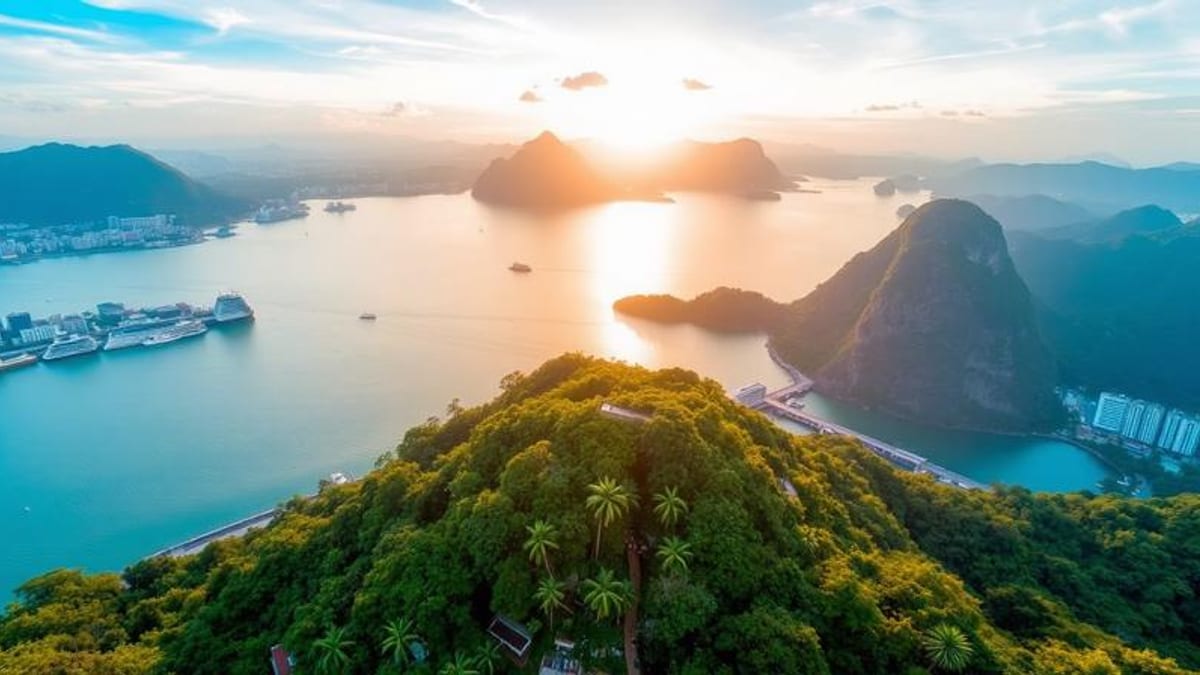
Image by Travel and Tour World – Tourism, Airline, Destination, MICE, Gobal Travel Market, Hotel news that you will find only over here.
New Report Highlights Expanding Visa-Free Network
Recent compilations of global visa policies indicate that Equatorial Guinean citizens now enjoy visa-free or visa-on-arrival entry to 52 countries and territories, placing the country in the lower mid-range of global passport power tables but marking a notable improvement compared with earlier years. The latest figures draw on comparative rankings such as the Henley Passport Index and specialist travel data platforms that track border regulations in real time.
Among the most eye-catching additions in these datasets are Hong Kong, Singapore and Macao, three high-capacity hubs in Asia that function as regional gateways for business and long-haul air travel. For Equatorial Guinean travelers, easier access to these transit and commercial centers effectively shortens the distance to a wider global network, from Southeast Asia to the Pacific.
The same reports also highlight destinations such as Iran in the Middle East, Cameroon in Central Africa, Ecuador in South America and Barbados in the Caribbean as part of Equatorial Guinea’s growing list of visa-free or visa-on-arrival partners. While many of these links existed in some form previously, their consolidation into a 52-strong tally underscores how incremental policy changes around the world are reshaping travel options for citizens of smaller states.
Analysts point out that visa policy data are constantly updated and that minor discrepancies often arise between different indexes and travel advisory platforms. Even so, the convergence of several independent sources around the 52-destination benchmark for Equatorial Guinea signals a broader trend toward gradually improving mobility for the country’s nationals.
Tourism Ambitions Meet Evolving Border Policies
Equatorial Guinea has for years publicized ambitions to develop tourism as a secondary pillar of its oil-dependent economy, promoting rainforest reserves, volcanic island landscapes and white-sand beaches on Bioko and Annobón. However, international arrivals have historically remained modest, constrained by limited air links, high costs and a perception of opaque entry procedures.
The new mobility data do not directly change how foreigners enter Equatorial Guinea, but they illustrate how outbound travel options for Equatorial Guinean citizens are widening just as the government seeks to reposition the country as a regional hub. Easier movement for residents can stimulate diaspora travel, educational exchanges and business scouting trips, all of which may feed back into inbound tourism over time.
Regional connectivity is especially significant. Visa-free access between Equatorial Guinea and neighbors such as Cameroon supports cross-border leisure and business travel within Central Africa, a region where infrastructure and bureaucracy have often limited tourism flows. More seamless movement among these states can make multi-country itineraries more attractive to tour operators and independent travelers alike.
Observers note that tourism growth also depends on parallel reforms, including investments in hospitality training, transparent pricing, environmental protections and consistent application of entry rules at ports and airports. Within that broader puzzle, the visibility of a more “open” passport for local citizens sends a signal that Equatorial Guinea is increasingly plugged into global mobility systems.
Strategic Hubs: Hong Kong, Singapore and Macao in Focus
Hong Kong, Singapore and Macao stand out in the updated visa-free lists not only for their economic weight but also for their role as aviation and cruise gateways. For Equatorial Guinean travelers, visa-free or visa-on-arrival access to such hubs can lower the practical and psychological barriers to long-distance travel, whether for tourism, study or trade.
Hong Kong and Singapore in particular rank among the world’s top airports by international passenger traffic and connections. Easy entry for short stays allows Equatorial Guinean visitors to attend industry fairs, medical appointments or academic conferences while also using these cities as springboards to third-country destinations in East Asia, Oceania or North America.
Macao, although smaller, complements this picture as a leisure and entertainment destination tightly integrated with the Pearl River Delta mega-region. Its presence on Equatorial Guinea–linked visa-free lists reflects how even niche jurisdictions can play an outsized role in shaping travel behavior when they are part of wider multi-stop journeys.
Travel analysts suggest that as Equatorial Guinean residents become more familiar with transiting and staying in these hubs, outbound tourism patterns may diversify beyond the traditional focus on Europe and neighboring African states. Over time, this could also influence how tourism boards in Asian cities market to African audiences, including smaller but fast-growing origin markets.
From Caribbean Beaches to Andean Highlands
Beyond Asia, the inclusion of Barbados and Ecuador in the 52-country tally illustrates the geographic spread of destinations now accessible to Equatorial Guinean passport holders with fewer formalities. Both countries market themselves aggressively to international visitors, and their visa policies toward a range of African nations have been relatively open compared with some peers.
Barbados offers a classic Caribbean mix of beaches, heritage architecture and festival culture, and it has sought to broaden its visitor base beyond North America and Europe. Visa-free or visa-on-arrival access for Equatorial Guinean travelers symbolically opens a door from the Gulf of Guinea to the Caribbean Sea, even if actual visitor numbers from Central Africa are likely to remain small in the near term.
Ecuador, straddling the Andes and the Pacific, positions itself as a value-oriented destination for adventure and eco-tourism, from the Amazon basin to the Galápagos Islands. For Equatorial Guinean residents, easier access could support niche travel segments such as student exchanges, Spanish-language programs and faith-based trips, building ties between two Spanish-speaking countries on opposite sides of the Atlantic.
Travel industry observers say that while air connectivity between Equatorial Guinea and these far-flung destinations remains limited, visa facilitation is a necessary precursor to route development. Airlines, tour operators and cruise lines are more likely to invest in marketing and new products when regulatory barriers are lower, even if immediate demand is modest.
Balancing Opportunity and Perception
The expanding visa-free map for Equatorial Guinean citizens arrives at a time when many governments are recalibrating border rules in response to post-pandemic travel recovery, migration concerns and competition for international tourists. Mid-tier destinations such as Hong Kong, Singapore, Macao, Iran, Cameroon, Ecuador and Barbados are all adjusting their own strategies to attract visitors and investment.
For Equatorial Guinea, a stronger passport in mobility rankings can help counterbalance lingering perceptions that the country is isolated or difficult to access. Even if the primary beneficiaries in the short term are outbound travelers rather than foreign tourists, the narrative of improved openness can shape how tour operators, investors and conference organizers assess the country.
At the same time, specialists caution that visa-free access does not automatically translate into frictionless travel. Requirements such as proof of funds, onward tickets and travel insurance still apply in many destinations, and airline staff often act as de facto gatekeepers. Clear public communication about conditions of stay and rights at the border remains essential.
Equatorial Guinea’s experience illustrates how even incremental improvements in visa reciprocity can carry symbolic weight for smaller nations seeking a foothold in global tourism. As new reports continue to refine the list of 52 destinations offering visa-free or visa-on-arrival access, industry watchers will be looking for signs that greater mobility for Equatorial Guineans is matched by a parallel rise in visitors discovering the country’s own little-known attractions.