

Staying connected in Hong Kong has never been easier, but the sheer number of SIM and eSIM options can feel overwhelming for first-time visitors. Between airport counters, convenience stores, local operators and international eSIM providers, it pays to understand how Hong Kong’s mobile market works before you land. This guide walks you through the best options for 2026, typical prices, where to buy, and how to choose the right plan for your style of travel.
How Mobile Connectivity Works in Hong Kong
Hong Kong is one of the most connected cities in Asia, with dense mobile coverage and competitive prepaid offers tailored to visitors. The territory’s compact geography means that even budget plans typically deliver strong 4G and growing 5G coverage across the main tourist areas, including Hong Kong Island, Kowloon and most parts of the New Territories. For most travelers, a local SIM or eSIM will provide faster and more reliable data than hotel Wi Fi or roaming from a home carrier.
Four main mobile network operators dominate the market: CSL, 3 Hong Kong, China Mobile Hong Kong and SmarTone. These companies sell their own tourist SIMs and eSIMs and also provide the network backbone for many third party brands and resellers. As a visitor, you rarely need to think about the underlying network, but it matters for coverage in outlying districts or if you plan to roam onward to mainland China or Macau.
Hong Kong has required real name registration for prepaid SIMs since 2023. That means every physical SIM or local eSIM tied to Hong Kong numbers must be registered with a passport or other accepted ID before it can be used. Airport counters and major retailers are well practiced at doing this for tourists and the process is usually quick, though it can add a few minutes when you buy. Some international travel eSIMs that are technically based outside Hong Kong may not require local registration, which is one reason they remain popular with short term visitors.
For a typical stay of three to seven days, visitors can expect to pay the equivalent of a few United States dollars per day for high speed data, with many packages including far more gigabytes than the average traveler will use. Voice calls are less central than they once were, since most visitors rely on messaging apps, but local minutes are readily available if you need to phone a restaurant, hotel or tour operator.
Physical Hong Kong SIM Cards: What to Expect in 2026
Traditional plastic SIM cards remain a solid choice if you prefer something tangible, are not confident your phone supports eSIM, or simply like the ability to swap cards between devices. Hong Kong’s local prepaid SIMs have evolved in recent years, with many now supporting 5G data and generous allowances that easily cover heavy map use, social media, video streaming and ride hailing.
CSL and its brands continue to promote tourist focused prepaid products, including the Discover Hong Kong Tourist SIM range and general local prepaid SIM cards with short term data passes. These products are often marketed with high data caps or daily fair use limits, sometimes at promotional prices that run into mid 2026. Other operators offer similar visitor products that bundle local data with roaming data in mainland China and Macau, which can be valuable if Hong Kong is just one stop on a wider regional trip.
At the budget end, local data SIMs that primarily target residents are also available to visitors and can provide excellent value if you are comfortable navigating Chinese or bilingual packaging. These may not carry the word “tourist” on the card, but for pure data use they can be as good as or better than branded visitor SIMs. The trade off is that instructions and customer support may be less tailored to English speaking travelers.
In terms of price, it is common to see physical tourist SIMs priced roughly in the HK$80 to HK$150 range for several days to a couple of weeks of use, often with tens of gigabytes of local data or daily high speed allowances before speeds slow. As with all prepaid services, exact offers change frequently, and promotions are common, so treat headline data amounts as indicative rather than guaranteed.
Hong Kong eSIMs: Convenient Options for Modern Travelers
eSIMs have become the favored choice for many visitors to Hong Kong in 2026, especially those carrying newer iPhone, Google Pixel or high end Android models. An eSIM lets you download a digital SIM profile to your device without dealing with plastic cards, tiny trays or the risk of misplacing your home SIM. For frequent travelers, it also makes it easier to stack multiple regional plans on a single device.
There are two main types of eSIM options available for Hong Kong. The first is local eSIMs issued directly by Hong Kong operators or their sub brands, which behave much like a traditional prepaid SIM but are delivered digitally. These typically require real name registration under Hong Kong rules, yet they benefit from direct access to local networks and competitive per gigabyte pricing. The second type is international travel eSIMs sold by global providers that partner with Hong Kong networks. These usually focus on simplicity and ease of purchase from abroad and may bundle Hong Kong with other destinations in Asia.
Travel focused eSIM providers update their offers regularly, but as of early 2026 you will commonly find Hong Kong eSIM packages starting from small trial plans under 1 GB for several days, up to multi week plans with 10 to 20 GB or more. Some brands market “unlimited” data with fair use policies that slow speeds after a threshold, which can be acceptable for messaging and maps but less suitable for heavy video streaming. Prices vary, but competition keeps per day costs reasonable, particularly if you avoid very short one or two day plans.
One advantage of eSIMs in Hong Kong is the ability to activate them just before departure or on arrival, sidestepping any queues at the airport. For digital only plans, you simply scan a QR code or follow manual configuration steps, turn off data roaming on your home SIM to avoid bill shock, and let your phone switch to the eSIM once you land. This has made eSIMs especially attractive to business travelers and repeat visitors who value speed and predictability.
Typical Prices, Data Allowances and Validity
Exact prices change with promotions, exchange rates and seasonal campaigns, but some broad patterns can help travelers budget for mobile connectivity in Hong Kong in 2026. For physical tourist SIMs bought directly from local operators, prices around HK$80 to HK$150 are common for packages covering roughly three to ten days, often bundled with high data allowances that most casual visitors will struggle to exhaust.
Local prepaid SIMs that are not explicitly labeled as tourist cards sometimes deliver even better value, with daily data passes or longer validity options stretching to 30 days or more. These are useful if you plan a longer stay or intend to return within the year and want to keep the SIM active through periodic top ups. As with all deals, the fine print matters, particularly any conditions around card expiry if you do not recharge within a certain number of days.
eSIM pricing is more fragmented because of the number of global providers targeting Hong Kong. You can expect small data eSIMs with just enough capacity for messaging, occasional maps and email to cost only a few United States dollars, while more substantial packages with 10 GB or higher data caps or multi week validity command higher prices. Some providers position themselves as budget leaders with low cost fixed data packs, while others emphasize flexible bundles that can cover multiple countries in the region.
When comparing options, it is wise to focus less on the headline price and more on a few practical questions. How long is the validity from first activation, and does that align with your trip dates. Is there a fair use policy that might slow speeds significantly after a certain threshold. Does the plan include tethering or hotspot use if you plan to connect a laptop or tablet. Answers to those questions will matter more to your experience than saving a few Hong Kong dollars upfront.
Where to Buy SIM Cards and eSIMs in Hong Kong
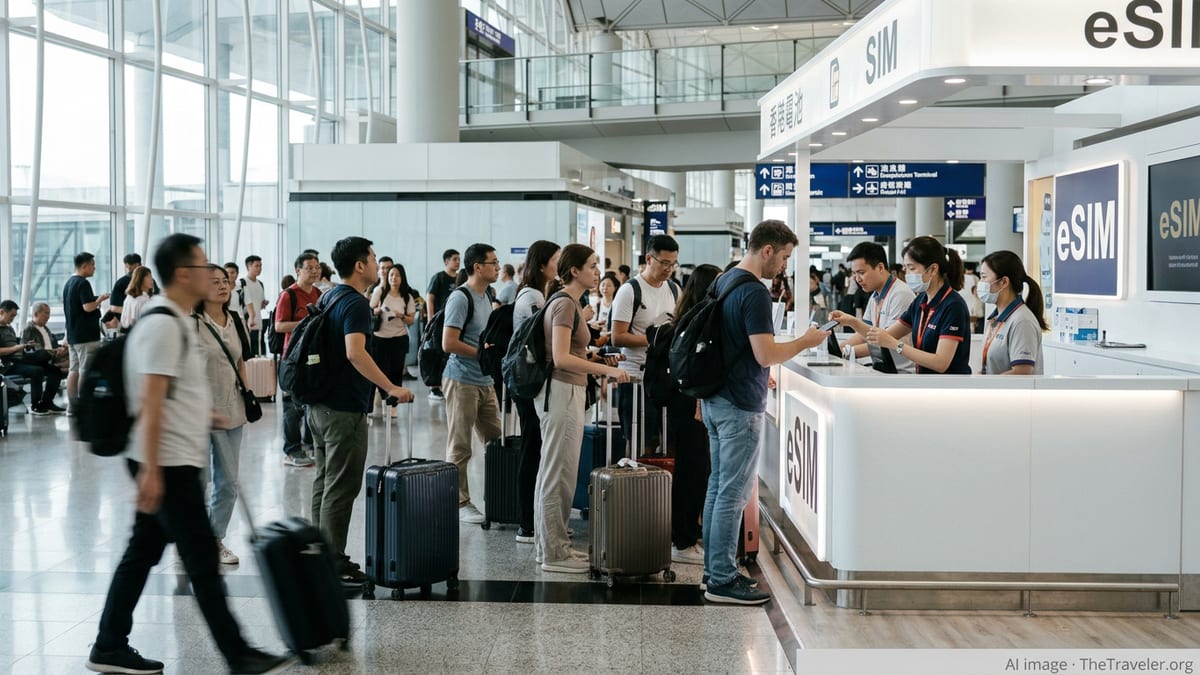
Hong Kong International Airport remains the easiest place to purchase a prepaid SIM on arrival, especially if you prefer a face to face transaction in English. After you clear customs, look for telecom operator counters or multi brand booths in the arrivals hall. Staff can recommend tourist packages, perform the necessary real name registration, help swap SIMs and test that your phone is working before you leave. Airport prices can sometimes be slightly higher than in town, but many visitors consider the convenience worthwhile.
In the city, convenience store chains such as 7 Eleven and Circle K, electronics malls and mobile phone shops stock a wide range of prepaid SIM cards. These retailers often sell both major network brands and smaller budget cards, some of which can be excellent value for data heavy use. If you buy away from the airport, you may need to follow the registration instructions yourself, which could involve scanning a QR code, uploading passport details to an app or visiting a dedicated registration website.
For eSIMs, most purchases happen online. You can buy directly from Hong Kong operator websites or from international travel eSIM platforms, often paying in your home currency and receiving setup details immediately. Many travelers choose to complete the purchase a day or two before departure, install the eSIM while still at home, and then simply switch it on in the phone settings when their plane touches down.
If you arrive without any plan at all and discover that airport counters are closed or busy, it is still possible to rely temporarily on free airport Wi Fi to download an eSIM from a travel provider. This is a useful fallback if you land very late or experience delays. Just be sure your phone is compatible with eSIM technology and unlocked from your home carrier before you attempt this route.
Registration, Compatibility and Practical Tips
Real name registration is the key regulatory detail that visitors should understand before buying a Hong Kong SIM or local eSIM. You will typically be asked to present your passport in person at a retail counter or upload an image of your passport and a selfie through an app or web portal. The process is designed to be straightforward, but it is wise to have passport details handy and allow a little extra time when you first connect.
Device compatibility is the next consideration. Most mid range and premium smartphones sold globally in recent years support the common frequency bands used by Hong Kong networks, but it is still possible for very old or niche devices to miss certain 5G or even 4G bands. Checking your phone model against network compatibility information from your chosen provider before you travel can prevent surprises. With eSIMs, you must also confirm that your handset supports eSIM technology, which is increasingly standard on flagship devices but not universal on budget models.
Before swapping physical SIMs, back up any contacts stored on your old SIM and familiarize yourself with how to open the SIM tray. Airport staff are used to helping tourists with this, but it is safer to have your own SIM pin tool in your carry on. For eSIMs, take screenshots or save QR codes and activation codes offline so that you are not dependent on email access at the moment of installation.
Finally, once you have your Hong Kong SIM or eSIM installed, check a few basics. Ensure that data roaming is turned off on your home SIM to avoid accidental charges, verify that mobile data is enabled on the correct line, and run a quick speed test or open a map app to confirm things are working. Save the customer service number or app for your provider in case you need support, and consider topping up a small extra amount early in your stay so that you do not suddenly run out of credit at an inconvenient moment.
The Takeaway
By global standards, staying connected in Hong Kong is straightforward and relatively affordable, whether you prefer the familiarity of a physical SIM card or the convenience of an eSIM. Strong competition between local operators and the rise of specialized travel eSIM providers give visitors plenty of choice, from bare bones data packs for quick city breaks to generous multi week plans that also cover nearby destinations.
The right solution for you will depend on your device, your itinerary and how heavily you rely on mobile data. If you want a simple, guided experience, buying a tourist SIM at the airport remains a safe and effective option. If you are comfortable managing settings on your phone and value the ability to set everything up in advance, a Hong Kong eSIM from a trusted provider can deliver a seamless arrival with instant connectivity.
Whichever route you choose, a few minutes of planning before you depart can save money and stress once you land. Check that your phone is unlocked and eSIM capable if you plan to go digital, think about whether you need coverage beyond Hong Kong, and familiarize yourself with registration requirements. With those details sorted, you can focus less on data and more on enjoying the city’s food, skyline and neighborhoods, confident that maps, messages and ride hailing will be just a tap away.
FAQ
Q1. Do I really need a local SIM or eSIM in Hong Kong, or is Wi Fi enough.
Public and hotel Wi Fi in Hong Kong is widely available, but a local SIM or eSIM provides more reliable connectivity for maps, ride hailing, mobile payments and messaging on the move. For most visitors, the low daily cost of a prepaid plan is worth the convenience and added security.
Q2. Can I buy a Hong Kong SIM card at the airport after I land.
Yes. Hong Kong International Airport has telecom counters and retail booths in the arrivals area where you can buy tourist SIM cards, register with your passport and have staff assist with installation. This is often the easiest option for first time visitors.
Q3. Is my phone compatible with Hong Kong SIM cards and eSIMs.
Most recent unlocked smartphones from major brands work without issues on Hong Kong networks. To use an eSIM, your device must specifically support eSIM technology. It is best to confirm compatibility in your phone’s settings or on the manufacturer’s website before travel.
Q4. How much data do I need for a one week stay in Hong Kong.
Usage varies, but many travelers are comfortable with around 5 to 10 GB for a week when using maps, social media, messaging and occasional video. Given the generous allowances on many Hong Kong plans, choosing a package with a bit more data than you expect to need is usually inexpensive peace of mind.
Q5. Do Hong Kong SIM or eSIM plans work in mainland China or Macau.
Some Hong Kong plans include roaming data for mainland China and Macau, while others are strictly for use within Hong Kong. If you plan to cross the border, check the product description carefully and look for packages that explicitly mention regional coverage.
Q6. What documents do I need to register a prepaid SIM in Hong Kong.
Tourists normally need a valid passport for real name registration. At an airport or shop counter, staff will scan or record your details. For self registration, you may be asked to upload a passport image and a selfie through an app or website.
Q7. Can I keep my home number active while using a Hong Kong eSIM.
Yes, if your phone supports dual SIM or dual eSIM, you can usually keep your home line active for calls and texts while using the Hong Kong eSIM for data. You should still disable data roaming on your home line to avoid unexpected roaming charges.
Q8. Is it better to buy an eSIM before I leave or wait until I arrive.
Buying an eSIM before departure allows you to sort out installation in a relaxed setting and connect immediately on arrival. Waiting until you arrive gives you a chance to compare physical SIM options in person. Both approaches work, so the choice comes down to your comfort with technology and how much you value instant connectivity.
Q9. What happens if I run out of data during my trip.
Most Hong Kong prepaid SIMs and eSIMs allow easy top ups through apps, websites, vouchers or in store purchases. If you exhaust your original allowance, you can usually buy an extra data pass or recharge credit without replacing the card itself.
Q10. Are there any security or privacy concerns with using Hong Kong SIMs or eSIMs.
Hong Kong does not block major international websites and apps, and mobile networks are considered secure for typical travel use. As with any destination, you should still practice basic digital hygiene such as using strong passwords, keeping your phone updated and being cautious on unfamiliar Wi Fi networks.