

More news on this day
Hong Kong is moving aggressively to capture a bigger share of high-end marine tourism, pairing new luxury yacht infrastructure with cross-border initiatives that place the city at the center of the Greater Bay Area’s emerging maritime playground.
Get the latest news straight to your inbox!
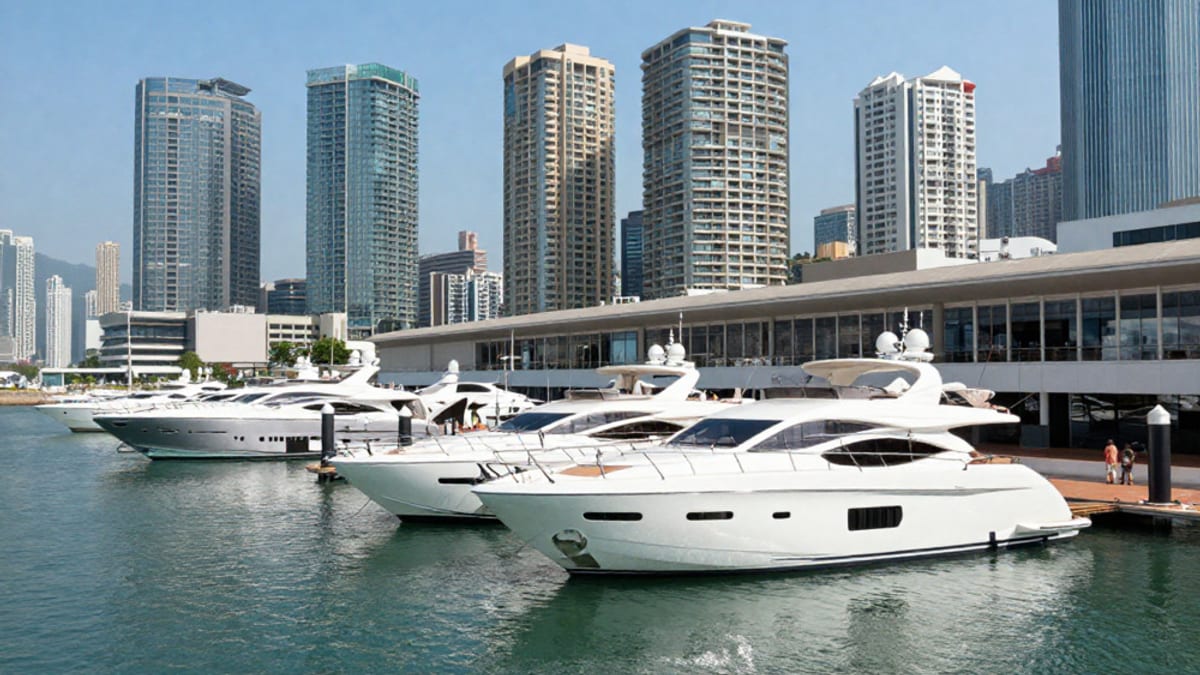
Image by Latest International / Global Travel News, Breaking World Travel News
Luxury yacht capacity expands from Victoria Harbour to the airport
After years of capacity constraints in traditional marinas, publicly available information shows that Hong Kong is now prioritising new berths and premium facilities tailored to luxury yachts. Existing hubs such as Aberdeen, Causeway Bay and the eastern harbours are being complemented by plans for purpose-built marinas in newly redeveloped waterfront districts.
One of the most closely watched projects is the proposed marina cluster around the former Kai Tak Airport runway. The area has already been transformed with the cruise terminal, waterfront promenades and new residential towers, and recent development materials highlight yacht parking and marine leisure as a core feature of the next phase, positioning the inner harbour as a showcase for superyachts against the city skyline.
At the western edge of the city, the Airport Authority’s expanded “Airport City” blueprint includes the Skytopia project, which sector groups describe as a HKD 70 to 100 billion mixed-use development anchored by a 500 to 600 berth Airport Bay Marina. Reports indicate that this facility, slated to open in phases from 2025, is designed to handle larger yachts and integrate directly with the international airport, offering visiting owners and charter guests seamless transfers from private jets to private yachts.
Industry observers note that this dual focus on Victoria Harbour and the airport island signals an ambition to make Hong Kong not only a picturesque yachting destination but also a strategic logistics node for high-net-worth travellers cruising across the Greater Bay Area and beyond.
Government strategy targets high-end, experiential marine tourism
Hong Kong’s latest tourism strategy documents emphasise a shift toward “high-quality tourism experiences,” with a clear focus on premium, personalised and experiential products. Official blueprints referenced in recent public releases highlight marine tourism, including yacht charters and island-hopping journeys, as a priority segment within this repositioning.
According to coverage of tourism policy updates, authorities are encouraging collaborations between the Hong Kong Tourism Board, marina operators, luxury hotels and retailers to curate exclusive itineraries for yacht visitors. These may bundle private harbour cruises with fine dining, tailored shopping experiences and cultural programming, turning a yacht stay into a themed lifestyle journey rather than a simple harbour tour.
Travel trade reports from late 2024 and 2025 indicate that the Tourism Board is simultaneously using its “Mega Events + Tourism” approach to draw more high-spending visitors to the waterfront. Ultra-luxury cruise partnerships, gourmet festivals with harbourfront experiences and new sports venues at Kai Tak Sports Park are intended to feed demand for private charters and tender services, effectively positioning yachts as a glamorous extension of the city’s events calendar.
Observers in the regional yachting industry suggest that by aligning marina investments with a broader premium tourism strategy, Hong Kong is aiming to compete more directly with established luxury maritime hotspots, while also leveraging the dense urban backdrop and short cruising distances to outlying islands as distinctive selling points.
Cross-boundary yacht schemes knit Hong Kong into the Greater Bay Area
Beyond local infrastructure, Hong Kong is working to deepen cross-boundary marine links with neighbouring cities in Guangdong and Macao. Guangdong’s “Action Plan for High-Quality Development of the Yacht Industry (2024–2027)” calls for a pilot programme to enable freer yacht movement among the three jurisdictions, and publicly available government answers to lawmakers in mid-2025 confirm that Hong Kong is engaged in ongoing discussions on implementation.
The stated goal is to streamline procedures for private and charter yachts to cruise more easily between Hong Kong, Macao and major Greater Bay Area cities such as Shenzhen, Zhuhai and Guangzhou. Measures under consideration include simplified clearance arrangements, mutual recognition of certifications and expanded berthing options at key cross-border hubs.
Regional business groups have also highlighted proposals to harmonise regulations and promote joint marine tourism routes that link Hong Kong’s islands, Guangdong’s coastal resorts and Macao’s entertainment offerings. These could take the form of multi-day itineraries where guests embark in Hong Kong, cruise along the Pearl River estuary and call at multiple GBA ports under a single, more integrated framework.
Analysts of the Greater Bay Area agenda view these moves as part of a broader effort to create a unified, high-end maritime tourism cluster. In this vision, Hong Kong serves as both a gateway and a flagship port, offering international connectivity, financial services and premium hospitality that complement the leisure infrastructure being built along the mainland coast.
Events, branding and the rise of a regional yachting ecosystem
Industry events and marketing partnerships are helping to entrench Hong Kong’s role in the Greater Bay Area’s yachting narrative. Yacht shows and marine lifestyle festivals staged at sites such as Kai Tak Runway Park Temporary Marina have already showcased the potential of the former airport waterfront as a stage for luxury vessels and nautical brands.
Academic research on tourism clustering in the Greater Bay Area, including recent work from Hong Kong universities, recommends building an integrated regional brand that leverages complementary strengths across cities. Within this framework, Hong Kong is often cast as the cosmopolitan showcase port, offering international-standard services and iconic harbour scenery that can elevate the appeal of cross-border marine products.
Trade media covering the China yacht sector point to strong growth in the country’s yacht and water leisure industry and highlight upcoming industry expos in GBA cities such as Guangzhou. These gatherings are expected to draw builders, charter operators and marina investors, reinforcing a network in which Hong Kong’s marinas, shipyards and service providers act as premium nodes for sales, management and refit work.
As the regional ecosystem matures, market watchers anticipate more joint promotions featuring Hong Kong alongside neighbouring coastal cities, from co-branded regattas and rally cruises to shared membership schemes that give yacht owners reciprocal access to berths and clubs across the bay.
Challenges and opportunities in balancing access and exclusivity
Even as Hong Kong advances plans for new marinas and yacht bays, the growth of luxury marine tourism carries familiar tensions. Commentary in local and international media has flagged public debate around proposals to convert sections of the urban waterfront, including parts of the Kowloon shoreline, into yacht-focused havens aimed at affluent visitors.
Critics question whether scarce harbourfront land and water areas should prioritise private berths over public parks, promenades and community facilities. Supporters, by contrast, argue that high-end yacht tourism can generate significant visitor spending, anchor waterfront regeneration projects and strengthen Hong Kong’s position in the Greater Bay Area’s services-led economy.
Urban planning specialists note that the next phase of development will test Hong Kong’s ability to reconcile world-class marinas with inclusive access to the harbour. Decisions on design, berth allocation and integration with public transport and open spaces are likely to shape how residents and visitors perceive the city’s maritime transformation.
For now, the momentum behind new berths, policy coordination and cross-border yacht initiatives suggests that Hong Kong intends to be a central port of call in the Greater Bay Area’s luxury maritime future, even as it navigates the trade-offs that come with turning one of the world’s great working harbours into a playground for high-end tourism.