

More news on this day
Hong Kong has introduced sweeping powers allowing border and law‑enforcement officers to compel travelers to unlock digital devices, adding a new layer of scrutiny just as Asian and Western hubs from Tokyo and Seoul to London, Toronto and New York move to tighten immigration rules ahead of the 2026 tourism season.
Get the latest news straight to your inbox!
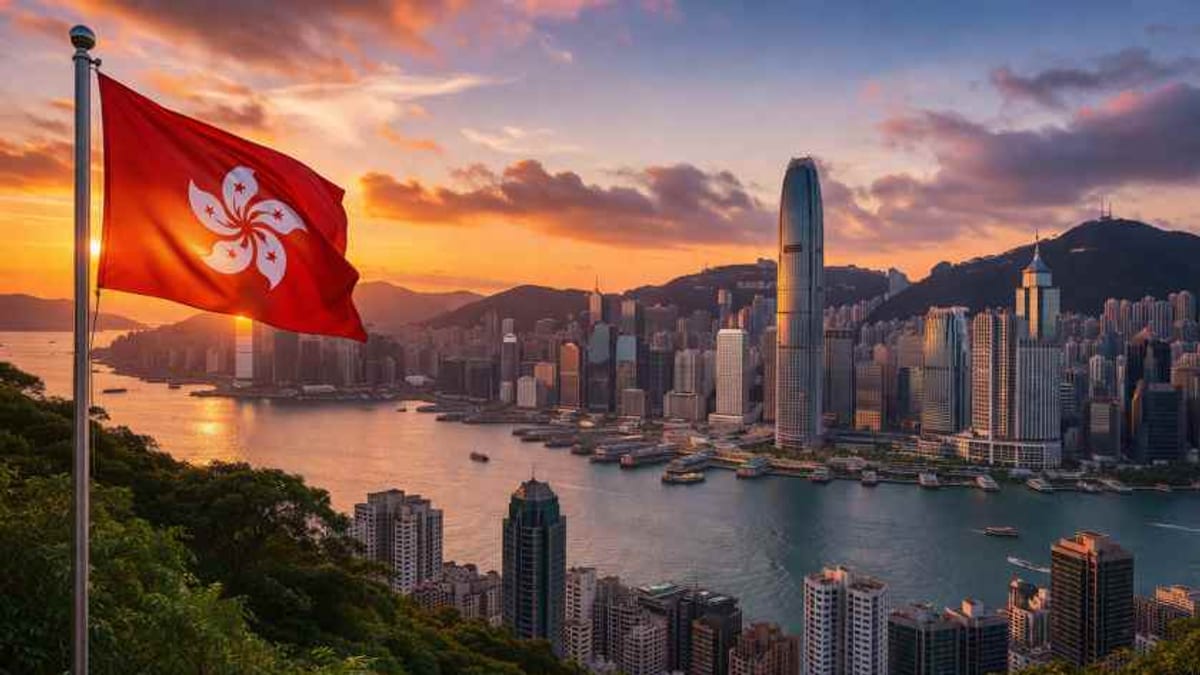
Image by Travel And Tour World
New Device Password Rules Put Hong Kong in Global Spotlight
Publicly available information indicates that Hong Kong’s updated security legislation now enables police and border officers to demand passwords or access codes to phones, laptops and other electronic devices from people under investigation or questioning, including foreign visitors. Those who refuse to cooperate can face fines reportedly as high as HK$100,000 and potential imprisonment, making digital noncompliance a criminal matter rather than a simple customs issue.
The rules draw on frameworks used in mainland China and mirror a broader international trend in which border authorities treat digital data as part of standard entry screening. Commentaries from technology and civil liberties observers suggest that the Hong Kong provisions go further than past practice by explicitly requiring travelers to assist with decryption and provide functional access, closing off common workarounds such as partial backups or read‑only previews.
For the tourism sector, the timing is sensitive. Official statistics show visitor arrivals rebounded strongly through 2025, surpassing 45 million in the first eleven months of the year and outpacing 2024. Industry analysts note that the device law arrives just as airlines and hotels have been banking on steady growth from short‑haul Asian markets and long‑haul visitors from North America and Europe in 2026.
Travel advisers now expect Hong Kong to feature more prominently in digital privacy guidance, alongside jurisdictions such as the United States and Australia where device inspections at the border were already a concern for frequent travelers and business visitors.
Immigration Tightening Becomes a Regional Pattern
While Hong Kong’s device powers are attracting attention, several major destinations across Asia and beyond are also recalibrating immigration rules, often in response to record visitor volumes. In Japan, a government advisory council on immigration policy has called for expanded digital border controls, closer data sharing with airlines and more rigorous residency management as foreign arrivals hit new highs in 2024 and are projected to climb further in 2025 and 2026.
Japan is also preparing a new framework to replace its long‑running technical intern program with a more controlled pathway for foreign workers, including possible caps on intake. Policy papers describe the aim as balancing labor market needs with tighter oversight of overstays and status violations, a signal that future long‑stay visas could come with stricter monitoring even as short‑term tourism continues to grow.
South Korea and Singapore are moving in a similar direction. Publicly available briefings from both governments highlight a focus on risk‑based screening, more selective work‑visa approvals and heavier use of advance passenger information to flag travelers for additional questioning. At the same time, each continues to expand automated gates and biometric e‑channels at airports, seeking to process low‑risk tourists quickly while devoting more resources to higher‑risk cases.
Analysts point out that for visitors, these shifts may not immediately translate into visible obstacles such as new visa requirements. Instead, they are more likely to encounter longer secondary checks, detailed questioning about finances and itineraries, or closer scrutiny if previous overstays or immigration violations are recorded in shared databases.
Western Gateways Add Their Own Layers of Control
In parallel with Asia’s adjustments, traditional long‑haul destinations for Asian travelers, including the United States, Canada, the United Kingdom and New Zealand, are also tightening parts of their immigration systems. Policy announcements over the past two years show a shared emphasis on reducing backlogs, raising income thresholds for some work and family routes, and introducing more automated risk scoring at the border.
In the United Kingdom, a 2025 immigration white paper signaled a substantial reset of overall migration levels, with higher salary requirements and narrower eligibility for certain categories. At the same time, the government has continued to refine special pathways for Hong Kong residents, including a recent expansion of the British National (Overseas) visa scheme that allows more adult children of status holders to apply with their families.
Canada and New Zealand have focused on recalibrating temporary and student routes after unusually strong inflows during the post‑pandemic recovery. Government updates describe higher financial proof requirements, stricter rules on education providers and sharper differentiation between short‑term visitors and those seen as de facto long‑term migrants. For tourists planning multi‑country itineraries that combine Asian hubs with stops in London, Vancouver or Auckland, the cumulative effect is a more complex compliance landscape in 2026 than just a few years earlier.
In the United States, the primary changes for many Asian travelers lie not in classic tourist visas but in heightened use of electronic screening and analytics through existing systems. Industry lawyers and advocacy groups report more frequent secondary inspections for travelers whose digital footprints, travel histories or prior immigration records trigger algorithmic risk flags.
Tourism Industry Weighs Security Against Visitor Confidence
Across Hong Kong, Tokyo, Seoul, Singapore and London, tourism boards and travel businesses have set ambitious recovery targets for 2026, banking on pent‑up demand, expanded air capacity and a return of big‑ticket events. Yet these goals now intersect with layered security measures ranging from device search powers in Hong Kong to enhanced pre‑clearance and visa vetting in other hubs.
Hotel groups and airlines are responding with more detailed pre‑trip communications, often urging passengers to verify visa categories, ensure that return tickets and proof of funds are clearly documented and be prepared to explain their travel purpose. Some are also updating corporate travel policies to address device searches, including recommendations on carrying travel‑only phones or laptops and limiting sensitive data when crossing certain borders.
Travel economists warn that even modest friction can have an outsized impact on high‑spending segments such as conference delegates, luxury shoppers and repeat visitors, who tend to be more sensitive to perceptions of risk and inconvenience. At the same time, governments argue that clear rules and robust enforcement are necessary to manage overstays, illicit work and security threats that could ultimately undermine the tourism boom.
Observers note that destinations able to communicate policy changes transparently and apply them predictably are more likely to retain traveler confidence, even under strict regimes. Sudden detentions, unexplained refusals of entry or highly publicized incidents at passport control, by contrast, can quickly ripple through international media and social platforms, discouraging future bookings.
What Travelers Should Expect in 2026
For individual tourists planning trips through Hong Kong and other major hubs in 2026, the emerging pattern points toward more front‑loaded compliance. Visa‑exempt travelers can still expect relatively easy entry in many cases, but the margin for error around paperwork, prior immigration history and digital privacy is shrinking.
Specialists in travel risk management suggest that Hong Kong’s device password rules are likely to feature prominently in corporate briefings for staff transiting the city, especially those who handle confidential commercial or legal data. Travelers may be advised to minimize stored content, use cloud‑based backups and assume that photos, messages and documents on a device could be inspected if they are singled out for questioning.
In Japan, South Korea and Singapore, visitors are more likely to encounter expanded biometric collection, automated gates and occasional targeted interviews, particularly if they are frequent entrants or traveling on passports from countries with higher overstay rates. Western destinations on the same itinerary may apply additional scrutiny, especially for travelers who string together multiple long stays or shift frequently between visitor and study or work categories.
Despite the more restrictive tone of recent policies, international arrivals across Asia and the West remain strong, and most travelers still clear immigration with minimal difficulty. For now, the most significant change is the expectation that tourists will treat border formalities, including digital inspections, as a central part of trip planning, not an afterthought at the end of a long‑haul flight.