

More news on this day
Hong Kong has introduced new rules under its national security framework that allow investigators to compel people under suspicion to hand over passwords to phones and laptops, a shift that is stirring intense concern among digital rights advocates and raising practical questions for travelers planning visits in 2026.
Get the latest news straight to your inbox!
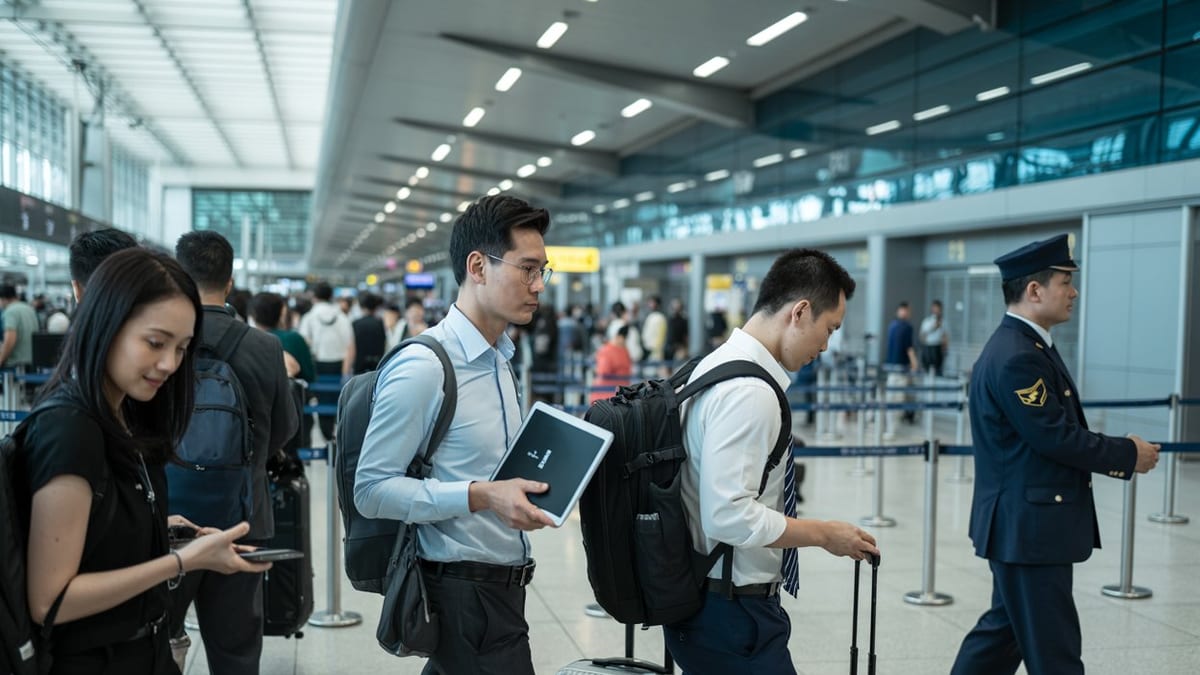
Image by Travel and Tour World – Tourism, Airline, Destination, MICE, Gobal Travel Market, Hotel news that you will find only over here.
What Has Changed in Hong Kong’s Security Rules
The latest amendments build on Hong Kong’s 2020 National Security Law and the Safeguarding National Security Ordinance adopted in 2024. In March 2026, the government updated the implementation rules so that police investigating suspected national security offenses can require a “specified person” to provide passwords or other decryption methods for electronic devices. Publicly available information indicates that refusal can be treated as a criminal offense, with potential penalties that include up to one year in prison and fines in the six-figure Hong Kong dollar range.
Reports from international and local media describe the changes as a significant expansion of investigative powers into the digital lives of residents and visitors. The rules apply in national security cases, a category that already includes broadly defined offenses such as secession, subversion, terrorism and collusion with foreign forces. Rights groups argue that the combination of wide legal definitions and compelled decryption powers could allow authorities to reach deeply into private communications, professional files and cloud-connected accounts stored on travelers’ phones and computers.
Hong Kong officials and pro-government commentators frame the amendments as a technical update that aligns the city with practices in other jurisdictions. They note that similar decryption-assistance requirements exist in countries such as the United Kingdom and Australia in certain criminal investigations. Critics respond that the political context in Hong Kong, including earlier crackdowns on protests and media, makes the potential impact much broader than in many other destinations.
Can Police or Border Officers Ask Any Traveler for Passwords
According to recent official explanations and local coverage, the new device-access powers are not presented as a blanket authority to stop any passerby and demand a password. Authorities have publicly stated that officers must first obtain a court warrant in the context of a national security investigation before compelling a person to unlock a phone or laptop. The rules also refer to “specified persons,” generally understood as individuals linked to an ongoing inquiry.
Even with this warrant requirement, digital rights advocates warn that travelers face practical uncertainty. The threshold for opening a national security investigation is not entirely clear to the public, and previous cases suggest that social media posts, political materials or contacts with foreign organizations can attract scrutiny. Customs officers already hold separate powers to inspect baggage and seize items suspected of carrying “seditious” content, a definition that has been applied to books, leaflets and other publications.
For foreign visitors, there is an added layer of concern at the border. Technology reporting and commentary point out that in many countries, including Hong Kong, a traveler who refuses to cooperate with device searches can be denied entry, even if they are not charged with a crime. While Hong Kong’s government rejects claims that officers can randomly demand passwords on the street, travelers have limited visibility into how the rules will be interpreted during fast-moving encounters at airports or checkpoints.
Implications for Business Travelers and Journalists
The new password rules are especially sensitive for business travelers, journalists, lawyers and NGO workers who routinely carry confidential data. Hong Kong remains a major regional hub for finance, logistics and professional services, and many companies still route teams through the city or maintain offices there. Industry groups and foreign chambers of commerce have previously voiced worries that expansive security powers and data-access rules could affect the flow of information and erode confidence in Hong Kong as a safe base for regional operations.
Business travelers face several overlapping risks. A compelled password could expose proprietary documents, strategic plans, client communications or internal messaging platforms. Even where investigators focus narrowly on a specific national security question, device access can reveal broader networks of contacts and sensitive commercial information. Some corporate security advisers now recommend that staff entering higher-risk jurisdictions travel with “clean” devices that hold only the minimum data needed for the trip, with everything else stored on secure remote systems.
Journalists and human rights workers encounter similar dilemmas. Phones and laptops often contain contact lists, interview notes, unpublished material and encrypted messaging histories that could place sources at risk if accessed. Press freedom organizations and advocacy groups have argued since the 2020 law that national security provisions already had a chilling effect on critical reporting. The new password requirements deepen those concerns by potentially turning every border crossing or police interaction into a high-stakes test of digital security practices.
How the Rules Affect Tourists and Short-Stay Visitors
For leisure travelers, the immediate risk remains lower than for politically active residents or those working in sensitive fields, but it is not negligible. Tourists routinely carry smartphones filled with personal photos, private chats, banking apps and social media accounts that may include political commentary. In theory, travelers who are not involved in any national security investigation should not face demands for passwords under the amended rules, yet online travel forums and rights organizations note that visitors have little ability to challenge officers’ interpretations in the moment.
Travel advisories from several countries already highlight Hong Kong’s security laws and warn that comments critical of the central or Hong Kong governments, even if made outside the city and posted online years earlier, could be scrutinized. The broadened powers to compel decryption mean that, if a visitor becomes entangled in such a case, authorities may lawfully access chats and content that the traveler assumed were safely behind a PIN or biometric lock.
Many privacy-conscious travelers are responding by adjusting their digital footprint when passing through Hong Kong. Common steps include signing out of sensitive accounts, limiting the data stored locally on devices, disabling automatic cloud backups and avoiding carrying archives of political material. Cybersecurity professionals emphasize that these choices cannot eliminate risk in the face of a determined investigation, but they can reduce the amount of personal information exposed during a brief stay.
Preparing for a 2026 Trip: Practical Digital-Safety Tips
Travel specialists and digital rights groups increasingly advise treating Hong Kong as part of a wider global trend toward more intrusive border and security checks of electronic devices. For trips in 2026, many recommend that visitors conduct a careful review of the data they carry and adopt “need to know” principles for phones and laptops. That means storing long-term archives, political materials and sensitive professional files on secure remote services rather than on devices that might be searched.
Another widely suggested practice is to separate personal and work information. Some business travelers now use dedicated travel laptops and low-data smartphones that contain only essential apps and documents for the journey. Strong, unique passwords and multi-factor authentication remain important, but travelers should also understand that under Hong Kong’s rules, they can be legally required to assist with decryption in a national security case.
Travelers are also encouraged to stay current with their own government’s travel advisories, which are being updated to reflect the latest developments in Hong Kong’s security environment. These notices typically outline legal risks, highlight known problem areas such as political expression and encrypted communications, and may offer country-specific guidance on consular support if a device is seized or a traveler is questioned.
For now, Hong Kong continues to welcome millions of visitors for tourism, shopping and business, and day-to-day experiences for most travelers remain smooth. Yet the new password rules illustrate how the city’s legal landscape has shifted since 2020. Anyone planning a visit in 2026 is likely to weigh Hong Kong’s attractions against a tighter environment for digital privacy, and to adjust their travel habits accordingly.