

More news on this day
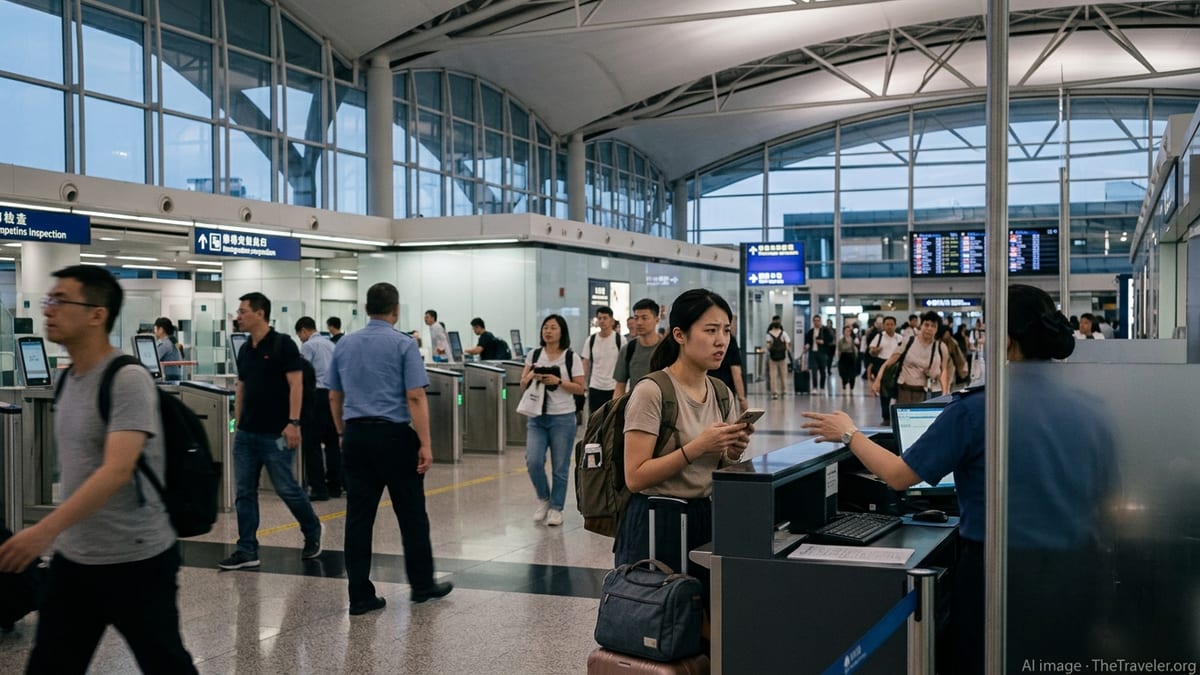
Travellers passing through Hong Kong International Airport are being warned that a routine encounter with officers could now come with a stark choice: hand over access to your phone or risk criminal consequences under the city’s expanding national security regime.
Get the latest news straight to your inbox!
A National Security Law With Global Reach
Hong Kong’s latest security framework, built on the 2020 National Security Law and the 2024 Safeguarding National Security Ordinance under Article 23 of the Basic Law, has significantly widened the powers available to investigators. Publicly available documents and legal analyses indicate that the new rules allow officers, with national security justifications, to seek access to electronic devices and encrypted data belonging to people in the city, regardless of nationality or length of stay.
The laws target a broad spectrum of alleged national security offences, from secession and subversion to espionage, sabotage and so called foreign interference. Critics argue that the definitions are sweeping and that the legal threshold for triggering an investigation is low, meaning the reach of the legislation can extend beyond long term residents to short term visitors and transit passengers who may have little understanding of the local legal landscape.
Human rights groups and legal commentators say this has turned Hong Kong from a relatively open transit hub into a jurisdiction where digital privacy is increasingly precarious. They highlight the combined effect of the 2020 and 2024 laws, warning that anyone physically present in Hong Kong, even briefly while changing planes, is theoretically subject to demands for information that could be stored on personal devices.
From Court Warrants to Password Demands
Recent amendments to the implementation rules of the 2020 National Security Law, together with provisions in the new Article 23 ordinance, have focused attention on how investigators can access the content of phones and laptops. According to published coverage of the updated rules, police may require “specified persons” connected to national security investigations to provide passwords or other decryption methods, with non compliance punishable by fines and potential prison terms.
Officials have publicly stressed that these powers are not designed for random street checks and that officers are expected to obtain court warrants before searching electronic devices in most circumstances. Nevertheless, rights advocates caution that the combination of broad national security concepts and expansive enforcement powers gives authorities considerable discretion over when and how to seek access to digital information.
Legal experts monitoring developments in the city say this framework creates a sharp legal dilemma: once a person is treated as relevant to a national security inquiry, refusal to unlock a device may itself become a separate offence. That possibility is fuelling concern among travellers who fear that saying no to a password request, particularly in controlled environments such as airports, could be interpreted as obstructing an investigation.
Airports, Customs and the New Front Line
Airports are emerging as a critical testing ground for these rules. Hong Kong International Airport, already equipped with automated e gates and extensive surveillance, sits at the intersection of immigration checks, customs inspections and national security enforcement. Recent updates to enforcement guidelines reported in local media indicate that customs officers can seize items they reasonably suspect are linked to seditious materials or national security risks, a category that may include electronic devices.
Border environments typically offer travellers fewer practical avenues to challenge demands from officers, particularly when individuals are in transit, unfamiliar with local law and operating under tight flight connections. Lawyers note that, in such settings, a traveller who hesitates or refuses to cooperate could quickly find themselves facing delays, formal questioning or potential detention while their legal position is assessed.
This combination of border control and national security imperatives has prompted some commentators to characterise Hong Kong’s airport as a place where digital privacy expectations should be considered minimal. Civil liberties organisations warn that the prospect of device searches and password demands, even if not exercised routinely, can have an outsized chilling effect on journalists, activists, business travellers and tourists carrying sensitive or proprietary data.
Chilling Effect on Privacy, Speech and Travel Choices
International rights organisations and legal research centres have repeatedly expressed concern that Hong Kong’s security legislation, including the new Article 23 ordinance, risks eroding freedoms of expression, association and privacy. Analyses of the laws argue that their provisions on state secrets, foreign interference and so called soft resistance could encompass a wide range of ordinary online behaviour, from social media posts to private messaging and document storage in the cloud.
For travellers, the fear is not only that device contents could be inspected, but that material considered uncontroversial at home could be interpreted differently under Hong Kong’s security framework. Professionals carrying work files, academics with research notes, or visitors with past online commentary about China or Hong Kong may worry that their digital history could be scrutinised if their devices are searched.
Travel advisers and privacy advocates are beginning to recommend practical precautions for those routing through the city. Common suggestions include travelling with minimal data, using temporary or “clean” devices, enabling strong encryption and multi factor authentication, and ensuring that sensitive materials are stored remotely rather than locally. While such steps cannot eliminate risk, they may reduce the volume of information available if a device is accessed under legal compulsion.
What Travellers Should Weigh Before Flying Through Hong Kong
The evolving security environment places the onus on travellers to assess their individual risk tolerance before choosing Hong Kong as a transit point or destination. Factors to consider include previous public statements about China or Hong Kong, involvement in political or advocacy work, possession of sensitive corporate data, or connections to organisations that have publicly criticised national security measures.
Airlines and travel platforms continue to promote Hong Kong as a major regional hub, and millions of passengers pass through the airport each year without incident. Yet rights groups argue that the legal backdrop has fundamentally changed since 2020, and even more so since the passage of the Article 23 ordinance, making it important for travellers to weigh convenience against potential exposure of their digital lives.
Specialists in digital security advise that, at a minimum, visitors should assume that their phones, laptops and online accounts could become points of interest in the event of a national security inquiry. In practical terms, that means planning itineraries, device configurations and data storage practices with the understanding that a demand to unlock a phone at Hong Kong’s border, while not guaranteed, is now a legally supported possibility rather than a remote hypothetical.