

More news on this day
Hong Kong International Airport is preparing to switch on a major new piece of its three-runway expansion, with the long-awaited departure facilities at its revamped Terminal 2 scheduled to open on May 27, promising faster check-in, more capacity and a refreshed travel experience for millions of passengers.
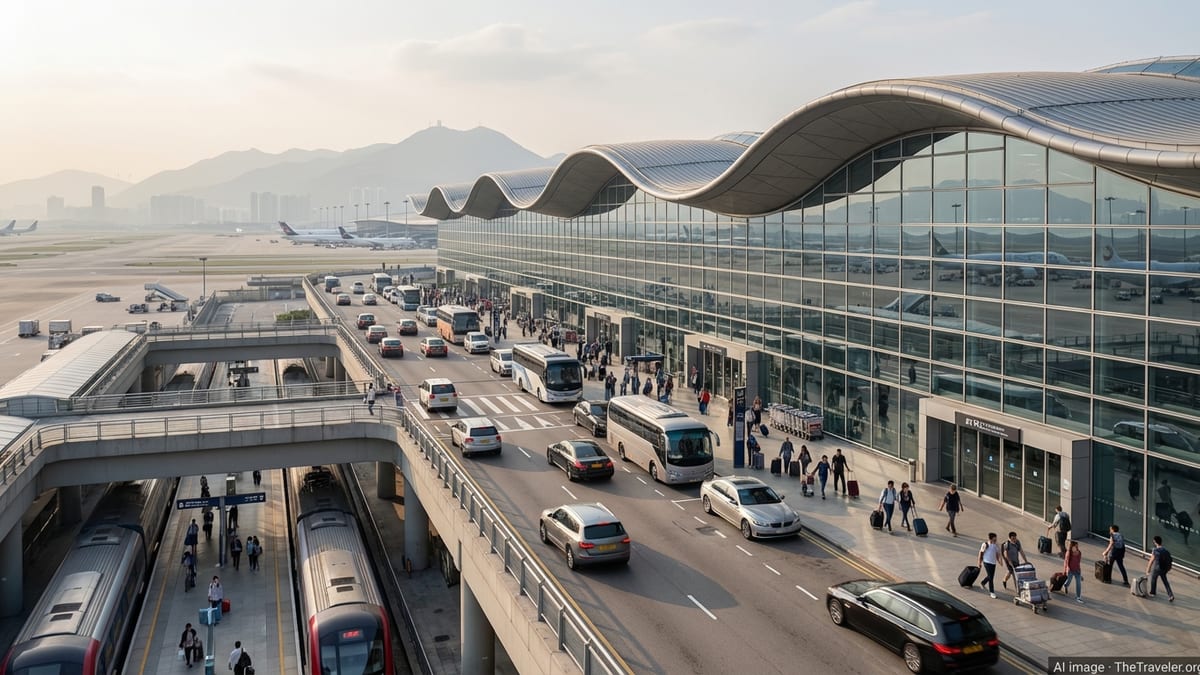
A Precise May 27 Start for T2’s New Era
The Airport Authority Hong Kong has confirmed that the expanded Terminal 2 departure facilities will begin operations on May 27, 2026, marking one of the most significant milestones at the city’s gateway since the launch of its third runway. The opening date has been timed to capture the surge in passenger traffic expected in the northern summer, when leisure and regional travel typically peak.
The May debut will see departure functions, including check-in, security and other front-of-house services, move into the new building. Authorities have stressed that the rollout will be phased rather than a single overnight switch, allowing systems and staff to ramp up steadily and reducing the risk of teething problems that have affected major hub expansions elsewhere.
The move comes as Hong Kong positions itself to reclaim and extend its pre-pandemic role as a leading Asian aviation hub. Officials say the expanded terminal, combined with the fully operational three-runway system, will give the airport headroom to handle growing traffic and attract new routes across Asia, the Middle East and the Americas.
How the New T2 Fits into the Three-Runway Strategy
The revamped Terminal 2 is part of a multibillion-dollar development plan that also includes a third runway and associated airfield infrastructure. The three-runway system entered full service in late 2024, increasing the theoretical number of aircraft movements the airport can handle and laying the groundwork for higher passenger throughput.
While the new runway tackles airside capacity, the expanded T2 targets the landside bottleneck: getting passengers into the system efficiently, processed quickly and dispersed to their flights or onward ground transport. By adding a full-function departure terminal to sit alongside Terminal 1, the airport authority aims to spread passenger flows more evenly and reduce crowding at traditional choke points such as check-in halls, security screening and kerbside drop-off areas.
In its completed form, T2 will ultimately handle both departures and arrivals, with its own concourse and gate areas due to follow in later phases. For now, departing passengers using T2 will continue to access airside gates via the existing automated people mover that links the terminal complex to the midfield and main concourses, mirroring how some flows are already managed from Terminal 1.
Smart Check-in and a Different Kind of Passenger Experience
Airport officials describe the new T2 as a “trendy and vibrant” space geared toward leisure travelers and frequent regional flyers, distinct from the more traditional layout of Terminal 1. Core to that vision is a suite of smart and largely self-service technologies designed to speed up the time it takes to move from the terminal door to the gate.
The departure hall will feature next-generation check-in facilities, including extensive self-service kiosks, automated bag-drop machines and contactless processing options. These tools are meant to complement, rather than entirely replace, staffed counters, giving passengers a choice between high-touch and high-tech depending on their preferences and travel needs.
Behind the scenes, upgraded baggage systems and integrated security screening are expected to streamline operations further. The goal is to reduce queuing, free up space for more comfortable waiting and retail areas, and give airlines more reliable cut-off times. The authority is also promising a more contemporary interior design, with natural light, wider circulation spaces and a tenant mix that targets younger and more budget-conscious travelers without sacrificing the premium services expected at a major international hub.
Who Will Fly From T2 and How Airlines Will Transition
When the departure facilities open on May 27, roughly 15 airlines are expected to relocate to Terminal 2 over time, in a coordinated shift that will be staged across several weeks and months. These carriers are primarily short-haul and regional operators, reflecting T2’s focus on high-frequency routes within Asia and nearby markets.
The airport authority has signaled that airlines will be moved in phases to avoid overloading the new terminal on day one. This phased approach allows ground handlers, immigration and security staff, and airline teams to test real-world operations at scale, fine-tune passenger wayfinding and adjust staffing patterns as demand patterns become clear.
For travelers, the most immediate impact will be a change to where they check in and clear departures rather than to their flight schedules or destinations. Tickets, boarding passes and pre-trip notifications are expected to clearly indicate “Terminal 2” where relevant. Passengers connecting between airlines split across T1 and T2 will still remain within a single integrated airport campus, though they should allow extra time during the initial transition period as new passenger flows bed down.
Stronger Ground Transport Links and the Role of the Coach Hall
The May opening of departure facilities builds on an earlier milestone in September 2025, when the new indoor coach hall at Terminal 2 began operating as the first phase of the project. That hall consolidated what had previously been a patchwork of coach and limousine boarding areas spread across outdoor car parks and different parts of Terminal 1.
Now housed under one roof at T2, the coach hall provides 41 parking bays for tour buses, cross-boundary coaches and limousines, alongside ticketing counters and waiting areas. The space is fully sheltered and air-conditioned, a significant upgrade for group and cross-border travelers who previously queued outdoors in heat, humidity or heavy rain.
Crucially, the facility is also plugged into a dense network of coach routes linking Hong Kong International Airport to more than 100 destinations across the Guangdong-Hong Kong-Macao Greater Bay Area. For mainland Chinese travelers, this makes T2 a more attractive one-stop node for cross-boundary journeys, while for inbound tourists, it simplifies access to cities across the region without the need for complicated transfers.
Public buses and taxis will continue to serve Terminal 1 as before, but with limousine and tour coach activity shifted to T2, congestion at the older terminal’s forecourts and car parks is expected to ease, making surface access smoother for all passengers.
What the New Layout Means for Day-of-Travel Logistics
For passengers, the most practical question is what will feel different on the day they fly. With T2’s departure hall in service, travelers booked on airlines assigned to the new terminal will enter through a separate check-in building, but once they have cleared formalities, they will still use the same airside network of concourses and gates that the airport operates today.
The expanded terminal is seamlessly connected to the Airport Express station, allowing incoming passengers from the city to walk directly into T2’s check-in area without changing levels or exiting the rail system. Clear signage is expected to guide passengers between T1 and T2 on foot, and the indoor links will be especially welcome in Hong Kong’s subtropical climate.
Within the building, more intuitive passenger flows aim to minimize backtracking and cross-traffic, two of the main contributors to congestion in older terminals. Departing passengers will move from the forecourt to check-in, security and outbound immigration in a largely linear path, while arriving flows will eventually be routed through a separate arrivals level once that phase of the T2 project is complete.
During the initial months following the May opening, travelers are being encouraged by airlines and airport officials to arrive a little earlier than usual, especially if they are unfamiliar with the terminal or are part of large tour groups. As staff and passengers gain familiarity with the new layout, those buffers are expected to shrink.
Capacity, Connectivity and Hong Kong’s Hub Ambitions
The expanded T2 is not just a cosmetic upgrade; it is central to Hong Kong’s strategy to cement its role as a super-connector in the region. Before the pandemic, the airport served tens of millions of passengers annually and was one of the world’s busiest international hubs. With visitor numbers rebounding and new bilateral air service agreements being signed with partners in South America, Central Asia, Africa and beyond, officials say additional terminal capacity is essential.
By dedicating Terminal 2 primarily to short-haul and regional operations, Hong Kong can cluster similar traffic patterns, which tend to feature high frequencies and shorter turnaround times. That clustering can make gate utilization more efficient and simplify scheduling for carriers that rely on quick aircraft turns. At the same time, it frees up space in Terminal 1 for long-haul services, widebody aircraft and complex connecting itineraries.
On the network side, the strengthened ground links via the T2 coach hall and the nearby SkyPier ferry and rail systems mean that the airport can market itself not just as a gateway to Hong Kong, but as an integrated node for the broader Greater Bay Area. This multimodal connectivity is a selling point for airlines looking to tap into the region’s combined population and economic output, as it broadens the airport’s catchment well beyond the city’s boundaries.
Preparing for a New Normal at Hong Kong International Airport
Ahead of the May 27 opening, the Airport Authority has launched an intensive program of training, drills and familiarization tours for airlines, ground handlers, government departments and emergency services. The objective is to ensure that when the first wave of passengers checks in at T2, staff across the airport community are comfortable with the new systems, routes and contingency plans.
Simulated passenger journeys are being run to test everything from queue layouts and boarding processes to security screening throughput and baggage handling times. These dry runs are intended to identify minor issues before they affect real travelers, whether that is a confusing sign, an under-resourced checkpoint or a pinch point in the landside road network.
For travelers planning trips through Hong Kong after May 27, the key advice is simple: check your booking and pre-flight notifications to see which terminal your airline is using, build in a little extra time for the first months of operation and be prepared for a noticeably different terminal environment if you are among the early users of T2. If the opening proceeds as planned, the new terminal is set to become a core part of the Hong Kong airport experience, signaling a new phase in the hub’s post-pandemic resurgence.