

More news on this day
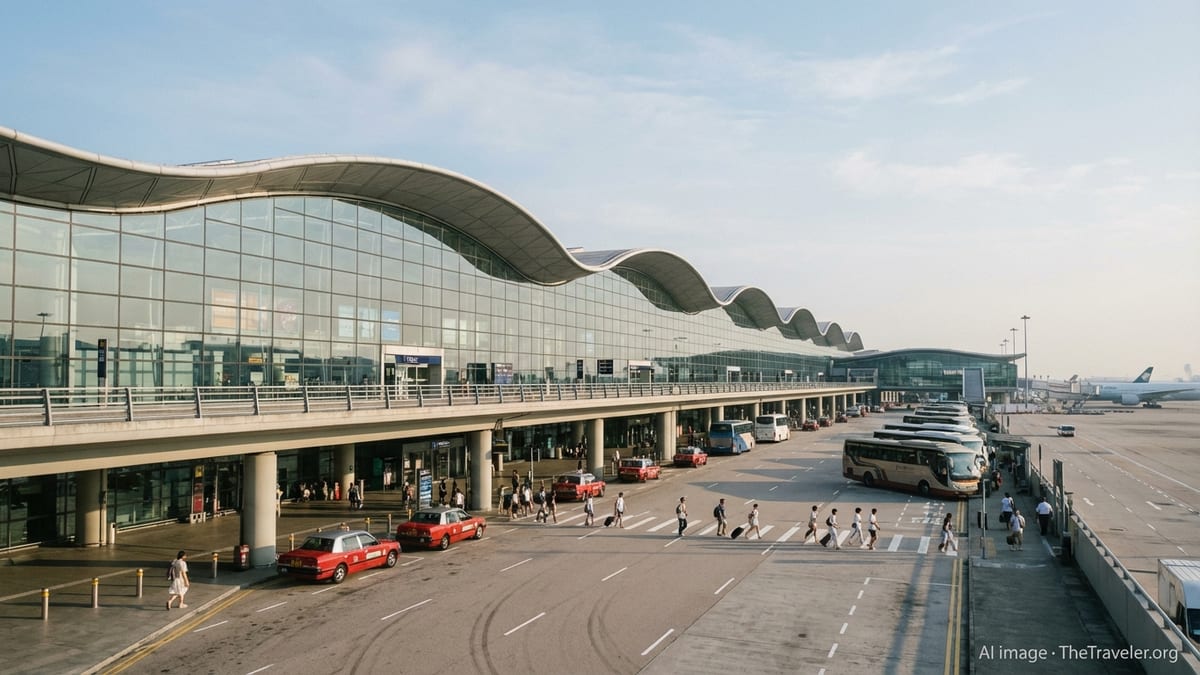
Hong Kong International Airport is preparing to activate the final piece of its multi‑billion‑dollar expansion, with the full opening of an enlarged Terminal 2 this May set to redefine how the city competes as a global aviation hub.
A Timed Debut for a Rebounding Global Hub
The Airport Authority Hong Kong has confirmed that the expanded Terminal 2 will begin full departure operations on 27 May 2026, a milestone timed to capture the summer travel surge and a rebound in regional demand. Around 15 mostly short‑haul and regional carriers are expected to migrate check‑in and processing to the new facility in stages, helping to spread passenger flows more evenly across the airport campus.
The decision to phase in Terminal 2 follows a careful period of testing for critical systems, from baggage handling to self‑service and biometric check‑in technology. Officials framed the timing as a balance between operational prudence and strategic urgency, linking the opening to the broader effort to restore Hong Kong’s pre‑pandemic role as a leading transfer and origin‑destination hub in Asia.
Under the initial operating model, departing passengers using Terminal 2 will complete check‑in, bag drop and security screening in the new building before travelling by automated people mover to the main boarding concourses at Terminal 1. That staged approach allows airlines and ground handlers to adjust processes gradually, while passengers begin to familiarise themselves with a reconfigured airport layout.
For the Airport Authority, the opening of Terminal 2 is more than an infrastructure ribbon‑cutting. It is positioned as a signal to airlines, investors and regional governments that Hong Kong is again in expansion mode, underpinned by long‑term traffic forecasts that anticipate strong growth in intra‑Asia travel and rising competition from rival hubs in the Pearl River Delta and beyond.
From Check‑in Annex to Full‑Service Terminal
When Hong Kong International Airport opened at Chek Lap Kok in 1998, the original Terminal 2 functioned primarily as a check‑in facility and retail space, without its own airside gates or arrivals hall. Departing passengers would check in at T2 and then transfer through a dedicated corridor to Terminal 1 for security and boarding. Arriving passengers never passed through the building.
The current expansion project fundamentally changes that profile. Once fully commissioned, the new Terminal 2 will become a complete passenger terminal offering both arrivals and departures, integrated with a new airside concourse and more than 60 aircraft stands as part of the wider three‑runway system. The redesign adds substantial floor area, new baggage systems, and upgraded immigration and security facilities intended to handle tens of millions of passengers per year.
Architecturally, the enlarged building emphasises open sightlines, high ceilings and natural light, reflecting a broader trend in airport design that prioritises intuitive wayfinding and a less stressful pre‑flight environment. The Airport Express station concourse, which already serves Terminal 1, has been reconfigured so trains can open doors directly into the Terminal 2 zone, providing a simple, single‑platform connection between the two terminals.
For passengers, the evolution of Terminal 2 turns what was once a relatively peripheral facility into a front door for a significant slice of the airport’s regional traffic. For the airport operator, it converts previously underutilised space into a productive asset aligned with the long‑term capacity targets set out in Hong Kong’s aviation master planning.
Three‑Runway System and Long‑Term Capacity Strategy
The completion of Terminal 2’s expansion is tightly coupled with the rollout of Hong Kong’s three‑runway system, which entered full operation in late 2024. The third runway, built on reclaimed land to the north of the existing airfield, was the most visible element in a programme that also includes a new passenger concourse, reconfigured taxiways, and extensive airfield support infrastructure.
Airport planning documents envisage that, once fully mature, the three‑runway system and expanded terminals could support annual throughput of around 120 million passengers and significantly more cargo movements than today. That capacity is designed to give Hong Kong the headroom it needs to grow as a connecting hub between North Asia, Southeast Asia and long‑haul markets in Europe and North America, even as rival airports across the region pursue their own megaprojects.
The enlarged Terminal 2 is expected to handle on the order of 20 to 30 million passengers annually when operating at scale, complementing Terminal 1 rather than replacing it. In the near term, officials project that about 15 million passengers could pass through T2 in the first year of substantial operations, providing immediate relief to peak‑hour congestion in T1’s check‑in halls and security lanes.
Strategically, the sequencing matters. With the third runway already in service, the airport can add new flights and redistribute air traffic movements, while the terminal capacity follows in a phased manner. The activation of Terminal 2’s departure facilities ahead of the full airside concourse opening allows Hong Kong to start capturing efficiency gains in passenger processing without waiting for every piece of the puzzle to be finished.
Balancing Regional and Long‑Haul Traffic
Airport planners have deliberately positioned Terminal 2 as a base for point‑to‑point and short‑haul regional services, especially those linking Hong Kong to destinations across mainland China, Southeast Asia, and North Asia. Airlines such as Hong Kong‑based low‑cost and leisure carriers, along with selected foreign operators running regional routes, are expected to be among the first to move check‑in operations to the new facility.
By contrast, most long‑haul and premium full‑service flights will continue to operate primarily out of Terminal 1, which remains the airport’s anchor for complex connecting banks and high‑yield intercontinental traffic. This division of labour is intended to optimise flows on the ground: regional passengers, who often travel light and require shorter processing times, can make use of high‑throughput self‑service facilities in T2, while longer‑haul, connection‑focused itineraries are consolidated in T1.
For airlines, the split offers operational clarity. Carriers can design schedules and allocate resources based on the passenger profiles and turnaround times associated with each terminal. For passengers, it introduces a measure of simplicity once the new pattern is established, with regional travellers increasingly directed to Terminal 2 from the outset of their journey and long‑haul customers guided toward Terminal 1.
The configuration also speaks to Hong Kong’s broader competitive positioning. As regional travel demand recovers and low‑cost and hybrid carriers expand, having a dedicated, modern facility tuned for quick regional turnarounds allows Hong Kong to capture growth segments that might otherwise gravitate to alternative hubs in Shenzhen, Guangzhou, or further afield.
Greater Bay Area Connectivity and the Coach Hall
A key piece of the Terminal 2 story sits not in the departure hall, but at ground level. In September 2025, the airport inaugurated a new indoor Coach Hall beneath the expanded terminal as the first operational phase of the project. The facility consolidates cross‑boundary coach services, tour buses and limousine boarding areas that were previously scattered around Terminal 1 and various car parks.
The Coach Hall offers 41 parking bays along with ticketing counters and waiting areas, creating a one‑stop interchange for passengers travelling between the airport and cities across the Guangdong‑Hong Kong‑Macao Greater Bay Area. By bringing these services under one roof, the airport has reduced traffic congestion around Terminal 1’s curb sides and freed up surface parking space for other uses, while offering passengers a more comfortable, sheltered environment.
The emphasis on ground connectivity is central to Hong Kong’s aviation strategy. Airport‑linked developments such as the SKYCITY complex, new road links and the “Airportcity Link” autonomous bus project between the Hong Kong–Zhuhai–Macao Bridge port and the airport precinct are intended to knit HKIA into a wider cross‑boundary transport ecosystem. Terminal 2’s multimodal design ensures that regional road, bridge and sea connections feed directly into the terminal network.
For travellers in nearby mainland cities, that integration means the airport functions not just as a departure point, but as an easily accessible regional hub. For Hong Kong, it anchors the airport’s role in the economic geography of the Greater Bay Area at a time when cross‑border competition for tourism, logistics and high‑value services is intensifying.
Passenger Experience and Smart Airport Technology
Alongside raw capacity, the Terminal 2 expansion is being used as a showcase for a new generation of passenger processing and digital services. The departure hall is planned around extensive use of self‑service bag drops, biometric identity checks, and automated boarding processes, all aimed at shortening queues and standardising the journey from curb to gate.
Designers have incorporated larger circulation spaces, more power outlets and charging stations, and a mix of quieter seating areas with zones curated for leisure travellers and families. Retail and dining outlets will be brought online in phases, with a focus on brands and concepts that appeal to short‑haul and holiday‑focused customers, complementing the more business‑oriented offerings already established in Terminal 1.
Behind the scenes, upgraded baggage systems, security screening technologies and real‑time operations control tools are intended to reduce mishandled luggage, speed up baggage delivery, and allow the airport to respond more flexibly to disruptions. The Airport Authority has highlighted the role of data analytics in predicting passenger volumes and adapting staffing and lane allocations throughout the day.
For frequent travellers, the most visible difference may lie in the perception of space and pace. By off‑loading a chunk of peak‑time demand from Terminal 1 to Terminal 2, the airport hopes to restore some of the buffer that made HKIA a benchmark for efficiency before the pandemic, even as overall volumes climb toward new highs.
Economic Stakes and Competitive Pressures
The scale of Hong Kong’s three‑runway and terminal expansion underscores how tightly the airport is woven into the city’s economic ambitions. Prior to the pandemic, HKIA consistently ranked among the world’s busiest airports for international cargo and was a major passenger gateway in Asia. Prolonged travel restrictions and shifting traffic patterns have since intensified competition from regional peers, many of which are rolling out their own mega‑terminals and new runways.
Authorities in Hong Kong view Terminal 2’s completion as a necessary step to defend and expand that role. Increased capacity allows the city to court new airlines and routes, support tourism recovery, and facilitate the movement of business travellers and high‑value cargo linked to sectors such as finance, professional services and technology.
There is also a political and symbolic dimension. By tying the airport expansion to Greater Bay Area integration and new bilateral air services agreements with countries in regions such as South America, Central Asia and the Middle East, Hong Kong is attempting to demonstrate that it remains outward‑looking and globally connected. The airport’s ability to handle larger passenger volumes with high service standards is central to that narrative.
Yet the investment also raises expectations. Airlines and passengers will judge the revamped Terminal 2 and the three‑runway system on practical outcomes: shorter queues, more reliable operations and competitive fares and schedules. For the Airport Authority, the challenge will be to translate the scale of the infrastructure into day‑to‑day performance that justifies years of construction and disruption.
Phased Completion and the Road Ahead
Even after the 27 May opening of Terminal 2’s departure facilities, the broader expansion programme will continue to unfold in stages. The dedicated airside concourse connected to T2, with its own cluster of boarding gates, is expected to come into service later in the decade, further reducing the need for regional passengers to transfer through Terminal 1.
In the meantime, the airport will operate in a hybrid configuration, with check‑in and some processing functions split between the two terminals while boarding remains concentrated in the existing concourses. That arrangement requires careful choreography of people movers, baggage routing and aircraft stand allocation, but also provides a built‑in safety valve if specific systems need further refinement.
Looking ahead, the Airport Authority has signalled that it will continuously adjust the airline mix at each terminal as travel patterns evolve. As new markets open and long‑haul demand returns to and potentially surpasses pre‑pandemic levels, the balance between regional and intercontinental capacity will remain a live question for planners.
For now, the imminent completion of Terminal 2 marks a pivot from construction to operation. After years of reclamation works, piling, structural steel and airfield reconfiguration, the public face of Hong Kong’s three‑runway era is about to take shape in the form of a new terminal where passengers will check in, shop, wait and begin their journeys. How smoothly that experience unfolds will help determine whether the airport can convert its expanded footprint into renewed status as one of the world’s pre‑eminent aviation hubs.