

More news on this day
Daniel K. Inouye International Airport in Honolulu has introduced a fleet of electric transit trams to its iconic Wiki Wiki Shuttle service, marking a visible new step in Hawaii’s push to decarbonize ground transportation at one of the United States’ busiest Pacific gateways.
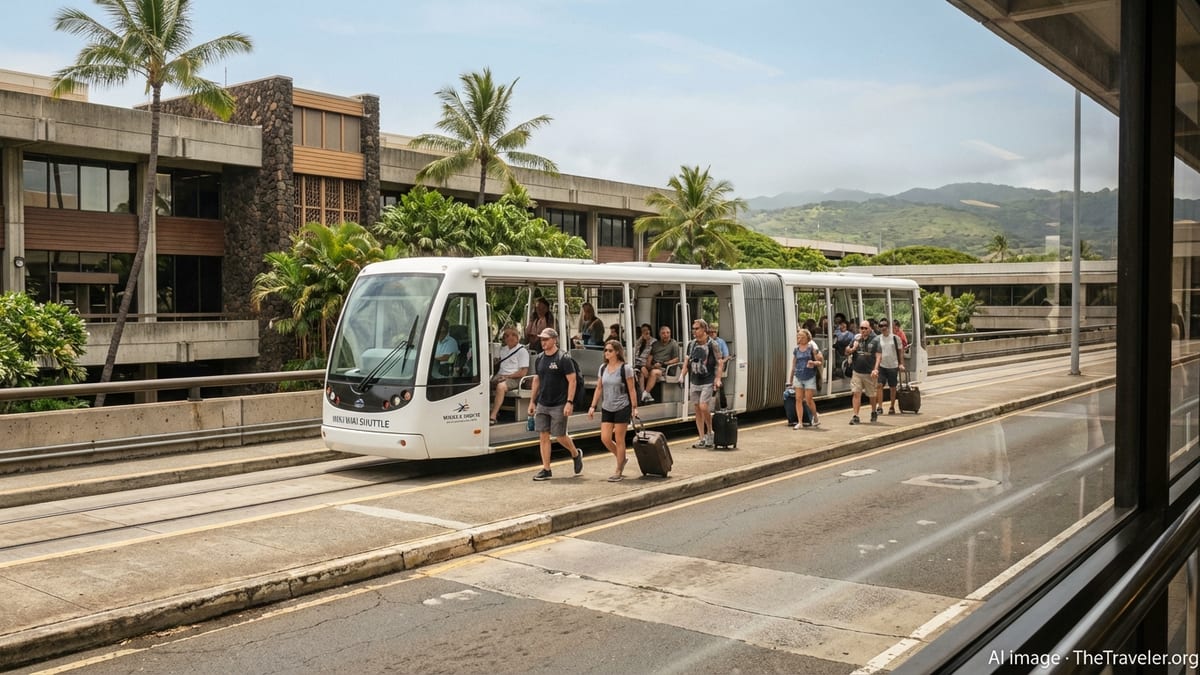
A Modern Twist on a Classic Airport Shuttle
The Hawai‘i Department of Transportation confirmed in mid-February that three new electric transit trams are now operating along the Wiki Wiki Shuttle routes within Daniel K. Inouye International Airport. The vehicles, supplied in partnership with Sustainability Partners and Moto Electric, began carrying passengers between Terminals 1 and 2 and concourses C and G after an initial rollout window this month.
The trams supplement, rather than immediately replace, the long-running diesel Wiki Wiki buses that have shuttled travelers around the sprawling airport since the 1960s. For now, the new electric units are scheduled to operate daily for limited hours, generally between mid-morning and early evening, while the traditional bus fleet continues to cover early morning and late-night demand.
Airport officials describe the move as both a practical mobility upgrade and a high-visibility symbol of the state’s broader climate ambitions. Honolulu is aiming for 100 percent clean energy and carbon neutrality by 2045, with ground transportation at the airport considered a key piece of that transition.
How the Electric Trams Change the Passenger Journey
The electric trams operate along the elevated third-level roadway, following the same core route that domestic passengers already associate with the Wiki Wiki service. Travelers can board with carry-on baggage at designated stops connecting Terminals 1 and 2 and the C and G gate areas, cutting what can be a lengthy walk in the tropical heat into a short, shaded ride.
Each tram consists of an open-sided electric vehicle with trailers, configured to carry several dozen seated passengers and limited standing room. One trailer position can accommodate a wheelchair, improving accessibility between concourses while the airport continues to adapt older infrastructure to modern standards.
Early user feedback has focused on the quieter, smoother ride compared with the diesel buses. Electric drivetrains eliminate engine vibration and tailpipe fumes, a noticeable difference for passengers already fatigued from long-haul flights. The quieter operation also reduces ambient noise in curbside areas, a small but welcome quality-of-life change for both travelers and airport workers.
Environmental Gains and Hawaii’s Broader Sustainability Goals
Even with just three vehicles, the new electric trams are expected to trim emissions and fuel consumption tied to intra-airport circulation. The airport complex processes tens of millions of passengers each year, and the short but frequent Wiki Wiki trips add up in diesel usage. By shifting a portion of those trips to battery power, officials say they are reducing local air pollution and dependence on imported fossil fuels.
The rollout aligns with statewide commitments to electrify public-sector fleets and ground transport. On O‘ahu, transit agencies and city partners have been adding battery-electric buses to their fleets, while the airport’s SustainableHNL program has identified ground vehicles and airside equipment as priority areas for emissions reductions.
The trams are integrated into a financing and maintenance model that allows the state to treat them as a service rather than a one-time capital purchase. Under this approach, public partners pay over time for reliable, zero-emission vehicles and support, which officials say lowers the barrier to expanding the electric fleet if performance targets are met.
From Autonomous Pilots to Proven Electric Mobility
The electric trams are the latest chapter in Honolulu’s effort to modernize ground mobility at its primary airport. In 2024, an autonomous electric shuttle pilot known as Miki operated alongside the Wiki Wiki buses, testing driverless vehicles on some of the same routes between concourses. That 18‑month trial ended after the manufacturer encountered financial difficulties, highlighting the technological and commercial risks of cutting-edge autonomy.
Lessons from that pilot informed the current strategy, which emphasizes proven electric drivetrains and human-operated vehicles while still advancing sustainability goals. By opting for conventional electric trams rather than autonomous shuttles, the airport can lean on established maintenance practices and driver training, reducing complexity even as it upgrades the fleet.
Combined with the opening of the Skyline rail station at the airport and other ground transport improvements on O‘ahu, the new trams are part of a layered mobility network that seeks to offer travelers more seamless, lower-emission ways to move from gate to curb and beyond.
What Travelers Can Expect in the Months Ahead
For passengers, the most immediate change is visual and sensory. The new trams are distinct from the older diesel buses, with open sides, a lower step up, and a near-silent ride as they glide between terminals. Signage at curbside stops indicates when electric trams are in operation, though travelers during early-morning or late-evening bank times are still likely to be served by the diesel fleet.
Airport officials note that three electric units cannot yet handle all intra-terminal demand during peak travel periods. At busy times, passengers may still experience queues and a mix of electric and diesel vehicles on the route. However, data gathered during this first phase will help determine how many additional trams are needed and how operating hours could be expanded.
For now, the introduction of electric trams on the Wiki Wiki Shuttle offers a tangible signal that one of the United States’ most important Pacific hubs is beginning to decouple passenger movement from fossil fuels. As visitors step off long flights into Honolulu’s tropical light, their first ride across the airport is increasingly likely to be electric.