

More news on this day
Spring travelers heading to and from Hawaii have faced a difficult April 2026, as rolling disruptions centered on Honolulu’s Daniel K. Inouye International Airport triggered widespread delays and cancellations across major U.S. mainland routes just as demand surged for island getaways.
Get the latest news straight to your inbox!
Taxiway Works and Weather Set the Stage for Disruption
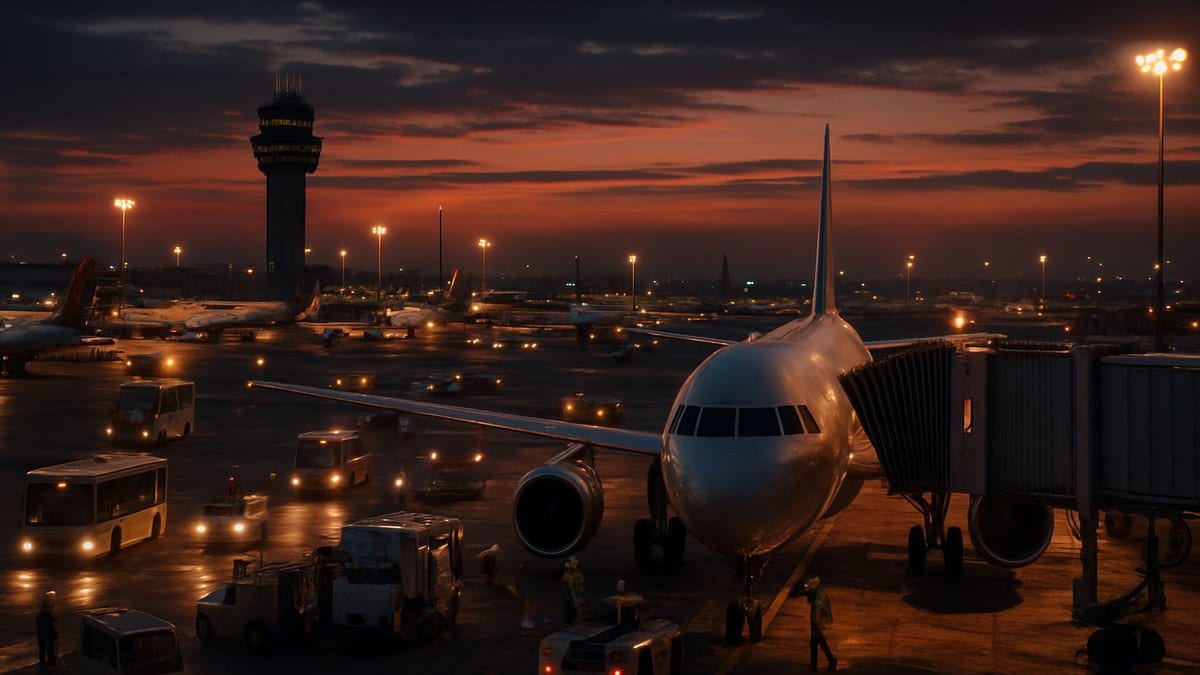
Operational turbulence in Honolulu did not come out of nowhere. Planning documents and airport modernization updates show that a series of infrastructure works, including recent taxiway closures and repaving activity, have constrained capacity at Daniel K. Inouye International Airport in early 2026. While the most intensive construction windows were scheduled outside peak hours, the resulting gate and taxiway reshuffles limited flexibility during irregular operations.
At the same time, early spring weather patterns across the Pacific and the U.S. West Coast have remained unsettled. Publicly available tracking data for the first half of April point to several days with elevated delay and cancellation counts nationwide, as storms and congestion affected multiple hubs. When those broader system pressures intersected with Honolulu’s tighter operating environment, even routine disruptions became harder to absorb, especially on long-haul mainland legs that require specific aircraft and crew rotations.
Industry analysis suggests that these combined factors turned Honolulu into a chokepoint. Once departures from the islands slipped behind schedule, knock-on effects were felt hours later at mainland airports such as Seattle, Los Angeles and San Francisco, where those same aircraft were due to operate onward flights. The result was a rolling pattern of misaligned aircraft, crews nearing duty limits and passengers stranded in both directions.
These stresses unfolded against a backdrop of strong demand for Hawaii travel. Booking platforms and fare trackers indicate that interest in Honolulu and neighboring islands surged heading into April, with some transpacific and West Coast routes reporting solid load factors. That left carriers with limited spare capacity to rebook disrupted passengers quickly, amplifying frustration as delays stacked up day after day.
Merger Shifts and Schedule Changes Add Complexity
Network adjustments tied to the ongoing integration of Hawaiian Airlines into the Alaska Airlines group added another layer of complexity to April’s disruptions. Public merger timelines show that a major passenger service system cutover is planned for late April 2026, when Hawaiian-branded flights transition to Alaska’s code. In the run-up, carriers have been reshaping their Hawaii networks, trimming some point-to-point mainland routes while boosting frequencies on core Honolulu services.
Travel news outlets and aviation blogs have documented a series of route suspensions and reductions affecting non-Honolulu gateways in recent months, particularly on secondary links that once allowed travelers to bypass Oahu. With more itineraries now funneled through Honolulu for connections to neighbor islands such as Kauai and the Big Island, the airport’s role as a central hub has intensified. When disruptions hit Honolulu, the consequences increasingly ripple out to communities that lost their previous nonstop options.
Reports from frequent travelers and online forums highlight how these structural changes translated into real-world headaches in April. Some passengers attempting to reach smaller islands found that a missed or delayed Honolulu connection forced unplanned overnights and rebookings onto next-morning departures. Others described longer overall journey times as former five to six hour nonstops from the mainland to neighbor islands were replaced by itineraries requiring an additional stop and screening in Honolulu.
Network planners typically build schedule buffers to protect key hubs, but the combination of merger-related changes, infrastructure work and strong seasonal demand left less margin than usual. Once operational issues emerged at Honolulu, airlines found themselves juggling constrained fleets and altered route maps, with fewer straightforward options for rerouting disrupted travelers without sending them back through the same strained hub.
Cascading Delays Across Major Mainland Gateways
Data from commercial flight tracking platforms for early April illustrate how problems centered on Honolulu quickly propagated across the mainland. On several days, departures from Honolulu to West Coast cities left hours late or were canceled outright, which in turn delayed or disrupted subsequent domestic legs that those aircraft were scheduled to operate. Seattle, Los Angeles, San Francisco and other large hubs registered noticeable spikes in late arrivals from Hawaii compared with typical seasonal patterns.
Because many of these Honolulu flights are long sectors that occupy an aircraft and crew for the better part of a working day, any disruption can consume available reserve capacity. Industry commentary notes that when a Honolulu to mainland flight cancels late in the process, airlines may have little choice but to cancel or downgrade other domestic services so that a replacement widebody or narrowbody can be reassigned. For travelers far from the islands, that has meant unexpected last-minute changes to flights that do not even touch Hawaii but sit downstream in the same rotation.
Airline operations specialists often describe this phenomenon as a “rolling delay wave,” in which one disrupted leg continuously pushes subsequent departures later into the day. In April 2026, Honolulu appeared to be an epicenter for such waves. Travelers on morning departures from coastal hubs reported arriving at the airport to find their aircraft still en route from an overnight Honolulu flight, and later departures sometimes lacked clear departure times as carriers waited for incoming aircraft to clear maintenance and crew checks.
Publicly available performance snapshots suggest that these mainland impacts were most pronounced on weekends and peak travel days, when schedules are densest and spare aircraft scarcest. On those days, a weather-related ground delay program or air traffic control restriction at a single hub could interact with delayed Honolulu arrivals to create a patchwork of missed connections and rolled-over passengers throughout the domestic network.
Traveler Experience: From Missed Connections to Full Refunds
The human impact of Honolulu-centered disruption has been widely documented across social media, travel discussion boards and complaint channels. Travelers recount missed connections from Honolulu onward to islands such as Kauai, with some describing overnight stays in airport terminals as they waited for first-wave departures the following morning. Others detail full-day delays on long-haul flights from mainland cities like Salt Lake City to Honolulu, as aircraft awaited technical inspections or replacement crew members.
These experiences have unfolded in the context of updated U.S. Department of Transportation rules introduced in recent years, which defined delays of three hours or more on domestic flights as significant for refund eligibility. Consumer advocates note that travelers affected by mechanical issues, staffing shortages or other airline-controlled problems on Honolulu routes may have options to request refunds instead of accepting lengthy delays or complex rebookings, although awareness of those rights remains uneven.
For many travelers, the most immediate challenge has been information. Reports indicate that same-day schedule changes and rolling estimates of departure times made it difficult to plan around delays, particularly for those with hotel check-in times, cruise departures or inter-island transfers. Some passengers described relying heavily on airline mobile apps and third-party trackers to spot cancellations or equipment swaps even before gate displays updated, underscoring how quickly conditions have been changing during periods of strain.
Customer forums suggest that meal and hotel vouchers have been inconsistent, especially when disruptions stem from a mix of causes such as weather, infrastructure constraints and crew duty limits. That ambiguity has contributed to a sense of chaos for some passengers, who report waiting in long customer service lines in Honolulu and mainland hubs while trying to secure acceptable alternatives home.
What Comes Next for Honolulu and Mainland Links
Looking ahead to the remainder of April and into the summer, airline schedules and airport planning documents indicate further changes on the horizon for Honolulu’s role in U.S. air travel. Several carriers have announced additional or restored Hawaii services from West Coast airports beginning in late spring and early summer, which could provide more alternatives for travelers but also raise the stakes for smooth operations at Daniel K. Inouye International Airport.
The ongoing merger integration, including the late April passenger systems transition for Hawaiian-branded flights, is expected to be a pivotal test. Industry observers note that large-scale technology cutovers can be flashpoints for booking errors, misaligned schedules and short-term disruptions even under ideal conditions. With Honolulu already under scrutiny after April’s operational turbulence, both airlines and airport managers are likely to face close attention from travelers watching how seamlessly the change unfolds.
There are also signs that carriers are tweaking schedules and aircraft assignments in response to recent challenges. Some travel analyses point to efforts to add buffer time on key Honolulu turns, redistribute widebody aircraft across the network and adjust departure banks to ease pressure on peak connection windows. If successful, those adjustments could help absorb inevitable weather and air traffic control disruptions before they cascade across the mainland.
For now, travelers planning April and early summer trips involving Honolulu are being encouraged by consumer advocates and travel advisers to build in longer connection times, monitor itineraries closely in the days before departure and familiarize themselves with refund and rebooking options. While the worst of the early April chaos may ease as taxiway projects advance and schedules are refined, Honolulu’s central position linking the Pacific and the continental United States means that any turbulence there is likely to remain a bellwether for broader mainland disruptions.