

More news on this day
At ITB Berlin 2026 in Berlin, Chinese travel technology company HonTrip is presenting its new Seeking China platform, an AI-driven cultural travel solution aimed at reshaping inbound tourism experiences across China.
Get the latest news straight to your inbox!
AI Platform Targets Rising Demand for Authentic China Experiences
HonTrip’s debut at ITB Berlin 2026 comes as international interest in China’s cultural and experiential travel deepens, supported by a broader recovery in global tourism. Publicly available figures for 2024 indicate a strong rebound in inbound visits to China, with growth driven by easing travel restrictions, expanded air capacity, and renewed curiosity about Chinese culture. Industry observers note that travelers are increasingly prioritizing authenticity, local connections, and curated cultural activities over traditional group sightseeing.
Seeking China is positioned as a response to these shifts. The platform combines AI-powered itinerary planning with curated cultural content, using data on traveler interests, trip length, and preferred themes to generate customized journeys. Rather than focusing solely on landmark checklists, the service emphasizes immersive experiences such as neighborhood walks, workshops with local artisans, food-focused explorations, and wellness traditions rooted in Chinese practices.
HonTrip’s model is designed as end-to-end support for the full journey, from inspiration and planning to in-destination assistance. The company highlights a service scope that includes pre-trip discovery, booking integration, real-time guidance on the ground, and post-trip content that helps travelers deepen their understanding of what they encountered. At ITB Berlin 2026, the company is introducing this integrated approach to an audience of European and global trade professionals looking for differentiated, culture-led offerings for clients.
Seeking China Blends Human-Curated Content with AI Personalization
The Seeking China platform centers on a hybrid model that combines human-curated cultural programming with AI-driven personalization. According to published coverage, its portfolio spans heritage craft activities, city discovery tours, themed cultural circuits, and wellness-oriented programs, all organized around a “culture-first” philosophy. The digital layer then adapts these modules to each traveler or travel group, adjusting pace, depth of information, and thematic focus.
AI algorithms analyze preference data, previous behavior, and contextual factors such as seasonality and local events to propose itineraries that align with specific interests. A traveler who prioritizes design and contemporary urban culture, for example, can be guided toward creative district walks, modern galleries and bookstores, and independent cafes in cities like Shanghai, Shenzhen, or Chengdu, while another focused on heritage may receive suggestions centered on temple complexes, rural handicraft villages, and classical gardens.
Multilingual content is a key element of the experience. Seeking China offers narrative layers that aim to explain historical background, social context, and everyday cultural practices in accessible language for international visitors. The intention is to move beyond transactional tourism by helping users understand the meanings behind rituals, architecture, cuisine, and urban life. At the same time, the AI component adapts explanations to different knowledge levels, providing more introductory or more in-depth commentary depending on user feedback and interaction patterns.
ITB Berlin 2026 Provides a Global Stage for China Inbound Innovation
ITB Berlin 2026, which marks the 60th anniversary of the world’s leading B2B travel trade show, serves as a prominent platform for the launch of Seeking China. The fair, held from 3 to 5 March 2026 at Messe Berlin, gathers thousands of exhibitors from more than 160 countries and regions, with a strong focus on technology, sustainability, and next-generation tourism concepts. The anniversary edition places particular emphasis on innovation and future-oriented business models across the global travel value chain.
Within this context, HonTrip’s presence aligns with broader trends on the show floor, where travel technology, AI tools, and data-driven personalization feature heavily in product demonstrations and conference sessions. Seeking China is being positioned to European tour operators, online travel agencies, and niche specialists who are looking to refresh or expand their China portfolios with more flexible, experience-rich itineraries that can be adjusted in real time.
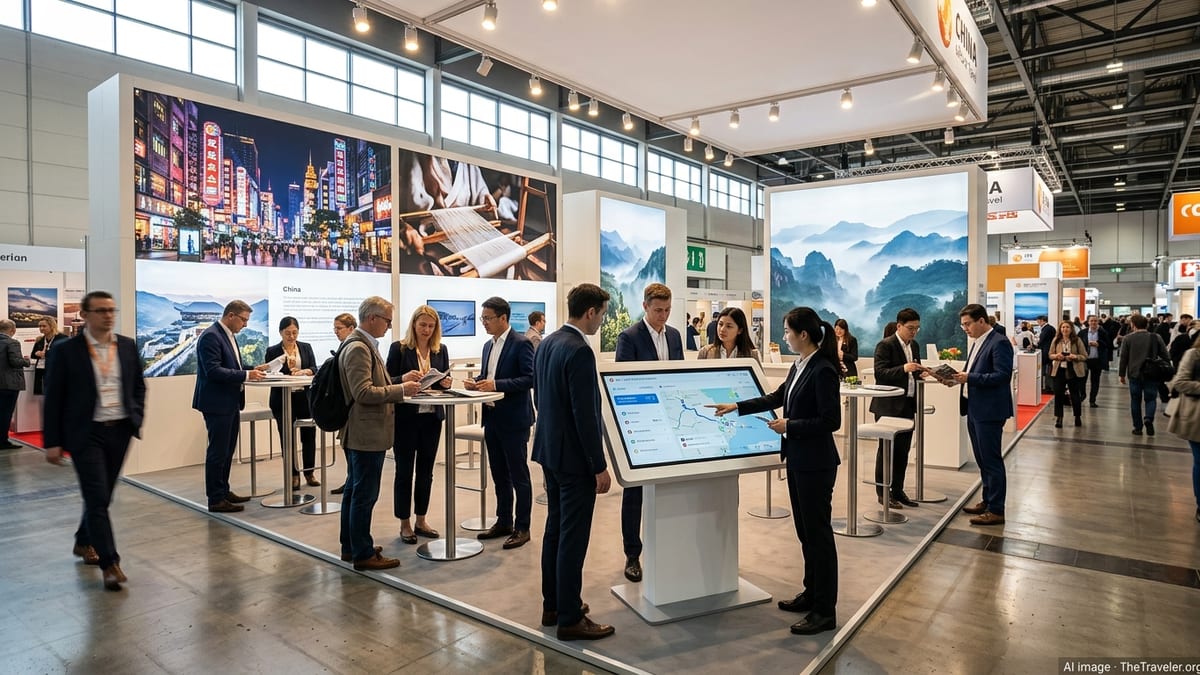
The company’s stand at ITB Berlin highlights both the digital interface and the on-the-ground network that underpins the platform. Visual materials emphasize scenes from urban neighborhoods, cultural workshops, and scenic regions beyond the traditional Beijing–Shanghai–Xi’an circuit, underscoring an ambition to distribute visitor flows more evenly and open up lesser-known destinations. For trade visitors, the focus is on how partners can plug into the AI layer while retaining their own branding and client relationships.
From Checklist Tourism to Context-Rich Journeys
The HonTrip launch reflects a broader industry conversation about the limitations of checklist-style travel, particularly for repeat visitors and younger demographics. Inbound demand for China is increasingly shaped by travelers who may have already seen flagship attractions or who arrive with strong interest in specific cultural themes such as crafts, food, contemporary art, or wellness. For these segments, the value lies less in covering as many landmarks as possible and more in having time and context to understand daily life and cultural nuance.
Seeking China’s portfolio mirrors these expectations with offerings such as heritage craft sessions with local makers, food walks featuring regional specialties in neighborhood markets, and wellness programs inspired by traditional Chinese approaches. The AI engine is used to suggest how these elements can be combined over several days in a way that balances activity with downtime and accommodates variables like jet lag and seasonal climate differences between regions.
The approach also responds to a rising emphasis on “meaningful connection” in global travel research, which notes that visitors increasingly evaluate trips by the depth of cultural engagement rather than the number of photos captured at iconic viewpoints. By building flexible itineraries that can be updated on the fly through a digital interface, HonTrip aims to help travelers pivot toward spontaneous opportunities such as neighborhood festivals, temporary exhibitions, or unexpected encounters, while still benefiting from structured guidance and logistical support.
Positioning China Inbound Tourism for AI-Era Growth
For China’s inbound tourism sector, the emergence of AI-enabled cultural platforms is seen as one potential driver of future growth. Public information on travel flows indicates that major gateways such as Beijing and Shanghai have already moved beyond pre-2019 levels of foreign arrivals, supported by route expansion and evolving visa policies. As connectivity improves to secondary and tertiary destinations, the challenge shifts from pure access to the quality and distinctiveness of on-the-ground experiences.
In this environment, HonTrip is positioning Seeking China as both a technology layer and a product framework that can help international partners respond quickly to changing tastes. AI is used to gather feedback, identify emerging interests, and spot under-the-radar locations or experiences that resonate with visitors, potentially informing how itineraries are updated across seasons. At the same time, the platform’s emphasis on curated cultural content is intended to ensure that the digital acceleration of planning does not come at the expense of depth or local relevance.
As ITB Berlin 2026 puts global travel innovation in the spotlight, HonTrip’s debut with Seeking China signals how AI tools are moving from back-end operations into the heart of the traveler experience. For trade professionals examining the future of China inbound tourism, the launch offers a concrete example of how technology and culture can be combined to design journeys that are both highly personalized and firmly rooted in local traditions.